
POLITICS
Igbo Youths Reject Tax Reform Bills


By Mike Odiakose, Abuja
As controversy continues to trail the proposed tax reform bills, Igbo Youths Progressive Forum, YPF, on Wednesday, described the bills as “anti-people and unjust.”
The group, in a statement, by its National President, Victor Onuoha Ukeh said the bill disregards the principle of fairness, adding that it will marginalise the South East region.
The statement reads: “The Igbo Youths Progressive Forum (IYPF) strongly opposes the proposed tax reform bill introduced by President Bola Tinubu’s administration.
“This bill is anti-people, unjust, and a clear attack on equity and fairness in Nigeria.
“At a time when Nigerians are struggling with high inflation, unemployment, and poverty, this proposed reform seeks to add further burdens on the already overwhelmed masses.
“It favours only a few industrialized states to the detriment of others, particularly the South East, which has fewer industries and is already marginalized in federal allocations and development projects.
“This bill disregards the principle of fairness by imposing excessive taxes on individuals and businesses without addressing the glaring inequality in the economic structure of the country.
“While industrialized states stand to benefit, less industrialized regions like the South East will suffer disproportionately.
“The bill not only worsens the economic divide but also jeopardizes the survival of small and medium enterprises, which are the backbone of Nigeria’s economy.
“Many of these businesses are already struggling, and additional tax burdens will cripple their operations, leading to job losses and a stagnation of economic growth.
“Furthermore, we are deeply alarmed by the proposal to transfer the funding of TETFund (Tertiary Education Trust Fund) to the national budget.
“This move is a death sentence for the agency that has been instrumental in improving tertiary education in Nigeria.
“TETFund’s independent funding structure has ensured that funds are allocated directly to developing infrastructure and improving the quality of education.
“Shifting this responsibility to the national budget will lead to inefficiency, bureaucratic bottlenecks, and chronic underfunding.
“This decision will cripple tertiary education and worsen the hardships already faced by Nigerian students, who are struggling with poor learning conditions, incessant strikes, and rising tuition fees.
“The proposed tax reform bill is not only anti-people but also a threat to the future of this nation.
“By placing heavier burdens on ordinary Nigerians while favoring a few wealthy states, it undermines the principles of equity and fairness.
“We call on the National Assembly to reject this bill in its entirety and protect the interests of all Nigerians, particularly those from less industrialized regions like the South East.
“The Igbo Youths Progressive Forum will not stand by while policies that harm our people and the future of our youth are forced upon us.
“We demand a fair, inclusive, and just approach to governance that promotes unity and national development.
“An attack on education and economic equity is an attack on the nation’s future, and we will continue to resist such actions with all our strength.”
By Tony Obiechina, Abuja
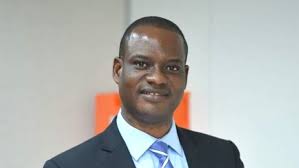
The Federal Government generated N33tn in revenue between January and October 2026, while about 90 per cent of Nigeria’s data is hosted abroad, highlighting the country’s growing revenue capacity and dependence on foreign digital infrastructure.
The Minister of Finance and Coordinating Minister of the Economy, Taiwo Oyedele, disclosed the figures while delivering the convocation lecture at the University of Uyo, Akwa Ibom State.
In a statement issued on Thursday by his Senior Special Assistant on Communications and Press Secretary, Maryann Duke, Oyedele attributed the record revenue performance partly to improvements in digital tax administration and the introduction of electronic invoicing.
He said the increased use of digital systems had strengthened revenue collection, improved tax compliance and enhanced efficiency across government institutions.
Oyedele, however, raised concerns over Nigeria’s dependence on foreign digital infrastructure, citing estimates from the Nigeria Data Protection Commission that as much as 90 per cent of the country’s data is hosted outside its borders.
He also disclosed, citing Nigerian Communications Commission figures, that Nigeria had recorded more than 157 million active internet subscriptions as of May 2026.
According to him, these connections generate enormous volumes of data through financial transactions, healthcare, education and taxation, creating significant economic opportunities for the country.
He warned that hosting most of this data abroad has implications for foreign exchange expenditure, job creation, technological skills development and Nigeria’s control over information generated by its citizens.
The minister compared the situation to Nigeria’s historical dependence on imported refined petroleum products, cautioning against allowing the country’s data to be processed abroad while digital services are subsequently sold back to Nigerians.
He called for increased investment in local data infrastructure, cybersecurity, technical expertise and predictable regulations to enable Nigerian businesses to capture greater value from the digital economy.
Oyedele stressed that digital sovereignty should not mean technological isolation but should position Nigeria to compete more effectively in international markets.
Addressing graduating students, he urged young Nigerians to move beyond consuming foreign technological products and become developers of solutions that address local and global challenges.
He described artificial intelligence as both a disruptive force and an opportunity for innovation, advising graduates to combine digital skills with critical thinking, creativity, sound judgement and integrity.
The minister also warned that irresponsible online conduct could affect employment opportunities, business relationships and professional credibility, as digital footprints increasingly shape public perception.
He urged universities to strengthen partnerships with government and industry to develop practical solutions in agriculture, energy, healthcare, environmental sustainability and digital services.
According to him, the performance of higher institutions should be measured not only by graduation figures and academic publications but also by businesses established, innovations developed and economic problems solved.
Oyedele outlined five priorities for graduates: continuous learning, value creation, integrity, responsible digital citizenship and active participation in national development.
“Your degree is evidence of what you have learned. Your competence will demonstrate what you can do. Your character will reveal who you truly are,” he told the graduating students.
He urged the graduates to combine innovation with ethical conduct and contribute to building an economy driven by local expertise, productive enterprises and technological advancement.
By David Torough, Abuja
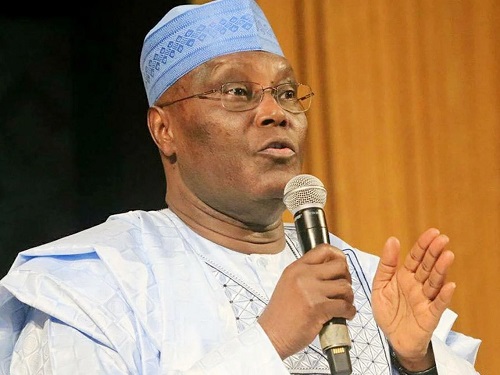
The Federal High Court in Abuja has nullified the leadership of the African Democratic Congress (ADC) led by former Senate President, David Mark, invalidating all decisions taken by the party under its leadership, including the emergence of former Vice-President Atiku Abubakar as its presidential candidate for the 2027 general elections.
The ruling, delivered on Thursday by Justice Peter Lifu, also invalidated the emergence of former Minister of Interior, Rauf Aregbesola, as the party’s National Secretary, the appointments of other national officers and the nominations of candidates for elective positions across the country.
The court further ordered the Independent National Electoral Commission (INEC) not to recognise or act on decisions taken at the ADC’s 99th National Executive Committee meeting held on July 27, 2025.
The judgment followed a suit marked FHC/ABJ/CS/1819/2025, instituted by former ADC Deputy National Chairman (North-East), Nafiu Bala Gombe, who challenged the process through which Mark and other members of the caretaker committee assumed control of the party.
Gombe argued that following the resignation of the party’s former National Chairman, Ralph Nwosu, he was constitutionally entitled to take over its leadership. He consequently asked the court to invalidate the actions of the Mark-led leadership and restrain Mark and Aregbesola from parading themselves as National Chairman and National Secretary, respectively.
Upholding the plaintiff’s case, Justice Lifu held that the emergence of the Mark-led leadership violated the ADC constitution, relevant provisions of the Electoral Act and the 1999 Constitution.
Speaking after the judgment, counsel to the plaintiff, Lukman Fagbemi (SAN), said the court had nullified all actions taken by the Mark-led leadership since July 2025.
He explained that INEC had been directed not to recognise or act on decisions taken at the party’s 99th NEC meeting, adding that the court found that the leadership did not emerge through lawful constitutional processes.
Another counsel to the plaintiff, Luka Musa Haruna (SAN), said the judgment effectively left the ADC without candidates for the 2027 elections, including the presidential, governorship, senatorial and House of Representatives contests, as well as state legislative positions.
He recalled that the interlocutory aspect of the dispute had gone to the Supreme Court, which directed that the matter be returned to the Federal High Court for determination of the substantive issues.
The latest ruling, however, has triggered a fresh legal and political confrontation, with Atiku declaring that he would challenge the decision at the Court of Appeal.
In a statement issued on Thursday by the Director of Strategic Communication of the ADC Presidential Campaign Council, Phrank Shaibu, titled ‘The Panic Is Real — Atiku’, the former Vice-President described the judgment as an attempt to weaken the opposition party and frustrate his presidential ambition ahead of the 2027 elections.
Atiku questioned why another suit was instituted against the Mark-led leadership despite an earlier judgment by the same Federal High Court, which he said had affirmed the leadership’s legitimacy.
He cited a judgment delivered on July 2, 2026, by Justice Musa Liman in suit number FHC/ABJ/CS/1637/2025, which he said dismissed a challenge to the Mark-led leadership on grounds relating to jurisdiction, standing and failure to exhaust internal party remedies.
According to him, the latest case amounted to an attempt to circumvent an existing judicial decision.
“Why, after that judgment, was another case filed to reopen the same dispute? This is a calculated attempt to circumvent a subsisting judgment. We will challenge this judicial manoeuvre at the Court of Appeal,” he said.
Atiku also questioned the timing of Thursday’s ruling, which came barely 24 hours after a large crowd attended the ADC campaign rally in Sokoto State.
He alleged that the judgment was intended to undermine the momentum generated by the rally and weaken his political support in Northern Nigeria.
“The timing of this judgment is no coincidence. It is part of a strategy to weaken my support in the North and frustrate a campaign whose message is resonating across the country,” he said.
The former Vice-President maintained that his political ambition was not restricted to Northern Nigeria, arguing that the economic hardship confronting Nigerians had created a national demand for political change.
He said the turnout at the Sokoto rally demonstrated growing support for the ADC’s promise to address the rising cost of living, adding that the campaign would proceed to Kebbi State and other parts of the country.
“My roots are in Northern Nigeria, but my candidacy belongs to all Nigerians. There is a difference between being from the North and being a candidate only for the North. Hunger and hardship do not respect regional boundaries,” he said.
Atiku urged his supporters not to be discouraged by the judgment, insisting that the party’s campaign activities would continue while the legal battle progressed.
He called on party members to remain peaceful, intensify house-to-house mobilisation and sustain the campaign for what he described as an affordable life for Nigerians.
Meanwhile, the ADC has rejected the judgment and indicated its intention to appeal, urging members to remain calm and law-abiding while the party explores available judicial options.
The ruling represents a major setback for the Mark-led faction of the ADC, coming at a critical stage in preparations for the 2027 general elections. Its implications for the party’s leadership, presidential candidacy and other electoral nominations will now be subject to further legal proceedings.
The Independent National Electoral Commission (INEC) has called for the partnership of the United Nations in combating disinformation in the 2027 general elections.
INEC Chairman, Prof. Joash Amupitan, made the call on during a courtesy visit by a United Nations delegation, led by Dr.
Leonardo Santos Simão, Special Representative of the UN Secretary-General for West Africa and the Sahel (UNOWAS), at the commission’s headquarters in Abuja on Wednesday.Amupitan also called for the UN’s partnership in enhancing early warning security monitoring and civic inclusion for women, youth and vulnerable groups in Nigeria.
He identified foreign information manipulation, fake news and targetted electoral disinformation as major emerging threats to democratic processes in West Africa.
“As we deepen our preparations for the 2027 general elections, the commission welcomes continued strategic support and collaborations with the United Nations in several key areas.
“These areas include electoral information integrity and countering disinformation, partnering on rapid response mechanisms and public awareness initiatives to combat foreign information manipulation and interference, the highlighted system manipulations and electoral disinformation.
“One of the greatest challenges to this relation is the issue of disinformation and misinformation, most especially when it has foreign components,” he said.
Amupitan reaffirmed INEC’s commitment to conducting free, fair, credible and transparent elections in 2027, assuring Nigerians that the commission was actively refining its operations to uphold the integrity of the ballot.
He highlighted key institutional reforms, technological updates and voter register cleanup exercises currently underway ahead of the upcoming elections.
The INEC chairman noted that Nigeria’s national voter register currently stands at 103 million, with young voters between the ages of 18 and 34 accounting for nearly 29 per cent of the electorate.
“Using technology, including the Bimodal Voter Accreditation System (BVAS), we have successfully identified and removed over 1.5 million ineligible registrations prior to reaching this 103 million mark.
“The cleanup process is ongoing, with display of the register for claims and objections in accordance with Section 19 of the Electoral Act. The final cleaned register will be published on Dec. 15,” Amupitan said.
The INEC chairman added that the commission was actively distributing permanent voter cards (PVCs) across the nation for new registrants, those who updated their details and voters requesting replacement cards.
To enhance operational efficiency and speed up voter accreditation on Election Day, Amupitan said that the commission had lowered the voter threshold per BVAS device from 1,250 to 800 voters.
He also noted that to build public trust and test technical readiness, INEC planned to conduct nationwide mock accreditation and election exercises prior to the general elections.
“Our objective is to ensure efficient logistics, transparent result management via the INEC Result Viewing Portal (IReV) and timely declaration of results.
“Election should be a source of peace, stability and nation-building,” the chairman said.
In his remarks, the head of the delegation said that the mission was aimed at offering moral and strategic support to Nigeria, as it prepares for the critical polls.
Simão said that given Nigeria’s strategic importance in West Africa, peaceful and successful elections in the country would serve as an inspiration to the entire sub-region.
He emphasised the need for Nigeria to conduct peaceful elections in spite of the diverse views and sentiments involved in any election.
“Elections are always challenging in any country because there are so many views, sentiments and emotions involved.
“Therefore, it is important to manage all of these varieties without putting in danger the peace and stability of the country. Particularly in our case here, the country Nigeria is being affected by terrorism and other sources of violence,” he said.
He said that the Nigeria election should not be another source of violence or burden for the country, another burden for the country, urging INEC to make sure that the elections were peaceful.
“Elections are always challenging because of the varied political sentiments and emotions involved.
“Given that Nigeria is already dealing with security challenges, the election should not be another source of violence or burden for the country,” he said.
Simão added that while the UN delegation would not act as official election observers due to mandate constraints, its presence in the country would continue through the election period to encourage positive behaviours and support peaceful political dialogue among political actors.
“Our objective is to give our contribution for successful elections. We need peaceful elections not only for the benefit of the people of Nigeria, but also of the region.
“Successful elections in Nigeria will be a sort of inspiration to other countries also to follow through. Therefore, the regional integration also happens at this level,” he said.(NAN)



CBN Introduces New Regulatory Framework for Non-Security VASPs, others
ShareBy Tony Obiechina, Abuja The Central Bank of Nigeria (CBN) has introduced a comprehensive regulatory framework for non-security virtual assets...


Group tasks Women Journalists on Reporting Impact of Coal Mining in Enugu
ShareFrom Sylvia Udegbunam, Enugu A non-governmental organisation, Renevlyn Development Initiatives, has called on women journalists in Enugu State to intensify...


RMAFC Chairman Tasks Directors, Others on Accountability, Productivity
ShareBy Tony Obiechina, Abuja The Chairman of the Revenue Mobilisation, Allocation and Fiscal Commission (RMAFC), Dr. Mohammed Bello Shehu has...


NDLEA Secures 18 Convictions, Arrests 130 Suspects in Kaduna
ShareThe National Drug Law Enforcement Agency (NDLEA), Kaduna State Command, said it secured 18 convictions and arrested 130 suspects for...
Gen Z No Longer Think for Themselves, Ayra Starr’s Mother Blames Social Media
ShareNene Aderibigbe, mother of Nigerian singer Ayra Starr, has criticised the influence of social media on Gen Z, claiming that...


Davido, Chioma Arrive in Style for Zlatan, Davita’s Wedding in Morocco
ShareNigerian music star, Davido, and his wife, Chioma Adeleke, have arrived in style in Marrakesh, Morocco, for the wedding celebration...


Lessons from the 2023 Presidential Elections: Obi Vs Wike
ShareBy Sunday Adelaja My goal in this article is to go beyond promoting a particular candidate like I did in...
Certificates Without Jobs: The Uncomfortable Reality of Nigeria’s Education System
ShareBy Idris Rufai Welcome to Nigeria, where young people are highly educated, professionally qualified and, unfortunately, increasingly experienced in the...

FG Generates N33tn Revenue in 10 Months – Oyedele
ShareBy Tony Obiechina, Abuja The Federal Government generated N33tn in revenue between January and October 2026, while about 90 per...


Terrorists Flee Strongholds, Military Block New Bases – DHQ
ShareBy David Torough, Abuja The Defence Headquarters (DHQ) has dismissed reports and suggestions of a ceasefire with Boko Haram terrorists,...