
POLITICS
Impeachment: Achuba Petitions Buhari, Heads to Court


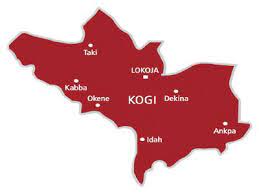
The impeached Deputy Governor of Kogi State, Mr Simon Achuba, has called on President Muhammadu Buhari to intervene in the political crisis currently rocking the state to prevent breakdown of law and order.
This is just as the embattled former Deputy Governor has said he would challenge his impeachment in Court.
Achuba spoke at press conference in Lokoja on Sunday, shortly after packing out of his official residence.
He said the president’s elderly intervention would save the state and the All Progressives Congress (APC) from an impending danger.
Achuba described his impeachment by the state House of Assembly as an act of extreme lawlessness, saying that he had instructed his lawyers to commence a judicial process to reclaim his seat.
He accused the executive and the legislative arms of government of treating him like a common criminal by calling policemen to barricade the entrance to his house.
The impeached deputy governor said that electricity supply to his official residence was also disconnected and power generator disabled to force him out few hours after his purported impeachment.
He insisted that swearing in anyone else as deputy governor amounted to illegality and a breach of the constitution.
“My purported impeachment last Friday by the state House of Assembly was unconstitutional and an illegality that will not stand the test of judiciary,” he said.
Meanwhile, the Assembly has accused members of the panel that investigated the allegations levelled against the former deputy governor of compromising the assignment given to them.
The Assembly’s Majority Leader, Hon. Hassan Abdulahi, made the accusation in a statement he issued on Sunday in Lokoja.
Based on the rules of procedure given to members of the panel, Bello said that their assignment was a fact-finding one, which did not require them to give any resolution.
“The panel submitted its report to us, and based on the report, we gave our verdict.
“The rule of procedure says that the panel was a fact finding one and as such, they were not to give judgment. This was in the rule of procedure which they accepted.
“They are not supposed to give any verdict in this circumstance. The decision of whether the deputy governor is guilty or not guilty is that of the House.
“If you look at Section 188(11), it says that the House of Assembly is the only authority which determines what gross misconduct is. It is not for the panel to determine,” the lawmaker explained.
He also expressed displeasure with the reports of the panel being put in public domain.
“How come that few minutes later, the whole reports were on social media, even before the deliberation of the House on the same report? Again, I should let you know that even the report that is in the public domain was not signed.
“In the rule of procedure, it was written boldly that the panel shall not give the report of its investigation to anybody except to the Assembly.
“We question the rationale behind the statement credited to the panel Chairman, Mr John Baiyeshea, on the issue and wonder what his interest is.
“So, if the panel has gone ahead to release the report to anybody, that means it has compromised.
“It is a known fact that the impeached deputy governor was on some national television stations, discussing issues that should be classified information about the state government, thus acting against the oath of secrecy he swore to uphold.
“Does that not amount to a gross misconduct?” he queried.
The majority leader claimed that Achuba confirmed before the panel that he did appear on those stations.
“Aside that, he (Achuba) also affirmed through an affidavit that he did commit the offence as alleged, and besides, the reports he submitted came in three parts. Then, how come the version on the social media is only parts I and II.
“In a nutshell, his actions already have negated the oath of secrecy. Is that not gross misconduct? Achuba also lied that he was not paid his salary when the schedules of payment showed clearly that he was paid.
“These and many more showed that he has negated his functions as deputy governor,” Bello said. (NAN)







By David Torough, Abuja
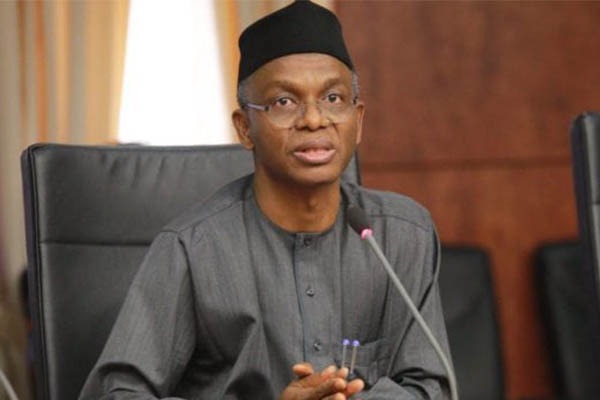
A former Kaduna State Governor, Nasir El-Rufai, has filed a N1 billion fundamental rights enforcement suit against the Independent Corrupt Practices and Other Related Offences Commission over the alleged unlawful invasion and search of his Abuja residence.
In the suit marked FHC/ABJ/CS/345/2026 and filed at the Federal High Court in Abuja on February 20 by his counsel, Oluwole Iyamu (SAN), El-Rufai is challenging the validity of a search warrant issued on February 4 by a Chief Magistrate of the FCT Magistrates’ Court.
He is asking the court to declare the warrant authorising the search and seizure at his residence invalid, null and void.
According to the application, the former governor contended that the warrant was “null and void for lack of particularity, material drafting errors, ambiguity in execution parameters, overbreadth, and absence of probable cause, thereby constituting an unlawful and unreasonable search in violation of Section 37 of the Constitution.”
El-Rufai listed the ICPC as the first respondent, while the Chief Magistrate of the FCT Magistrates’ Court, Abuja Magisterial District, the Inspector-General of Police, and the Attorney-General of the Federation were named as second to fourth respondents, respectively.
He is seeking seven reliefs, including a declaration that the invasion and search of his residence at House 12, Mambilla Street, Aso Drive, Abuja, on February 19 at about 2 p.m., allegedly carried out by operatives of the ICPC and the Nigeria Police Force under the disputed warrant, violated his fundamental rights.
Specifically, he asked the court to declare that the search “amounts to a gross violation of the applicant’s fundamental rights to dignity of the human person, personal liberty, fair hearing, and privacy under Sections 34, 35, 36, and 37 of the Constitution.”
He further urged the court to declare that “any evidence obtained pursuant to the aforesaid invalid warrant and unlawful search is inadmissible in any proceedings against the applicant, as it was procured in breach of constitutional safeguards.”
Among other prayers, El-Rufai is seeking an order restraining the respondents from relying on or tendering any items seized during the search in any investigation or prosecution involving him.
He also asked for “an order directing the 1st and 3rd respondents (ICPC and I-G) to forthwith return all items seized from the applicant’s premises during the unlawful search, together with a detailed inventory thereof.”
In addition, he is demanding “the sum of N1,000,000,000.00 (One Billion Naira) as general, exemplary, and aggravated damages against the respondents jointly and severally for the violations of the applicant’s fundamental rights, including trespass, unlawful seizure, and the resultant psychological trauma, humiliation, distress, infringement of privacy, and reputational harm.”
The former governor broke down the N1 billion claim into N300 million as compensatory damages for psychological trauma and emotional distress; N400 million as exemplary damages to deter future misconduct by law enforcement agencies; and N300 million as aggravated damages for what he described as the malicious and oppressive nature of the respondents’ actions.
He also sought N100 million as the cost of filing the suit, covering legal fees and associated expenses.
In his grounds of argument, Iyamu maintained that the warrant was fundamentally defective, citing lack of specificity in the description of items to be seized, material typographical errors, ambiguous execution terms, overbroad directives and absence of verifiable probable cause.
He argued that the alleged defects contravened Sections 143 to 148 of the Administration of Criminal Justice Act (ACJA), 2015; Section 36 of the ICPC Act, 2000; and constitutional protections against arbitrary intrusion.
According to him, “Section 143 of the ACJA requires that an application for a search warrant be supported by information in writing and on oath, setting forth reasonable grounds for suspicion,” which he said was absent in the present case.
He added that Section 144 mandates specific descriptions of the place to be searched and the items sought to prevent general warrants, but the warrant in question vaguely referred to “the thing aforesaid” without detail.
He further submitted that “Section 146 stipulates that the warrant must be in the prescribed form, free from defects that could mislead, but the document is riddled with errors in the address, date, and district designation.
“Section 147 allows direction to specified persons, but the warrant’s indiscriminate addressing to ‘all officers’ is overbroad and unaccountable.
“Section 148 permits execution at reasonable times, but the contradictory language creates ambiguity, undermining procedural clarity.”
Iyamu argued that the execution of the warrant on February 19 resulted in an unlawful invasion of his client’s premises and violated his constitutional rights.
He cited decided cases, including C.O.P. v. Omoh (1969) NCLR 137 and Fawehinmi v. IGP (2000) 7 NWLR (Pt. 665) 481, to support his position that evidence obtained through improper means is inadmissible.
In an affidavit supporting the application, Mohammed Shaba, a Principal Secretary to the former governor, deposed that officers of the ICPC and the Nigeria Police Force stormed the residence on February 19 under what he described as a defective warrant issued on or about February 4.
He averred that the “search warrant did not specify the properties or items being searched for,” and alleged that the officers failed to comply with procedural requirements before conducting the search.
Shaba further stated that during the operation, officers allegedly seized personal documents and electronic devices, causing “undue humiliation, psychological trauma, and distress.”
He added that none of the seized items had been returned and that the application was filed in good faith to enforce the applicant’s constitutional rights.
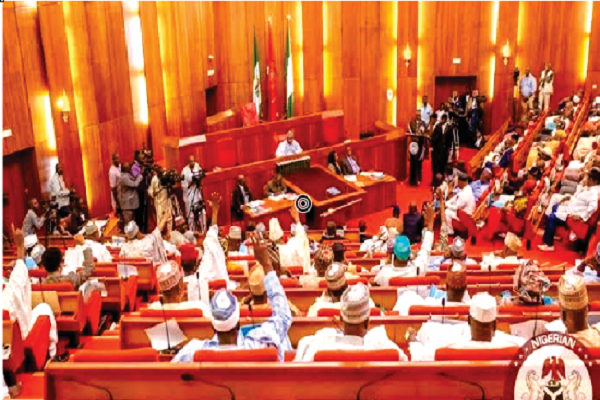
Chairman, Senate Committee on National Security and Intelligence, Sen. Yahaya Abdullahi, on Wednesday decried the envelope budgeting system for security and intelligence agencies.
Abdullahi expressed the concern when the Permanent Secretary, Special Services, Office of the National Security Adviser, Mohammed Sanusi, appeared before the committee for budget defence.
He said that the meeting was convened to examine the budgetary provisions that would fund the operations of the security and intelligence community for the 2026 financial year.
Abdullahi, while recalling that President Bola Tinubu recently declared a national emergency on security, said that the committee considered it necessary for budgetary allocations to the intelligence community.
“This is to ensure that it is commensurate with the challenges facing the nation,” he said.
The senator said that it was imperative for security agencies to perform optimally and address the myriads of increasing emerging security threatening national stability, adding that they needed to be properly funded.
“It is, however, disheartening to note that the security and intelligence agency’s budget is still subject to the vagaries of the envelope system of budgeting rather than on genuine needs and requirements,” he stated.
The lawmaker said that the non-release or partial release of capital funds allocated to security agencies in the 2024 and 2025 budgets was inappropriate.
“This has, no doubt, impacted very negatively on their capacity to procure materials and modern security equipment as well as their operational capabilities,” he said.
Abdullahi stressed the need for the National Assembly to provide the intelligence community the necessary resources to safeguard the nation, the citizens and their property.
A member of the committee, Sen. Orji Kalu (APC-Abia), commended the security and intelligence community for appearing before the committee promptly.
He said: “In previous instances, some invitees—especially certain ministers—have not adhered to scheduled times, arriving hours late and citing various excuses.
“Such delays negatively affect our work, especially during this critical budget period,” he said.
Kalu, while describing budget deliberations as serious matters, said: “delays hinder our ability to perform our constitutional duties effectively.
“I urge that this culture of punctuality and respect for institutional processes be maintained.”
Also speaking, the Permanent Secretary, Special Services, Office of the National Security Adviser, Mohammed Sanusi, said that the brief covered the Office of the National Security Adviser and its centres.
The centres, according to him, include the National Counter Terrorism Centre, National Cyber Security Coordination Centre, National Centre for Control of Small Arms and Light Weapons and Presidential Amnesty Programmes, among others.
Sanusi said that the key focus area for the intelligence community in the current financial year included, but not limited to, combating terrorism, banditry and kidnapping through enhanced intelligence and community-based strategies.
“It is noteworthy that the operations and the activities of the securities in the 2025 financial year are not without challenges.
“Some of these key challenges encountered by the intelligence community in the implementation of the 2025 budget include, among others, the envelope system of budgeting,” he said.
Sanusi said that the envelope system constituted a lot of constraints in terms of resource allocation to the intelligence community.
“There are irregular releases of the overhead cost, non-implementation of the release of the 2025 capital appropriation and irregular release of foreign service personnel shortfall,” he stated.
He, therefore, called for provision of adequate funding to the intelligence committee through a supplementary budget.
“This is to ensure timely and speedy response to issues of national security. We all agree that no nation can grow without adequate security,” Sanusi said.

Anambra State House of Assembly has given indication that it will lift the suspension on the member representing Ayamelum State Constituency, Bernard Udemezue.
Udemezue was suspended in August 2025 following accusations that he made social media posts revealing certain information about the workings of the House, including members’ allowances and emoluments.
The lawmaker had defended himself, saying his actions were based on his promise to his constituents that if elected, he would run an open door policy and render necessary accounts of his stewardship, including making his pay known.
He was initially suspended for six months, but after the suspension elapsed, he made attempts to resume, but was again sent out for another three months for not following the procedure, which involves an apology to the House.
Meanwhile, the Speaker of the Assembly, Somtochukwu Udeze, on Wednesday directed the House Committee on Rules, Ethics and Privileges to review the suspension.
Speaking during plenary, Udeze tasked the committee, chaired by the Majority Leader, Ikenna Ofodeme, to urgently re-examine the matter in line with the House resolution and report back to the Assembly on the next adjourned date.
The Speaker said that the lifting of the suspension is subject to review by the committee, which he said will assess the level of compliance by the affected member to the suspension meted out to him.
He said the committee will review these and report to the House on the next adjourned date for recommendations and consideration.
Udemezue is expected to serve out his suspension on February 26, 2026.



Eleme Kingdom Honours Prof. Sebastine Hon with Historic Chieftaincy Title
ShareBy David Torough, Abuja Jubilations and heartfelt tributes marked a historic celebration in Eleme as the Aleto Clan Council of...


Nigeria Democratic Congress Receives INEC. Registration Certificate
ShareThe Independent National Electoral Commission, INEC, on Monday presented the certificate of registration to the Nigeria Democratic Congress, NDC, one...


Navy Seeks Govt Partnership to Sustain Command’s Golf Tournament
ShareThe Nigerian Navy has called for the inclusion of the annual Eastern Naval Command (ENC) Golf Tournament in the tourism calendar of Cross River....


Uganda Plans to Link New Railway Line to Tanzania
ShareUganda plans to link a new railway line to neighbouring Tanzania, potentially opening up a new export route for minerals like gold, copper and iron ore. Uganda currently sends...


CJ Reassigns EFCC’s Cases against Malami as Judge Fixes Dates for Hearing
ShareThe Chief Judge (CJ), Federal High Court (FHC), Justice John Tsoho, has reassigned the two cases filed by the Economic and Financial Crimes Commission...


Kano to Install Toll Gates on Major Entry Roads
ShareFrom Aliyu Askira, Kano The Kano State Government has announced plans to install toll gates on major highways leading into the Kano metropolis as part of efforts to enhance security monitoring and...


Spotify Posts 163.5 Per Cent Streaming Growth in Nigeria
Share Five years after its inauguration in Nigeria, Spotify says music listening in Nigeria has grown at an average rate...

Irate Plateau Youths Block Highway over Killing of Nine Members
ShareFrom Jude Dangwam, Jos and Attah Ede, Makurdi Fresh waves of violence rocked parts of Plateau and Bauchi states on Sunday,...

El-Rufai Slams N1bn Suit against ICPC over Abuja Home Raid
ShareBy David Torough, Abuja A former Kaduna State Governor, Nasir El-Rufai, has filed a N1 billion fundamental rights enforcement suit...


Nigeria Records N5trn Post-harvest Losses in 2025
ShareThe Organization for Technology Advancement of Cold Chain in West Africa (OTACCWA) has disclosed that Nigeria recorded between N3.5 trillion...