
Foreign News
Inclusion Fundamental to Sustainable Peace, Rebuilding Societies in Wake of War – Guterres


UN Secretary-General António Guterres on Tuesday said inclusion was fundamental to ensuring sustainable peace and rebuilding societies in the wake of war.
Guterres said this when he addressed an open debate on diversity, statebuilding, and the search for peace, organised by Kenya.
Kenya holds the rotating Security Council presidency in the month of October.
Guterres told world leaders, ambassadors, and prominent global citizens meeting in the Security Council in New York that “for countries emerging from the horrors of conflict and looking to a better future – indeed for all countries – diversity must not be seen as a threat.
’’“It is a source of strength,” the secretary-general added.
While stressing that “peace is not found in a piece of paper”, but in people, the UN chief spoke of how inequalities and weak governance could create the space for intolerance and extremism capable of sparking violent conflicts.
According to him, inclusion on the other hand has the opposite effect.
By opening the door to inclusion and participation, “we take a giant step forward in conflict-prevention and peacebuilding,” he said.
“As countries look to build sustainable peace, they need to include and involve all segments of the population in the process of rebuilding communities and sustaining peace,” he added.
The meeting, chaired by Kenyan President Uhuru Kenyatta, was held because most situations on the Security Council’s agenda arise from internal conflicts in which identity issues—whether ethnic, racial, religious or socioeconomic–play a part.
Rwandan President Paul Kagame, former South African President Thabo Mbeki, and the first woman Deputy Speaker of Afghanistan’s Parliament, Fawzia Koofi, were among those briefing.
The secretary-general emphasised three areas for action, beginning with ensuring national institutions and laws work for all people, through protecting and promoting human rights.
“It means implementing policies and laws that protect vulnerable groups, including laws against discrimination based on race, ethnicity, age, gender, religion, disability, sexual orientation or gender identity,” he said.
Countries emerging from instability cannot afford to ignore the views of entire segments of their populations, which could fuel future resentments, the UN chief warned. Instead, they should explore ways to give greater voice to subnational regions.
“Governments must find ways to move people forward together, as one, through constant dialogue – recognising and respecting differences – even if this means devolving some areas of authority,” Guterres said.
UN operations on the ground, he said, work to keep dialogue open and flowing between state institutions and local populations “so that everyone can have a hand in shaping their country’s future.”
For his third point, the secretary-general stressed the importance of including women and young people because “building and sustaining peace requires their voices and actions.”
This is something which UN peacekeeping operations and special political missions strongly emphasise, he said.
For example, the UN mission in Somalia, UNSOM, has trained budding politicians from different political parties in the country. It also supported the authorities and women leaders in implementing a 30 per cent gender quota in national elections.
“As a global community, we must continue encouraging and supporting the full and active participation of women and young people in this journey,” the secretary-general said.
In his address, President Kagame of Rwanda underscored how peacebuilding is an ongoing process. While it will be impossible to prevent all conflicts, their intensity and impact can be minimised by remaining attentive to local needs and expectations.
“This means investing in the capacity of institutions and individuals so they can deliver the results that citizens expect and deserve,” he said, speaking via videoconference.
Peacebuilding is also not purely technical but deeply political and human, he further stated, and consideration must be given to the emotions and memories that various parties bring to the negotiating table.
“Multilateral organisations such as the United Nations and the African Union have a central role in many situations. Civil society groups, particularly those led by women also have a key role, as do business leaders.”
President Kenyatta of Kenya offered several recommendations for the international community, which included reviewing whether global institutions currently are “fit for purpose” in building a more inclusive world.
He also called for governments, the UN and social media companies to collaborate on combating hate speech and incitement.
“This can include an agreed global code of conduct by companies, and the development of early warning tools to detect escalation trends and to facilitate pre-emptive measures,” he said. (NAN)




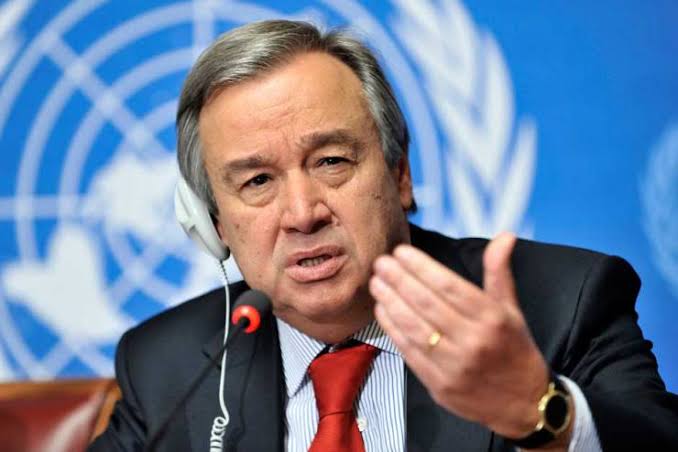
UN Secretary General António Guterres on Monday called for a peaceful future for Israelis and Palestinians ahead of the third anniversary of the Oct. 7 attacks by the militant organisation Hamas on Israel.
“Let this anniversary mark not only another year of mourning, but also a renewed determination to build a different future,” Guterres said in New York.
He said Israelis and Palestinians should be able to “live side by side in peace and security, with their rights, dignity, and aspirations fulfilled. “These horrors must never be repeated, “He added.On October 7, 2023, Hamas and other armed groups killed more than 1,200 Israelis and foreign nationals and abducted 251 people to Gaza.The attacks triggered the Gaza war, in which more than 74,000 Palestinians have since been killed, according to the Hamas-controlled health authority in Gaza.
A ceasefire has been in place since October 2025, although deadly attacks have continued.
Relations between the Israeli government and the United Nations remain deeply strained, with Israel accusing Guterres of bias and the UN chief repeatedly criticising Israel’s conduct in Gaza.
Guterres also paid tribute to the victims of the Oct. 7 attacks.
“Nothing can justify these atrocities,” he said.
“Their suffering, and the enduring grief of their families, must never be forgotten.”
The UN chief also highlighted the suffering of Palestinians in Gaza following the war.
“Their suffering, too, demands an end, now,” he said.
Guterres said the ceasefire had brought some relief but had yet to deliver security, adequate humanitarian assistance or a credible path to recovery and peace.
He urged all sides to fully implement their commitments and move to the next phase of the ceasefire.
“It is time for the ceasefire to become permanent. It is time to allow humanitarian assistance at scale.
“And it is time to respect international law,” he said.
“We must build the political path to lasting peace across the whole region.”
Kenya has confirmed its first case of Ebola, a Kenyan citizen who has been living in the Democratic Republic of Congo for the past seven years.
Health Minister Aden Duale said the patient, who fell ill a month ago, and was treated in several hospitals in DR Congo, died days after arriving in Nairobi.
Duale said the patient boarded a flight on Saturday and underwent normal public screening at the main airport in Nairobi before he was transferred by a relative to a hospital in the city.
More than 4,000 people have died from Ebola in DR Congo this year, in what is the second most deadly known outbreak of the disease.
Shortly after DR Congo declared an outbreak of Ebola in May, it was also reported in Uganda, where two people have died. However, the World Health Organization (WHO) declared the county free of the disease in August.
Since then, all cases of the disease have been declared in DR Congo.
The current outbreak has been caused by the Bundibugyo species of Ebola, which is relatively rare, with no known vaccine.
Duale confirmed that the Kenyan national had tested positive for the Bundibugyo species.
According to the minister, the patient first travelled by road from DR Congo to the Ugandan capital Kampala, where he boarded a flight to Nairobi
Duale said that after being taken to the Nairobi Hospital, the patient was transferred to an isolation facility which was built during the Covid-19.
It was there that the patient “developed fever, chills, intense fatigue and weakness, painful swallowing, muscle pain and bleeding under the skin”.
The patient died at 23:30 (20:30 GMT) on Monday and his burial is planned for later on Tuesday in line with public health safety protocols.
At least 28 contacts, including family members and healthcare workers, have been identified, while health authorities are tracing a further 23 passengers and four crew members who travelled on the same flight.
So far, WHO has recorded 4,082 deaths out of 8,463 cases since the emergence of the Bundibugyo species of the virus.
There are currently no approved vaccines or treatments for the species, which is highly infectious.
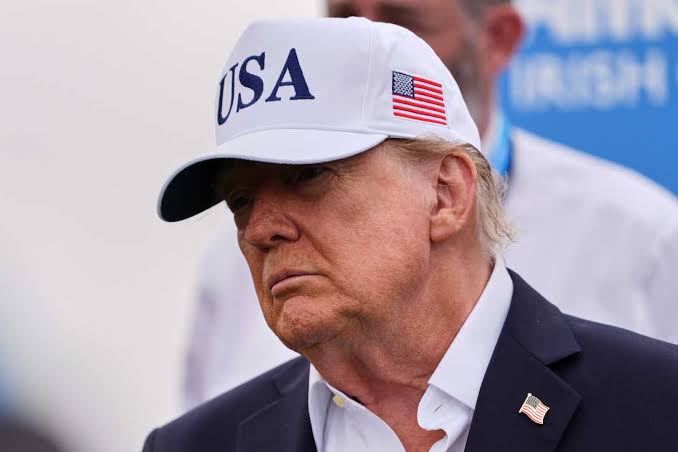
President Donald Trump has infused his ongoing feud with the White House press with a new level of acrimony.
Journalists from three major media outlets – CNN, Politico and MS Now – were denied access and had their press credentials confiscated on Saturday morning as they attempted to enter the White House grounds for work.
As media watchdog organisations and the White House Correspondents Association cry foul, Trump appears set to press ahead with a sweeping effort to punish these outlets.
In his Truth Social post announcing his decision on Friday, he said he was “banning” the organisations because “of their constant ‘reporting’ of fake news”.
In remarks later that day, he complained that “something is wrong with a country that can allow people to write purposely negative stories”.“If they want to write them, that’s fine,” he continued. “I don’t have to let them into the people’s house”, he said, referring to the White House.
The president’s frustration at the media, however, came after a week of setbacks in which major institutions handed him a series of losses across his agenda.
First, the Supreme Court blocked his plan to restrict mail-in voting ahead of the midterms. This prompted Trump to lash out at the court’s justices including those he had appointed. “These are not the people I interviewed to serve on the United States Supreme Court,” he said.
The Federal Reserve, the US central bank, then raised interest rates after Trump had spent months arguing they should be cut. This was followed by a judge ordering his administration to give 30 days’ notice before making any changes to the Kennedy Center arts venue in Washington DC after the president warned it could be “ripped down”.
These headlines, combined with approval ratings that recently sunk to record lows for his second term, suggest Trump is facing challenging political headwinds.
His latest attack on the press, however, raises clear legal questions.
The First Amendment to the US Constitution forbids Congress from “abridging” the freedom of the press. It is language that courts have long interpreted as preventing the government from discriminating against the media based on the content of their coverage.
All three targeted news outlets have promised to file lawsuits challenging Trump’s decision.
Although the breadth of this move is unprecedented, it is far from the first time the Trump administration has attempted to limit or deny access to the White House to members of mainstream media outlets.
In his first term, the administration revoked CNN correspondent Jim Acosta’s press credentials, setting off a legal battle that was ultimately resolved in the journalist’s favour. It also temporarily suspended the pass of a reporter who had a heated argument with White House adviser Sebastian Gorka – a move that also was subsequently blocked by the courts.
Last year, the White House banned reporters for the Associated Press from participating in the president’s press pool – which allows media outlets access to smaller in-town and travelling presidential appearances – because the newswire service would not follow Trump’s move to rename the Gulf of Mexico as the Gulf of America.
That dispute also led to a protracted – and yet to be fully resolved – legal battle, prompting the White House to change press pool rules to drop the guaranteed spot for all wire services.
The White House bans, however, represent a dramatic escalation.
The restrictions include access to the entirety of the White House grounds, not just the press pool. And they target entire news organisations, not just a single disfavoured correspondent.
While Trump has been clear about the motives behind his decision, he has shed little light on why he has acted now. He has regularly criticised his press coverage since he first entered national politics more than a decade ago, but he said on Friday there was no specific incident that prompted his announcement.
At the moment, however, the president is embattled.
Even beyond the week of clear setbacks, he is in the midst of an unpopular and difficult-to-resolve war of choice in Iran, which has led to a surge in energy and other consumer prices, deflating his standing with the American public.
Polls also suggest his party faces an uphill battle to retain control of the House of Representatives and perhaps the Senate in November’s crucial midterm congressional elections.
His attempts to improve the public’s mood by touting his accomplishments in campaign events and at his Republican Party’s convention earlier this month in Texas have, at least so far, proven ineffective.
There may be more behind Trump’s decision to lash out at the media this weekend. But it could also simply be an indication of presidential frustration in the face of events and circumstances, some of his own making, that are turning against him.



ASUSS Opposes NUT Strike in FCT, Urges Teachers to Ignore Stay-at-home Directive
ShareBy Laide Akinboade, Abuja The Academic Staff Union of Secondary Schools (ASUSS), Federal Capital Territory (FCT) Chapter, has dissociated itself...
Edo Varsity Lecturer Dies after Sex Romp in Hotel
ShareA senior lecturer at the Ambrose Alli University, Ekpoma in Edo State, Dr. Matthew Uwuigbe, has died under mysterious circumstances...

Over 84 Per Cent Nigerians willing to Vote During 2027 Elections – Yiaga
ShareYiaga Africa said 84 per cent of Nigerians intend to vote during the 2027 general elections, urging political parties to...


PNC 2026: NCDMB, DMG Affirm Collaboration with Bayelsa, Unveil New Activities
ShareFrom Mike Tayese, Yenagoa As preparations intensify for the 2026 edition of the Practical Nigerian Content (PNC) Forum, slated for...

Tinubu’s $700 Billion Mineral Resources Deal With America at Whose Interest?
ShareBy Hajia Hadiza Mohammed For some time now the hottest issue of debate in the Nigeria media space has been...

Atiku’s Production Subsidy: Has politics overtaken economics?
ShareBy Kayode Oladele Alhaji Atiku Abubakar, former Vice President of Nigeria and presidential candidate of the African Democratic Congress, (ADC),...

2027: Governors’ Backing Boosts Tinubu’s Chances, says Presidency
ShareBy Tambaya Julius, Abuja The Presidency has said the growing number of governors backing President Bola Tinubu has strengthened his...
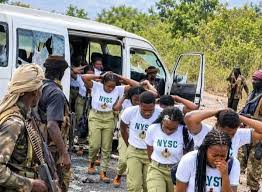

Security Operatives Rescue 20 Abducted NYSC Members in Imo
ShareBy Tambaya Julius, Abuja Security operatives have rescued 20 members of the National Youth Service Corps (NYSC) who were abducted...

Nigeria’s Oil Reforms will Unlock $50bn Deep Offshore Investments – Tinubu
SharePresident Bola Tinubu said recent reforms in Nigeria’s oil and gas sector are designed to unlock up to 50 billion...
Ododo Condoles Families of NAF Personnel, Armed Forces Over Ondo Crash
ShareFrom Joseph Amedu, Lokoja Kogi State Governor, Ahmed Ododo has commiserated with the families of the Nigerian Air Force personnel...