
COVER
INEC Faces 1,069 Election Lawsuits, *109 new political parties apply for registration

Independent National Electoral Commission (INEC) is facing 1069 election law suits, Daily Asset has learnt.
This is as 109 political associations have applied for registration as political parties with INEC.
INEC National Commissioner, Chairman, Information and Voter Education Committee, Mr. Festus Okoye who spoke at an electoral reform round-table organised by the Nigeria Civil Society Situation Room and the Kofi Annan Foundation in Abuja on Thursday, revealed that currently, INEC is slammed with 1069 election lawsuits.
He said: “One of the biggest challenges facing the commission is the large number of pre-election matters that are still pending in various courts of law.
“As at today, the commission has a total of 809 pre-election matters while we have just 800 post-election matters, so the implication is that we have more pre-election matters than post-election.
“As at yesterday, the commission has withdrawn and reissued over 70 certificates of return that were previously issued to those who were elected into the various states and national assembly positions.
“There are more that we are still withdrawing and more that we are still re-issuing, some of these things arose from the not too transparent party primary elections that were conducted by the various political parties.
“It is really a source of concern that up till today, there are still a number of cases arising from pre-election matters in courts,” he said.
Okoye said one of the things the commission is looking at is whether the fourth alteration to the Constitution of Nigeria would properly address the issue of pre-election matters.
He said this is because the fourth alteration, gave the court of first instance a total of 180 days within which to determine cases and issues arising from pre-election matters.
“But 180 days from the period of the conduct of party primary elections and the end of substitution period dovetailed into the conduct of elections and even beyond.
“This more or less distorts what the commission’s activities and also puts it on edge in terms of knowing which political parties would be on the ballot and which would not,” he said.
He said the commission is looking at a situation where it could shorten the regime of the determination of pre-election matters to make it possible for it to have some level of sanity before going into any major election.
On new political parties, he said the number of political associations waiting to be registered are more than the existing ones adding that if they are registered Nigeria would have over 200 parties in 2023 elections.
Okoye said that the issue of the number of political parties is a challenge because the ballot papers are getting longer and the result sheets are getting bigger and creating a big challenge for the voters.
He said: “So I think we need to have a national conversation to see whether we really need the number of political parties in existence in the country or not.
Meanwhile, Nigeria used about two million tonnes of paper to conduct the 2019 General Elections, an official of INEC has said.
“For the first time, we used close to two million tonnes of paper for the conduct of elections, that is paper that will fill about 60 and 70 aircrafts, Prince Adedeji Soyebi, INEC National Commissioner in charge of South West, said on Tuesday.
Soyebi, also the Chairman, Board of the Electoral Institute, INEC, raised the concern in Lagos at the INEC 2019 State Level Post Election Review Retreat.
The meeting had in attendance INEC management staff including heads of departments, electoral officers and their assistants and some collation officers in the state at the 2019 elections.
Soyebi said elections in the country had been too expensive due to mistrust among the stakeholders.
“We must look for a way to perfect the system. The build up to the election was very rancorous,’’ he said.
According to him, the number of woods cut to produce huge paper used for ballots, perfecting security features to currency standard, logistics and others, call for concern.
“Most of the things we do here are due to lack of trust. When we print out ballot paper, we print it up to currency quality with a lot of security features.
“We transport them as if we are transporting money with fully armed security apparatus, keep in central bank as if they are currency; all these are prices of mistrust among ourselves.
” This mistrust is costing the country very hugely. All these we must address as a nation; we cannot continue this wasteful expense because we don’t trust ourselves.
”It is just appropriate for us to take stock after a major exercise like this. In the history of elections in Nigeria, this is the first time we will be confronted with huge logistics problems,” he said.
Soyebi , who also frowned at huge number of petitions and litigation arising from party primaries and general elections, said that the country had a long way to go.
He said that full electronic voting would tackle most of Nigeria’s electoral challenges.
“Time waits for nobody; we need a dynamic electoral system. The dynamics of politics and elections keep changing in Nigeria every time.
“We have been clamouring for what is called full electronic voting. By now, our register is electronic; accreditation by the smart card readers is electronic.
“Honestly, in my opinion, if we can have electronic balloting, it will help the system, it will rest a lot of things,’’ he added.
He said in 2015, the total number of registered voters was about 70 million, and in 2019, about 84 million.
“If we project into 2023, we should expect about 100 million registered voters.”
Soyebi congratulated INEC staff for their performances in the 2019 elections in spite of challenges.
He said that the commission had started making preparation for 2023 general elections, adding that the first ballot would be cast in 2023, exactly 1, 332 days away.
“What we are here to do is to find out things that went right and look at those things that went wrong and find ways of correcting them.
“This review is going to translate into relationship with other stakeholders to find out what went right and what went wrong.
Mr Sam Olumekun, the Resident Electoral Commissioner of INEC in Lagos State, said at the event that there was the need for stakeholders to consider addressing voter apathy before 2023 elections.
Olumekun said that the meeting was aimed at conducting a postmortem of the 2019 elections.
He said that the objective was to review operational framework and provide a platform for knowledge sharing.
According to him, there are reports and comments on the conduct and outcomes of the elections, including those abusing INEC and those supporting it.
He said: “We need to look at all these reports and, in good conscience, comment on these reports. There have been massive allegations of inducement of voters and vote-buying.
“In my humble opinion, this is the effect of processes in the system, but must we not ask the question: If there is an effect, what is the cause?
“Another important issue is voter apathy. We have close to 6.6 million registered voters in Lagos.
“In each of those elections, we recorded barely one million people turning out to vote.
“This is a very important issue that we must look into. How can we mitigate this development?”






By David Torough, Abuja
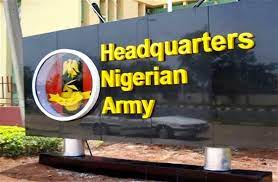
The Defence Headquarters (DHQ) said even though citizens of Nigeria have the constitutional right to carry out peaceful protest to express their feelings, it would not allow anarchy to destroy the country by some unscrupulous elements.The Director, Defence Media Operations, Maj.
-Gen. Edward Buba said this while briefing newsmen on the operations of the armed forces yesterday in Abuja. Daily Asset reports that on Oct. 20, 2020 soldiers opened fire on End SARS protesters at the Lekki toll gate (Admiralty Circle Plaza) in Lagos State causing the death of protesters.Buba alleged that the planned nationwide protest has the potential of degenerating into anarchy and reign of terror based on the situational analysis by the military high command.He said the military had thoroughly examined several factors such as whether or not the planned protest was motivated by opposition politics, independent parties, sovereign interference or terrorist groups amongst others.He said it was also examined to ascertain whether or not other organisations had fed on the frustrations of Nigerians to create the situation.“However, for us in the military, the constitution is clear as to how and when the military gets involved.“The constitution also clearly defines the roles and functions of the armed forces.“On the other hand, while citizens have a constitutional right to peaceful protest, they do not have a right to mobilise for anarchy in order to unleash terror.“The contemporary context of the planned protest is to shadow happenings in Kenya which has so far been violent and unresolved to date.“Given the situation, there are already indicators that unscrupulous elements are bent on hijacking the planned protest for violent purposes,” he said.Buba revealed that there were signs of status related violence such that persons with things as basic as smart phones and cars were targets, not leaving out those that own houses and shops.Other targets, according to him include: places of worship, businesses, markets, persons of other ethnic groups and members of opposing political parties among others.“Based on the foregoing, the level of violence envisaged is best described as a state of anarchy.“It is for this reason the armed forces will not watch and allow the nation spiral out of control to such low levels.“Basically, the military has been exposed to wars and has witnessed situations of anarchy in countries ravaged by war, particularly during ECOMOG or during peacekeeping operations.“It is for this reason that troops will act dutifully to forestall such ugly occurrences from happening in our nation,” he added.Buba urged the citizens to note that both the timing and the atmosphere of hardship in the country had made the planned protest different from others in the past.He added that it was incumbent upon all to quench the fires of violence rather than ignite them.“It is time to let cool heads prevail in order for the government to further remedy the situation and make our nation flourish again,” he added.On the operations of the military across the country, Buba said troops eliminated 106 terrorists, apprehended 164 others and rescued 103 hostages in different operations in the last one week.He said the troops recovered 125 assorted weapons and 1,522 ammunition, comprising 41 AK47 rifles, one PKT gun, 24 locally fabricated guns, 28 dane guns and one pump action gun.Buba said the troops recovered 755 rounds of 7.62mm special ammo, 623 rounds of 7.62mm NATO, 102 rounds of 7.62 x 54mm, 63 live cartridges and 247 empty cases of 7.62mm ammo.“Others are: 22 AK47 magazines, one baofeng radio, 22 vehicles, 31 motorcycles, two bicycles, 10 mobile phones and the sum of N2.9 amongst other items,” he said.In the North-east, Buba said the troops of Operation Hadin Kai recorded successes leading to the surrendering of Boko Haram/ISWAP terrorists and their families within the week.He said a total of 1,760 BH/ISWAP terrorists’ fighters and family members consisting 117 male adults, 345 adult females and 628 children surrendered within the week.According to him, troops neutralised 41 terrorists, arrested 27 suspects and rescued 16 kidnapped hostages as well as recovery of a cache of arms and ammunition.In the North-central, Buba said the troops of Operations Safe Haven and Whirl Stroke eliminated 12 insurgents, arrested 39 violent extremists and rescued 39 kidnapped hostages within the week.According to him, troops neutralised 41 terrorists, arrested 27 suspects and rescued 16 kidnapped hostages as well as recovery of a cache of arms and ammunition.In the North-central, Buba said the troops of Operations Safe Haven and Whirl Stroke eliminated 12 insurgents, arrested 39 violent extremists and rescued 39 kidnapped hostages within the week.He said the troops recovered several arms and ammunition comprising 21 AK47 rifles, 14 fabricated pistols, 15 dane guns, 285 rounds of 7.62mm special ammo, and 200 rounds of 7.62mm NATO.In the North-west, Buba said the troops of Operation Hadarin Daji neutralised 22 terrorists, arrested 23 terrorists and rescued 32 kidnapped hostages as well as recovered a cache of arms.Under Operation Whirl Punch, he said the troops neutralised eight terrorists, arrested 20 suspects and rescued 12 kidnapped hostages as well as recovered arms and the sum of N2.9 million amongst others.In the Niger Delta, Buba said the troops of Operation Delta Safe had maintained momentum against the activities of crude oil thieves, destroying several illegal refining sites and recovered stolen products.He said the troops recovered 802,200 litres of stolen crude oil, 121,900 litres of illegally refined AGO and 450 litres of DPK within the week.According to him, troops discovered and destroyed 20 dugout pits, 24 boats and 34 storage tanks, as well as recovered 56 cooking ovens, two speedboats, 14 pumping machines, 18 drums, 22 vehicles and motorcycles.He added that a total of 36 illegal refining sites were destroyed while a total of 32 suspected oil thieves and other violent extremists were apprehended in the region.In the South-east, the defence spokesman said the troops of Operation UDO KA neutralised three terrorists, arrested 22 violent extremists and rescued four kidnapped hostages.“Troops recovered one pump action gun, 31 rounds of 7.62mm special ammo, 23 cartridges, one baofeng radio, six mobile phones amongst other.“All recovered items, arrested suspects and rescued hostages were handed over to the relevant authorities for further action,” he said.
By David Torough, Abuja
Benue State Governor Hyacinth Alia has solicited the support of the Central Bank of Nigeria (CBN) in streamlining the state’s economy to engender economic growth, employment, the development of vital infrastructure and technology, as well as enhance financial inclusion.
The governor made the appeal when he paid a courtesy visit to the CBN Governor, Olayemi Cardoso in Abuja. This was contained in a Statement on Thursday by the Principal Special Assistant to the Governor on Media, Publicity and Communications Strategy, Bridget Tikyaa. He said that Benue State has vast opportunities in agriculture, solid minerals, and other areas which it wanted the CBN to support the government to fully harness for local and international markets.Alia also urged the apex bank to support the state with its expertise in developing appropriate data in all the key areas of development for proper planning and strategic engagement with investors.Alia told the CBN Governor that the state’s newly created Bureau of Statistics aims at enhancing the state’s statistical systems, boosting our economy through job creation and foreign exchange activities and supporting agricultural sector.The governor said, “We seek your support in providing system strengthening and equipment infrastructure for the Benue State Bureau of Statistics.“This support will not only benefit the Benue State Government but will also enhance the capabilities of the CBN and Nigeria at large.“A well-supported statistical system ensures we have reliable data to guide our economic policies and development strategies.”Alia reeled out other areas of support and collaboration with the CBN to boost the economy of Benue State.These include support for the Benue State Bureau of Statistics to generate accurate data and conduct analysis.The governor sought CBN’s support in implementing favourable monetary policies to stabilise the economy and control inflation.He also sought for the training and capacity-building programmes for financial managers and policymakers in the state to enhance their ability to manage the state economy more effectively.The governor requested the CBN to facilitate partnership with development finance institutions to fund large-scale projects such as agricultural mechanization, industrial parks, special economic zones, and major infrastructure projects to spur economic development across the state.Alia urged the apex bank to work with the Benue State Government to develop and implement policies that improve the business environment, reduce bureaucracy, and attract domestic and foreign investments.Other areas, he said, were in providing technical assistance and support for economic planning, budget management, and the implementation of economic reforms to strengthen the state’s economic framework.He said there was a need to encourage the adoption of digital finance solutions and innovations to enhance efficiency, reduce costs, and broaden access to financial services across the state.The governor appreciated the CBN for its support to the state, including the release of 60 trailers loaded with fertiliser, which was distributed to farmers to boost food production and achieve food security.In his remarks, Cordoso commended Alia for the visit and thanked him for the initiatives aimed at diversifying the economy.Cordoso noted that prevailing insecurity in food producing areas and high cost of transportation of farm produce are also contributing to the rise in food inflation in the country.He said the increasing activities of middlemen who often finance smallholder farmers, aggregate, hoard and move farm produce across the border to neighbouring countries, has contributed to the problem of scarcity of foodstuffs across the country.The CBN governor said there was a need to check such activities in order to address the food supply deficit in the Nigerian market and moderate food prices.The CBN governor assured the Governor that the bank would ensure credit development financial institutions, the Bank of Industry, Bank of Agriculture partner the state for more grants and loan facilities for effective growth and development in various sectors.He assured the governor that the CBN was ready to work with the Benue state government in various areas to boost the state’s economy.
By Lubem Myaornyi, Abuja
President Bola Tinubu extended his heartfelt commiserations to the family of the late Chief Emmanuel Iwuanyanwu who passed away yesterday.Chief Iwuanyanwu who was the President-General of Ohanaeze Ndigbo Worldwide was an accomplished businessman and notable politician.
Tinubu condoled with the Imo State Government, the friends and associates of the deceased, and Ndi Igbo over this irreparable loss. The president affirmed that the departed elder statesman will always be remembered for his remarkable legacy and prayed for the repose of his soul and comfort to his family. The son of the deceased, Jide Iwuanyanwu announced his demise in a statement yesterday in Owerri.The statement read, “The Iwuanyanwu family of Umuohii Atta in Ikeduru Local Government Area of Imo State announces the demise of our patriarch, Engr Chief Emmanuel Chukwuemeka Iwuanyanwu-Ahaejiagamba Ndigbo.“Chief Iwuanyanwu died on Thursday, July 25, 2024, after a brief illness. He was aged 82.“Chief Iwuanyanwu is survived by his wife Lady Princess Iwuanyanwu many children and grandchildren including Dr Mrs Nwadiuto Iheakanwa Managing Director Champion Newspapers. Details of the burial will be announced later by the family after due consultations.”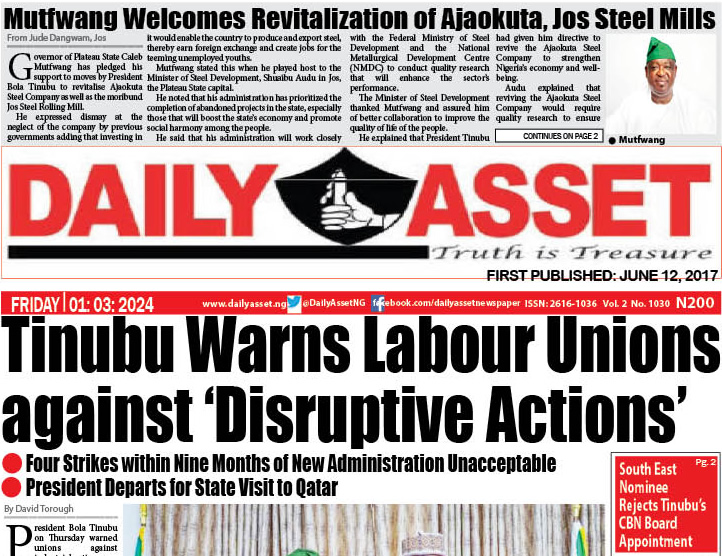
Tinubu Approves Management Unit for Health Sector Renewal Investment Initiative
SharePresident Bola Tinubu has approved the establishment of the Sector-wide Coordinating Office-Programme Management Unit (SCO-PMU) domiciled in the Office of...

FG Denies Slash in Students’ Allowances
Share The Federal Government says it has no plan to slash scholarship students’ allowances as recently projected in the media.The...

Planned Protests: CAN calls for calm and patience
ShareBy Laide Akinboade, Abuja The Christian Association of Nigeria, CAN, on Friday, has urged Nigerians to calm and patient with...

Senate Consultant Scores Benue LG Bureau High on Projects Execution
ShareThe Consultant for Senate Standing Committee on States and Local Government Administration, Engineer Kayode Adegbayo has described the quality of...

Doctor Mark Ogbodo: A Man Destined for Success
ShareBy Paul Ugah Henry Miller once said, “Every man has his own destiny, the only imperative is to follow it,...


Ignore Anti -government Protests, Wike Begs Abuja Residents
ShareBy Laide Akinboade, Abuja Minister of the Federal Capital Territory, Barr. Ezenwo Nyesom Wike has called on residents of the...
Reps Commit to Ensure Legislations for Better Skills Acquisition, Management
ShareBy Ubong Ukpong, Abuja The House of Representatives on Thursday pledged its continuous commitment to ensure legislations that would align...

Economic Sabotage: Senate Summons Petroleum Minister, NNPCl, CBN, NPA, Others for Interrogation
ShareBy Eze Okechukwu, Abuja The Senate is blowing hot over alleged economic sabotage by stakeholders within the petroleum sector, thus...
Dialogue with Organisers of August 1 Protest, AANI Urges FG
ShareBy Johnson Eyiangho, Abuja The Alumni Association of the National Institute (AANI) has advised the Federal Government to dialogue with...


Stigmatization: CSO Urges Kogi Gov to Assent Bill Protecting HIV Patients
ShareFrom Joseph Amedu, Lokoja Civil Society Organisation, Initiative for Grassroot Advancement in Nigeria (INGRA), has called on the Kogi State...