
NEWS
INEC’s By-elections and Lessons not Learnt


By Reuben Abati
The by-elections held across the country last Saturday in 16 constituencies across 12 states, in terms of the organisation, the process and outcomes would seem to confirm one painful truth, namely that Nigeria’s democracy is still inchoate, tentative, fledgling, and that we are not yet anywhere near the target of democratic consolidation in Africa’s largest democracy.
Students of Nigeria’s political history would readily recall that these were phrases used to describe and define Nigerian democracy after the return to democratic rule in 1999.
Nigeria had been under the clutches of military dictatorship for the better part of its life as an independent nation (January to July 1966; August 1966 to 29 July, 1975; 29 July, 1975 – 13 February,1976; 13 February, 1976 – 1 October, 1979; 31 December, 1983 – 27 August, 1985, 27 August, 1985 – 26 August, 1993; 1993 – 1998 and 1998 – 1999.Over a period of 39 years, there were brief, eventually truncated moments of democratic rule which occurred between 1960 -1966, 1979 – 1983, 26 August, 1993 – 17 November, 1993. With the annulment of the Presidential election of 12 June, 1993, considered the freest and fairest in Nigerian history, and the isolation of Nigeria within the international community, the populace turned against the Nigerian military, which under General Sani Abacha bared its fangs and imposed a reign of terror on the people.
The people revolted against the military establishment blaming soldiers for their authoritarianism, and everything that may have ever gone wrong with Nigeria.
Between General Ibrahim Babangida and General Sani Abacha, the Nigerian military was cast in the mould of an anti-people establishment which needed to be removed from governance.
The death of Chief MKO Abiola in detention, that is Abacha’s gulag, further inflamed passions, and the people were more urgent in demanding the exit of the military. General Abdusalami Abubakar who succeeded General Abacha had his work cut out for him: to hearken to the people’s demands and process the transition to democracy programmes which the military had been toying with, adopting all kinds of subterfuge.
On 29 May, 1999, the people’s aspiration was achieved with the swearing in of Chief Olusegun Obasanjo of the People’s Democratic Party (PDP), a former General as president.
The people were elated. They hailed the return to democratic rule as the second liberation. They dismissed soldiers as villains. They swore that the worst form of civilian rule is better than the best form of military rule. Civilian rule was seen as Nigeria’s “second liberation”, the first being freedom from British imperialism.
It is to the credit of Nigerians that for the past 36 years, the people have kept faith with democracy. But what is the quality of achievement? How have we fared? Democratic rule would seem to have brought a lot of development and growth, especially in the once troubled South South region, the civic society is relatively more open, with the people empowered to ask questions about governance and accountability, but after the various elections since 1999, the shadow of the military persists, and it may not be too cynical to argue that Nigeria’s democracy is still a work in progress, yet to mature and continues to raise fresh concerns about the Nigerian character.
Elections are central to the democratic process, and elite bargain. Military rulers impose themselves on the people through the path of violence, namely coup d’etats.
Civilian rulers acquire their legitimacy through the ballot box, a representative process that plays up the people’s right to choose from competing parties and candidates and determine their own future guided by the rule of law.
Elections in Nigeria since 1999, have remained problematic prompting repeated calls for electoral reform and the emplacement of a framework to guarantee integrity and accountability to achieve the goal of free and fair elections.
The search for this ideal has been elusive. Since 1999, every election season has been followed by debates about the need for reform to correct issues arising including operational inefficiencies, electoral fraud, rigging, violence, violation of electoral laws.
The tragedy is that the more reforms are introduced, the political elite and the state institutions, and the people themselves always find a way to circumvent well-intentioned attempts to improve the democratic space.
The Electoral Act of 2022, used for the 2023 general election, considered for example to be the most progressive framework since 2001 only resulted in greater uncertainty especially with the electronic transmission and collation of results, BVAS, IREV, and the INEC portal. Since that general election, and the litigations that followed both local and international election monitors and observers have been resilient in urging that more reform is needed ahead of the next general elections in 2027.
They argue, at various fora including interactive sessions with the National Assembly that electoral reform must be treated as a national emergency by the Tinubu administration.
Some of the recommendations include single day voting, the proper definition of electronic transmission, affirmative action for women, statutory enactments on technological innovations such as the INEC Election Results Viewing (IREV), BVAS and Smart Card Reader, as well as the establishment of a National Electoral Offenders Commission.
It goes without saying that an electoral system that works would build trust in the electoral system and strengthen the electorate, the prompt punishment of electoral crimes will check the reign of impunity during elections.
The urgency of the matter was signposted in the by-elections of Saturday, 16 August. The by-elections were as a result of deaths, resignations, or court-ordered re-runs after the 2023 general elections, conducted in line with Section 28(3) of the Electoral Act, 2022.
By-elections by their nature are smaller in scope, restricted as they are to specific constituencies – in the present instance 16 out of 360 Federal Constituencies and 109 Senatorial districts, 12 states out of 36 and the Federal Capital Territory and 32 Local Government Areas out of 774 LGAs.
A by-election is also necessarily an off-cycle, supplementary election, thus reducing pressure on the Electoral Commission. The main thing to note is that since 1999, both by-elections and general elections have all presented the same ambiguities and controversies. Nothing has changed. Rather, things are getting even more complicated.
According to INEC results, the APC, the ruling party won 12 of the constituencies out of 16, APGA won in two, PDP won in one, and NNPP in one.
This is very much after an established pattern: in Nigeria’s political space, the incumbent ruling elite either at the Federal or state level assume that it is their divine right to win every election that is conducted under their watch. Hence, sitting state governors would always win almost every seat during local government elections. Elections at the Federal level are greedily arranged for the party in power at the center.
This is the simple logic behind the power game and conflict at the heart of Nigeria’s democratic process. Since the announcement of the results, the opposition parties have been up in arms. The PDP, Labour Party, the African Democratic Congress (ADC), the Coalition of United Political Parties (CUPP) and others have protested that the elections were rigged and that there were widespread cases of electoral fraud, vote buying, manipulation, failure of INEC and other institutions.
In Kano, there is dispute over the Shanono/Nagwai state constituency by-election and the Ghari/Tsanyawa state constituency. APC and PDP have however, also called on INEC to cancel the by-elections in the two constituencies in Kano.
In Edo, the PDP rejects APC’s victory, citing irregularities with BVAS. In Anambra, APGA won in Anambra South Senatorial district and Onitsha North I state constituency by-election. The party is accused of vote-buying to rig elections by other political parties.
In Kaduna state, PDP says its members were abducted. In Edo Central Senatorial District, Governor Monday Okpebholo complained about malfunctioning BVAS machines. In Iperu-Remo, Ogun State, a Mitsubishi van was intercepted and a sum of N2. 5 million was found on the three occupants of the bus, money which they said they had collected from a man named “Political Solution.”
There were also threats of actual violence. In Nnewi South, the Deputy Governor and the Commissioner for Environment escaped being lynched by a mob who accused them of vote-buying. A total of over 333 thugs were arrested in Ogun, Kano, and Kaduna states. In Kaduna state, the APC recorded a clean sweep as it also did in Taraba, Niger, Jigawa, Ogun, Edo., Adamawa and Kogi.
The courts would soon be dragged into the brawl. In Adamawa, the PDP is poised to go to court over the Ganye state constituency by-election.
It also accuses the police of complicity. Chairman of the Adamawa state chapter of the ruling Peoples Democratic Party (PDP), Shehu Tahir has accused Assistant Inspector General of Police, Taiwo Adeleke of providing a cover for the APC.
The PDP Chairman is so incensed he is even threatening that if the Ganye by-election is not reversed by a court of competent jurisdiction, “democracy will come to an end in 2027.”
We hope not as that is not the aspiration or the hope of most Nigerians. Nigerians want an election process that will deliver good governance, not a process that is on sale to the highest bidder. The lesson of the past is that even the best crafted electoral framework will not work unless the people themselves are ready.
The people may claim that they love democracy, but they are not prepared for it. The professional political class is desperate, self-serving and greedy.
Our politicians and their Godfathers want power, not to serve the people, but to gain access and control state resources.
In a prostrate economic environment, where there are few opportunities for a large population, political jobs, either directly or by association have become the surest means of survival. The glamour of political office, the perks, the title provide enough reason for the thuggery and the psychotic obsession with winning by any means possible.
Every election season is a business cycle for everyone seeking to make a small fortune from the politicians. The electorate have become so cynical and distrustful of the political elite, they would readily sell their votes.
They collect money from whoever is willing to pay and at the end vote for the highest bidder. They are unapologetic; they fail to see that it is the future of the country that they are trading away by selling their conscience. More efforts should be invested in voter education.
There is poverty in the land, but the people have lost their conscience. The institutions, and the security men have their own motivations too.
In Nigeria’s strange political arrangement, electoral umpires accept that their job is to help the incumbent party or man in power win. The security agencies do not work for the state, they serve the man of power.
The aggrieved is advised to “Go to Court”, with both parties knowing that it is better to be declared winner in a Nigerian election than to be the loser and expect justice from the courts.
INEC needs to be overhauled, its operational processes need to be reviewed, and the word “Independent” in its title must become meaningful. Those who recommend a single day voting during general elections can now see that it would be impossible to adopt such a format for Nigerian elections.
If elections in just 16 constituencies in 12 states can be this problematic, the chaos of having elections in one day can be well imagined.
Electoral offenders must be sanctioned to check their impunity. After every election, the security agencies claim to have arrested many offenders, but there is hardly any further report about their prosecution or conviction.
The offenders being agents to influential political figures often escape the full wrath of the law. The impunity is so entrenched that known thugs or political enforcers are usually rewarded with patronage and positions by their sponsors. The landscape of power in Nigeria is sordid.
Those who are familiar with the subject have expressed the view that the August 16 by-elections offer intimations of what to expect in 2027, that is a bellwether.
The ruling APC, besieged on all fronts by a conspiratorial band of opposition politicians has just sent a signal that it would be difficult to uproot it from power. The tussle would be more intense in 2027, but the basic elements remain the same.
The Presidency has issued a statement commending INEC for conducting a hitch-free by-election that was devoid of violence.
But that is not the reading of the opposition parties. The Tinubu administration has been talking about legacy projects – the Lagos-Calabar Highway, six bus terminals across six geo-political zones (which is wasteful by the way), and the digitization of the education system.
In order of priorities, the best legacy President Bola Ahmed Tinubu can leave behind is to work towards ensuring a free level playing field in the next general elections, and enhance the integrity of the electoral process.
He must show that his ambition is not worth the agony of other Nigerians. It is up to him to show the way forward, and the people may perhaps learn from his example.
Reuben Abati, a former presidential spokesperson, writes from Lagos.
 | ReplyReply allForwardAdd reaction |
By Oluwaleye Adedoyin Grace
What is the value of a constitutional right that citizens struggle to enjoy? In Nigeria, the right to life is expressly guaranteed by the Constitution, yet thousands of citizens continue to lose their lives to terrorism, banditry, kidnapping and communal violence.
Communities are attacked, travelers abducted, families displaced and innocent people killed, often leaving behind questions about the government’s ability and willingness to protect those it governs.The tragedy is not merely that criminals continue to take innocent lives; it is that citizens are increasingly confronted with the fear that their safety may depend more on luck than on the protection of the state.
While government responses often come in the form of condemnations, security assurances and promises of decisive action, Nigerians continue to ask a fundamental question: What does the right to life mean when the state cannot adequately protect the lives it is constitutionally obligated to safeguard?Section 33 of the Constitution of the Federal Republic of Nigeria 1999 guarantees the right to life. However, the protection of this right must mean more than a constitutional declaration. It must also inform the actions, priorities and accountability of the institutions entrusted with public security.
This article examines the legal responsibility of the Nigerian state to protect life, the extent to which failures by public authorities may attract legal accountability, and whether the constitutional promise of the right to life is being matched by the protection Nigerians deserve.
The Constitution Promises Life. Does the Government Protect It?
The right to life is not a favor that the government grants to citizens; it is a constitutional guarantee. Section 33(1) of the Constitution provides that every person has a right to life and that no person shall be deprived intentionally of that right except in circumstances permitted by law. This provision establishes life as a fundamental right that the state is legally bound to respect.
However, the constitutional protection of life must be examined against the realities of Nigeria’s security crisis. According to SARI Global’s October 2026 security assessment, Nigeria recorded 612 security-related incidents and at least 835 confirmed fatalities across 36 states and the Federal Capital Territory in October alone. This represented an increase from the 587 fatalities recorded in September. Although these figures include combatants killed during armed engagements and other security-related deaths, rather than exclusively civilian casualties, they demonstrate the scale of the country’s security challenges.
Nigeria’s insecurity is not a recent development. The Boko Haram insurgency, which escalated into a violent campaign in 2009, has persisted for more than fifteen years. Similarly, rural banditry, which escalated in Zamfara State around 2011, has expanded across parts of the North-West and North-Central regions, bringing with it mass abductions, killings and attacks on rural communities. These developments raise a fundamental constitutional question: beyond prohibiting the unlawful taking of life, what responsibility does the state bear when citizens face persistent and foreseeable threats to their existence?
Section 14(2)(b) of the Constitution provides an important starting point by declaring that the security and welfare of the people shall be the primary purpose of government. This provision recognises that the legitimacy of government is inseparable from its responsibility to protect the people. However, it is important to acknowledge that Section 14 falls within Chapter II of the Constitution and is generally non-justiciable under Section 6(6)(c). It cannot, therefore, automatically serve as an independently enforceable fundamental right. Nevertheless, its constitutional significance in defining the purpose and responsibilities of government cannot be ignored.
More importantly, Article 4 of the African Charter on Human and Peoples’ Rights guarantees the inviolability of human beings and recognises the right to life and personal integrity. The Charter, which has been domesticated in Nigeria through the African Charter on Human and Peoples’ Rights (Ratification and Enforcement) Act, provides an additional legal foundation for the protection of life.
The African Commission on Human and Peoples’ Rights, in Social and Economic Rights Action Centre (SERAC) and Centre for Economic and Social Rights (CESR) v Nigeria (2001), explained that states have four levels of obligations concerning human rights: to respect, protect, promote and fulfil them. Particularly relevant is the obligation to protect, which requires governments to take measures against violations by private individuals and other non-state actors. In practical terms, the state cannot simply fold its arms where private actors threaten the lives and fundamental rights of citizens.
This distinction is crucial to the Nigerian situation. The government’s obligation to respect the right to life means that its own agents must not unlawfully deprive individuals of life. Its obligation to protect, however, requires appropriate measures against threats posed by others. Thus, the fact that a killing is committed by bandits, terrorists or kidnappers does not automatically remove the incident from the scope of the state’s human rights responsibilities.
The question is no longer whether Nigeria has laws guaranteeing the right to life. It does. The more difficult question is whether the institutions responsible for protecting that right are taking the reasonable measures required of them. A constitutional guarantee that does not translate into meaningful protection risks becoming a promise that exists more comfortably on paper than in the lives of those it was enacted to protect.
When Criminals Kill, Where Is the State?
Nigeria’s insecurity has evolved from isolated security threats into a persistent national crisis. From the Boko Haram insurgency in the North-East to banditry in the North-West, mass abductions along major highways and recurring communal violence in the North-Central region, the lives of Nigerians have become increasingly vulnerable. What makes the situation particularly troubling is not merely the frequency of these attacks, but the growing ability of armed groups to repeatedly target communities, displace residents and disrupt ordinary life.
The Boko Haram insurgency, which escalated into a violent rebellion in 2009, exposed serious weaknesses in Nigeria’s security architecture. The abduction of 276 schoolgirls from Chibok, Borno State, in April 2014 attracted international condemnation and brought the country’s security crisis to global attention. Years later, the mass abduction of students from Government Science Secondary School, Kankara, Katsina State, in December 2020, and the abduction of students from the Federal Government College, Birnin Yauri, Kebbi State, in June 2021, demonstrated that schools and educational institutions remained vulnerable to armed attacks.
Nigeria has continued to witness disturbing cases of school abductions by armed bandits and other criminal groups. On 17 November 2025, gunmen invaded Government Girls Comprehensive Secondary School in Maga, Kebbi State, abducting 25 female students and killing the school’s vice-principal. Just four days later, on 21 November 2025, armed men attacked St. Mary’s Catholic School in Papiri, Niger State, abducting 303 students and 12 teachers. Earlier, on 7 March 2024, more than 280 pupils and students were abducted from Kuriga, Kaduna State. The pattern continued in 2026, with reports of students abducted from schools in Borno State and other communities. These incidents are not merely statistics; they represent children whose right to education, personal liberty and security has been violently interrupted. These incidents raise an uncomfortable question: how many warnings and tragedies must occur before the protection of vulnerable communities becomes a demonstrable security priority?
The scale of the crisis is reflected in more recent figures. According to the European Union Agency for Asylum, drawing on Armed Conflict Location and Event Data (ACLED), Nigeria recorded 8,654 security incidents between January 2024 and December 2025. Of these, 4,829 involved violence against civilians, while 3,415 were classified as battles and 410 as explosions or remote violence. Borno, Katsina and Zamfara recorded the highest numbers of security incidents. These figures reveal that insecurity is not confined to one geographical location or one category of violence.
The situation has remained alarming in 2026. SARI Global’s October 2026 security assessment recorded 612 security-related incidents and at least 835 fatalities across the 36 states and the Federal Capital Territory. This represented a 42 per cent increase in fatalities compared with the 587 recorded in September. The report also documented 55 abduction events during October. Importantly, the fatality figure includes armed-group fighters killed during military operations and other security-related deaths; it should not be presented as a civilian death toll. Nevertheless, the figures demonstrate the intensity and persistence of the security crisis.
However, the problem extends beyond the number of reported deaths. The displacement of communities, destruction of livelihoods and restriction of movement reveal the wider consequences of insecurity. The European Union Agency for Asylum, relying on United Nations High Commissioner for Refugees (UNHCR) data, reported that approximately 3.58 million internally displaced persons were living in Nigeria as of August 2025. Conflict-related displacement continues to affect communities across the North-East, North-West and North-Central regions. Behind these figures are families forced to abandon their homes, children whose education has been interrupted and farmers who can no longer safely access their farmlands.
Kidnapping has also become an increasingly organized source of criminal revenue. In its 2026 assessment of Nigeria’s kidnapping crisis, ACLED observed that mass abductions involving more than ten people increased sharply in 2025 compared with 2024, averaging at least 100 incidents per quarter. It
further reported that armed bandits were responsible for more than 80 per cent of recorded mass abductions since the beginning of 2025. The implication is disturbing: kidnapping is no longer merely an isolated criminal activity but an increasingly organized enterprise sustained by ransom payments and the vulnerability of civilians.
The problem, therefore, cannot be reduced to the existence of armed groups. It must also include an examination of the effectiveness of the institutions established to protect citizens. Security agencies have conducted military operations, arrests and counter-insurgency campaigns. These efforts should not be disregarded. However, the existence of security operations does not, by itself, establish that communities are adequately protected. Where attacks repeatedly occur, roads become unsafe, schools remain vulnerable and residents receive little protection despite credible warnings, the effectiveness of existing security measures deserves serious scrutiny.
The government cannot reasonably be expected to prevent every criminal attack. However, citizens should not have to accept recurring massacres, mass abductions and the displacement of entire communities as an unavoidable feature of national life. The real concern is whether security institutions are identifying threats, responding to credible intelligence, deploying adequate protection and taking effective steps to prevent the recurrence of known attacks. When communities repeatedly become targets, the question is no longer simply how many criminals are operating, but what the institutions responsible for protecting those communities are doing about it.
Can Government Be Held Legally Responsible for Failing to Protect Lives?
The fact that a criminal, rather than a government official, takes a person’s life does not automatically absolve the state of responsibility. Human rights law recognises that the obligation to protect life extends beyond preventing unlawful killings by government agents. It also requires governments to take reasonable measures to protect individuals against foreseeable threats posed by private persons and criminal groups. The critical issue, therefore, is not simply who committed the killing, but whether the government knew or ought to have known of the danger and failed to take reasonable steps to prevent it.
The African Commission on Human and Peoples’ Rights provides an important foundation for this position. In Social and Economic Rights Action Centre (SERAC) and Centre for Economic and Social Rights (CESR) v Nigeria (2001), the Commission affirmed that governments have a duty to protect citizens against harmful acts committed by private individuals. This obligation requires more than enacting laws against criminal conduct; it demands positive action to prevent violations and ensure effective enforcement of existing protections.
More specifically, the African Commission’s General Comment No. 3 on the African Charter’s right to life explains that a state may incur responsibility for killings committed by non-state actors where it fails to exercise due diligence to prevent them or ensure proper investigation and accountability. It further recognises the state’s responsibility where authorities knew or ought to have known of an immediate
threat to life but failed to take measures that might reasonably have prevented the deaths. This is particularly significant for Nigeria, where repeated attacks on communities and mass abductions raise questions about the adequacy of intelligence gathering, preventive security measures and responses to credible warnings.
The European Court of Human Rights also addressed this question in Osman v United Kingdom (1998). The Court recognized that the right to life could impose a positive obligation on state authorities to take preventive operational measures where an individual faces a real and immediate risk to life from the criminal acts of another person. It explained that responsibility may arise where authorities knew or
ought to have known of the risk but failed to take measures within their powers which, judged reasonably, might have been expected to avoid it. Although the European Convention on Human Rights does not govern Nigeria, the reasoning in Osman offers a useful persuasive illustration of how positive obligations to protect life may operate.
This principle is important, but it must not be misunderstood. Government cannot be held automatically liable for every murder, kidnapping or terrorist attack occurring within its territory. Such an interpretation would impose an impossible obligation on the state to prevent every criminal act, regardless of its resources, the unpredictability of human conduct or the circumstances surrounding an attack. The relevant inquiry is whether there was a sufficiently foreseeable threat and whether the authorities failed to take reasonable measures within their powers.
For instance, where security agencies receive credible intelligence about an impending attack on a community, possess the operational capacity to respond, but fail to take reasonable protective steps, the circumstances may raise a legitimate question of state responsibility. The same concern arises where repeated attacks reveal an identifiable pattern of violence, yet authorities fail to investigate the pattern, strengthen protection or take reasonable steps to prevent its recurrence. A government cannot indefinitely treat recurring and foreseeable threats as isolated surprises. Where killings are left unexplained, perpetrators remain unidentified and victims’ families are denied meaningful access to justice, the state may incur a separate responsibility for failing to fulfil its investigative and accountability obligations.
Ultimately, the law does not demand that the government guarantee a society entirely free from crime. It demands that government exercise due diligence, respond to foreseeable threats and ensure accountability when lives are unlawfully taken. The government may not be responsible for every bullet fired by a criminal, but it must answer for its own failures where it had the knowledge, authority and reasonable opportunity to prevent the loss of life.
Who Answers for the Dead?
The death of a person does not end the state’s responsibility to account for violations of the right to life. For families who lose loved ones to unlawful killings, the tragedy is often followed by another struggle:
obtaining answers, securing investigations, identifying those responsible and accessing justice. In many instances, families are left to mourn without knowing whether anyone will ever be held accountable. The question is not merely who killed their loved ones, but whether the law provides a meaningful avenue for redress when the state fails to protect them or its agents are implicated in their deaths.
Section 46(1) of the Constitution provides a mechanism through which persons whose fundamental rights have been, are being or are likely to be violated may approach a competent High Court for redress. Similarly, the Fundamental Rights (Enforcement Procedure) Rules 2009 provide a framework for enforcing rights guaranteed under Chapter IV of the Constitution and the African Charter. These provisions are important because constitutional rights should not exist without accessible procedures through which their violations can be challenged.
A particularly significant decision is Dilly v Inspector-General of Police and Others (2016). The Court of Appeal recognized that the next of kin of a deceased person could institute proceedings to enforce the deceased’s right to life. The Court reasoned that it would be absurd to deny the right to seek redress simply because the person whose life was unlawfully taken could no longer approach the court personally. Such an interpretation would render the right to life practically unenforceable precisely when its violation is most complete.
The courts have also demonstrated that compensation is an available remedy where violations of the right to life are established. In Chia and Others v Nigeria (2018), the ECOWAS Court of Justice found that the unlawful killing of Ikyase Chia by state agents violated his right to life under Article 4 of the African Charter. The Court also condemned the failure to investigate and prosecute those responsible and awarded ₦50 million in compensation to the applicants. This decision demonstrates that the responsibility of the state does not end with acknowledging that a life has been lost; it extends to accountability and appropriate reparation where a violation is established.
However, an important distinction must be maintained. Where a person is killed by private criminal actors, the state is not automatically liable to pay compensation simply because the killing occurred within its territory. The family would need to establish a legally recognized basis for the state’s responsibility, such as a failure to exercise due diligence in the face of a foreseeable threat, or a separate failure to investigate the death effectively. Where state agents are directly responsible for the killing, the legal position is different because the conduct is attributable to the state.
Unfortunately, the existence of legal remedies does not mean that obtaining justice is straightforward. Families may lack the financial resources to pursue litigation, struggle to obtain official records and encounter difficulties identifying witnesses or securing evidence. In communities affected by prolonged insecurity, access to legal representation and functioning judicial institutions may itself be limited. Consequently, the people most affected by violations of the right to life may also be those least equipped to challenge them.
The purpose of legal accountability is not to place a monetary value on human life. No amount of compensation can restore a murdered parent, child, spouse or sibling. Rather, compensation, effective investigations and judicial accountability serve to recognise the violation, provide some measure of redress to surviving relatives and discourage future abuses. A society cannot claim to protect the right to life while leaving the families of those whose lives have been unlawfully taken to fight endlessly for answers.
Conclusion
The right to life must be more than a constitutional provision recited after every tragedy. It must translate into practical protection, timely intervention and effective accountability. Where institutions fail to prevent foreseeable threats, those responsible must answer for their failures. Government cannot continue to offer condolences where its citizens need protection, or issue promises where accountability is required.
The Constitution does not merely recognise the value of human life; it places an obligation on the State to protect it. Nigerians should not have to die before their lives become a matter of national concern. Democracy governance news
A government that cannot protect the lives of its citizens must, at the very least, be held accountable when it fails. The right to life must be lived, not merely written.
From Mike Tayese, Yenagoa
More than 100 Oil-Producing Communities in Bayelsa, and their Representatives, has accused Renaissance Africa Energy Company Limited, of withholding document of the contract plan, the meeting was supposed to be an opportunity to reclaim what they described as their collective economic rights.
Traditional rulers, Community Chairmen, youth and women leaders from the four kingdoms of Kou, Iduwini, Mein and Basan West had gathered to demand the release and renewal of the Community Content Plan guiding the distribution of contracts and other opportunities arising from oil operations in the EA/EJA fields.
Daily Asset recalls a week ago, that Traditional Rulers, Community leaders, Youth leaders and other stakeholders from the four kingdoms hosting the EA /EJA oil field, endorsed the Community Content Plan Management Committee (CCPMC) as the legitimate body responsible for coordinating benefits accruing to the host communities.
The meeting, held with the Joint Task Force (JTF) Operate Delta Safe, which is mediating the dispute between the communities and Renaissance Africa Energy Company, exposed growing frustration among stakeholders over alleged manipulation of contractual opportunities and benefits meant for indigenous people.
At the centre of the disagreement is the Community Content Plan, which the communities say expired almost a year ago and must be renewed to guarantee transparency, accountability and fair access to opportunities.
Speaking on behalf of the stakeholders, Chief Raphael Lamaleti, an indigene of Letugbene in Iduwini Kingdom, recalled that the host communities had enjoyed arrangements that allowed indigenous contractors from different communities to participate in oil-related businesses during the period.
“The operations were managed by Shell Petroleum Development Company (SPDC), before the transition to Renaissance.
He said the arrangement initially provided opportunities for local contractors and gave the communities a sense of inclusion in the economic activities taking place in their territory.
Lamaleti alleged that the system had gradually been undermined by individuals working in collaboration with some company staff, who he accused of manipulating the Community Content Plan and hijacking opportunities intended for the wider host communities.
He stated that the stakeholders were therefore demanding a renewed document that would clearly establish how contracts and other benefits would be distributed among the four kingdoms.
“The renewed plan must be endorsed by Renaissance and legitimate representatives of the host communities to prevent a situation where a few individuals allegedly monopolise opportunities meant for everyone.
Lamaleti said that the communities had already consulted their traditional rulers, regents, community chairmen, youth presidents, women leaders and other opinion leaders before presenting their position.
He expressed disappointment that Renaissance reportedly failed to make the document available at the meeting, despite expectations that it would be presented for examination and necessary action.
The Chairman of Letugbene Federated Community, Job Asusuwie, said that the immediate priority is to hand over the document to a committee already nominated by the communities and formally inaugurated to oversee its implementation.
Speaking on behalf of the forum of community chairmen across the EA/EJA fields, Asusuwie said the chairmen had completed the necessary consultations before nominating representatives from the different communities to constitute the committee.
He maintained that the committee was established through due process and had the backing of the host communities’ leadership.
According to him, the committee was set up in response to what he described as years of alleged manipulation of employment and contractual opportunities in the oil fields.
He said the chairmen were determined to ensure that benefits from oil operations reached the grassroots rather than being controlled by a few individuals.
He called on the JTF to give Renaissance a short deadline to produce and hand over the Community Content Plan to the inaugurated committee, warning that the communities might explore other lawful options if the company failed to comply.
Also speaking, the Acting Paramount Ruler of Agge Community, Victor Disi, said the communities’ immediate concern was to obtain the document so that the committee could examine it and begin its assignment.
Disi appealed to all stakeholders to support the process, stressing that the demand was intended to promote peace and stability in the affected communities.
Similarly, Chief Nathan Daniel of Donbiri Community Development Committee said he attended the meeting specifically to secure the document for the already constituted committee.
He expressed disappointment that the document remained unavailable despite the communities’ readiness to commence work.
Daniel urged Renaissance management and the relevant authorities to ensure that officials responsible for the document made it accessible to the committee without further delay.
The Chairman of the Youth Presidents’ Forum, Sylvanus Joseph, condemned what he described as the continued personalisation of benefits meant for the host communities.
Speaking on behalf of the four clans of Iyeku Community and its youths, Joseph, expressed concern that some traditional leaders were allegedly allowing individuals to influence decisions concerning benefits that should serve the collective interests of the people.
He said the youths had reached a point where they could no longer tolerate what they considered the manipulation of opportunities meant for their communities.
They insist that their agitation is not intended to disrupt oil operations but to secure accountability, fairness and meaningful participation in decisions affecting their livelihoods.
“As the JTF mediation continues, attention will now turn to Renaissance management and whether the company will release the disputed document within the period demanded by the communities.
From Joseph Amedu, Lokoja
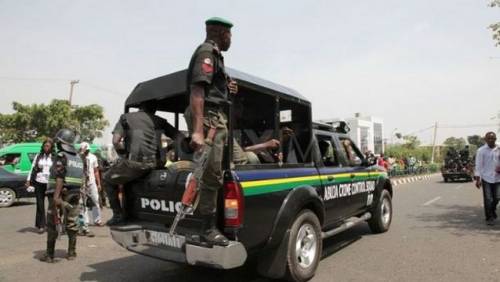
The Kogi State Police Command has declared a 25-year-old commercial motorcyclist, Siraka Auwal, missing.
Auwal, a resident of Sarki Noma, Lokoja, left home for work on November 11, 2026, and has not been seen since.
In a statement by the Police Public Relations Officer, Saliu Oyiza Afusat, the command described Auwal as brown in complexion, of average height, with no tribal marks on his face.
He speaks Hausa fluently and a little English.
The statement said Auwal left home with his red Bajaj Boxer motorcycle with registration number DAV 924 QB.
The command appealed to anyone with useful information on his whereabouts to report to the nearest police station or contact the PPRO on 08107899269.


A Right to Life, But at What Cost?
ShareBy Oluwaleye Adedoyin Grace What is the value of a constitutional right that citizens struggle to enjoy? In Nigeria, the...
Bayelsa Oil Communities Accuse Renaissance of Withholding Contract Plan
ShareFrom Mike Tayese, Yenagoa More than 100 Oil-Producing Communities in Bayelsa, and their Representatives, has accused Renaissance Africa Energy Company...


Police Declare 25-Year-Old Okada Rider Missing in Lokoja
ShareFrom Joseph Amedu, Lokoja The Kogi State Police Command has declared a 25-year-old commercial motorcyclist, Siraka Auwal, missing. Auwal, a...
African Ministers Establish Common Communication Front, Revive Annual Continental Meetings
ShareBy David Torough, Abuja African Ministers of Information have called for a coordinated continental communication framework to combat misinformation, strengthen...
Delta Targets Higher Oil Production, Improved Host Community Benefits
ShareThe Delta Government has pledged to boost oil production, improve host community benefits and sustain peaceful operations in the state’s...


Police Arrests Four for Allegedly Killing 14-year-old Boy over Inheritance
ShareFrom Aliyu Askira, Kano The Kano State Police Command has arrested four suspects, including a woman, over the alleged abduction...


Court Sentences 39-year-old Driver to Five Years in Prison over Theft
ShareFrom Mike Tayese, Yenagoa A Bayelsà State High Court sitting in Yenagoa has sentenced a 39years old Driver, Perelayefa Nelson...


Oborevwori Woos Warri, Uvwie Ahead of 2027 Polls
ShareFrom Francis Sadhere, Delta Delta State Governor, Rt. Hon. Sheriff Oborevwori, has called on residents of Warri and Uvwie to...
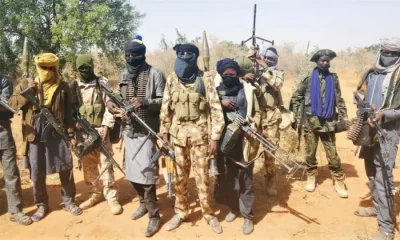

Hoodlums Set Ablaze Ukana Mbak Ukot Village Head Ancestral Home
ShareFrom Christopher Tom, Uyo The indigene of Ukana Mbak Ukot Community in Odoro Ikot Clan, Essien Udim Local Government Area...


Constructive Criticism Strengthens Democracy, Good Governance, Says Diri
ShareFrom Mike Tayese, Yenagoa Bayelsa State Governor, Douye Diri has described objective and constructive criticism as a critical tool for...