
Agriculture
Inflation: Experts Seek Extension Workers for Farmers

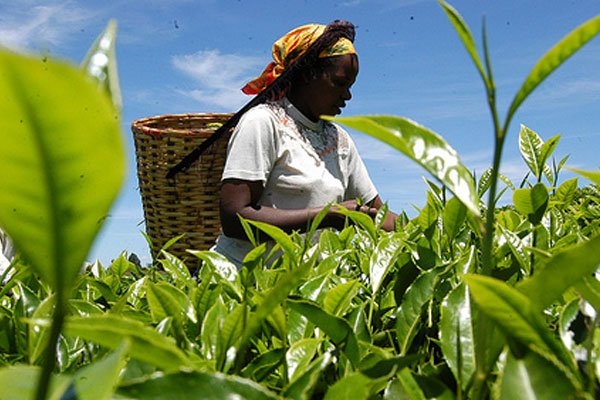
Some financial experts have urged the Federal Government to enhance small holder farmers with agric extension workers to boost food supply and check inflation.
They said this in interviews with the News Agency of Nigeria (NAN) on Friday in Lagos.
NAN reports Nigeria’s inflation rate dropped for the eighth consecutive month in November to 15.
40 per cent from 15.99 per cent recorded in October.The prices of goods and services measured by the Consumer Price Index increased by 15.40 per cent (year-on-year) in November 2021.
The National Bureau of Statistics also said the composite food index rose by 17.
21 per cent in November 2021 compared to 18.30 per cent in November 2020.The Senior Manager, Nissi Agro Allide Services, Mr Nnamdi Ifekwe, said enhancing small holder farmers with agric extension workers was crucial for their growth.
“Having more extension workers to educate our farmers on recent farming innovations will change the narrative.
“Then we can begin to achieve food sufficiency and the food induced inflation will abate,” he said.
He noted that the Federal Government should expand its loan schemes to accommodate more farmers in the country.
“Allowing more farmers to access the Federal Government loan schemes will ensure they grow beyond subsistence levels.
“Operating above subsistence level is key to achieve food security in the country,” he said.
Also, the Chief Executive Officer, Ogu Investment, Mr Mosses Igbrude, has said cost of logistics was one of the factors triggering inflation in the country.
“The cost of logistics has risen arbitrarily as moving commodities across the country is too expensive.
“This is responsible for the cause of rise of commodities in the country,” he said.
He noted the apex bank should reorganise the Anchor Borrowers’ scheme for it to have serious impact on the economy.
He also suggested that the Federal Government should continue to endeavour to improve the insecurity situation.
“Ensuring that the security condition gets better will halt the rural urban migration presently in the country,” Igbrude said.
He said that many young people would return to the hinterland and be engaged meaningfully if security improves. (NAN)









Some residents in Lagos State have expressed concern over the recent surge in the price of tomatoes, forcing many households to adopt alternatives.
The residents made their views known in separate interviews on Wednesday in Lagos.
A market survey showed that a 50kg basket of tomatoes now sells between N115,000 and N125,000, compared to between N35,000 and N40,000 recorded last month.
Olachi Igwe, a resident of Ago Palace, said the scarcity and high cost of tomatoes had disrupted her household’s meal plans.
“I contacted my usual vendor, but she said tomatoes were scarce and difficult to source.
“A small bowl we used to buy for between N3,500 and N4,000 now sells for as high as N6,000 to N7,000, when available.
“For now, my family will resort to palm nut stew (ofe akwu) until prices stabilise,” she said.
Another resident, Mercy Okeleye of FESTAC, said although her family prefers fresh tomatoes, rising prices have forced her to consider cheaper options.
“I cannot do without fresh tomatoes because of the taste, but I may have to buy broken ones, popularly called ‘esha’, which are relatively cheaper.
“I do not consider tomato paste a suitable substitute because it is not purely made from tomatoes,” she said.
Also speaking, Tope Babalola from Dopemu, said she might adjust her cooking methods if prices remain high.
“I have not bought tomatoes in over a month, but if the price is still high, I will use more onions and peppers.
“I will not resort to artificial additives; I prefer natural ingredients for my meals,” she said.
Joan Ogugua, another resident, said she had already switched to tomato paste to cope with the situation.
“I asked my son to buy tomato paste for our meals. I cannot justify spending excessively on fresh tomatoes when other basic needs must be met,” she said.
Also, Oge Ugwu, a civil servant at Lekki, said she would resort to cucumber stew with the recent price hike.
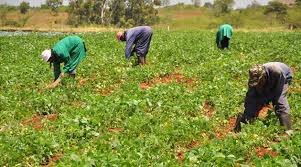
The Tomatoes Growers and Processors Association of Nigeria (TOPAN) has predicted a steady increase in the price of the produce between May and June 2026.
The Kaduna State Chairman TOPAN, Rabiu Zuntu, disclosed this in an interview recently in Lagos.
Zuntu noted that although there is no particular time for tomatoes planting season up north, seasonal weather variations can affect the production of the produce.
“Although we can plant tomatoes all-year-round, we cannot assure quality harvest all-year-round.
“Some farmers are harvesting now, while others are transplanting, and others are harvesting.
“Tomatoes are still available for sale but the price of the produce is gradually on the increase.
“Come May/June, the prices of tomatoes will be very expensive, so now is a good time to stock up the produce. There’s always a scarcity within that period.
“This is because of the nature of the weather in the north around that period, the weather is usually very hot and tomatoes cannot resist such hot temperature,” he said.
Zuntu said the price of tomatoes have started rising up in the north.
“A 50kg rafia basket of tomatoes sells from N20,000 as against N7,000 to N10,000 that was sold earlier in the year.
“While a crate of tomatoes up north is sold between N10,000 and N15,000 as against N5,000 to N6,500 sold earlier in the year.
“In most part of Kano State, where there is bumper harvest, they are rounding off their harvest. So, tomato is not that available there and most buyers have turned to where they can find it now, mostly within Kaduna State and some parts of Plateau State.
“So, that’s why the supply has decreased and the tomato supply and cost is determined by the law of demand and supply,” he said.
A 50kg basket of tomatoes in Lagos, at the moment, sells between N40,000 and N60,000 depending on the size and quality.

The Smallholder Women Farmers Organisation in Nigeria (SWOFON), Oyo State chapter, has said that the lack of irrigation facilities had become a major obstacle to dry season farming in the state.
The Chairperson of SWOFON in Oyo State, Atinuke Akinbade, said this in an interview in Ibadan on Monday.
Akinbade, who shared the experiences of women farmers in the state during the 2025 dry season, said that inadequate access to water for irrigation significantly affected the performance of many farmers during the period.
“It hindered many older farmers from participating in dry season farming and also prevented younger farmers from doing as much as they could in cultivating large acres of land,” she said.
Akinbade explained that farmers who managed to plant during the season struggled to access sufficient water to irrigate their farms, a situation worsened by the effects of climate change.
“Many farmers who depended on streams and wells to water their crops suffered major setbacks because those sources could not provide enough water for irrigation.
“Some farmers had to resort to buying water from commercial water tankers, which increased the cost of production, while at times it was even difficult to get water from the tankers,” she said.
The SWOFON chairperson warned that failure to address the problem could worsen food insecurity in the coming months.
“Even now, rainy season farming has not fully commenced because of the irregular rainfall pattern.
“This is a double burden, and if nothing is done, it may lead to serious hunger later,” she said.
Akinbade, however, acknowledged that the government had organised training for members of the association on home gardening.
She, however, said that little support was provided to address the challenges of dry season farming.
The chairman said that the home garden support package given to members consisted mainly of seedlings and one sprayer.
“They gave us two packs each of maize and pepper seeds, with six seeds in each pack, as well as one sprayer, so that we can grow food for household consumption,” she said.
Earlier, Oluwatoyin Oyedeji, SWOFON Coordinator in Oyo East, explained the severe hardship members of the organisation experienced in sourcing water for irrigation.
“Many farmers are already counting their losses because water was not available to irrigate their farms.
“Those who depended on streams and brooks were badly affected because many of them dried up, while the few that still had water had so little that farmers had to dig deeper into the ground in search of more,” Oyedeji said.
In the same vein, the Women Leader for farmers in Saki East, Musiliu Ashiru, said the absence of irrigation facilities also hampered dry season farming in her area.
According to her, many farmers still engaged in dry season farming have had to pay for water to keep their crops alive.
“Many of them buy water from the dam here to irrigate their crops. It has not been easy for them this year,” Ashiru said.




Police Detain Woman for Alleged Killing of Co-wife in Bauchi
ShareThe police command in Bauchi State, said it has apprehended a housewife over alleged killing of her co-wife following a...


FRSC Deploys 170 Ambulances Nationwide for Emergency Rescue
ShareThe Federal Road Safety Corps (FRSC) has deployed more than 170 ambulances across the country as part of efforts to...


NBA Decries Rising Insecurity in Plateau, Urges Urgent Action
ShareThe Nigerian Bar Association (NBA) has decried the spate of security challenges currently confronting Plateau and other parts of Nigeria....


Benue Begins Compilation of Out-of-school Children
ShareThe Benue Government has begun compilation of out-of-school children as part of efforts to improve child protection and access to...

NAPTIP Uncovers Suspected Baby Trafficking Ring in C’River
ShareThe National Agency for the Prohibition of Trafficking in Persons (NAPTIP) has uncovered an alleged child trafficking operation involving newborn...


Kaduna Pensioners Applaud Uba Sani over N3.65bn Gratuity, Death Benefits
ShareThe Kaduna State Chapter of the Nigeria Union of Pensioners (NUP) has commended Gov. Uba Sani for approving N3.65 billion...


FG Calls for Urgent Action to Protect Nigeria’s Rivers
ShareThe Federal Government has called for integrated management of Nigeria’s rivers, forests, wetlands and watersheds to safeguard water resources, public...

FCCPC Calls for Improved Capacity Building on Competition Reporting, Matters
ShareThe Federal Competition and Consumer Protection Commission (FCCPC) says there is a need for sustained capacity building in competition reporting...

Fire Guts Customs Western Marine Command Office in Lagos
ShareFire gutted the Nigeria Customs Service (NCS) Western Marine Command office in Apapa, Lagos, on Monday, destroying property worth millions...


Fuel Price Hike Reduces Sales, Increases Cost of Doing Business — Traders
ShareSome traders in the Federal Capital Territory (FCT) have expressed concern over the impact of the recent fuel price increase...