
NEWS
Insecurity: Buhari Fires Back at Obasanjo, Jonathan

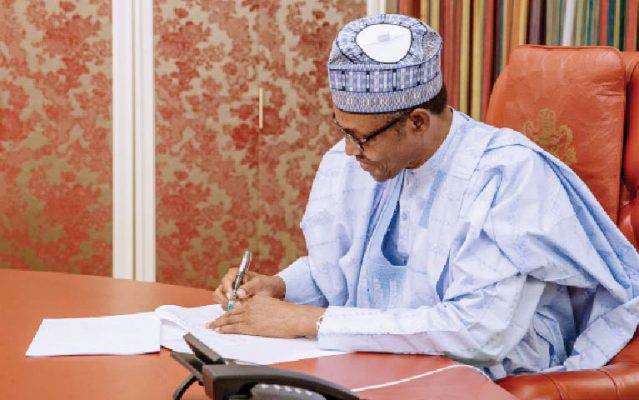
Says his critics are not patriotic
President Muhammadu Buhari yesterday made a veiled reference to former Presidents Olusegun Obasanjo and Goodluck Jonathan, insisting that those who are criticizing him over isolated security challenges in some parts of the country are not patriotic.
The president who spoke at an audience with the National Executives of the Buhari Campaign Organisation (BCO) in the State House, Abuja, on Tuesday.
Buhari, however, said: “Every country in the world has security challenges. While we have made significant progress in the fight against terrorism, we acknowledged that there are also new and emerging challenges like kidnapping and banditry.
“I assure you and Nigerians that we will not relent in our efforts to secure the country from criminal activities. Those who politicize the isolated cases of insecurity are not patriotic Nigerians.
“I’m confidence that this administration uses all resources at its disposal to protect the lives and property of all Nigerians and not just prominent Nigerians or those who make headlines.’’
It is recalled that Obasanjo had on Monday wrote an open letter to President Muhammadu Buhari, saying, “Nigeria is on the precipice and dangerously reaching a tipping point where it may no longer be possible to hold danger at bay”.
In the letter released by his media aide, Kehinde Akinyemi Obasanjo said he intended to use the open letter to address weighty issues. “I am constrained to write to you this open letter. I decided to make it an open letter because the issue is very weighty and must be greatly worrisome to all concerned Nigerians and that means all right-thinking Nigerians and those resident in Nigeria.”
Similarly, former Goodluck Jonathan on Tuesday said insecurity has worsened in Nigeria since he left Aso Rock. He spoke as he paid a condolence visit to Reuben Fasoranti, the leader of Afenifere, a Yoruba socio-cultural group, whose daughter, Funke, was killed by gunmen on the Benin-Ore road last week.
He said: “The issue of security must be approached from a different dimension. We cannot continue the old way because it is getting out of hand. We hope the federal and state governments will do something about it.
“Every generation face problems and this generation must find ways to solve these problems. Every government faces a problem.
“The first commercial kidnapping, because it involved money, happened in 2006 when I was the governor of Bayelsa state. From that time, it moved to terrorism in the north. Now, it is a major problem in the country.
“The federal government in conjunction with state government must design a different approach to this issue.
“I was there as president and security challenge was there but now, it is getting worse every day and we can’t continue to use the same old method.”
On corruption, President Buhari said his administration would continue to be tough on its ongoing crusade against corrupt practices in the country.
“We will continue to be tough on the cancer of corruption as you may be aware the African Union in its deliberations last year appointed me as African Corruption Champion for the continent.
“This is because other countries have seen our dedication to fighting corruption and are keen to emulate our approach,’’ he added.
The president also reiterated the determination of All Progressives Congress (APC) led Federal Government to lift 100 million Nigerians out of poverty.
He noted that policies and programmes put in place by the government to support farmers and small businesses had started yielding fruitful results.
“We remain committed to lifting 100 million Nigerians out of poverty in 10 years.
“Policies put in place to support farmers and small businesses are yielding positive results and we are determined to integrate them into the larger economy.”
In a related event, President Buhari on Tuesday said any person or administration that cannot secure a country or an institution, will not be able to manage it. President Buhari President Buhari also said that the successes recorded in degrading terrorists in the North East will be extended to various parts of the country experiencing challenges, assuring Nigerians that security still tops his list of priorities.
The President, who received executive members of the Nigerian Medical Association (NMA) led by the President, Dr Francis Adedayo Faduyile, at the Presidential Villa, Abuja, said offenders took advantage of the focus on the North East to commit crimes in other parts of the country.
He said: “If you cannot secure a country or institution, you cannot manage it. ” The President noted that efforts were still ongoing to improve employment level, following the success in getting many into the agricultural sector, stressing that opening up the economy for investments and getting the youths engaged will control crime rate. On health and education, President Buhari urged states and local governments to play stronger roles in complementing the efforts of the Federal Government, especially in getting more children into classrooms.
The President in a statement signed by his Special Adviser on Media and Publicity, Chief Femi Adesina said, “The issues of health and education are constitutional. If there are too many Almajiris in a state, then the government is not following the constitution. “
The states also have elites who are educated enough to remind their governments about their responsibility to Almajiris,.”
In his remarks, President of the NMA congratulated President Buhari for winning a second term in office, attributing his return to efforts made by the government to reposition the country, especially in health sector, like establishment of a cancer centre in University of Lagos Teaching Hospital.
Dr. Faduyile commended the President for always looking towards the NMA to appoint competent members for positions in the health sector, assuring that the medical association will continue to partner with the government to bring good health services to Nigerians.
He said there was a need to make the National Health Insurance Scheme (NHIS) compulsory for all Nigerians, including those in the informal sector, as some special treatments, like cancer, will require funds that might be beyond the reach of many.





President Bola Tinubu has approved the establishment of the Sector-wide Coordinating Office-Programme Management Unit (SCO-PMU) domiciled in the Office of the Coordinating Minister of Health and Social Welfare.A statement on Friday by his spokesman, Chief Ajuri Ngelale, said the unit would ensure efficient, transparent and accountable management of external grants mobilised towards the implementation of the Nigeria Health Sector Renewal Investment Initiative (NHSRII).
Ngelale said SCO-PMU would report to a Steering Committee/Ministerial Oversight Committee chaired by the Minister, including the Minister of State, Permanent Secretary; Ministry of Finance, Ministry of Budget and Economic Planning and relevant development partners. “The SCO-PMU will serve as the secretariat and delivery unit for the NHSRII and is to be headed by a national coordinator (NC).“The functions of the SCO-PMU include programme management, monitoring and evaluation, engagement and supervision of Independent Verification Agents (IVAs) for NHSRII programmes and fiduciary management, among others.“Consequently, the President has approved the appointment of Dr. Muntaqa Umar Sadiq as the National Coordinator of SCO-PMU,” he said.Report says that Sadiq has over 17 years of experience in public health, impact investing, investment banking, energy, and climate financing across the health, finance, climate and energy sectors.He had served as Head of the Performance Management and Delivery Unit at the Federal Ministry of Health and Social Welfare and Chief Executive Officer of the Private Sector Health Alliance of Nigeria.He also served as Head of the Nigeria Energy Transition Office and Private Sector Engagement Adviser at the World Bank. (NAN)
The Federal Government says it has no plan to slash scholarship students’ allowances as recently projected in the media.The Minister of Education, Prof. Tahir Mamman, stated this during a meeting with the leadership of the National Association of Nigerian Students (NANS) in Abuja on Friday.
Report says that there was a report that the ministry, through the Federal Scholarship Board, announced a slash in allowances of foreign scholars stranded in Russia, Morocco, and Algeria among others.
The slash in scholars’ allowances under the federal government’s Bilateral Educational Agreement Scholarship (BEA) was attributed to the economic crises.Mamman said that there was no slash in scholars` allowances but rather an adjustment due to Foreign Exchange fluctuations (FOREX).“We want to clarify what has been in the media on allowances paid to scholars under the Bilateral Scholarship Agreement.“We want to place it on record that the ministry and the Federal Government for that matter have not slashed the allowances due to students.“What happened is some adjustments in the amount due to them because of FOREX fluctuations, and as soon as we get the balance we have applied for, we will pay them.“But for now, what is in the budget is what we can pay. So, there is no slash, we will even be happy to increase, so this is what has led to the adjustments,” he said.(NAN)
By Laide Akinboade, Abuja
The Christian Association of Nigeria, CAN, on Friday, has urged Nigerians to calm and patient with Federal Government and should give the the government more time to address these pressing concerns.In a statement issued by CAN and signed by Archbishop Daniel Okoh ,President, CAN and made available to journalists in Abuja.
CAN also urged all Nigerians to consider alternative means of expressing their grievances. He however said CAN stands in solidarity with the citizens of nation during these challenging times of economic hardship and pervasive hunger. The statement reads in part, “As we navigate this period of crisis, it is imperative to uphold the constitutional rights of every Nigerian to peacefully protest and express their grievances. The right to assemble and voice discontent is a cornerstone of our democracy and must be protected and respected by all. Peaceful protests are a powerful tool for civic engagement, allowing the populace to communicate their concerns and hold leaders accountable. However, the anxiety related to the impending protests is heightening, especially given the volatile experiences in countries like Kenya and Pakistan.”We must also draw from our recent history. The #ENDSARS and #RevolutionNow protests, though rooted in genuine grievances, were marred by tragic incidents where miscreants hijacked the process. This led to widespread looting, destruction of properties, and unfortunate loss of lives. These experiences have shown us that mass demonstrations can quickly degenerate into chaos if not properly managed and coordinated.” In light of the planned protests scheduled to commence on 1st of August, CAN urges all Nigerians to consider alternative means of expressing their grievances. We recommend giving the government more time to address these pressing concerns. This period should be used to explore other legal avenues that will not easily give hoodlums the opportunity to hijack the exercise to destroy our national assets or endanger lives and properties. Dialogue, petitions, and town hall meetings are viable options that can yield positive results without the risk of disorder.”We call on the government to cut the cost of governance and expedite its efforts to alleviate the hardships in the land. The opulent lifestyle of political office holders must be addressed to demonstrate the sincerity of those in government to improve the living conditions of the people. Likewise, it is imperative that the government implements the newly approved national minimum wage to provide immediate relief to struggling families.”Furthermore, specific measures must be taken to put an end to kidnappings, banditry, and mass killings that have plagued various parts of our country. The security and well-being of every Nigerian should be paramount, and urgent action is required to restore peace and order.”We also call on the government to expedite its efforts to alleviate the hardships in the land. There is an urgent need for more refined and effective policies that address the root causes of the economic challenges we face. The government must deepen its consultations with stakeholders, including religious leaders, to create a more inclusive and comprehensive approach to problem-solving. By working together, we can devise sustainable solutions that reflect the needs and aspirations of the people.”In these trying times, let us all remember the words of our Lord Jesus Christ: “Blessed are the peacemakers, for they shall be called the children of God” (Matthew 5:9). As we seek to bring about positive change, let us do so with a spirit of peace, love, and unity. Our strength lies in our ability to come together, support one another, and work collectively toward a better Nigeria.”We pray for wisdom and discernment for our leaders, resilience and hope for our citizens, and divine intervention to guide us through these difficult times”.
Tinubu Approves Management Unit for Health Sector Renewal Investment Initiative
SharePresident Bola Tinubu has approved the establishment of the Sector-wide Coordinating Office-Programme Management Unit (SCO-PMU) domiciled in the Office of...

FG Denies Slash in Students’ Allowances
Share The Federal Government says it has no plan to slash scholarship students’ allowances as recently projected in the media.The...

Planned Protests: CAN calls for calm and patience
ShareBy Laide Akinboade, Abuja The Christian Association of Nigeria, CAN, on Friday, has urged Nigerians to calm and patient with...

Senate Consultant Scores Benue LG Bureau High on Projects Execution
ShareThe Consultant for Senate Standing Committee on States and Local Government Administration, Engineer Kayode Adegbayo has described the quality of...


Doctor Mark Ogbodo: A Man Destined for Success
ShareBy Paul Ugah Henry Miller once said, “Every man has his own destiny, the only imperative is to follow it,...


Ignore Anti -government Protests, Wike Begs Abuja Residents
ShareBy Laide Akinboade, Abuja Minister of the Federal Capital Territory, Barr. Ezenwo Nyesom Wike has called on residents of the...
Reps Commit to Ensure Legislations for Better Skills Acquisition, Management
ShareBy Ubong Ukpong, Abuja The House of Representatives on Thursday pledged its continuous commitment to ensure legislations that would align...
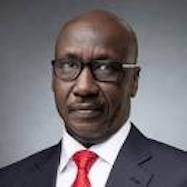

Economic Sabotage: Senate Summons Petroleum Minister, NNPCl, CBN, NPA, Others for Interrogation
ShareBy Eze Okechukwu, Abuja The Senate is blowing hot over alleged economic sabotage by stakeholders within the petroleum sector, thus...
Dialogue with Organisers of August 1 Protest, AANI Urges FG
ShareBy Johnson Eyiangho, Abuja The Alumni Association of the National Institute (AANI) has advised the Federal Government to dialogue with...


Stigmatization: CSO Urges Kogi Gov to Assent Bill Protecting HIV Patients
ShareFrom Joseph Amedu, Lokoja Civil Society Organisation, Initiative for Grassroot Advancement in Nigeria (INGRA), has called on the Kogi State...