
NEWS
Insurance Sector Recapitalization Ends, NAICOM Clears 53 Firms


By Tony Obiechina, Abuja
The National Insurance Commission (NAICOM) has announced the successful completion of the insurance sector recapitalisation exercise, with 43 insurance and reinsurance companies meeting the new minimum capital requirements, while eight others are undergoing final regulatory verification.
The recapitalisation exercise, which lasted 12 months, was carried out pursuant to the provisions of the Nigerian Insurance Industry Reform Act (NIIRA) 2025, signed into law by President Bola Tinubu on July 31, 2025.
In a statement issued on Monday, the Commission described the completion of the exercise as a major milestone that would strengthen the financial capacity of insurance operators, enhance policyholder protection, and position the industry to play a greater role in Nigeria’s economic development.
According to NAICOM, the recapitalisation marks the beginning of a new era for the country’s insurance industry, creating a stronger, more resilient, professionally governed and policyholder-focused market.
“The successful conclusion of the exercise marks a defining milestone in the transformation of Nigeria’s insurance industry and signals the beginning of a new era for insurance in the country,” the Commission said.
It noted that the recapitalisation process followed the implementation of NIIRA 2025, under which the Commission issued comprehensive guidelines detailing the new minimum capital requirements, eligible capital instruments, admissible assets, verification procedures, reporting obligations and supervisory expectations for operators.
NAICOM said the rigorous review, verification and validation process significantly strengthened the industry’s financial resilience while attracting substantial domestic and foreign investments.
“The verified outcome of the exercise indicates that 43 insurance and reinsurance companies successfully met the prescribed Minimum Capital Requirements.
“However, eight insurance companies that submitted evidence of compliance shortly before the statutory deadline are currently undergoing final verification and regulatory review. This would be concluded within fourteen days,” the Commission stated.
The NAICOM further stated that the higher capital base would improve insurers’ capacity to underwrite larger and more sophisticated risks across key sectors of the economy, honour policyholder claims promptly, absorb emerging risks and support long-term investments, including infrastructure financing.
It added that the exercise would also strengthen the Commission’s risk-based supervisory framework by ensuring that regulatory capital remains aligned with the size, complexity and risk profile of each licensed operator.
The regulator reassured policyholders, investors and other stakeholders that it would continue implementing the reforms contained in NIIRA 2025 while modernising the insurance ecosystem through innovation, technology and digitisation.
The Commission said it remained committed to strengthening consumer protection, promoting sound market conduct, expanding insurance penetration and building a globally competitive insurance industry.
It also pledged to provide regular updates on post-recapitalisation supervisory actions, the status of companies undergoing final verification, industry restructuring developments and the implementation of the Risk-Based Capital Framework.
NAICOM expressed appreciation to the Federal Government, shareholders, investors, insurance operators, professional bodies, development partners and other stakeholders for their support throughout the recapitalisation process.
“The successful completion of this recapitalisation exercise is not the destination but the foundation. It marks the beginning of a new era in which stronger institutions, stronger governance and stronger public confidence will make insurance work better for every Nigerian,” it added.
From Dan Amasingha, Minna
The Niger State Government has intensified its campaign against illegal mining, warning that individuals and companies operating without valid licences or government authorisation will be arrested and prosecuted.
The Commissioner for Solid Mineral Development Resources, Mohammed Qasim Danjuma (Dan-Rimin Agaie), issued the warning on Monday, describing illegal mining as a major threat to environmental sustainability, public safety and the state’s economic development.
He said the government had strengthened surveillance of mining sites across the state in collaboration with security agencies and regulatory authorities to identify and apprehend illegal operators.
According to the Commissioner, no person, association or corporate organisation is permitted to explore or extract mineral resources in Niger State without obtaining the requisite licences and approvals from the appropriate authorities.
“Illegal mining deprives government and host communities of legitimate economic benefits, damages the environment and undermines efforts to build a well-regulated and sustainable mining industry,” he said.
Danjuma stressed that the present administration remains committed to sanitising the solid minerals sector through strict enforcement of mining regulations and environmental standards.
He warned that anyone found engaging in unauthorised mining activities would face the full weight of the law, adding that the government would not tolerate actions capable of sabotaging its reforms in the sector.
The Commissioner urged prospective investors and mining operators to comply with all statutory requirements by securing the necessary licences and permits before commencing operations.
He also appealed to traditional rulers, community leaders and residents to partner with the government by reporting suspected cases of illegal mining to the relevant authorities, noting that public cooperation is critical to protecting the state’s mineral resources.
Reaffirming the government’s commitment to responsible resource development, Danjuma said the Ministry would continue to provide an enabling environment for genuine investors while ensuring full compliance with operational, environmental and safety standards.
He expressed confidence that a transparent and well-regulated mining industry would attract sustainable investment, generate employment opportunities, increase government revenue and contribute significantly to the socio-economic development of Niger State.
The statement was signed by the Information Officer, Ministry of Solid Mineral Development Resources, Ibrahim Moh’d Wachin.
By David Torough, Abuja
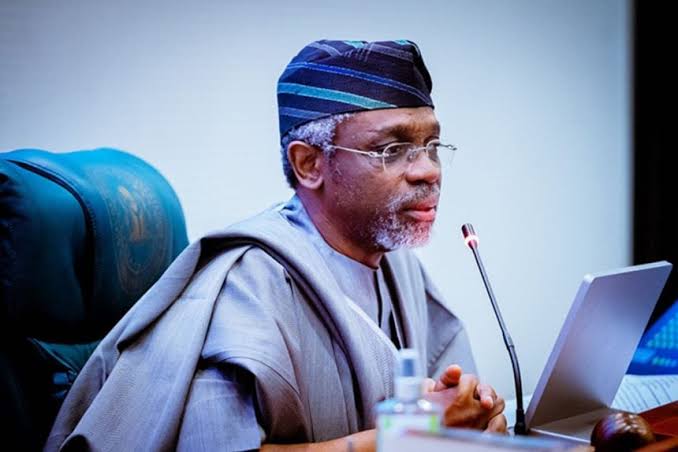
The Federal Government has unveiled a seven-week implementation roadmap for the proposed National Policing Bill, with the executive bill scheduled for presentation to President Bola Tinubu on September 3 as part of efforts to establish the legal and operational framework for state police in Nigeria.
Chief of Staff to the President and Chairman of the Presidential Working Group on the National Policing Bill, Femi Gbajabiamila, announced the timeline on Monday after the inaugural meeting of the committee at the Presidential Villa, Abuja.
He said the milestone-driven programme, running from July 27 to September 14, would culminate in the submission of the executive bill to President Tinubu on September 3.
Subject to the President’s approval, the draft legislation will undergo nationwide consultations before being revised and transmitted to the National Assembly.“The timetable is demanding, but it is not a shortcut,” Gbajabiamila said, explaining that legal drafting, policy research, data analysis and implementation modelling would proceed simultaneously under fixed review stages to ensure a technically sound and implementation-ready framework.
He announced an open call for memoranda and proposals from Nigerians, civil society groups and other stakeholders through the dedicated portal, www.nationalpolicingbill.com, with submissions expected by August 13. He added that the public consultation window could be extended if necessary to encourage wider participation.
“The public is included. No matter your station in life, you have an opportunity to contribute meaningfully because the whole idea behind state policing is for everyone to take ownership,” he said.
Gbajabiamila explained that while the National Assembly had approved constitutional amendments to create state police, the amendment process still requires ratification by state Houses of Assembly before becoming operational.
According to him, the constitutional amendment only provides the legal authority and broad framework for federal and state policing, while the proposed National Policing Bill will establish the detailed operational system governing recruitment, training, funding, command structure, jurisdiction, accountability, intelligence sharing and cooperation between federal and state police institutions.
He noted that the Nigeria Police Force remains the country’s only constitutionally recognised policing institution and that no state police service currently exists.
“Our mandate is to produce a technically robust, implementation-ready draft National Policing Bill and supporting legislative package,” he said.
Gbajabiamila said the committee’s assignment also includes reviewing existing policing laws, setting national minimum standards, developing state readiness certification procedures, establishing federal-state coordination mechanisms and creating independent complaints institutions.
To provide technical guidance, he announced the inauguration of a multidisciplinary Policy Advisory Committee chaired by Justice Mohammed Liman.
Addressing concerns over the possible abuse of state police by political office holders, Gbajabiamila assured Nigerians that the proposed legislation would contain strong safeguards against political interference.
“State Police cannot mean thirty-six state militias, just as national standards cannot become a disguised method of re-centralising day-to-day state policing,” he said.
He stressed that no political office holder would be permitted to direct the arrest or persecution of political opponents, insisting that officers would remain accountable only to the Constitution and the law.
Gbajabiamila further disclosed that no state would be allowed to commence policing operations without demonstrating adequate capacity in recruitment, training, discipline, oversight, firearms control, data management and financial sustainability.
“National standards will be the baseline. States may establish higher standards; however, no Nigerian should receive a lower standard of protection because of where they reside,” he said.
Responding to questions on the cost of establishing state police, the former Speaker of the House of Representatives said it was premature to put a figure on the project, insisting that any financial estimates would be based on detailed research and the peculiar security needs of individual states.
“There is no cost to securing life and property. At this stage, giving you a cost will be pulling something out of thin air. The cost will be evidence-based and determined on a state-by-state basis,” he said.
Attorney-General of the Federation and Minister of Justice, Lateef Fagbemi (SAN), said national minimum standards would prevent political persecution and guarantee equal protection for Nigerians irrespective of where they live.
Also speaking, Ogun State Governor Dapo Abiodun, a member of the presidential working group, described the proposed legislation as one of the most significant reforms of the Tinubu administration, saying it would clearly define the responsibilities of federal and state police while addressing critical issues such as funding, jurisdiction and firearms control.
The Federal Government maintained that the proposed reforms would strengthen Nigeria’s security architecture by creating a policing system better suited to the country’s size, diversity and evolving security challenges.
Among those present at the briefing were Inspector-General of Police Olatunji Disu, President of the Nigerian Bar Association Afam Osigwe, Chairman of the Policy Advisory Committee Justice Mohammed Liman and the President’s Special Adviser on Planning and Research, Nnadubem Moghalu.
The Tertiary Institutions National Laureate Committee has announced the commencement of the 2026 National Laureate Programme.
The National Laureate Programme is a Federal Government initiative aimed at recognising outstanding academic research and innovation in Nigerian tertiary institutions.
The programme, backed by an annual research prize fund of ₦365 million, is designed to reward exceptional undergraduate dissertations, master’s theses and doctoral research from accredited higher institutions across the country.
The committee’s spokesperson, Ita Ekpenyong, disclosed this in a statement issued on Sunday in Abuja.
Ekpenyong said, “The initiative underscores the Federal Government’s commitment to strengthening Nigeria’s research ecosystem, promoting innovation and positioning scholarship as a driver of national development.”
He said the programme, inaugurated under the leadership of the Minister of Education, Dr Tunji Alausa, would identify, assess and reward outstanding research produced in accredited universities, polytechnics, colleges of education, monotechnics, military institutions and other eligible tertiary institutions.
As part of preparations for the 2026 edition, the committee directed all eligible institutions to begin internal arrangements for participation by setting up Institutional Laureate Selection Committees made up of experienced academics with proven research credentials.
The institutions are also required to submit the names and designations of committee members, who will coordinate their participation in the programme.
Following internal assessments, “Each participating university is expected to nominate up to 18 research works, comprising six undergraduate dissertations, six master’s theses and six doctoral theses.”
Equivalent submissions will be accepted from polytechnics, monotechnics, colleges of education and other tertiary institutions.
The research entries will be drawn from six thematic areas, including Agriculture, Teaching Innovation, Medicine and Health Sciences, Engineering, Science and Technology, Law, and Arts and Social Sciences.
Under the programme, winners in the undergraduate category will receive ₦35 million, while the master’s and doctoral categories will attract prizes of ₦50 million and ₦100 million, respectively.
In addition, the committee said 15 Thematic Laureate Awards worth ₦12 million each would be presented to other outstanding researchers.
The committee stated that all nominated research works must first be submitted to the Nigeria Education Repository and Databank and assigned a valid National Document Number before they can qualify for consideration.
It explained that the requirement was intended to strengthen research integrity, improve documentation and preserve Nigeria’s academic output within the country’s knowledge infrastructure.
The committee also said the programme would adopt a three-stage assessment process involving institutional, regional and national evaluations to ensure transparency, fairness and merit in the selection of winners.
It urged participating institutions to conduct their internal assessments with professionalism, noting that only the highest-rated research would progress to the next stages.
The committee further called on professional bodies across agriculture, engineering, science, medicine, law, education, arts and related fields to nominate distinguished scholars for appointment to Regional Laureate Selection Committees in the six geopolitical zones.
According to the committee, nominations will be screened based on merit, experience, integrity, diversity and conflict-of-interest requirements.
Institutions and professional associations have until August 15 to constitute their committees and nominate experts, while the submission of institutional entries will remain open until August 31.
Speaking on the initiative, Chairman of the National Laureate Committee, Prof. Abubakar Sambo, said the programme was conceived to promote academic excellence and recognise research capable of driving national development.
Sambo said the programme was designed to elevate academic excellence to national prominence, encourage world-class research, inspire innovation and recognise scholars whose work has the potential to transform lives, industries and the future of Nigeria
He urged all eligible tertiary institutions and relevant professional associations to participate actively in the inaugural edition of the programme.


Insurance Sector Recapitalization Ends, NAICOM Clears 53 Firms
ShareBy Tony Obiechina, Abuja The National Insurance Commission (NAICOM) has announced the successful completion of the insurance sector recapitalisation exercise,...
Niger Strengthens Surveillance to Protect Mineral Resources
ShareFrom Dan Amasingha, Minna The Niger State Government has intensified its campaign against illegal mining, warning that individuals and companies...

State Police: FG Unveils Seven-week Implementation Roadmap
ShareBy David Torough, Abuja The Federal Government has unveiled a seven-week implementation roadmap for the proposed National Policing Bill, with...
FG begins 2026 National Laureate Programme
ShareThe Tertiary Institutions National Laureate Committee has announced the commencement of the 2026 National Laureate Programme. The National Laureate Programme...
Still On Abubakar Malami, His Battles and Landmark Achievements
ShareBy Hajia Hadiza Mohammed As I stated in my previous article, some of my colleagues have queried my interest in...


Why Nigeria’s Births should not Worry Elon Musk
ShareBy Chinedu Moghalu Elon Musk has a gift for reducing significant anxiety to a sentence. “Nigeria alone had 4 million...

Neutralizing South Africa’s Xenophobic Excesses
ShareBy Chidi Amuta Nelson Mandela must be churning in his resting place. An exemplary life lived and a myth created...
Enugu Joint Security Operatives Rescue Abduction Victim
ShareFrom Sylvia Udegbunam, Enugu A joint security team comprising Police operatives, Forest Guards, and members of the Neighbourhood Watch Group...


Police Uncovers Two Illegal Arms Factories in Benue
ShareFrom Attah Ede, Makurdi Police in Benue State uncovered and destroyed two illegal firearm manufacturing factories, recovered three AK-47 rifles...


Troops Foil Bandits’ Attack, Rescue Nine Kidnap Victims in Zamfara
ShareFrom Ifeanyichukwu Nwannah, Gusau Troops of Sector 2, Operation FANSAN YAMMA, deployed at the Forward Operating Base (FOB) in Kasuwan...