
BUSINESS
Investments in Economic Zones Hits $20bn in 30 Years- Minister


By Joseph Amah, Abuja
The Minister of Industry, Trade and Investment, Mr. Adeniyi Adebayo, has said total cumulative investments in the country’s Free Economic Zones (FEZs) was about $20 billion over its 30 years of operations. Speaking at the inauguration of the new NEPZA Lagos Office, over the weekend, the minister said the generous fiscal incentives associated with the free zone scheme remained a veritable source of economic development.
Adebayo pointed out that the free zone scheme generated N250 billion in both foreign and local direct investments in 2021 and N35 billion in customs duty payments as well as N65 billion in local import/backward linkage.
He added that the scheme generated N500 million in Pay as You Earn (PAYE); 25,000 in new employment and 5,000 transfer of skills.The minister said, “I must commend you all for what you have been able to achieve within a short period of time, as it goes to show that with dedication and the right mix of human capital, of which NEPZA is sufficiently blessed, there are no limits to what can be achieved. “Our mission is to formulate and implement policies and programmes to attract investments, boost industrialisation, increase trade and exports and develop enterprises. “The Free Zone Scheme is one of the prime initiatives of the Federal Government, for diversification of Nigeria’s economic base, in order to achieve our vision of growing the economy, creating jobs and generating wealth. I urge you not to relent in giving it your best in your service to promote the economic development of our great country, Nigeria.”
Also speaking at the occasion, Managing Director/Chief Executive, NEPZA, Prof. Adesoji Adesugba said that the choice of Lagos as its liaison office was based on pure economic considerations. He said, “Remember that 80 per cent of the special economic zones is located in Lagos and within 100 kilometers of its radius, making the city as the country’s most potent economic gateway. “Accordingly, this is our way of bringing NEPZA closer to our investors for sustained customer service, to continually attract and retain investors. In addition, today’s events are a landmark as we are also commissioning the Special economic zones security unit. “This was created to provide guard duties and enforcement services in all the zones ensuring the sanctity of economic activities therein.” Chairman, NEPZA Board, Alhaji Adamu Fanda, said the authority remained committed to repositioning the country in the next few years as the number one free trade zone destination in Africa.
Unstable electricity supply and rising fuel prices are placing significant strain on frozen food businesses in Lagos, as traders struggle to cope with higher operating costs and reduced customer patronage.
The traders, who spoke with in separate interviews on Wednesday, said the combined effect of unstable power supply and expensive fuel had increased their operating costs and reduced profit margins.
Frozen food businesses rely heavily on constant electricity to preserve items such as chicken, turkey, fish, and other perishable products.
However, irregular power supply has forced traders to depend on generators, which run on fuel, thereby increasing operational expenses.
There has been a nationwide drop in power generation due to insufficient gas supply.
Consequently, the country’s power sector, largely dependent on gas-fired plants, has been hit by disruptions in gas supply worsened by pipeline maintenance challenges and liquidity constraints.
Chika Oluehi, owner of Chika Frozen Foods at Ijora-Olopa, said he now factors electricity and fuel costs into his pricing to remain in business.
“Before now, a carton of turkey sold for about N85,000, but it now goes for between N105,000 and N110,000.
“A carton of chicken that used to sell for about N39,000 to N41,000, now sells for N46,000. We have to calculate our margins carefully to avoid losses,” he said.
Oluehi added that storage capacity determines how traders cope with electricity challenges.
“Suspending my frozen food business is not an option for me because of my storage facilities.
“When there is no electricity, we use fuel to power generators, but the generator does not fully carry the freezer. It only chills it and does not completely prevent spoilage,” he said.
Oluehi added that he had resorted to alternative energy sources to reduce losses.
“Where I live, I sometimes have light, and I also use a solar freezer. It helps, but it still depends on electricity, so it is not a complete solution,” he said.
According to him, the rising cost of fuel also affects the transportation of frozen foods from suppliers to markets.
“When fuel prices go up and there is no power, we spend more transporting these frozen foods.
“Once fuel increases, prices automatically rise, and customers cannot buy as much as they used to.
“Imagine having 10 customers and five stop buying, while the remaining five reduce the quantity they purchase. The business will eventually suffer,” he said.
Another trader, Mojisola Kazeem of MJ Frozen Foods in Surulere, said she had temporarily halted selling frozen items due to the cost of fuel and electricity.
“I had to pause it. I cannot cope with the electricity situation and the cost of fuel.
“Hopefully, when things return to normal, I can pick up from where I stopped,” she said.
Similarly, a fish seller in Mushin, Bose Adeyemi, said she now reduces the quantity she stocks to avoid spoilage.
“Without steady electricity, keeping large quantities is risky. If light goes off and fuel is expensive, you may lose everything.
“I now buy in small quantities even though it reduces profit,” she said.
A cold-room operator in Agege, Sulaiman Adebayo, said many traders now share storage space to cut electricity costs.
“Some traders cannot afford to run generators alone, so they rent space in cold rooms. But even cold-room owners are increasing prices because of fuel,” he said.
Adebayo noted that the situation had reduced customer patronage.
“Customers complain that frozen foods are too expensive. Many now buy smaller portions, and some switch to alternatives,” he said.
Yetunde Afolabi, a soft drink seller at Yaba Market, said poor electricity supply had affected her sales because customers prefer chilled drinks.
“People will not buy soft drinks when they are hot. Once there is no light, the drinks lose their chill, and customers walk away.
“Some of them even open the cooler, check the bottle, and drop it back when it is not cold enough.
“I spend money on fuel to run my generator, but I cannot keep it on all day because fuel is expensive. When I switch it off, the drinks become warm, and I lose sales,” she said.

Sri Lanka has issued guidelines to government institutions on the prudent use of fuel and energy amid possible disruptions to fuel imports caused by escalating tensions in the Middle East.
The Office of the Commissioner General of Essential Services issued the guidelines to ministry secretaries, provincial and district secretaries, and heads of government and statutory institutions and called for measures to reduce fuel and electricity consumption across the public sector.
Officials have been advised to avoid using individual vehicles to commute to work and instead use public transport or group transport whenever possible, according to the office.
Government institutions have also been instructed to prepare daily transport plans to reduce the number of vehicles used for field duties.
The guidelines set out steps to conserve electricity and energy, including maximising natural lighting, reducing the use of air conditioning by relying more on electric fans, and limiting elevator use by encouraging people to take the stairs.
Local government authorities have been directed to switch off street lights during unnecessary hours and temporarily turn off street lighting in non-high-security areas as a precautionary measure, the office said.
The guidelines further encourage heads of institutions to allow staff to work remotely where technological facilities are available instead of requiring physical attendance.
The office urged all public officials to act responsibly, set an example for the public, and extend maximum support to national energy conservation and security efforts.
From Mike Tayese, Yenagoa
The Niger Delta Chamber of Commerce, Industry, Trade, Mines and Agriculture (NDCCITMA) has unveiled plans to attract up to five billion dollars structured investments to the oil-producing region in five years.
Chairman of the NDCCITMA, Amb.
Idaere Gogo Ogan, who disclosed this at a pre-summit conference ahead of the Niger Delta Economic and Investment Summit in Port Harcourt, Rivers State, said the initiative would catalyse no fewer than 500,000 direct and indirect jobs as well as spur investments and create wealth.He said the summit with the theme: “Driving Investment, Innovation, and Industrial Growth in the Niger Delta”, slated for Port Harcourt on May 19-21, 2026, would deliberate on investment mobilisation, enterprise growth, industrial expansion, and regional coordination.
According to a statement by the Media Consultant Ono Akpe and made available to our correspondent via email, president Bola Tinubu is expected as the special guest while the Prime Minister of Barbados, the Hon Mia Amor Mottley, will be the keynote speaker.
Ogan stated that the recent Niger Delta Business Roundtable brought together policy-making leaders, investors, entrepreneurs, development institutions, and strategic stakeholders from across the nine Niger Delta states, and that the clear message from the event was for the region to transit from ambition to implementation.
The NDCCITMA Secretary and chairman of the summit local organising committee, Dr. Solomon Edebiri, said the economic and investment summit was a strategic initiative designed to reposition the region as a competitive hub for investment, enterprise development, and sustainable industrialisation.
Dr. Edebiri noted that the Niger Delta was known for its contribution to Nigeria’s economy through oil and gas, stressing however that its legacy lies on its diverse wealth and its untapped opportunities, which the summit seeks to highlight and unlock.
He added that the organising committee has lined up various activities to promote the event, including a road show across the Niger Delta states, in Lagos and the Federal Capital Territory as well as a follow-up press conference.
Present at the press conference are Chief Kelechi Obilor Financial Secretary, (NDCCITM), Boma Jack; Board Member (NDCCITMA), Hon Marcel Odunze; Board Member, amongst others.



FCTA launches birth registration in rural areas
ShareLaide Akinboade,Abuja The Federal Capital Territory Administration (FCTA) at the weekend, launched a grassroots social mobilisation exercise to promote birth...

SDP Leader, Adebayo Condemns Federal Shutdown for APC Convention, Calls it Abuse of Office
ShareBy Mike Odiakose, Abuja Prince Adewole Adebayo has criticised the Federal Government’s decision to shut down access roads around the...

FCT has about 16,000 cases of TB
Shareas Treatment success rates for TB is 94% By Laide Akinboade,Abuja The Federal Capital Territory (FCT) revealed at the weekend,...


TB screening outreach: Experts screened over 800 people
ShareBy Laide Akinboade, Abuja Experts in health sector on Friday, screened over 800 people for Tuberculosis (TB), in some selected...

PINL Urges Communities to Take ownership of Oil,Gas Assets within their Environment,
ShareFrom Mike Tayese, Yenagoa Pipeline Infrastructure Nigeria Limited (PINL) has called for stronger collaboration with host communities to enhance the...


Amnesty Programme is Now on its Right Path, Ex-agitators
ShareFrom Mike Tayese, Yenagoa Niger Delta Ex-Agitators Forum (Phase 3) on Friday made it clear that the 30,000 ex-agitators in...

Niger Delta Investment Summit Set to Unlock Regional Opportunities
ShareFrom Mike Tayese, Yenagoa Plans are underway to host a major investment forum aimed at unlocking economic opportunities and accelerating...


From Strategy to Results: Why Every Organization Needs an Efiko – Barrow
ShareBy Raphael Atuu, Abuja Every organization, it seems, needs an Efiko.That was the bold assertion from Omagbitse Barrow as he...

APC Convention: FG Shutsdown Secretariat, Orders Workers Stay at Home
ShareBy David Torough, Abuja Ahead of the All Progressives Congress (APC) national convention in Abuja, the Federal Government has ordered...
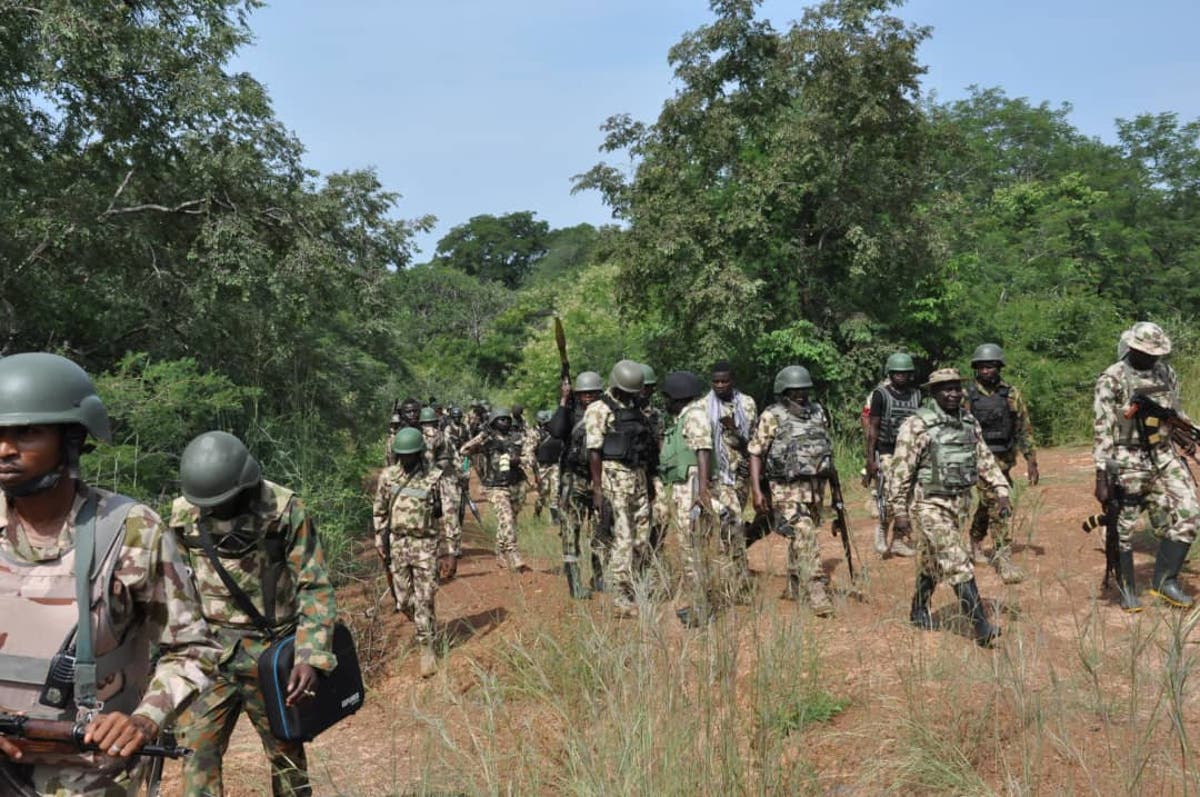
Soldiers Eliminate Six Bandits in Sokoto, Zamfara, Kebbi
ShareTroops of Sector 2, Operation FANSAN YAMMA, have intensified coordinated offensives against terrorist enclaves across Sokoto, Zamfara, and Kebbi states, killing at least six suspected bandits and recovering arms...