
Foreign News
Iranian Missiles Injure 160 in Towns Near Israeli Nuclear Site

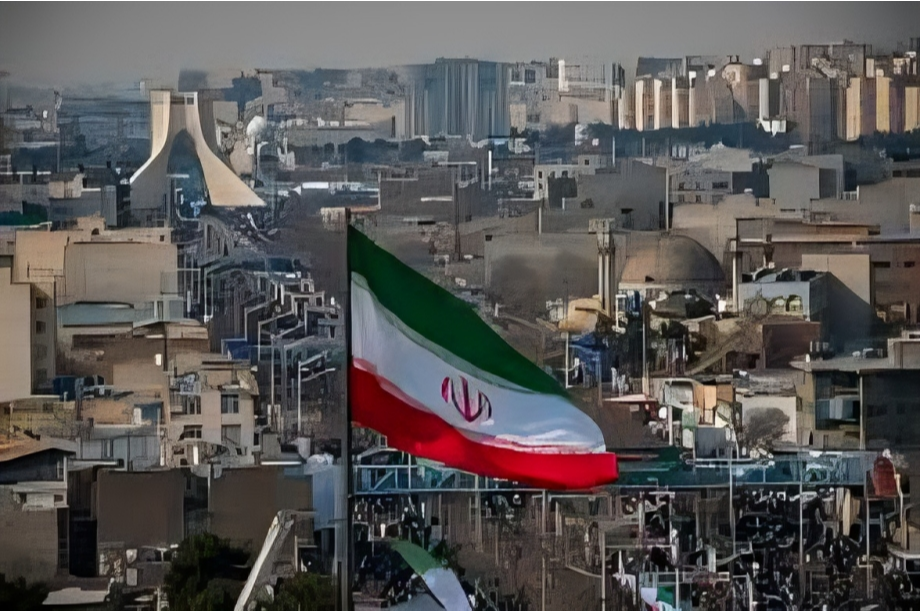
More than 160 people have been injured – some seriously – in Iranian missile strikes on two southern Israeli towns close to a nuclear facility, Israeli emergency officials said.
They say 84 people were wounded in Arad and another 78 in Dimona, after ballistic missiles hit the towns on Saturday evening.
The International Atomic Energy Agency (IAEA) said it is not aware of any damage to the nuclear research facility located about 13km (eight miles) outside Dimona.
Iranian state TV earlier said the strikes were in response to an attack on Iran’s Natanz nuclear facility on Saturday.
On Sunday, at least seven people were injured in an Iranian missile attack on Tel Aviv, emergency services say.
The Israeli Air Force says Tehran has fired 400 missiles at Israel since the US-Israeli attack on Iran on 28 February. Of these 92% were intercepted, it adds.
In Arad, local residents said the blasts they heard on Saturday were terrifying. The missile badly damaged several buildings, leaving a deep crater.
Naram Zaid, a paramedic in the town, told BBC News she had seen a “lot of children with head and chest injuries” after being crushed by objects inside a damaged building.
“I was trying to reassure a 10-year-old girl with head injuries, with blood on her face from broken glass,” she added.
“She was refusing to get into the ambulance as her parents were still inside the building, and we waited for her parents to be evacuated from the destroyed apartment block and then we sent them all to hospital.”
The outside walls of two residential apartment buildings were gouged out by the impact.
Crowds of dark-suited men stood staring at the damage in this Ultra-Orthodox town in the Negev desert.
The nearby town of Dimona experienced a similar missile strike.
Among the many injured there was a 10-year-old boy. Medics described his condition as serious.
“In both Dimona and Arad, interceptors were launched that failed to hit the threats, resulting in two direct hits by ballistic missiles with warheads weighing hundreds of kilograms,” Israeli firefighters said.
The ability of Iran to keep inflicting this kind of damage inside Israel is a reminder of the human cost of the war.
Urgent investigations are taking place to ascertain how the missiles breached Israel’s air defence system.
But as in the 12-day war last summer, Israelis know that the system is not infallible.
As then, such attacks are more likely to harden the public’s resolve rather than weaken it.

For Somalia’s malnourished children, already suffering the twin catastrophes of looming famine and radical cuts in foreign aid, the U.S.-Israeli war on Iran means more than soaring petrol pump prices; it is a matter of life and death.
Shortages of lifesaving therapeutic foods exacerbated by shipping disruptions are forcing clinics to turn away severely malnourished children and ration supplies, Reuters reporting shows.
Almost half a million children under 5 suffer from “severe acute malnutrition” or “wasting”, the most life-threatening form of hunger, and the delays are worsening the effect of the aid reductions.
Health workers in Baidoa and Mogadishu say they have had to stretch out meagre stocks of specialised milk and nutrient-dense peanut-based paste vital to saving these children.
“Since the needs are large and we don’t have a lot of supplies, we have had to keep reducing the amount we give children,” Nurse Hassan Yahye Kheyre said.
The 225 cartons of peanut paste remaining at his clinic, which treats more than 1,200 children, will probably be exhausted within two weeks, according to the International Rescue Committee, which supplies the facility.
“If treatment is on-and-off, the children will become very weak, physically and mentally. And it may not be possible to reverse it,” Kheyre added.
The IRC is one of three aid groups that said transport delays and rising costs linked to the war in Iran were making an already complicated situation worse.
At the clinic in the southwestern city of Baidoa, run by IRC’s local partner READO, mother-of-nine Muumino Adan Aamin has been trying to get peanut paste for Ruweido, her 11-month-old daughter.
Ruweido is on a regimen of three sachets a day, but Aamin has been turned away twice because the clinic had run out each time.
Aamin nearly lost her daughter Anisa to hunger when a previous drought pushed Somalia to the brink of famine in 2017.
“Just bone and skin,” the toddler only survived because of peanut paste, Aamin said.
Nine years on, a new drought has pushed 6.5 million people, or one in three Somalis, into acute hunger, and aid groups are desperately trying to plug gaps.
An IRC order for peanut paste that would have fed over 1,000 children got stuck two months ago in the Indian port of Mundra, now congested with diverted cargoes unable to dock in the Gulf, said Shukri Abdulkadir, IRC’s Somalia coordinator.
After being told that the peanut paste, made in India, would take at least 30 more days to arrive, IRC cancelled the order.
It placed an emergency order for 400 cartons from Nairobi, and is moving supplies in Mogadishu to Baidoa while awaiting them.
But the increase in freight and manufacturing costs has pushed the price of a single carton to 200 dollars from 55 dollars, according to CARE International, whose latest order now buys enough for only 83 children rather than 300.
In 2024, deliveries of therapeutic milk and ready-to-use therapeutic food (RUTF) from Europe to Somalia typically took 30-35 days, increasing to 40-45 days in 2025 as vessels diverted around Africa owing to security threats in the Red Sea.
Since the United States and Israel attacked Iran on Feb. 28 and Iran closed the entrance to the Gulf, a lack of ships has pushed that out to 55-65 days, said Mohamed Omar, head of Health and Nutrition at Action Against Hunger (ACF) in Mogadishu.
Meanwhile, in Somalia, the IPC global hunger monitor says more than 2 million people are now in the “Emergency” phase, one level before famine.
Admissions of severely malnourished children in January-March to health centres supported by ACF were up 35 per cent from last year.
Staff at Daynile General Hospital, which is treating 360 children for wasting, said on April 20 that they barely had enough supplies for the week.
“Some children’s nutritional status has already worsened,” said health and nutrition supervisor Xafsa Ali Hassan.
Somalia was not among 17 impoverished nations singled out to receive a share of this year’s funds allocated to the UN Office for the Coordination of Humanitarian Affairs (OCHA) by the U.S., which has made the most drastic cuts among foreign aid donors.
OCHA says more than 200 health facilities have been closed and mobile teams disbanded.
It said in December that over 60,500 severely malnourished children had gone untreated as a result, and that the number could rise to 150,000 if funding gaps persisted.
Then, when the Iran war erupted, domestic fuel prices leapt 150 per cent.
“Somalia is really hard hit by the Iran war because people are still reeling from the impact of the previous drought,” said IRC’s Abdulkadir.
“It’s very difficult for people to absorb these shocks.”
OCHA has appealed for 852 million dollars from global donors to stave off a full-blown famine.
This is far below the 1.42 billion dollars it requested last year – yet it has still barely received 14 per cent of this amount.
Australian researchers on Thursday revealed that alcohol consumption causes a higher proportion of cancers in Australia than previous estimates.
According to a statement of the University of Sydney, the study estimates that around 4.6 per cent of all cancers in Australia are caused by alcohol consumption, which also increases the risk of developing cancer by 19 per cent.
The research, published in the British Journal of Cancer, analyzed alcohol consumption behavior among 225,000 people in the Australian state of New South Wales’ 45 & Up Study.
The study’s lead author Peter Sarich from the University Of Sydney School Of Public Health said “cancer is the leading cause of premature death in Australia.
“While the science on the causes of cancer continues to evolve, the evidence is now clear that reducing alcohol consumption is an effective strategy for preventing cancer.’’
Researchers estimated that over 7,800 cancer cases diagnosed in Australia in 2024 were attributable to alcohol, exceeding earlier estimates of between 2.8 per cent and 4.1 per cent.
The study found cancer risk rises with increased alcohol intake. For every 10 drinks consumed per week, the risk of cancer increased by 19 per cent.
The risk rose by 46 per cent for liver cancer, 27 per cent for cancers of the mouth, throat, larynx and esophagus, 18 per cent for breast cancer, and 16 per cent for colorectal cancer, according to the study.
Sarich said if Australians followed national guidelines of no more than 10 drinks per week, more than 3,700 alcohol-related cancer cases annually could be prevented.
He added that only around half the population is aware that alcohol causes cancer.

Pope Leo XIV commemorated the first anniversary of the death of his predecessor, Francis, as he addressed worshippers in Equatorial Guinea yesterday.
The pontiff paid tribute to his predecessor’s commitment to the most vulnerable and marginalised groups in society.
As he flew from Angola to Equatorial Guinea, Leo said Francis had given “his witness, his words, and his gestures.
He did so by truly living close to the poorest, to the least, to the sick, to children, and to the elderly.”
In tribute, Leo said, “Let us thank the Lord for the great gift of Francis’ life to the whole Church and to the whole world.
”As Pope, Francis headed the Catholic Church from 2013 to 2025. He died at the age of 88.
The current pope, who was the curia cardinal Robert Francis Prevost, a U.S. and Peruvian citizen, was then elected to succeed him.
Equatorial Guinea is the final stop on the pope’s 11-day tour.
Africa is one of the regions of the world where the Catholic Church is growing.
There are currently around 290 million Catholics living on the continent, and this could rise to more than 700 million by the end of this century, forecasts suggest.



Plateau PDP Cautions Members Against Obtaining Nomination Forms From Pro-Wike Faction
ShareBy Mike Odiakose, Abuja As Nigerians await the verdict of the Supreme Court on the leadership crisis rocking the Peoples...


Soludo’s 16.4km Road Project Ends Years of Suffering, Opens Up Anambra Communities
ShareBy Laide Akinboade Abuja Vice President of Boardwalk Group and Abuja-based real estate developer Chief Obiageli Okwubanego, on Wednesday, commended...


Ekiti Church Attack: CAN Demands Action Over Killing, Abduction of Worshippers
ShareBy Laide Akinboade, Abuja The Christian Association of Nigeria (CAN) on Wednesday, condemnedthe attack on a church gathering in Eda...


Journalist Petitions DSS Over Alleged Criminal Activities Of Company, River-Bend Agent
ShareBy Julius Tambaya, Abuja Following alleged criminal conducts of River-Bend Nigerian Limited and one Mr. Thomas Terzulum Nongo, a renowned...


Stakeholders Urge FG, Benue Govt to Partner NGOs to End Violence, Discrimination Against Girls
ShareBy Julius, Tambaya Abuja Stakeholders have called on the Federal and the Benue State Governments to strengthen collaboration with non-governmental...


Bago Orders Immediate Repairs of Wind-Damaged Buildings at NYSC Camp
Share From Dan Amasingha, Minna Niger State Governor, Mohammed Umaru Bago, has directed the immediate rehabilitation of buildings damaged by a windstorm at the National Youth Service Corps...
2028 Olympic Games Qualifier: Super Falcons to Discover Opponents Today
ShareNigeria’s Super Falcons will find out their opponents for the 2028 Los Angeles Olympic Games women’s football qualifiers this week. The Confederation of African Football (CAF) announced on Tuesday that the draw for the African qualifying...
Ghana Military Convoy Attack Kills Three Civilians, Seven Assailants
ShareFor Somalia’s malnourished children, already suffering the twin catastrophes of looming famine and radical cuts in foreign aid, the U.S.-Israeli...


Imo Deputy Governor Resigns
ShareFrom Marcel Duru Owerri The Commissioner for Information and Strategy Chief Declan Emelumba has said that Imo State Deputy Governor, Ekemaru has resigned. Speaking...


NAF Airstrikes Destroy Terrorists’ Structures in Mandara Mountains
ShareThe Nigerian Air Force (NAF) has sustained its counter-terrorism offensive with precision airstrikes that destroyed terrorists’ structures and logistic hubs in the Mandara Mountains area of Borno....