
NEWS
JAMB Opens Portal for Printing of 2026 Mop-up UTME Slip


The Joint Admissions and Matriculation Board has announced that candidates scheduled for the 2026 Mop-Up Unified Tertiary Matriculation Examination can now print their examination notification slips ahead of the exercise.
The mop-up examination is scheduled to be held on Saturday, June 13, 2026.
The announcement was contained in a statement issued on Sunday by JAMB’s spokesperson, Fabian Benjamin.
The statement said the notification slip contains essential details required for the examination.
“The notification slip contains vital information, including the candidate’s examination centre, date, time, and other important instructions necessary for a seamless examination exercise,” the statement said.
JAMB explained that the mop-up exercise was arranged for candidates who were unable to sit for the earlier UTME due to technical challenges, as well as those whose biometric verification could not be completed during the main examination.
“Eligible candidates are advised to visit the Board’s website and click on ‘Print 2026 Mop-Up UTME Slip’ to access and print their slips.
“Candidates are strongly advised to print their slips well ahead of the examination date and familiarise themselves with their examination centres to avoid last-minute difficulties,” the statement added.
JAMB also stressed that the mop-up examination represents the final opportunity for eligible candidates to participate in the 2026 UTME, adding that no further examination would be conducted after the exercise.
Candidates were therefore advised to take advantage of the opportunity and make adequate preparations.

By Tony Obiechina, Abuja
The Central Bank of Nigeria (CBN) has released revised foreign exchange (FX) guidelines, introducing new rules on the movement of foreign currency into and out of the country.
Under the updated framework, travelers may take up to $50,000 in cash or its equivalent in other foreign currencies out of Nigeria, provided the amount is declared at the point of departure.
The apex bank also maintained the existing threshold that permits individuals to carry up to $10,000 without making any declaration.According to the guidelines, foreign currency not exceeding $10,000 may be exported freely in cash or other credit instruments.
Amounts above $10,000 but not exceeding $50,000 must be declared before departure. Any sum exceeding $50,000 will require proof that the funds were obtained through an authorised dealer.The CBN further clarified that individuals entering Nigeria can bring in up to $10,000 or its equivalent without declaration. However, any amount above that limit must be declared upon arrival.
The new rules also allow authorised dealer banks to import foreign currency to meet domestic cash demand, subject to prior approval from the CBN.
Regarding inbound foreign exchange transfers, the guidelines state that beneficiaries in Nigeria will receive funds through their bank accounts in naira or any other currency approved by the CBN from time to time.
For international money transfer operations, cash withdrawals will be capped at the naira equivalent of $200. Any amount above that threshold must be paid directly into a bank account.
In addition, all International Money Transfer Operators (IMTOs) are required to maintain naira settlement accounts with authorised dealer banks and ensure that all transactions pass through these designated accounts.
The guidelines also permit authorised dealers and buyers to purchase foreign currency from visitors to Nigeria. Travelers leaving the country may convert any unused naira back into foreign currency, provided they can show evidence of the initial currency exchange. Such reconversion is limited to the amount originally exchanged through authorised channels.
By Tony Obiechina, Abuja
Nigeria’s drive to strengthen its petroleum industry received a boost as the Nigerian Upstream Petroleum Regulatory Commission (NUPRC) and the Nigerian Nuclear Regulatory Authority (NNRA) agreed to harmonise regulatory processes aimed at reducing operational costs, improving safety standards and enhancing investor confidence in the upstream oil and gas sector.
The agreement emerged from a meeting in Abuja between NUPRC Chief Executive, Oritsemeyiwa Eyesan, and NNRA Director-General, Yau Idris, where both agencies resolved to eliminate overlapping regulatory requirements and establish a more efficient compliance framework for industry operators.
Eyesan said excessive and duplicative regulations often increase operational expenses through multiple fees, charges and reporting obligations, ultimately undermining the competitiveness of Nigeria’s oil and gas industry. She noted that closer collaboration between the two agencies would help close regulatory gaps, improve efficiency and safeguard investments.
Under the proposed framework, the NUPRC and NNRA will adopt a single-window approach that allows both regulators to share information, reducing the need for operators to submit the same data to different agencies. The partnership will also strengthen oversight of radiological safety in oil and gas operations, including the management of Naturally Occurring Radioactive Materials (NORM) generated during exploration and production activities.
The collaboration comes as the Federal Government intensifies efforts to boost petroleum sector investment and increase production following the implementation of the Petroleum Industry Act. Although official data showed foreign capital inflows into the oil and gas sector rose by 283.3 per cent year-on-year to $0.46 million in the first quarter of 2026, the industry continued to attract only a marginal share of the $10.37 billion total capital imported into the Nigerian economy during the period.
Meanwhile, the global oil market received fresh signals from OPEC+ after key producing countries agreed to increase production quotas by 188,000 barrels per day for July. The decision was reached during a virtual meeting involving Saudi Arabia, Russia, Iraq, Kuwait, Kazakhstan, Algeria and Oman.
The producer group said the increase was intended to support market stability while allowing participating countries to accelerate compensation for previous production adjustments. However, analysts suggested the additional supply would have limited immediate impact on oil prices amid continuing concerns over disruptions linked to the Middle East conflict and restrictions affecting movement through the Strait of Hormuz.
Energy analyst Jorge Leon of Rystad Energy described the latest quota increase as largely symbolic, arguing that the market remains more concerned about the availability of physical barrels than production targets. He warned that once tensions ease and shipping routes normalise, the market could quickly shift from fears of supply shortages to concerns about oversupply, particularly if returning OPEC+ output coincides with increased US shale production and weakening global demand.
The twin developments underscore efforts by both regulators and producers to balance efficiency, safety and supply stability at a time when Nigeria seeks to attract greater investment into its petroleum industry while global oil markets remain vulnerable to geopolitical uncertainties.
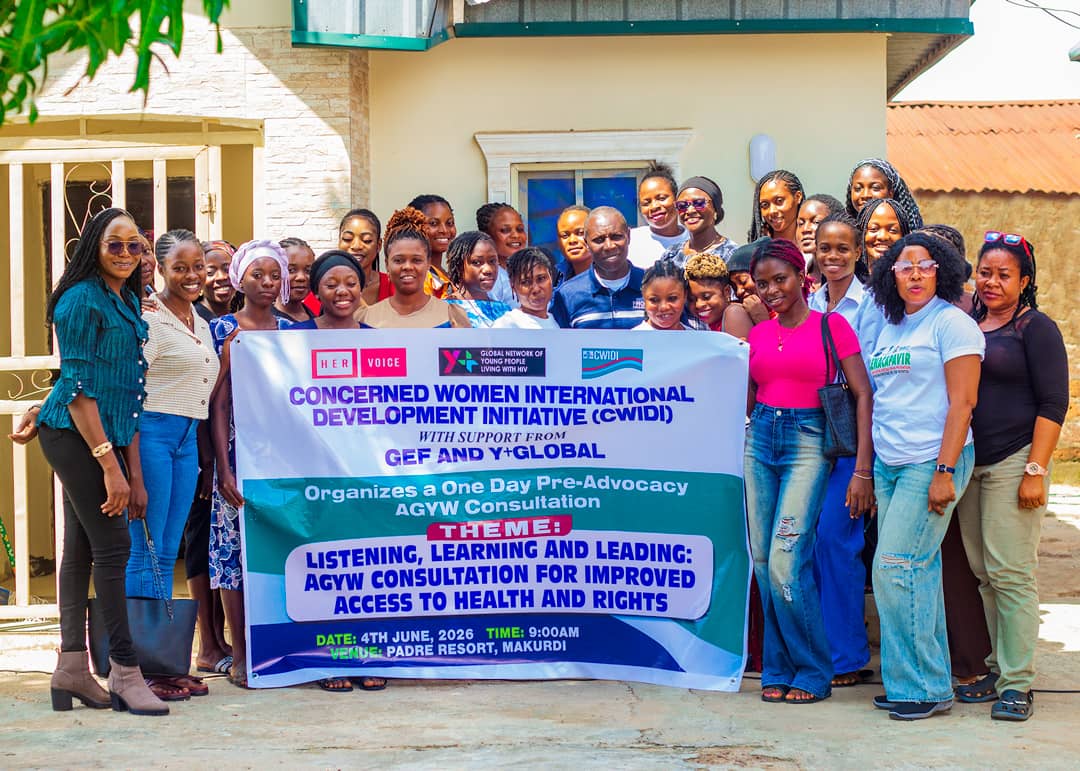
By Attah Ede, Makurdi
Adolescent Girls and Young Women (AGYW) in Benue State have been urged to speak out against Gender-Based Violence (GBV) in order to protect their health rights and secure their future aspirations.
The Executive Director of Concerned Women International Development Initiative (CWIDI), Becky Gbihi, made the call during a one-day Pre-Advocacy Consultative Engagement held at Padre Resort, Makurdi.
The engagement, themed “Listening, Learning and Leading for Improved Access to Healthcare and Rights,”was organized by CWIDI in collaboration with GEF and Y+ Global to strengthen the capacity of 25 Adolescent Girls and Young Women in Benue State.
Gbihi noted that many AGYW in the state continue to face violence, discrimination, and exclusion in accessing healthcare services, justice, and participation in government decision-making processes.
She explained that the programme was designed to equip participants with knowledge on healthcare access, legal rights, leadership, and active participation in policies and decisions that affect their lives.
“We want to instill leadership qualities in the participants and equip them with knowledge on health and rights. The essence of this engagement is also to provide a platform for AGYW to share the barriers they face so that CWIDI can effectively advocate on their behalf,” she said.
According to her, the meeting also identified key stakeholders for follow-up advocacy aimed at addressing the challenges raised by participants.
In a presentation titled “Understanding Gender-Based Violence and Survivor-Centred Responses,” the Lead of the Centre for Family Empowerment, Mr. Emmanuel Zia, trained participants on various forms of violence, including physical, sexual, emotional, and economic abuse, as well as child marriage and online violence.
He advised caregivers and support providers to prioritize survivors’ safety, maintain confidentiality, treat victims with dignity, and avoid blame or judgment, stressing that negative attitudes often worsen survivors’ trauma.
“Victims should be provided with emotional security and assured of strict confidentiality. This guarantees their right to privacy and helps build trust,” Zia said.
He further encouraged participants to utilize the knowledge gained from the training to advocate for improved healthcare, education, gender equality, environmental protection, and disability rights by engaging relevant stakeholders.
During group discussions, participants identified inadequate budgetary allocation to the health sector and a shortage of medical personnel at primary healthcare facilities in rural communities as major barriers to quality healthcare access.
They also highlighted malaria, unsafe abortion-related complications, and tuberculosis as pressing health challenges affecting AGYW and called on government and philanthropic organizations to provide urgent interventions.
One of the participants, Miss Doofan Dugba, expressed appreciation to the organizers, saying the training broadened her understanding of GBV response and how to support survivors without stigmatization.
Another participant, Miss Tondo Iveren, said the workshop changed her perception that women should be treated as second-class citizens.
“The knowledge I gained from the workshop has helped me understand that women have rights, and whenever those rights are violated, they should speak up,” she said.
She added that she now knows where to report cases of abuse, how to overcome fear of perpetrators, and pledged to replicate the knowledge gained in schools and communities.
Also speaking, Miss Vera Anjov described the engagement as highly educative but recommended that future editions allocate more time for group discussions to enable participants to identify and proffer solutions to a wider range of challenges affecting AGYW.


JAMB Opens Portal for Printing of 2026 Mop-up UTME Slip
ShareThe Joint Admissions and Matriculation Board has announced that candidates scheduled for the 2026 Mop-Up Unified Tertiary Matriculation Examination can now print their examination notification slips ahead...
Dismisses Admission Exclusion Claims
ShareThe Nigerian Defence Academy (NDA) has dismissed reports claiming prospective candidates were excluded from admission into its 78 Regular Course due to portal closure. The Academy described the...


CBN Updates Forex Rules, Approves $50,000 Limit for Travellers
ShareBy Tony Obiechina, Abuja The Central Bank of Nigeria (CBN) has released revised foreign exchange (FX) guidelines, introducing new rules...
NUPRC, NNRA Partner on Compliance Costs, Safety Oversight
ShareBy Tony Obiechina, Abuja Nigeria’s drive to strengthen its petroleum industry received a boost as the Nigerian Upstream Petroleum Regulatory...


Army Rescues 360 Abducted Women, Children in Borno Operation
ShareBy David Torough, Abuja Nigeria’s security forces recorded a significant breakthrough in the fight against terrorism and kidnapping as troops...

Stakeholders Seek Better Healthcare Access for Benue Adolescent Girls
ShareBy Attah Ede, Makurdi Adolescent Girls and Young Women (AGYW) in Benue State have been urged to speak out against...


Nigeria Customs Hosts Diplomatic Reception to Strengthen Global Partnerships, Trade Relations
ShareBy Tambaya Julius, Abuja The Nigeria Customs Service (NCS) on 3 June 2026 hosted a high-level diplomatic cocktail reception in...

Tinubu To Commission Fruit Juice Factories, BIPC Motorcycle Assembly Plant In Benue
ShareFrom Attah Ede, Makurdi President Ahmed Bola Tinubu is set to visit Benue State to commission the newly built ultra modern Bensono Concentrate Plant, Benva Juice Factory, and the Motorcycle Assembly...

Dangote Refinery Surpasses Capacity Target, Eyes 1.4m bpd Expansion
ShareBy David Torough, Abuja Dangote Petroleum Refinery and Petrochemicals has achieved a major operational milestone by increasing its crude oil processing capacity to 700,000 barrels...


Alia Appoints New Acting Head of Service in Benue
ShareFrom Attah Ede, Makurdi Benue State Governor, Rev Fr .Hyacinth Alia has approved the appointment of Dr. Ihu Eunice Ogbenyi as new Acting Head of Service (HoS)...