
COVER
JAMB Sets 150 Cut-off Mark for University Admissions

By Tony Obiechina Abuja
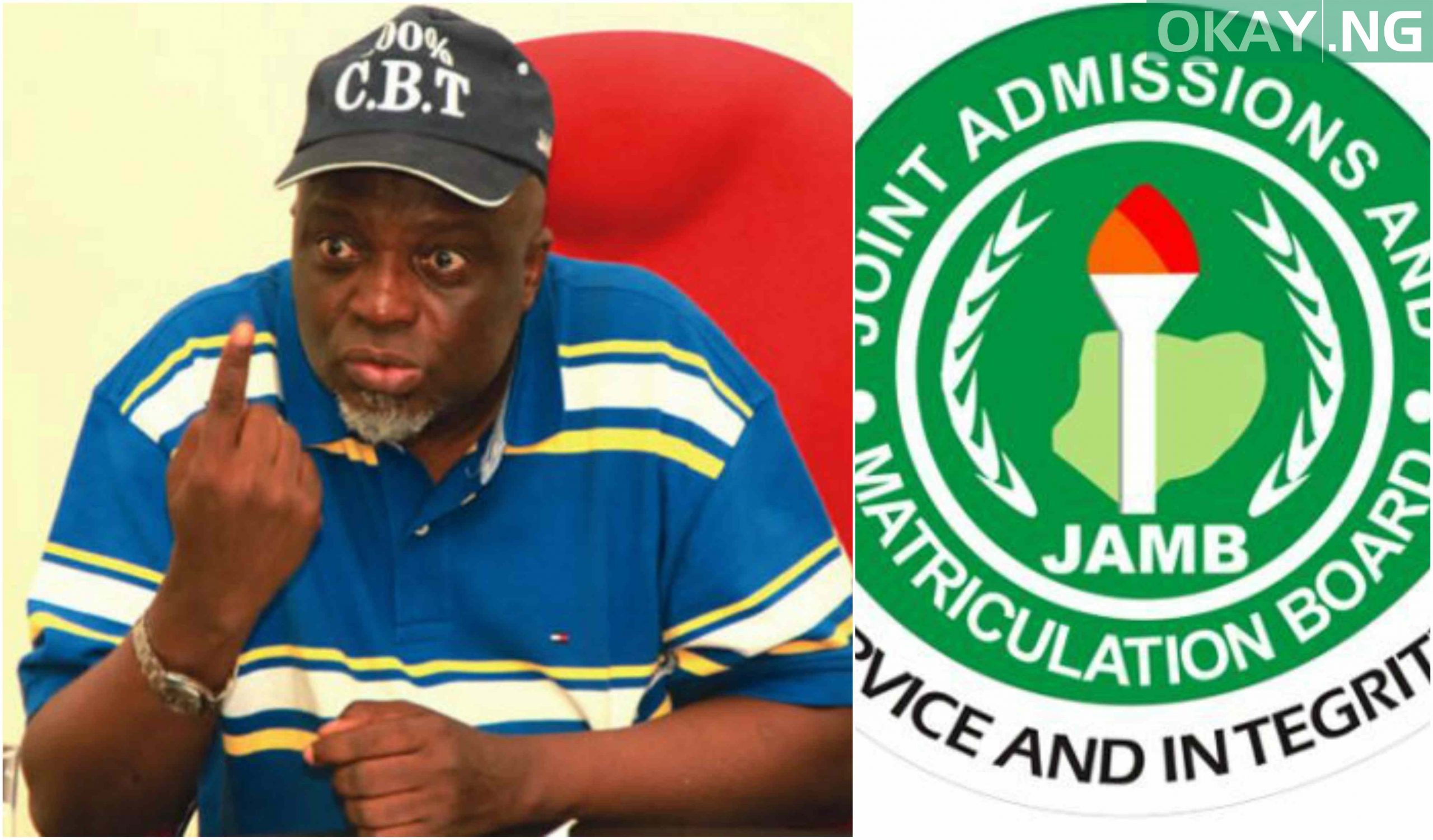
The Joint Admissions and Matriculation Board (JAMB) has fixed 150 as the minimum cut-off mark for admission into Nigerian universities for the 2025/2026 academic session.The decision was reached on Tuesday during the 2025 Policy Meeting on Admissions, held at the Bola Ahmed Tinubu International Conference Centre in Abuja, with stakeholders from various tertiary institutions in attendance.
According to JAMB, 140 was approved as the minimum score for colleges of nursing sciences, while polytechnics, colleges of education, and colleges of agriculture will admit candidates with a minimum score of 100.“The minimum admissible scores for admissions for the next academic session have been fixed at 150 for universities, 100 for polytechnics, 100 for colleges of education, and 140 for colleges of nursing sciences by the stakeholders (Heads of Tertiary Institutions),” JAMB announced via its official X account.FG Dismisses ASUU Strike RumourThe Minister of Education, Dr. Olatunji Alausa said categorically that the Academic Staff Union of Universities (ASUU) is not on strike.This came after the ASUU directed all its branches nationwide to suspend their services due to the delay in the payment of June 2025 salaries.The ASUU President, Prof. Chris Piwuna, in an interview with newsmen on Tuesday, said the decision was in line with the union’s “No Pay, No Work” resolution.However, Alausa said the Federal Government has been working to ensure industrial harmony in the nation’s tertiary institutions.However, Alausa said the Federal Government has been working to ensure industrial harmony in the nation’s tertiary institutions.The minister in a statement signed by the minister’s Director, Press and Public Relations, Boriowo Folasade, said public tertiary institutions have remained open and stable for the past two years, a feat that has not been achieved in several decades.The Minister reassured that the welfare of both academic and non-academic staff remains a top priority for the Federal Government, in line with President Bola Tinubu’s Renewed Hope Agenda for Human Capital Development.“It is not by coincidence that Nigerian Public Tertiary Institutions have remained open and stable for the past two years, something that has not happened in several decades,” the Minister stated.“This is a reflection of our government’s unwavering commitment to maintaining cordial relationships with all stakeholders in the education sector. We are meeting demands in phases, and we are doing so respectfully and consistently,” he said.He emphasised that the government will continue to improve working conditions and protect the academic calendar.Alausa urged the public to disregard any misinformation suggesting that ASUU is on strike, reiterating that the current stability in the university system is a joint achievement that must be preserved.He added that the Federal Government will continue to work closely with all unions in the education sector to ensure uninterrupted education for students.“Our children are the heartbeat of the nation, and their uninterrupted education is non-negotiable. The Federal Government will continue to work closely with all unions in the education sector to ensure that the gates of our institutions remain open,” he added.FG Sets 16 Years as Minimum Age for Tertiary Institutions AdmissionThe Federal Government has formally set 16 years as the minimum age for admission into Nigeria’s tertiary institutions.The Minister of Education, Dr. Tunji Alausa, made the announcement during the opening session of the Joint Admissions and Matriculation Board (JAMB) Policy Meeting held in Abuja on Tuesday.Dr. Alausa emphasized that any admission conducted outside the Central Admission Processing System (CAPS) would be deemed illegal, warning that institutions and individuals involved in such practices would be prosecuted.He stressed that the age requirement is mandatory and non-negotiable, adding that heads of institutions found complicit in admission fraud will face strict legal consequences.Meanwhile, heads of universities at the 2025 policy meeting organised by the Joint Admissions and Matriculation have set the 2025 minimum admission benchmark for universities at 150.This means that JAMB will permit no university in the country to admit any candidate who scores below 150 in the 2025 Unified Tertiary and Matriculation Examination.However, certain institutions like the University of Ibadan, Pan-Atlantic University, and the University of Lagos, among others, set their benchmark at 200.However, some newly established private universities proposed UTME scores of 120. But the Registrar of JAMB, Prof. Ishaq Oloyede, suggested 160.
By Tony Obiechina, Abuja
The Development Bank of Nigeria Plc (DBN) has launched DAWN: DBN Action for Women in Nigeria, unveiled its Impact Report and presented MSME Data Assets at the seventh edition of Annual Lecture held in Abuja.
DBN, in a statement on Thursday, said while delivering a welcome address, its Managing Director and Chief Executive Officer, Dr Tony Okpanachi, said the central challenge was no longer reforms themselves but ensuring benefits reach businesses at end of the chain.
He asked how to make sure benefits reach traders in Onitsha, fabricator in Aba, farmer in Kebbi and young founder in Yaba, noting that MSMEs accounted for about half of Nigeria’s GDP and more than eight in every ten jobs, adding that when reform works for MSMEs it works for most Nigerians.
He explained that reform becomes prosperity only when entrepreneurs can act on it whether through long tenor loans to buy equipment, banks willing to take risk or skills and records needed to grow.
He said working through Participating Financial Institutions DBN provides longer term funding, partial credit guarantees through subsidiary Impact Credit Guarantee Limited and capacity building including Entrepreneurship Training Programme.
He disclosed that as at December 2025 DBN had disbursed a cumulative N1.4 trillion to MSMEs through 84 Participating Financial Institutions creating about 1.6 million jobs nationwide.
Under the new five year strategy, the Bank aims to reach more than two million MSMEs with deliberate targets for women led businesses, youth led businesses and underserved states.
On DAWN, Okpanachi said finance alone had not enabled enough women-led businesses to scale.
He said initiative brings together financing, guarantees and credit support, technical assistance, outcome linked grants and market linkages delivered through banks, microfinance institutions, fintechs, aggregators, cooperatives and direct channels.
Its priority sectors are agriculture and exports, healthcare, arts and creatives, technology and green business.
He said DAWN is about moving gender focused lending beyond intention and turning access into opportunity.
On the sidelines of the lecture DBN and African Development Bank held a signing ceremony of AfDB DBN 61 million United States dollars Gender Line of Credit development that reinforces Bank commitment to women led enterprises.
Okpanachi urged Participating Financial Institutions to extend lending into sectors and states where access to finance has been limited, policymakers and regulators to measure reform by what changes for business at end of chain and MSMEs to formalise, keep good records and use support now available.
The Vice President as Special Guest of Honour was represented by Dr Fred Iklaga Senior Technical Adviser in the Office of Special Adviser to the President on Economy.
Keynote speakers were Chief Executive Officer of MTN Nigeria, Dr Karl Toriola, and Chairman of Nigeria Sovereign Investment Authority, Dr Segun Ogunsanya.
Fireside chat featured Chief Executive Officer of Sterling Bank Abubakar Suleiman, manufacturing and trade entrepreneur Mrs Omoyemi Chukwurah and by video Kola Masha of Babban Gona.
The Secretary to the Government of Federation, represented by Augusta Warren Bekaredebo, said 2026 tax reforms would bring relief to many small businesses expressing optimism that a lot of businesses will be smiling by next year because they will be exempted from tax.
By Tambaya Julius, Abuja
The Nigeria Labour Congress (NLC) has threatened possible nationwide industrial action following the failure of talks with the Federal Government over workers’ welfare, petrol prices and other outstanding labour demands.
The warning came after a meeting between the government and organised labour at the Ministry of Labour in Abuja on Thursday, October 22, ended without an agreement.
The congress has given the Federal Government until Tuesday, October 27, to make meaningful progress on the issues, warning that its relevant organs would decide the next line of action if the next meeting fails to produce concrete commitments.
The NLC has also directed its affiliates, state councils and civil society allies to begin mobilising members for possible nationwide action.
In a statement issued after the meeting, the NLC Acting General Secretary, Benson Upah, expressed disappointment over what he described as the government delegation’s lack of preparedness for the negotiations.
According to the congress, organised labour presented its demands in good faith but left the meeting without any concrete commitments from the government.
The demands include a reduction in petrol prices to 2024 levels, renegotiation of the national minimum wage, implementation of agreed tax relief measures and resolution of the terms of settlement involving the Joint Health Sector Unions (JOHESU).
The congress also called for the resolution of issues raised by the Joint Public Service Negotiating Council (JPSNC) over peculiar allowances, wage awards and hazard allowances.
The NLC said the government delegation lacked the necessary authority to engage meaningfully on the issues presented by labour representatives.
“The meeting between the Federal Government and organised labour, convened at the Ministry of Labour in Abuja on 22nd October 2026, has ended without resolution,” the statement said.
It added that the Minister of Labour requested that the meeting be adjourned until October 27 to allow the government to prepare adequately for further discussions.
The preparations, according to the statement, would include bringing relevant ministers and heads of departments and agencies to the negotiating table.
The congress said it remained open to dialogue but would not accept continued delays in addressing workers’ concerns.
“We will report back to our organs, and if no meaningful progress is made on Tuesday, the relevant organs of the NLC will decide the next line of action,” it said.
The labour body urged workers and members of the public to remain calm while the negotiations continue, even as it directed its affiliates and allies to prepare for possible industrial action.
“However, we urge all affiliates of NLC and TUC; all state councils and our civil society allies to be alert and start mobilising for a possible action across the nation while we hope that the tenets of our demands are met by the government,” the statement added.
The October 27 meeting is expected to provide another opportunity for both sides to address the outstanding issues and prevent a possible escalation of the dispute.
However, the NLC’s decision to begin mobilisation suggests that tensions could rise if the next round of talks fails to produce meaningful progress.
The Federal Road Safety Corps (FRSC) has barred its personnel from escorting politicians during campaigns for the 2027 general elections.
Zonal Commanding Officer, RS6, ACM Abimbola Owolabi, gave the directive during her maiden visit to the Cross River Command in Calabar on Wednesday.
Owolabi said patrol vehicles and sirens must not be used for political activities or private engagements, including weddings and funeral processions.
She directed officers deployed to campaign venues to focus exclusively on traffic management to prevent congestion and road crashes.
The zonal head warned personnel against leading political convoys or providing escorts for politicians, stressing that official vehicles must not be used for unauthorised purposes.




2027: FOOG Women Coordinator Urges Nigerians to Support Tinubu’s Re-election Bid
ShareBy Francis Sadhere, Warri Chief (Mrs) Esther Orighomisan Okotie-Eboh, Coordinator of Felix Omagbemi Ogbe Group (FOOG) Women Support Group for...


Troops Neutralise 217 Terrorists, Rescue 349 Kidnap Victims, Arrest 333 Suspects in Oct
ShareBy David Torough, Abuja The Armed Forces of Nigeria (AFN) say troops neutralised 217 terrorists and other criminals, rescued 349...


2027: Tompolo Mobilises Support for Tinubu in Ogun, says Economy Stabilising
ShareThe Grand Patron of the PBAT Door-to-Door Movement, Government Ekpemupolo, has called on the people of Ogun State to massively...

Henry Okeke Commends Mbah for Clearing Pension Arrears in Enugu
ShareBy Raphael Atuu, Abuja Barrister Henry Nnanna Okeke, a member of the Governing Council of Enugu State Polytechnic, Iwollo, has...


2027: ADC Urges ECOWAS to Insist on Credible Elections in Nigeria
ShareThe National Chairman of the African Democratic Congress (ADC), Sen. David Mark, has urged the Economic Community of West African...


Obi Promises Emergency Measures on Security, Corruption, Poverty
SharePresidential candidate of the Nigeria Democratic Congress (NDC), Peter Obi, has promised emergency measures to tackle insecurity, corruption, hunger and...


Why I Chose Music over Football – Mr Eazi
ShareAfrobeats star Mr Eazi has claimed that English club Chelsea FC wanted to sign him before they signed former Super...


Court Grants Odumodublvck’s Lawyer Prayer for Adjournment
ShareAn Abuja High Court sitting in Life Camp on Thursday, granted another adjournment in the assault trial of a rapper,...


RMD Makes History as PAO Conference Keynote Speaker
ShareVeteran Nollywood actor Richard Mofe-Damijo, popularly known as RMD, is set to become the first male motion-picture practitioner to deliver...
Telecom Vandalism: The Human Cost of Nigeria’s Network Disruptions
ShareBy Usman Aliyu Going into labour in Benin City, Edo, Grace Osagie anticipated calling her husband, but unexpected phone issues...