
JUDICIARY
Judiciary and the Future of Elections in Nigeria, By Sebastian Hon


I thank the Chief Judge of Benue State, Hon. Justice Maurice Ikpambese, who has deemed me fit and proper to once again deliver the lead paper at the 2023/2024 Legal Year of the Benue State Judiciary. I performed similar roles in 2009 (just a year after my elevation to the rank of Senior Advocate of Nigeria) and in 2019, about four years ago.
I must say that the theme of this year’s Legal Year in Benue State is most suiting, given the stark realities popping their eyes into our very faces as Nigerians.
As stakeholders in the Legal Profession, we cannot pretend that all is well with the Profession in Nigeria and more particularly, with the Nigerian Judiciary, which is facing all manner of incendiary attacks left, right and centre. Never in the history of this Nation has the Nigerian Judiciary faced such attacks as this year! May that day never come when Nigerians will rise up in arms against members of the Legal Profession, including members of the Judiciary. In Jesus’ Name I pray.This Paper, which, in my humble opinion, is a rushed assemblage of all authorities I can gather (no thanks to my gruelling Election Petition schedule) is, therefore most relevant at this moment, to refresh our memory. Kindly forgive any noticeable inadequacies in the presentation – as I just realised on Thursday, 14th September, 2023, that I had an all-important Paper to present before your Noble selves on Saturday, 16th September, 2023.
[B] MAIN PAPER DISCUSSED
The judicial powers of the Federation are vested in the courts established for the Federation of Nigeria, as specified in detail, in section 6(1)-(6) of the Constitution of the Federal Republic of Nigeria, 1999 as amended.
On the other hand, the jurisdiction of all these Courts are as prescribed by the same Constitution under Chapter VII. We shall go no further, since any further discussion on this will stray us far away from the bounds of today’s discourse.
I have segmented this Paper into several subheadings, for easier comprehension and appreciation.
The Nigerian Judiciary as the Guardian of the Constitution
All democratic powers in Nigeria today, including the Judiciary, derive their source from the Constitution of the Federal Republic of Nigeria, 1999 as amended; hence this all-important gathering must appreciate the role the 3rd arm of government, the Judiciary, plays in protecting the said Constitution. This role, the courts play, by insisting on scrupulous compliance with the provisions of the said Constitution, to not only establish an enduring democratic culture, but also to deepen it. Case law supports this in unmistaken terms.
Thus, in Alamieyeseigha vs. FRN, the Court of Appeal held emphatically as follows:
The judiciary has a fundamental role to play as the protector and guardian of the Constitution. They further have the mandate to curb the excesses and overbearing executive and legislative act by their judicious pronouncements. [Emphasis mine]
In Abubakar vs. INEC, I.T. Muhammad, CJN, delivering the lead judgment of the Supreme Court in a hotly-contested presidential election, held as follows:
In interpreting the provision of the Constitution, which is the organic law of the land or the grundnorm, care must be taken to give it the real meaning which the people had in mind in adopting its provisions. Speaking along this line, Mudapher, JSC (as he then was), in Brigadier Marwa & ors v. Admiral Nyako & ors (2012) LPELR-7837(SC) pages 45-46, paragraphs B-A; (2012) 6 NWLR (Pt. 1296) 199 adopted with approval the dictum of Chief Justice Dickson in the Supreme Court of Canada, in Hunter v. Southam Inc (1984) 2 SCR 145 wherein his Lordship made the following comments:-
“The task of expounding a Constitution is crucially different from that of construing a statute. a statute defines present rights and obligations… a Constitution by contrast is drafted with an eye to the future. Its function is to provide a continuing framework for the legitimate exercise of governmental power…. It must therefore, be capable of growth and development over time to meet new social, political and historical realities often unimagined by the framers. The judiciary is the guardian of the Constitution and must in interpreting its provisions, bear these considerations in mind.” [Emphasis supplied]
The Nigerian courts perform the role of ‘guardians’ of the Constitution because they are the ones symbolically vested with powers to take ‘custody’ of same. Thus, the Supreme Court rightly described the Nigerian Judiciary as “the custodian of the Constitution.”
In the discharge of this deeply important role, the Nigerian Judiciary must always know and appreciate that enthroning a genuine democratic process and then deepening it as a culture is a must, for even the very same Judiciary to function well. Thus, in Ukpo vs. Imoke, Salauwa, JCA (as he then was) held that section 14 of the 1999 Constitution as amended “allowed [section] 40 above the importance of entrenching a viable hitch free electoral process with a view to ensuring a true and dynamic democratic culture vis-à-vis good governance in the country.” And, after quoting sections 6(1) and (2) and 13 of the same Constitution, his lordship rammed home the point why we are here, on page 177, thus:
Thus, I have deemed it expedient to reiterate that the role of the judiciary cannot be over emphasised. It is instructive that never has the judiciary of this great nation had so much to gain, or so much to lose – in terms of prestige and honour. It is my belief that the judiciary has a sacred, albeit arduous duty to salvage this nation. And as judges, we must strive to rise up to that challenge. For only then can we earn for ourselves the gratitude of the people, and as parties in the temple of justice, the eternal blessing of the Almighty God (The Supreme Judge).
This, then represents the true and rightful role the Nigerian Judiciary must play and do so ceaselessly; otherwise, as aptly captured in the dictum above, this “would make the judiciary lose its credibility and legitimacy….” No person would like this; and indeed, no sane person likes the current perception of the Nigerian Judiciary in the eyes of the common man.
The greatest challenge against the integrity of the Nigerian Judiciary is its handling of political matters. Rightly or wrongly, many Nigerians have come to the conclusion that there is no or little justice in political or politically-exposed matters.
Politics anywhere is a game that builds and consumes all consumables – be they highly or lowly placed; be they institutions or animated beings. Political activity, which is the stepping stone to democracy, is almost always hydra-heightened, building and destroying individuals and institutions, as each performs their roles or as each becomes a victim along the way. The Supreme Court acknowledged the power play in politics in the recent case of Waziri vs. PDP, in the following words:
It must be noted that politics and electioneering is not only a game of number[s] and popular choice but a game of gimmicks and outsmart. Everyone devices every means to size down and knock out his opponents in order to get the upper hand.
In Nigeria, as things are presently, the Judiciary seems to be at the receiving end of this political gimmickry, which represents, throughout the history of Nigeria, the greatest threat to the survival of our democracy, nay, the Nation.
Whether we like it or not, the Judiciary performs very sacred and delicate functions, leading to grave changes in the socioeconomic and political landscape of any given nation; or leading to the cementing of the existing structural status quo. That is the more reason why our respected Judges and Justices must, as a matter of utmost urgency and necessity, arrest the negative public perception of the Nigerian Judiciary – which will go far into salvaging what we have left as a Nation.
By way of a brief but decisive starting point, I strongly counsel, with due respect, that the Nigerian Judiciary should remain apolitical; and I have support in the decision of the Court of Appeal in Gadi vs. Male, where it held that in a society which upholds the rule of law “as a way of life,” the Judiciary must be “apolitical.” Accordingly, that, where the issue before the court smacks of enormous political interplay, judicial pronouncements founded on the Judex’s personal conviction, if made part of the judgment, “would make the judiciary lose its authority and legitimacy.”
The Supreme Court reiterated this stand in the case of INEC vs. Yusuf, where Peter-Odili, JSC, held as follows:
Without question, the court is enjoined to interpret statutes as they are without going outside it to bring in what the court would think was intended. I shall refer to some dicta of this court in that wise. See Obi v. INEC & Ors. (2007) LPELR-2166(SC); (2007) 11 NWLR (Pt. 1046) 560 at 543 paras. F-G wherein Aderemi, JSC put it admirably thus:
“The intention of the legislature, or put bluntly, the intention of [the] National Assembly at the federal level or the State House of Assembly at the State level, is not to be judged by what is in its mind but by its expression of that mind couched in words of the statute. If at the end of the interpretative exercise carried out on the provisions of statute or Constitution, a judex’s personal conviction as to where the justice and rightness of the matter lies is returned, that would make the judiciary lose its credibility and legitimacy….”
It is in the light of this cold reality of the Nigerian public and even the international community downgrading the respect for the Judiciary that I hereby urge, once again, a sober and even solemn rethink. This is just the stark truth! Et seq.
The Nigerian Judiciary should, barring some exceptions, apply the law as it is
The Judiciary should always, save where the known exceptions apply, interpret electoral and other laws as they are, under the literal rule of interpretation. Thus, if the Electoral Act of any year has not provided for any situation or has not addressed any issue, the Judiciary should not, through judicial legislation, fill in the gap. Also, if a previous provision in an Electoral Act is omitted in a subsequent Electoral Act, the courts must not attempt to fill the gap, in the guise that it was a mistake made by the Legislature. Thus, in Action Congress vs. INEC, the Supreme Court was called upon to overrule the provisions of the Electoral Act, 2006, which terminated the power of INEC to disqualify candidates. That Court, per Onnoghen, JSC (as he then was), held on pages 275-276 that the lawmaking powers of the Federation resided in the Legislature and not the Judiciary; hence the latter lacked power to amend, add to or subtract from those provisions. His lordship concluded thus:
In the instant case, the legislature thought it right and proper, and for good reason, to take away the powers of the respondent to disqualify candidates earlier granted it by the very legislature. I hold the considered view that it would be improper, nay illegal, for this court to read into either the Act or Constitution what is clearly not stated therein just to allow the respondent to continue to exercise power that no longer belongs to it by express enactment. If the legislature feels that it made a mistake by omitting the provision in subsection (8) of section 21 in the Electoral Act, 2006, it is its duty to amend the law.
I have nothing to add.
The Nigerian Judiciary must remain an impartial arbiter, no matter the so called ‘political interests’ involved
The Judiciary, in order to properly guide Nigeria through the electoral process and then enrich its jurisprudence and ultimately sustain our hard-earned democracy, must remain neutral in all cases and situations, including the so called high profile political matters. The apex Court captured this in the case of Tafida vs. FRN, per Aka’ahs, JSC, thus:
In order to engender confidence in the people, the judiciary must be seen to be neutral in its decisions and must at all times act as the blindfold[ed] maiden who holds the scales of justice evenly to ensure that no party has unnecessary advantage over the other and the state of equilibrium is tilted by the weight of evidence put forward by a party.
In the earlier decision of Okotie-Eboh vs. Manager, the apex Court had explained this mystery of the blindfolded woman thus:
Justice is often depicted as a blindfolded woman with a sword in one hand and a scale on the other hand. Those who are called to mete out justice are not blindfolded. They can see with their two eyes and reason with their head. In the application of the law to meet the end of justice it is important to recognize that men and women now live in a dynamic society and the interpretation of the provision of any statute should mirror the societal accentuation of the society and understanding of the nature of man or woman.
The Nigerian Judiciary must resist inordinate requests for ex parte or so called ‘urgent’ orders
Litigants qua lawyers, especially in the pursuit of electoral justice or contrived electoral justice, rush to court and secure, many at times, orders that upon proper consideration, ought not to have been made. This, too, should be discouraged; and the body to do that is the Judiciary. Thus, after decrying entertainment of speculative suits, the Supreme Court held in Nworka vs. Ononeze-Madu, firmly as follows:
Borrowing from the wisdom of the lower court in its ruling of 2nd November, 2004 in respect of this appeal, per Monica Boln’an Dongban-Memsen, JCA, at page 132/273 of the supplementary record of appeal:
“The judiciary must insulate and protect itself and the society from the impatience of litigants who seek judicial orders at all cost. the rule of law must be upheld at all times and only when proper procedures are observed and upheld can the rule of law subsist.”
Let us all remember the “Association for Better Nigeria” (ABN) inglorious days of the late Arthur Nzeribe, where conflicting ex parte orders destroyed the fledging democratic experiment of 1993! History, they say, has a way of repeating itself! Let us be ware!
Nigerian Judiciary must always ensure and enforce internal democracy in political parties
Where a court of law is not deprived of substantive/subject matter and or territorial jurisdiction, it should, without fear or favour, compel, through sound and unbiased judicial decisions, political parties to ensure internal democracy within their ranks, which will further deepen our electoral system and democracy. The Supreme Court drove home this point in the case of Abubakar vs. Buhari, while voiding an illegal substitution of the candidate who won the primary election with the preferred candidate of the leaders of the concerned political party, in the following words:
It is once again necessary to reiterate the fact that political parties must embrace internal democracy if our democratic process is to yield the desired outcome of a government of the people, for the people and by the people. Charity begins at home. Political parties cannot continue to act in brazen disregard of their own constitution and guidelines, as well as the Electoral Act and the Constitution of the Federal Republic of Nigeria, 1999, (as altered), in the conduct of its affairs and expect such acts to be endorsed by the courts. The essence of our democratic process is that the people are allowed the freedom to choose their representatives at every level of governance. A political party has no right to impose its will on its members. Let there be an even playing field and let the chips fall where they may. As we have stated over and over again, while it is true that the choice and sponsorship of a candidate for election is the internal affair of the party, which the courts ordinarily have no right to interfere with, a narrow window has been provided by section 84(14) of the Electoral Act 2022 (previously section 87(9) of the Electoral Act, 2010 as amended) to grant an aspirant who participated in the election in issue, the right to approach the court for redress where the provisions of the Electoral Act, 1999 Constitution, as amended, or the party’s constitution and guidelines have not been complied with in the choice of candidate. [Emphasis ours]
Similarly, the Supreme Court held in Uba vs. Moghalu that when persons holding high offices in political parties feel too powerful to be governed or controlled by the party constitution and guidelines and consequently produce the result of a primary election which never took place/which allegedly took place but not within the prescribed time and party rules, then this is recipe for anarchy in the body polity of Nigeria. Kekere-Ekun, JSC, once again echoed loudly on pages 311-312 thus:
The law is quite settled that political parties must obey their constitution, guidelines and regulations. In A.P.C. v. Karfi & Ors. (2017) LPELR – 47024(SC) @ 33 – 34 A – A; (2017) 16 NWLR_(Pt. 1592)_ 457. His Lordship, Okoro, J.S.C. held, inter alia:
“The era of recklessness and impunity by political parties is over, it is an aspect of corruption for a political party to disobey Its constitution and guidelines in order to impose candidates on the electorate. This court has taken a firm stand that this must stop. It is in the interest of our nation that political parties observe internal democracy for the smooth running of our democratic process.”
In my concurring judgment in Mato v. Hember & Ors. (2017) LPELR – 42765 (SC) @ 51 A – C; (2017) 6 SC (Pt. VI) 161; (2018) 5 NWLR (Pt. 1612) 258, I opined thus:
“The only way our democratic dispensation can work effectively is where an aspirant for political office, who is qualified to contest an election, is given an even playing field. The failure of internal democracy within our political parties right from the grassroot level eventually leads to instability in the entire political system. The failure of internal democracy is one of the reasons why the courts dockets are congested with pre-election disputes.
What more do we have to say? The dicta above and in many more decisions not captured here show once again that, by enforcing internal democracy within political party structures, the Nigerian Judiciary is directly or indirectly exerting positive impact on the entire democratic process in Nigeria. No judicial posturing could be better in this respect!
Nigerian Judiciary owes Nigeria a duty to stop forum shopping
Forum shopping has been defined as the practice of a litigant choosing the most favourable court in which his matter or cause may be entertained or adjudicated upon. This definition alone is demeaning and disgusting enough!
Such litigants, intent on pulling a fast one on their opponents, claim that Rules of Superior Courts of Record in Nigeria allow this – when such Rules do not confer jurisdiction on the courts with such potentially favourable disposition to them. Courts of law, led by the Supreme Court, have seriously deprecated this sharp practice, but both the Bar and the Bench are far from putting an end to it, much to the consternation and astonishment of many.
Such bold attempt to circumvent justice was made in Mailantarki vs. Tongo, where it was argued that, since the Civil Procedure Rules of the FCT High Court provided that a suit could be filed where one of the defendants resides, this donated jurisdiction to the FCT High Court over a pre-election matter that arose in Gombe State. In dismissing these arguments, Eko, JSC, who delivered the lead judgment of the apex Court, held quite unassailably on pages 85-86 thus:
Let me quickly deal with the argument of the learned senior counsel to the effect that, by dint of Order 9 rule 4(1) and Order 22 rule 5 of the FCT High Court (Civil Procedure) rules, the FCT High Court can exercise jurisdiction over the cause of action that arose in Gombe State. The law is settled that the jurisdiction of a court of record, in its broad and substantive sense, cannot be conferred by the rules of court. The rules of court are only made, pursuant to the powers conferred on the heads of courts by the [Constitution to make rules, to regulate practice and procedure in their respective courts. The rules they make are only to regulate the practice and procedure in their respective courts. The rules do not confer jurisdiction on the court to entertain causes or matters. Rather, the jurisdiction of courts in Nigeria is either conferred for vested by the Constitution or the enabling statute establishing the court. This is my understanding of the dictum of Obaseki, JSC in Clement v. Iwuanyanwu (1989) 4 SC (Pt. II) 89; (1989) 3 NWLR (Pt.107) 39 on the question whether rules of court confer substantive jurisdiction on the court they relate to. My answer, therefore, to the submission of the appellant’s senior counsel on this, is that the FCT High Court does not derive any jurisdiction from its rules of practice and procedure to entertain any cause or matter, the dispute in respect of which arose in Gombe State or any other place outside the Federal Capital Territory, Abuja. It is my considered view that the jurisdiction vested in the FCT High Court by section 257(1) of the 1999 constitution to hear and determine any civil proceedings in which the existence or extent of a legal right, power, duty, liability, privilege, interest, obligation or claim is in issue is only to the extent of the disputes that arise within the territory of the Federal Capital Territory, Abuja. In Rivers State Government & Anor v. Konsult (Swedish Group) (supra), the poignant statement of the law, relevant and very material to our federal structure, is that a court in one State of the federation does not have jurisdiction to hear and determine a matter either exclusively within the jurisdiction of another state or which arose within the territory of another State. No court in any state, including the FCT High Court, has extra territorial jurisdiction.
His Noble lordship even came down harder on the perpetrators of this heinous judicial misdeed, in the later case of Pali vs. Abdu, thus:
The appellant attempted, unsuccessfully, to “steal” nomination as the candidate of the APC for Alkaleri/Kirfi Federal Constituency, in Bauchi State. He was checkmated. The suit, culminating in this appeal is one of the ploys politicians use, clearly an abuse of court’s process, to hoodwink the courts to endorse the illegalities they perfect in the field. But it should be drummed to every ear that the court, as the last hope of a common man, should not be conversely turned to be the last hope of the corrupt and desperate politicians seeking to wield power by all means. I notice the cause of action in this matter arose in Federal Constituency of Bauchi State Alkaleri/Kirfi on 7th December, 2014. Like in Dalhatu v. Turaki (2003) 15 NWLR (Pt. 843) 310; (2003) 7 SC 1, in which the cause of action also arose in Jigawa State; the appellant herein chose to come to Abuja FCT, as forum convenient, to litigate, in what appears to to be “forum shopping”, the practice that was very seriously decried in Dalhatu v. Turaki (supra). Taking into consideration all the offensive antics of the appellant leading to the commencement of the proceedings and till date, I should think an award of Two Million (N2,000,000.00) Naira as costs to each set of respondents will substantially indemnify them for the costs thrown away. Accordingly, I hereby order the appellant to pay to each set of respondents N2,000.000.00 as costs.
From the above authorities, forum shopping occurs, mainly, when a litigant leaves the State where the cause of action arose to institute his matter in another State of the Federation or the FCT Abuja, a practice the Supreme frowns at as being “highly reprehensible,” resulting in any affected matter being struck out for want of territorial jurisdiction and abuse of process.
Forum shopping also occurs when each of the parties approaches different courts seeking the same reliefs, in which case the court will hold the latter suit as an abuse of process. Forum shopping would be held to also have occurred when there is a pending matter before the High Court and then a subsequent Election is filed at an Election Tribunal over the same subject matter.
Similarly, when an aggrieved person files an election petition challenging the election of his opponent and the petition is finally determined against him by the highest court that hears and determines appeals emanating from such an election, it will amount to forum shopping which translates to a gross abuse of process for him to file a fresh suit at the High Court, seeking to nullify the candidature of that his opponent.
Noble law lords, I urge you with the highest level of humility, to resist, henceforth, any attempt by litigants qua Lawyers, especially in the political turf, to shop for so called favourable judicial fora, for the adjudication of their disputes. Again, I say that the definition of this inglorious term (namely, that it means a litigant seeking a favourable court or panel to institute his suit) is more than demeaning! We all must resist this with all our vigour, Noble law lords!
Nigerian Judiciary must respect and uphold amendments introduced by the Legislature to extant Electoral Laws
Law is dynamic, and so is our global society. Laws are always changed or altered, to suit prevailing socioeconomic and political changes. Ditto our Electoral Laws; and the courts, in order to keep pace with the moving train of such changes, must move along – since the Judiciary is only involved in the interpretation of law and not law making.
In Ararume vs. INEC, it was argued before the Court of Appeal that the then recently-promulgated section 34 of the Electoral Act, 2006, was merely cosmetic and barren, without any legal sanctions for breach. The court was tacitly urged to disregard it. The Court of Appeal disagreed but nevertheless suggested that the legislature should take the further step of stipulating sanctions. In an admirable fashion, Adekeye, JCA (as he then was), who delivered the lead judgment of that Court, held quite admirably on pages 156-157 thus:
In our democratic system of government the 1999 Constitution [in] section 6(6) vests the adjudicatory role on the judiciary. Interpretation of statute is an indispensable aspect of adjudication. It is not unusual to be guided or persuaded by historical facts culminating into the promulgation of certain laws in their interpretation for the comprehension of their subject-matter. This has followed the footsteps of the legislators who in their role as lawmakers have been guided by history of past events in promulgating laws to correct the mischief meant to be cured by such legislation. The court cannot but take judicial notice, informed by the plethora of authorities in our law reports on how the process of sponsorship, nomination and substitution of candidates were abused by indiscriminate and arbitrary changes in the past electoral exercise. I am most sure that section 31 was promulgated and inserted into the 2006 Electoral Act to curb the excesses of political parties. This is a welcome change as we cannot continue to play hanky-panky in our electoral process.
The Nigerian Judiciary must rescue itself from itself: Conflicting judgments and sitting on appeal against decisions of courts of coordinate jurisdiction must stop
In PDP vs. Lawal, the apex Court emphasised the equality of the three arms of government – the Legislature, the Executive and the Judiciary – but also made a statement that should elicit an awakening on the part of the Judiciary: that the Judiciary should not be tyrannical or arbitrary, even against itself! Salauwa, JSC, who delivered the lead judgment intoned thus:
The powers accorded the judiciary under section 6 of the Constitution are very far-reaching. Indeed, section 6 taken together with other provisions of the Constitution are collectively a safeguard to the individual against unwholesome arbitrariness, whether on the part of the Executive, the Legislature or even the Judiciary itself.
This then first takes me to the ugly area of courts dishing out conflicting judgments. In this regard I have to boldly but humbly admonish that my Noble law lords, nay, the entire Nigerian Judex, should abide by the wise counsel cum caution by the Supreme Court in the case of FRN vs. Nwosu, as thus:
The foregoing is a graphic demonstration of the essence of precedents in jurisdictions that observe them. They provide stability and certainty in the development of the law. Seemingly lazy and deliberate wrong appreciation of the ratio decidendi in an earlier decision which binds a court results in conflicting judgments on the same issue the attendant effect of which is… a disturbed and distorted development of the law.
Similarly, in PDP vs. Okorocha, the apex Court held that it amounts to “an act of disservice to the administration of justice” if a court closes its eyes to a previous judgment and decides otherwise; and that this would make the law “uncertain.” And in N.I.W.A. vs. S.P.D.C.N. Ltd., the Supreme Court linked failure to follow judicial precedents to anarchy in the judicial sector, thus:
There is no doubt that the principle of stare decisis is well entrenched in our jurisprudence and has helped to bring certainty to our laws as espoused by the courts; else there would be confusion and anarchy in the judicial process.
What happens to the Nigerian body polity when there is “anarchy in the judicial process” can only be imagined! We should avoid such like a plague!
However, not even our revered Supreme Court is spared by this affliction! While this paper will not extend to discussion on the details of such unworthy happenstance in the hallowed Chambers of the citadel of the Judiciary, I will speak, brevi manu, to my immediate audience on what to do when two or more judgments of the Supreme Court and the Court of Appeal conflict.
When a court other than the Supreme Court is faced with two or more conflicting judgments of the Supreme Court, it is bound to follow the latter or latest of those judgments. On the other hand, the Court of Appeal (and, consequently, the High Court) is bound by its previous decision or decisions. Thus, in Osho vs. Foreign Finance Corp., the Supreme Court held inter alia that “the Court of Appeal is bound by its previous judgments” and those of the Supreme Court.
Finally, it is settled law that Judges of the High Court have equal powers and exercise coordinate jurisdiction. The following courts have also been held to be of coordinate jurisdiction:
The High Court and the Lands Tribunal.
A State High Court and the FCT High Court.
A State High Court and the National Industrial Court.
The same Court sitting in two or morevdistinct Judicial Divisions.
Consequently, no such Judge has power to sit on his judgment or review the judgment of another Judge of coordinate jurisdiction.
However, a person affected by any decision of a court can approach the same court or another court of coordinate and competent subject matter and territorial jurisdiction to set it aside for want of jurisdiction, fraud, deceit or misrepresentation.
CONCLUSION
The Nigerian Judiciary occupies a very high and decisive place in the scheme of things in our democracy. The Judex should, please, note that rightly or wrongly, unprecedented searchlight has been beamed on the Nigerian Judiciary, especially in its efforts to sustain and deepen our democracy; hence, even though they have been doing fairly well, should do better.
I hereby repeat that may that day never come when the informed and the uninformed Nigerian will rise up in arms against us! May that day never come!
But we must also up our game. To say that this be done urgently is an understatement! May this never fall on deaf ears! I so pray o Lord!
Thanks; and God bless us all.
Chief Sebastine Hon , SAN, FCIArb., DSSRS
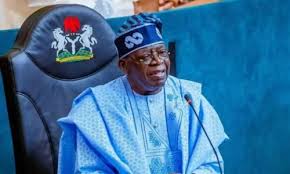
The Department of State Services (DSS), on Thursday, tendered a generated copy of the message posted by Omoyele Sowore on his social media handles where he allegedly defamed President Bola Tinubu as evidence at the Federal High Court in Abuja.
The DSS also played the video evidence of President Tinubu’s speech made on Aug.
26, 2025, during his state’s visit to Brazil, before Justice Mohammed Umar in establishing its cyberstalking charge against Sowore, the publisher of Sahara Reporters.Both the message and the video recording in a flash drive were admitted in evidence and marked as exhibits by Justice Umar after counsel for the defendant, Marshal Abubakar, reserved his objection and until final written addresses stage.
The development occurred when the security agency’s 1st prosecution witness (PW-1) and an operative of the service, Cyril Nosike, was being led in evidence by its lawyer, Akinlolu Kehinde, SAN.
The News Agency of Nigeria (NAN) reports that Sowore is being prosecuted for referring to the president as “criminal” in his X and Meta handles.
In the amended charge, marked: FHC/ABJ/CR/484/2025 and filed on Dec. 5, Sowore is named as sole defendant.
Although Sowore, X Incorp (formerly Twitter) and Meta (Facebook) Incorp were listed in the earlier charge as 1st, 2nd and 3rd defendants respectively, in the amended charge, the names of 2nd and 3rd defendants were dropped.
Testifying, Nosike said he works at the Cyberspace Monitoring Centre of the service.
According to my duty is to monitor the cyberspace 24 hours, night and day.
“I am here to give evidence in support of the charges filed against the defendant,” he said.
Narrating how he came across Sowore’s post, he said: “On the 26th of August, 2025, in the course of my duty at the Cyberspace Monitoring Centre, I detected and monitored a post by the defendant through his X handle.
“The post was referenced as such: ‘This criminal @officialABAT actually went to Brazil to say that there is no more corruption under his regime in Nigeria. What an audacity to lie shamelessly.’”
The witness explained that the X handle; “@officialABAT” is the official X handle of the President and Commander-In-Chief of Nigeria.
He said after he came across the president’s video, he downloaded it and saved it in a flash drive and marked the flash drive as “XYZ.”
He said he equally had a certificate of compliance of to back this in compliance with the Evidence Act.
The judge admitted the flash drive as Exhibit “A” and the certificate of compliance as Exhibit “B” after Abubakar said he would respond in appropriate time.
The video recording was then played for some minutes.
The video showed President Tinubu speaking about the achievements of his administration and encouraged the Brazilians to invest in Nigeria because there was now a conducive business environment, where there is no more corruption.
Nosike said when he saw Sowore’s post, he made a screenshot of it, including the reaction and a certificate of compliance to back it.
The judge equally admitted these in evidence and marked them as Exhibits “C” and “C1” after the defendant’s lawyer reserved his objection.
When the DSS lawyer asked the witness what his office did seeing the post, he said: “Seeing the reactions from this post, the DSS wrote a letter officially to the owners of X and Facebook, which is Meta, through their email addresses.
“We also have the screenshot of the letter and certificate of compliance
“The letter was for them to take down the post considering that the statement on that post was generating lots of tension.”
The screenshot of the letter was marked at Exhibit “D” by the judge.
The witness further told the court that tye DSS also wrote a letter to Sowore through his lawyers and that they also acknowledged the receipt of the letter.
According to him, the letter was a demand to retract that post.
Justice Umar admitted it in evidence and marked it as Exhibit “E” after Abubakar reserved his objection.
The witness said after Sowore received the letter, despite being a classified information, “he went ahead to post this on his X and Meta platforms.”
According to him, as expected, the letter also garnered reactions from Nigerians and the content of the reactions of that letter were far-reaching and painted the service in bad light.
The officer said he made a screenshot of the post and had a certificate of compliance in support and it was admitted as Exhibit “F.”
The witness told the court that Sowore’s inciting posts made their work, as security agencies, complicated.
“We have officers and men who have sworn on oath to put themselves on the line for the security and stability of this country.
“Such inciting posts that generate tension, make our work more difficult and we take such issues very seriously,” Nosike said.
When Abubakar was directed to cross-examine the witness, he prayed the court to allow him study the evidence of the witness.
He, therefore, sought an adjournment to February but DSS counsel objected.
Kehinde argued that Section 396(3) of Administration of Criminal Justice Act (ACJA), 2015, stipulates day-to-day trial after arraignment.
He said there was no basis for Abubakar’s plea for adjournment.
Justice Umar subsequently adjourned the matter until Jan. 27 for cross-examination of the PW-1 and continuation of hearing.

Gov. Douye Diri of Bayelsa says the judiciary remains the hope of the common man in the society, charging officers in the temple of justice to always strive to be upright.Diri said this on Friday in Yenagoa at a Thanksgiving/Valedictory Court Section for the commencement of the 2025/2026 Legal Year in the state.
The governor said: “It has become an annual ritual but we all know that the bible says seek ye first the kingdom of God and all other things shall be added on to thee. “Today we are handing over this new legal year to God for His protection to the judiciary. I believe you are going to do beyond our expectations with God on your side.“In this country today without exception, I appeal to us Nigerians, Bayelsa people to allow the judiciary to be used by God, to be allowed to work to the best of their ability and conscience to deliver incorruptible and sound judgement.”Diri said that the trust of the public lies with the judiciary which demands justice for all manner of people, irrespective of the class in the society.The governor urged the judiciary especially the judges to always stand tall on what is right, as they are highly autonomous as an arm of the government.On her part, Justice Matilda Ayemieye, the Chief Judge of Bayelsa, commended the Bayelsa government for the support in various ways to ensure that the judiciary is autonomous.She said that the judiciary enjoys cordial working relationship with the Nigeria Bar Association, the Legislature and the Executive.The chief judge said that the new legal year allows them to assess the previous year, adding that it is a day of accountability towards the people they serve and to strengthen the rule of law.Ayemieye said that the Bayelsa judiciary aspires to be one of the best judiciary as they have earned respect among other judiciary in the country.Also, Mr Biriyai Dambo (SAN) the Attorney General and Commissioner for Justice, expressed happiness over the commencement of the new legal year.He said that they are committed to service delivery in Bayelsa and commended the bar and the bench for their hard work to ensure that justice is served in Bayelsa.The Commissioner said that for the past years the judicial system had changed and that the welfare of the judiciary and that of the Ministry Justice is one of the priorities of Diri’s administration which has paid in full all monies owed law officers.“This current administration has boosted the morale of law officers, as they have contributed to the justice delivery in Bayelsa state.“This current administration has equally assisted the NBA Yenagoa and Sagbama branches respectively. My office is wide open to enhance the justice system in Bayelsa state,” he said. (NAN)
The Federal High Court in Abuja has dismissed cybercrime charges filed by the Inspector-General of Police against a female medical doctor, Bolanle Aseyan. Delivering judgment on Friday, Justice Peter Lifu discharged and acquitted Aseyan, stating that the police failed to prove the essential elements of the alleged offences.
The Inspector-General had arraigned Aseyan on a four-count charge of defamation, harassment, and intimidation against another doctor, Olufunmilayo Ogunsanya. The police alleged that Aseyan used social media platforms to harm Ogunsanya’s reputation. He was said to be her former boyfriend. The charges were filed under Section 24 of the Cybercrime (Prohibition, Prevention) Act, which addresses online threats and cyber harassment. To support the case, the police presented three witnesses. Aseyan also called two witnesses to testify in her defence during the trial. Justice Lifu, while reviewing the matter, noted both doctors were once in a romantic relationship before it turned sour. He further observed that the two had sexual relations while in the United Kingdom and later made conflicting social media posts against each other. The judge held that the prosecution failed to prove its case beyond reasonable doubt and therefore could not secure a conviction. Specifically, the judge said the defendant’s alleged Twitter handle used in the cyberbullying was not tendered as evidence before the court. Justice Lifu also said there was no proof of threats or intimidation, but rather evidence of a previous affectionate relationship. Consequently, the judge dismissed all four charges, discharged and acquitted Aseyan, and declared the case closed. He ordered the police to immediately return all seized items, including her international passport, upon service of the judgment. Aseyan said she met Ogunsanya online in 2019 and travelled to the United Kingdom in 2020, where she claimed she was raped. She stated that upon arrival in Leeds on March 7, 2020, tired and disoriented, Ogunsanya offered her wine shortly after she got to his home. She alleged that after taking the drink, she passed out and later woke up to find that he had allegedly had sex with her without consent. Aseyan further claimed that Ogunsanya maltreated her before she returned to Nigeria shortly after the alleged incident. (NAN)



NPERA Deepens Transparency, Accountability in Port Sector
ShareBy David Torough, Abuja The Nigerian Ports Economic Regulatory Agency (NPERA), has reiterated its commitment to transparency, accountability and responsible...


Troops Rescue Wounded Civilians, Recover 117 Cows, Stolen Vehicle in Zamfara
ShareBy David Torough, Abuja Troops of Sector 2, Operation FANSAN YAMMA, have recorded a series of operational successes in Zamfara...

Minister Warns Envoys against Unguarded Comments Ahead 2027 Elections
ShareThe Minister of Foreign Affairs, Ambassador Bianca Odumegwu-Ojukwu, has warned foreign diplomatic missions against making unguarded comments, disparaging remarks or...

Shettima Holds Northern Governors in High Regard, Aide Clarifies
ShareSenior Special Assistant to the President on Media and Communications, Stanley Nkwocha, said Vice President Kashim Shettima holds northern governors...


World Bank Mobilises $112bn Private Capital in FY26
ShareThe World Bank Group said it mobilised a record 112 billion dollars in private capital in fiscal year (FY) 2026,...


Oluremi Welcomes FOPSHAN’s Endorsement of Tinubu for Second Term
ShareThe First Lady, Sen. Oluremi Tinubu on Thursday in Abuja, welcomed the endorsement of the President for a second term...


Why APC Govs Oppose Wike — Tinubu’s Ex-spokesman
ShareA former South-East spokesman to President Bola Tinubu, Denge Onoh, has attributed the growing face-off between the Minister of the...
Nigeria, State Capture and the Implications on 2027 Elections
ShareBy Uche Igwe An interesting trend is going on in Nigeria in the name of democracy. Many observers have noticed...

Wike, His Rainbow Coalition and the Politically Lazy Governors
ShareBy Hajia Hadiza Mohammed Nyesome Wike, the current Minister of the Federal Capital Territory (FCT) will go down in Nigeria...


2027: INEC Appeals for Peaceful Conduct, Promises Neutrality
ShareThe Independent National Electoral Commission (INEC) has appealed to political parties, candidates and voters to ensure peaceful conduct before, during...