
NEWS
Julius Berger Completes Bodo-Bonny Road

By Mike Odiakose, Abuja
The 37.9-kilometre Bodo-Bonny Road project in Rivers state awarded to leading engineering construction company, Julius Berger Nigeria PLC, has been completed.
According to the Project Manager, Tim Nippert who broke the news in his office at Km Zero, Bodo, the few staff currently on site are engaged in tree planting on the sides of the road and laying of foundations for streetlights.
The Project Manager declared that the project is completed.
“What’s the outstanding works presently is only tree planting and streetlight foundations as well as pole installations, especially, around Kilometre 12 roundabout.
That’s the two only things we have to do.”He said that some joints on the Bodo-Bonny Road bridges are just being completed, as they needed to be done this late because of some missing import materials.
“We have it now. We will do it within the next two weeks. Then we are done with these works.”
He said all the street light foundations on the right-hand side of the Km 12 roundabout approach, are already there.
“On the left-hand side we have different type of foundations. You will see it as well. That’s the only things which are ongoing.”
According to Nippert, despite the difficult terrain and natural challenges encountered during the project, Julius Berger successfully completed the work within the approved budget and even generated savings.
“These savings are currently being used to fund additional features such as street lighting and beautification works. Outstanding tasks, including these enhancements, are expected to be completed within the next two weeks.
“From the contract sum, we made some savings and the ministry awarded us to provide streetlights and do some beautification like tree planting. We are now equipping the entire project with additional streetlights with budgets we have saved.
“It’s actually very good for the ministry that they don’t need to spend more money,” Nippert said.
The Minister of Works, David Umahi had directed that the Bodo-Bonny Road in Rivers State be opened to users by the end of November 2025, with full completion and commissioning scheduled further ahead.
Umahi gave the directive during an inspection tour of federal road projects across the South-South and South-East regions in October, 2025, where he assessed the level of work done by Julius Berger on the critical highway.
On that occasion, he disclosed that the project, which began on October 20, 2017, had undergone several cost reviews saying, “this project, 37.9 km, we call it Bodo-Bonny, is exactly eight years old today. The commencement of the project was on 20th of October 2017.”
Justifying the project cost, Umahi said the cost translates to about ₦7.4 billion per kilometre, which he described as reasonable given the terrain and the standard of work being executed.
“This is a coastal route going through marshy lands. If we were to do this project now, it would cost over ₦15 billion per kilometre. The quality of work is very good, and I’m very happy with the commitment of the project manager,” the Minister stated.
Umahi directed that all barricades be removed by the end of November to allow for partial traffic flow while monitoring continues until the final asphalt surfacing is completed later.
The minister further said that President Bola Ahmed Tinubu will come to commission the road even as he revealed plans to install solar-powered streetlights, CCTV cameras, and trees along the embankments, noting that the enhancements would be financed from the project’s contingency funds without additional cost to government.
“As the first road link between Bonny Island to the rest of Rivers State, the Bodo-Bonny road is a milestone infrastructure development project for the advancement of the Niger Delta and a catalyst for the continued success of Bonny Island – a key industrial area in Nigeria tied to the economic development and general wellbeing of the Nation as a whole.
“This pioneer project is also a benchmark regarding financing cooperation between the private and public sectors, in reference to the special contractual conditions of part funding of 50% by Nigeria LNG Limited (NLNG).
“Technically, the road is a massive undertaking with many construction challenges due to the low-lying marshy area, muddy and swampy soil conditions and considerable tidal movements.
“The scope comprises construction of a 39 km long road, cross culverts and two mini bridges with a span of 23 m each as well as two creek bridges, Afa Creek Bridge of about 530 m length and Nanabie Creek Bridge of about 640 m length, in addition to the construction of a major river bridge of about 750 m length over the Opobo Channel.
“Substantial dredging activities and several specialised soil stabilisation methodologies were carried out as well as employing incremental launching for constructing the bridges.”
Meanwhile, President Bola Tinubu has approved the phase 2 of the Bodo-Bonny Road project in Rivers state.
The Minister of Works, David Umahi, disclosed this recently at the Medallion award presentation organised by the Bodo-Bonny Road and Bridges Peace Committee in Abuja.
Umahi, represented by the Minister of State for Works, Bello Goronyo, said the road is more than a physical link; it is a bridge to opportunity, a lifeline for commerce, and a symbol of national cohesion.
The Minister explained that the Ministry was already “putting pen on paper to start work immediately,”.
The project, he said is a key connectivity link that will reduce insecurity and boosts commerce in Niger Delta.
“It connects coastal communities to the mainland, reduces insecurity, and opens doors for prosperity across the Niger Delta,”.
Earlier, the Chairman, Planning Committee Bodo-Bonny Road project award ceremony, Prof. Jasper Jumbo, said Nigeria has remembered the communities after a tortuous 38 years of the project.
NEWS
Nigeria Customs, World Bank Launch Two-Week Post Clearance Audit to Boost Revenue, Trade Compliance
By Tambaya Julius, Abuja
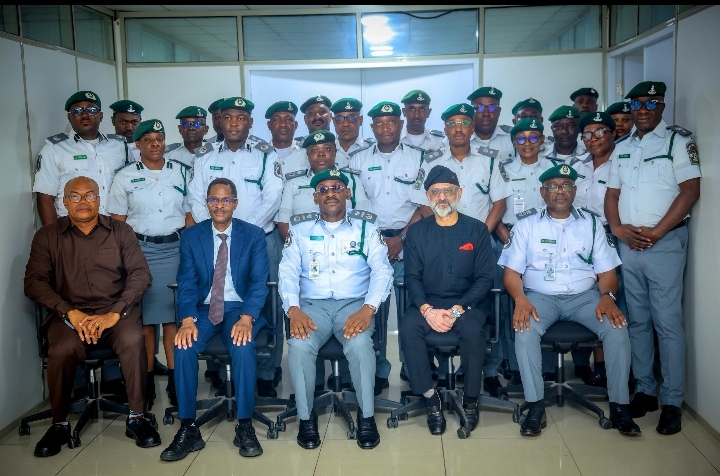
The Nigeria Customs Service (NCS), in partnership with the World Bank Group, has commenced a two-week Technical Assistance Mission on Post Clearance Audit (PCA) under the Accelerated Revenue Mobilisation Reform (ARMOR) Programme to strengthen compliance management, revenue assurance, and trade facilitation through modern audit practices.
The programme, which began on June 1 and will run until June 12, 2026, is being held at the NCS Headquarters in Maitama, Abuja.
Speaking at the opening ceremony on behalf of the Comptroller-General of Customs, Adewale Adeniyi, Assistant Comptroller-General Babatunde Olomu described the mission as a major milestone in the Service’s ongoing modernisation efforts.
According to Olomu, the initiative aligns with the Customs Service’s vision of becoming a technology-driven, intelligence-led, and globally competitive customs administration capable of meeting contemporary trade and revenue challenges.
He noted that customs administrations across the world are increasingly adopting intelligence-based, risk-driven, and post-clearance interventions that encourage voluntary compliance while facilitating legitimate trade and supporting economic growth.
Olomu explained that the mission would provide an opportunity to evaluate existing operational processes, identify areas requiring improvement, and adopt international best practices aimed at strengthening the Post Clearance Audit framework.
He identified risk-based targeting, case management, registry management, quality assurance, standardisation, and integrated audit systems as critical areas that would receive attention during the programme.
The Assistant Comptroller-General emphasised that an effective Post Clearance Audit system allows Customs to move beyond transaction-based controls to a broader compliance management strategy that enhances revenue collection, promotes transparency, facilitates trade, and builds public confidence.
“This mission presents a valuable opportunity to critically assess our existing processes, identify gaps, learn from international best practices, and develop practical solutions that will strengthen our PCA framework and overall compliance management system,” he said.
Olomu also commended Adeniyi for his commitment to Customs modernisation and capacity development, while expressing appreciation to the World Bank and other development partners for their continued support of Customs reforms in Nigeria.
He urged participants to fully engage in the programme and ensure that knowledge acquired translates into measurable improvements in operational efficiency and service delivery.
In his remarks, World Bank Task Team Lead, Moses Kajubi, said the mission was designed to enhance the capacity of Post Clearance Audit officers through exposure to modern customs practices, practical audit tools, and globally recognised methodologies.
Kajubi stated that participants would gain valuable insights into international best practices, compliance management strategies, and case management techniques that could be adapted to Nigeria’s customs environment.
He stressed the importance of technology, structured case management systems, and data-driven decision-making in improving audit quality, compliance monitoring, and trade facilitation outcomes.
“This engagement will equip participants with practical tools and global best practices that can be applied directly in the field to improve the effectiveness of Post Clearance Audit operations,” he noted.
Kajubi expressed confidence that the programme would strengthen institutional capacity and contribute significantly to the broader modernisation objectives of the Nigeria Customs Service.
Also speaking, Lead Consultant for the ARMOR Programme, Colonel Aloke Dutt, said the mission seeks to improve trade facilitation, optimise revenue generation, and strengthen compliance management through a more coordinated and structured approach to Post Clearance Audit.
He underscored the need for standardised audit methodologies, effective monitoring frameworks, and the integration of data analytics into audit operations to improve accountability and operational efficiency.
Dutt further highlighted the role of technology-driven solutions, including the B’Odogwu platform, as well as the development of Standard Operating Procedures (SOPs), in supporting a competency-based audit system across the Service.
During a technical session, Assistant Comptroller of Customs, Muhammad Jubril, demonstrated the Post Clearance Audit process on the B’Odogwu platform, explaining how officers can initiate audit reviews using Harmonised Commodity codes and other risk indicators.
Closing the event, Comptroller Muhammad Shattima encouraged participants to take full advantage of the training and apply the knowledge gained towards achieving the strategic goals of the Nigeria Customs Service.
The Technical Assistance Mission forms part of ongoing efforts by the NCS to strengthen compliance systems, enhance revenue collection, and align its operations with international customs standards while facilitating legitimate trade

By Laide Akinboade, Abuja
Residents of Kampala Street, Wuse II, Abuja, have formally notified the Abuja Metropolitan Management Council (AMMC) of a pending court case challenging actions affecting properties in the area, warning that any demolition exercise before the determination of the suit could amount to contempt of court.
The warning was contained in a letter dated June 2, 2026, addressed to the Director of Legal Services, AMMC, by the law firm of M.
P. Anaukyaa & Co., solicitors to six claimants led by Mrs. Nnennaya M. Okeke.According to the letter, the claimants are parties in Suit No.
CV/1022/26 pending before the High Court of the Federal Capital Territory (FCT), Garki Judicial Division, involving the Hon. Minister of the FCT and Corporate Ideals Properties Limited as defendants.The solicitors stated that the suit concerns properties located on Kampala Street, off Adetokunbo Ademola Crescent, Wuse II, and that all relevant court processes, including the writ of summons, motion on notice, enrolled order, and Form 48, had already been served on the defendants.
They drew the attention of the AMMC to an enrolled order issued by the court on April 2, 2026, directing all parties to maintain the status quo pending the hearing and determination of the matter.
The letter noted that since the FCT Minister is a defendant in the suit and AMMC’s actions are often undertaken pursuant to directives from the minister’s office, it became necessary to formally notify the council of the ongoing litigation and the subsisting court order.
The claimants’ counsel maintained that any attempt to proceed with demolition or other actions affecting the disputed properties would constitute a violation of the court’s directive and could expose those involved to contempt proceedings.
They further argued that the properties in question are fully developed structures, some of which, according to them, have existed for more than three decades.
According to the lawyers, demolition of the buildings before the resolution of the case would result in irreparable damage to the owners and undermine the authority of the court.
“Any attempt to carry out any demolition will not only occasion injustice and irreparable damage, but it will amount to total disrespect and disregard of the express order of the court directing that status quo be maintained pending the hearing and determination of the case,” the letter stated.
The solicitors also attached photographs of the disputed properties to support their claim that the structures are longstanding developments.
They urged the AMMC and all parties connected with the matter to respect the court order and refrain from taking further action until the suit is heard and determined.
As of the time of filing this report, neither the AMMC nor the Federal Capital Territory Administration had issued an official response to the notice.
The matter is expected to come up for further proceedings before the FCT High Court.
By Mike Odiakose, Abuja
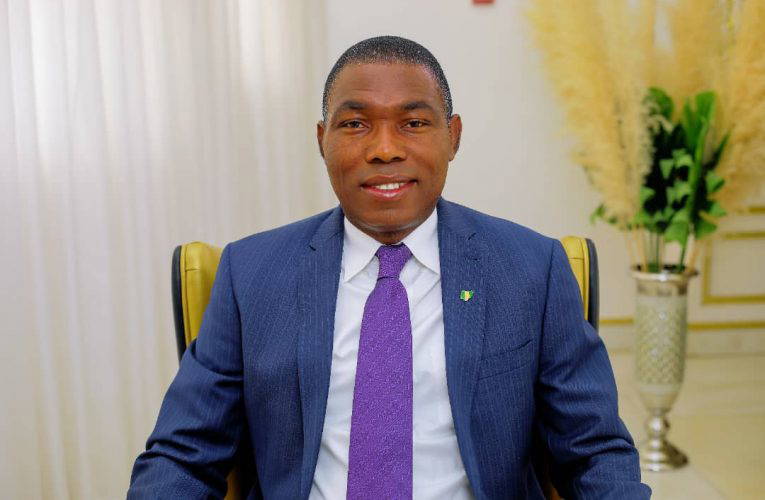
The presidential candidate of the Social Democratic Party (SDP), in the coming 2027 general elections, Prince Adewole Adebayo, has accused President Bola Tinubu’s administration of using poverty and economic hardship as instruments to weaken citizens and prevent them from demanding accountability from government.
Adebayo, who spoke during an interview on the state of the nation, argued that the widespread suffering across the country is not accidental but the direct consequence of policies and governance failures under the All Progressives Congress (APC)-led government.
According to him, millions of Nigerians have become so preoccupied with survival that they have lost sight of the rights and privileges that come with citizenship.
“The poverty that Nigerians are facing is artificial, government-inflicted and self-tolerated by the people,” Adebayo said.
The SDP leader maintained that rather than empowering citizens through quality education, economic opportunities and social welfare, the government has presided over conditions that keep people dependent on political patronage and handouts.
He said a hungry population would naturally find it difficult to challenge authority or demand constitutional guarantees from elected leaders.
“My opponent is not Tinubu,” he said. “My opponent is the ignorance of the people. Once they understand what government is supposed to do and what their rights are as citizens, they will know why they are suffering.”
Adebayo argued that the Tinubu administration has failed to uphold the principles of governance contained in Chapter Two of the Constitution, which outlines the responsibilities of government towards citizens.
He said if public resources were properly managed and deployed according to constitutional provisions, the level of poverty, unemployment and social dislocation currently witnessed in the country would be impossible.
Adebayo cited the growing number of out-of-school children as evidence of what he described as a government that has abandoned its core responsibilities.
According to him, children of school age can be found hawking goods, begging for alms and roaming the streets in virtually every part of the country, while many of those enrolled in schools are receiving little or no meaningful education.
“There is no part of Nigeria where you will not find children selling on the streets or begging. Some receive no schooling at all, while others receive schooling without education,” he said.
He further alleged that the APC government has allowed the education system to deteriorate to the point where it produces graduates who are ill-equipped to contribute meaningfully to national development.
He warned that a poorly educated population is easier to manipulate politically and less likely to hold leaders accountable.
The SDP leader also accused the government of distracting Nigerians from the fundamental issues affecting their lives while insecurity, unemployment and economic hardship continue to worsen.
According to him, the prevailing conditions have created a society where citizens are more willing to accept short-term relief and political gifts than demand long-term reforms and good governance.
He argued that this situation benefits politicians who exploit poverty to secure loyalty and suppress public scrutiny.
Adebayo said the solution lies in political enlightenment and civic education, insisting that Nigerians must begin to understand the meaning of citizenship and the obligations government owes them.
“Politicians are looking for voters, but citizens should first understand that they are citizens and what that means. Once they understand their rights, they will stop settling for crumbs and start demanding good governance,” he said.
The SDP stalwart maintained that meaningful political change would only occur when Nigerians reject what he described as a culture of dependency and begin holding leaders accountable for the nation’s vast resources and opportunities.
He added that the task before opposition parties and reform-minded leaders is not merely to defeat President Tinubu at the polls, but to awaken citizens to their constitutional rights and responsibilities.
According to Adebayo, once Nigerians become politically conscious and refuse to be controlled by poverty and patronage, the country’s democratic and economic fortunes will begin to change.



Nigeria Customs, World Bank Launch Two-Week Post Clearance Audit to Boost Revenue, Trade Compliance
ShareBy Tambaya Julius, Abuja The Nigeria Customs Service (NCS), in partnership with the World Bank Group, has commenced a two-week...


Court Suit halted Planned Demolition in Abuja
ShareBy Laide Akinboade, Abuja Residents of Kampala Street, Wuse II, Abuja, have formally notified the Abuja Metropolitan Management Council (AMMC)...
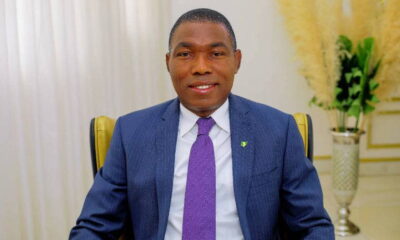

Tinubu’s Government has Made Poverty a Tool of Control’ — SDP Presidential Candidate
ShareBy Mike Odiakose, Abuja The presidential candidate of the Social Democratic Party (SDP), in the coming 2027 general elections, Prince...
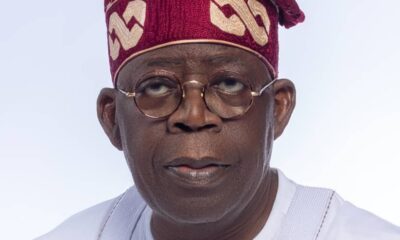

Julius Berger Completes Bodo-Bonny Road
ShareBy Mike Odiakose, Abuja The 37.9-kilometre Bodo-Bonny Road project in Rivers state awarded to leading engineering construction company, Julius Berger...
Security Guard Allegedly Abducts Employer’s Children in Minna
ShareFrom Dan Amasingha, Minna A businessman, Alhaji Danjuma, resident in the Brighter Area of Minna, Niger State, has appealed for prayers and...


Ndidi Leads Eagles for Poland Friendly
ShareSuper Eagles captain Wilfred Ndidi has joined the rest of the squad in Warsaw ahead of Wednesday’s international friendly against Poland. Ndidi and other stars such as Moses...


DR Congo Reopens Bunia Airport after 10-Day Closure amid Ebola Outbreak
ShareAuthorities in the Democratic Republic of Congo (DRC) have reopened the main airport in Ituri Province, the epicentre of the country’s ongoing Ebola outbreak, after a...
Customs, World Bank Group Strengthen Post Clearance Audit Capacity
ShareBy Tambaya Julius, Abuja The Nigeria Customs Service (NCS) has commenced a two-week Technical Assistance Mission on Post Clearance Audit (PCA) in collaboration with the World Bank Group under the...
Civilian Protection Now Central to Air Operations – CAS
ShareChief of the Air Staff (CAS), Air Marshal Sunday Aneke, said civilian protection has become a central consideration in the planning and execution of Nigerian Air Force (NAF) operations. Aneke stated...

Cardoso Re-assigns Deputy Govs, Ikeazor Takes over Policy Directorate
Share Governor of the Central Bank of Nigeria (CBN), Olayemi Cardoso, has re-assigned all four deputy governors of the institution....