
NEWS
Kaduna Central Youths Declare Support for Yerima Shettima 2027 Senate Bid


From Nicholas Dekera, Kaduna
A coalition of youths under the platform of the Progressive Movement for Good Governance in Kaduna Central Zone has declared its support for Hon. Yerima Shettima to represent the zone in the Senate come 2027.
Speaking after what they described as “deep consultations, research, and wide engagements,” the group’s leader, Abubakar Abdullahi, said Hon. Shettima is the most qualified to provide effective representation and give Kaduna Central youths a stronger voice in the nation’s legislative chamber.“With Yerima Shettima in the Senate, the youths will have a high sense of belonging, and a more prosperous representation will be achieved,” Abdullahi said. “The universe is calling — it is our time to answer. Shettima is our choice and our voice. He is the man the cap fits, who understands our day-to-day problems and also has the capacity, knowledge, wisdom and strength to lead us to the Promised Land.”Abdullahi further urged Kaduna Central youths to rally behind Shetima, stressing that their energy, creativity, and passion are vital to shaping the future of both the zone and the state.“Let unity guide us, let strategy strengthen us, and let patriotism lead us,” he declared. “The time for a better Kaduna Central is loading — a proud leadership that will bring development for all, without sentiment or bias. With Yerima Shettima, the possibility is assured.
By Sunday Adelaja
My goal in this article is to go beyond promoting a particular candidate like I did in the past. This time I am trying to dissect the intricacies of political science in Nigeria.
I am trying to analyse and bring out nuggets that could benefit all political players in the future.Unfortunately, from the comments I have seen so far, most people tend to be quick to judge the articles from the perspective of partisanship.
Their view is often black and white. It is either the article is for their preferred candidate or they are against it. If you’re not for us, then you’re against us, they say.That is unfortunate. Because these articles are all about hidden truths; secrets that are hidden to those directly involved in the politicking process in Nigeria. It will take someone detached from the realities on the ground to be able to see and pinpoint these facts. If taken seriously, these articles could help shape a better political future, especially for the opposition politicians and the future aspirants to the highest political posts in our beloved country.
In this particular article I’ll like to encourage my Obidient followers not to be in a hurry to condemn this piece, but be careful in analysing the facts I present, perhaps they will be able to learn a few things that might help their political future.
Now, let the journey begin
What Obi Could Have Done After 2023
The most consequential question is what could have happened immediately after the 2023 election.
Rather than allowing the Obidient phenomenon to remain primarily centered on the personality of Peter Obi, it could have been converted into a permanent civic-political organisation.
For example:
A national structure
Six geopolitical zones, State organisations, Local government chapters, Ward organisations, Polling-unit volunteers, Professional associations, Diaspora chapters, Policy and research institutions, Candidate development.
The movement could have recruited people not merely to support Obi, but to build a political philosophy around: Productivity; education; infrastructure; security; healthcare; industrialisation; constitutional reform; anti-corruption; entrepreneurship; national unity.
That would have transformed personal popularity into institutional capital.
The distinction is important because political movements survive leaders only when the institution becomes larger than the individual.
Wike’s Real Political Lesson
The most interesting lesson from Wike is therefore not necessarily that his policies or political choices are superior. It is his understanding of leverage.
Wike has repeatedly demonstrated a willingness to operate outside conventional political alignments.
In 2023, he remained a PDP governor while refusing to support the PDP presidential candidate.
In the current political environment, he remains associated with the PDP while serving in Tinubu’s APC-led government and organising a coalition supporting Tinubu’s presidential re-election.
This demonstrates a particular political philosophy: Party membership is one source of power; relationships are another.
Wike appears to place considerable emphasis on the second.
And that is where the Obi comparison becomes powerful. Obi’s political capital was largely horizontal: Millions of people who felt connected to a national idea.
Wike’s capital has been more vertical: Political leaders connected to political structures.
Tinubu’s capital is both: vertical organisation + horizontal alliances.
The strongest political architecture generally requires both. That is why I am not going to focus on Tinubu in this article. From my calculations, the incumbent president is going to easily win the 2027 election. However I focus on Obi and Wike because they are for the future of Nigerian politics as individuals. What they do after the 2027 elections will determine their places in history of Nigerian politics.
A politician needs people who love the message and people who can organise the machinery.
The Critical Lesson from 2023
The 2023 election should therefore be studied not only as an election that Obi lost, but an extraordinary demonstration of political market demand.
INEC recorded more than six million votes for Obi.
The subsequent collapse of Labour Party’s electoral performance in many governorship contests showed that presidential popularity did not automatically translate into a durable statewide political organisation.
That gap between electoral enthusiasm and organisational infrastructure is perhaps the most important lesson.
What does this mean for Obi and Wike’s future?
Rather than predicting who will become Nigeria’s president, the more useful question is: What would each man have to demonstrate to become a viable national presidential contender?
For Obi, the critical question is whether his enormous personal following can become a durable national organisation capable of recruiting political leaders, winning legislative and governorship contests, building structures across the North and South, and maintaining unity beyond the presidential campaign.
Obi’s political trajectory has already changed significantly: he moved from the Labour Party into the broader opposition realignment.
For Wike, the question is different. His strength is political organisation and elite relationships. The unresolved question is whether the Rainbow Coalition can develop broad, durable popular legitimacy across Nigeria, rather than functioning primarily as a network of political actors supporting a particular presidential candidate.
Those are fundamentally different challenges.
The Real Contest in 2027 and Beyond: Popularity Versus Organisation
Nigeria’s political history suggests that neither mass popularity nor elite organisations alone are sufficient.
A candidate needs: Popular legitimacy grassroots organization elite alliances cross-regional acceptability financial resources credible candidates polling-unit machinery a compelling national message the ability to negotiate coalitions.
Tinubu’s political journey illustrates the importance of building these layers over a long period. Wike’s current Rainbow Coalition illustrates the power — and potential limits — of cross-party elite coordination. Obi’s 2023 campaign demonstrated how rapidly a candidate can mobilise millions of voters without initially possessing a comparable traditional party structure.
The historical question now is whether either model can acquire the missing pieces.
Conclusion: The Lesson is Bigger than Obi, Wike or Tinubu
The deepest lesson from these three political careers is that political capital has different forms.
Peter Obi demonstrated the extraordinary power of mass mobilisation.
Nyesom Wike has demonstrated the importance of political leverage, coalition-building and relationships across party boundaries.
Bola Tinubu demonstrated the value of long-term institution-building, succession planning and political alliances.
The most consequential political organisation would theoretically combine the strengths represented by all three models: Obi’s ability to inspire millions + Wike’s ability to negotiate across political structures + Tinubu’s long-term capacity to build and maintain a political machinery.
Whether Nigeria’s future political actors can create such a synthesis will be more consequential than the personality of any single politician.
And that may be the most important lesson of the 2023 election: Winning millions of votes is political capital; converting those votes into institutions, leaders, structures and enduring alliances is political power.
These articles are not for the masses, they are not for popularity contests. But like they say, a word is enough for the wise. If these four series articles helps some future generations of Nigerian politicians even if only one person, then it would have been worth the efforts.
Sunday Adelaja is a Nigerian born leader, transformation strategist, pastor and innovator. He was based in Ukraine.
Political Intimidation, Opposition Rights and the Battle for Nigeria’s Presidency In 2027
By Yasir Shehu Adam
The African Democratic Congress (ADC) presidential campaign flag-off in Sokoto State on Wednesday, November 4, 2026, was more than an ordinary political gathering. It was an event that exposed growing political tensions ahead of the 2027 general elections and raised important questions about political freedom, democratic participation and the treatment of opposition parties in Nigeria.
Led by former Vice-President Atiku Abubakar, the campaign attracted thousands of supporters, political leaders and party stakeholders. Among the prominent figures present were former Sokoto State Governor Aminu Waziri Tambuwal, former Minister of Transportation Rotimi Amaechi and other ADC leaders. The large crowd that welcomed Atiku reportedly turned his journey from the airport to the campaign venue into a three-hour movement through the city.
However, behind the political excitement was a series of controversies that nearly overshadowed the campaign. The ADC had initially scheduled the flag-off for October 31 but postponed it to November 4, citing planning and coordination considerations. The postponement came amid allegations that the Sokoto State Government was frustrating the party’s preparations, including claims that hotels were instructed to deny accommodation to visiting delegates. These allegations were disputed by an APC support group, which argued that hotel demand was influenced by a traditional title conferment ceremony scheduled in the state. The competing explanations deserve proper examination rather than political assumptions.
More seriously, the ADC raised concerns about alleged attacks on its members and restrictions on its political activities. The party also alleged that its governorship candidate, Manir Muhammad Dan’iya, was attacked by personnel of state-owned security outfits. The controversy extended to the sealing of a building previously used as the party’s office.
However, the Sokoto State Government defended its action, explaining that the property had ownership issues involving the defunct Savannah Bank and that intervention was necessary to prevent further violence. These explanations must be independently examined, because neither political accusations nor government statements should replace transparent investigations.
On November 3, Atiku Abubakar made another serious allegation, accusing the Department of State Services (DSS) of allegedly mobilising protesters to create disturbances capable of providing grounds for imposing a curfew and stopping the ADC campaign.
He claimed that some individuals were being assembled around Koko Road in Sokoto to cause disorder. However, these allegations had not been independently verified by the time of reporting. The DSS subsequently rejected the accusation and announced that its Director-General had ordered an investigation. The agency also maintained that its operatives had protected the ADC governorship candidate during an earlier incident in Sokoto, in which two DSS personnel were reportedly injured.
This development raises an important question: can Nigeria genuinely guarantee equal political rights for all parties, regardless of whether they belong to the ruling party or opposition? Democracy cannot survive where political participation depends on the approval of those in power.
The right to peaceful assembly, freedom of association and freedom of movement are fundamental constitutional rights. Security agencies must therefore remain professional, neutral and committed to protecting every Nigerian, irrespective of political affiliation. Equally, political parties must be prepared to provide credible evidence whenever they make serious allegations against public institutions.
Beyond the controversy, Atiku used the Sokoto campaign to present his political promises ahead of the 2027 presidential election. He pledged to tackle insecurity, address economic hardship, restore fuel subsidy and reopen the nation’s borders for legitimate business.
His running mate, Rotimi Amaechi, also criticised the Tinubu administration over the country’s economic situation. These promises may attract Nigerians who are dissatisfied with the current economic conditions, but the real question is whether the ADC has practical and sustainable plans to achieve them. Nigerians have heard several political promises before. What they need now are clear policies, realistic implementation strategies and measurable commitments.
The Sokoto campaign has therefore presented the ADC with both an opportunity and a responsibility. Atiku and his political associates must demonstrate that their proposed alternative is different from the political practices they criticise.
They must explain how they intend to address insecurity, unemployment, inflation, poverty and the growing cost of living. Restoring fuel subsidies, for instance, requires clear explanations about financing, implementation and long-term economic consequences. Political speeches alone cannot provide the answers Nigerians are looking for.
Similarly, the ruling APC and the Sokoto State Government must understand that opposition parties are not enemies of the state. A government that believes in democracy should have no reason to fear peaceful political competition.
If the ADC’s allegations are false, the appropriate response is to present evidence and allow independent investigations to establish the facts. If any public official or security personnel is found to have abused their authority, those responsible must be held accountable under the law.
Ultimately, the 2027 presidential election should not be a contest of intimidation, political propaganda, personality attacks or the mobilisation of crowds alone. It should be a contest of ideas, competence, credible leadership and workable solutions to the problems confronting Nigerians.
The people of Sokoto, like millions of Nigerians across the country, deserve the freedom to support any political party of their choice without fear, threats or harassment. Atiku Abubakar and the ADC must also understand that a successful campaign is not measured only by the size of the crowd but by the credibility of the promises made and the confidence they can build among voters.
As Nigeria moves towards another general election, one principle must remain unquestionable: democracy belongs to the people, not to the ruling party. No government should use public institutions to silence legitimate opposition, and no opposition party should use unverified allegations to undermine public confidence.
The real battle for 2027 should be about who can genuinely make Nigeria work for its people.
Yasir Shehu Adam (Dan Liman) Journalist and Writer, Bauchi State.
By Idris Rufai
Welcome to Nigeria, where young people are highly educated, professionally qualified and, unfortunately, increasingly experienced in the art of waiting for employment.
Every year, universities and polytechnics produce thousands of graduates who leave their institutions with certificates in their hands, knowledge in their heads and hope in their hearts.
However, many soon discover that obtaining an academic qualification does not necessarily translate into securing a job. For some, their certificates become more useful for framing than for gaining employment.Nigeria appears to have perfected the production of graduates without creating sufficient opportunities to absorb them into the workforce. While young people continue to acquire degrees, diplomas and professional qualifications, employment opportunities remain difficult to access. Perhaps the country should consider introducing a university course titled B.Sc. in Waiting for Government Employment.
As another batch of prospective National Youth Service Corps (NYSC) members prepares to begin their orientation camp activities, one important question deserves national attention: Why should graduates spend years acquiring education, complete their national service and still return to the streets in search of employment without a clear pathway to economic independence?
I strongly believe the government should consider introducing a structured post-NYSC employment policy that gives eligible corps members a fair opportunity to secure employment after completing their service year.
Under such a policy, federal and state governments could establish employment partnerships with ministries, agencies, public institutions and private organisations. Graduates who demonstrate commitment, discipline and competence during their service year could be considered for available vacancies, preferably within their states of service or other locations where opportunities exist.
This should not necessarily mean automatic employment without consideration of qualifications, performance or available vacancies. Rather, it should be a deliberate policy that prioritises qualified former corps members when suitable opportunities arise.
After all, national service is designed to promote patriotism, national integration, discipline and service to the country. It is only reasonable that the experience gained during that period should also provide a meaningful pathway towards economic participation.
I believe introducing such a policy could help reduce unemployment, strengthen the transition from education to the labour market and restore young people’s confidence in the value of education.
There is also a growing need to reconsider the age requirements attached to certain government employment opportunities, particularly in uniformed services and other public institutions.
It is painful to see graduates who have spent years pursuing their education become ineligible for certain employment opportunities simply because they have crossed the prescribed age limit. Some young people spend additional years pursuing higher qualifications, completing compulsory national service or facing circumstances beyond their control before becoming available for employment.
Should years spent acquiring education become a disadvantage when seeking employment?
Government should review restrictive age requirements where appropriate and consider extending the maximum age limit to 30 years for eligible recruitment categories, subject to professional, medical and operational requirements. Such a review could give more qualified graduates a fair opportunity to compete for available positions.
Beyond government recruitment, unemployment cannot be addressed through recruitment promises alone. Whenever the problem becomes too obvious, another familiar solution emerges: an empowerment programme, a distribution ceremony and photographs of young people receiving sewing machines, motorcycles, farming equipment and other materials.
But what happens after the cameras leave?
Empowerment should not become a temporary ceremony where beneficiaries receive items today only to return to unemployment tomorrow. Although such interventions can be useful, they must be supported by proper training, access to markets, business financing, mentorship and continuous monitoring.
Nigeria possesses enormous agricultural resources, mineral deposits, tourism opportunities and a youthful population. These resources can generate employment if supported by serious investment, functional infrastructure, vocational education and policies that encourage businesses and industries to grow.
The private sector must also be recognised as an important partner in tackling unemployment. Government cannot employ every graduate, but it can create an enabling environment where businesses expand, industries operate effectively and entrepreneurs employ more people.
Most importantly, education should not become a source of disappointment for the Nigerian child. We must change the growing narrative that “last last, school na scam.” Education should remain a meaningful investment in knowledge, personal development and national progress, not a journey that leaves graduates wondering whether their years of sacrifice were worthwhile.
It is particularly painful to see young people dedicate their lives to education, acquire professional skills and obtain the necessary qualifications, only to spend several years moving from one employment opportunity to another without success. Some eventually settle for jobs unrelated to their qualifications, while others are pushed into irregular labour and petty trading simply to survive. Many also migrate to bigger cities in search of opportunities, leaving their communities without the contributions they could have made.
Nigeria must begin to rethink its approach to education, national service and employment. Producing graduates without creating opportunities for them is not a sustainable development strategy.
The government should therefore consider a comprehensive post-NYSC employment framework, review restrictive recruitment age requirements and invest in sectors capable of creating sustainable jobs.
A country that encourages its young people to study must also be prepared to create an economy where their knowledge and skills can be put to use.
The real measure of educational development should not be how many graduates our institutions produce annually, but also how effectively society creates opportunities for those graduates to contribute to national development.
Nigeria must stop being a factory that produces graduates for unemployment. It is time to turn certificates into opportunities, skills into productivity and education into a meaningful pathway to a better future.

By David Torough, Abuja
The Defence Headquarters (DHQ) has dismissed reports and suggestions of a ceasefire with Boko Haram terrorists, insisting that the Armed Forces of Nigeria will sustain military pressure against insurgents, bandits, kidnappers and other criminal groups threatening national security.
The declaration came as the military disclosed that its troops neutralised 435 terrorists and bandits, arrested 809 suspects, secured the surrender of 198 insurgents and rescued 717 kidnapped victims during 588 coordinated security operations conducted across the country in September and October.
The Director of Defence Information, Maj.-Gen. Samaila Uba, made the disclosures on Thursday in Abuja during a joint security press briefing organised by the Office of the National Security Adviser (ONSA).
Responding to questions on whether the Federal Government or the military had entered into any ceasefire arrangement with Boko Haram, Uba categorically rejected the suggestion, maintaining that ongoing operations against terrorist groups, including Boko Haram and the Islamic State West Africa Province (ISWAP), remained active.
“On the issue of whether there is a ceasefire with Boko Haram, I want to make it clear that there is nothing like a ceasefire,” he said.
According to him, the number of terrorists neutralised, suspects apprehended and abducted persons rescued demonstrates the military’s determination to sustain its offensive against criminal elements.
He warned that anyone involved in activities threatening the lives and security of Nigerians would either be eliminated through lawful military operations or brought to justice.
Uba explained that the military campaign was not restricted to the North-East but extended to other parts of the country where kidnappers, bandits and other criminal networks continued to threaten innocent citizens.
Providing details of the operations, the defence spokesman said the military recorded significant successes under the strategic leadership of President Bola Tinubu and the Chief of Defence Staff, Gen. Olufemi Oluyede.
Among the rescued victims were 20 prospective National Youth Service Corps (NYSC) members abducted in Owerri, Imo State, and 11 persons rescued in Danko-Wasagu, Kebbi State.
He also identified several high-profile terrorist commanders neutralised during the operations, including Ali Mandara, Abba Gajiri, Habu Ikkima, Nakif Yana Faruk, Commander Gogore and Abdussamad Ohida.
The military further recovered 5,666 arms, ammunition, explosives and Improvised Explosive Devices (IEDs), alongside other logistical assets, in efforts to dismantle the operational capabilities of terrorist and criminal networks.
Uba said major tactical breakthroughs were recorded in Buniyadi, Baga, Kukawa, Bittai and the Owo forest, disrupting enemy networks and weakening their operational structures.
On the movement of insurgents from their traditional strongholds into other parts of the country, the DHQ spokesman said the development reflected the pressure military operations had mounted on their former locations.
He, however, cautioned that the Armed Forces would not allow the terrorists to establish new bases or safe havens elsewhere.
He disclosed that security agencies were mapping areas where fleeing insurgents might have relocated and implementing proactive measures to prevent them from establishing fresh operational footholds.
Uba cited the recent neutralisation of a high-level terrorist in a forest area as further evidence that no part of the country would be allowed to serve as a safe haven for criminal groups.
He also linked the military’s ongoing restructuring, including the establishment of new formations, battalions and units, to efforts to close security gaps and strengthen operational coverage nationwide.
According to him, the adjustments to the Armed Forces’ order of battle are designed to respond to emerging threats, improve troop deployment and ensure a stronger military presence in vulnerable areas.
The DHQ acknowledged that security challenges persist in Borno, Yobe, Taraba, Katsina, Kwara, Zamfara, Sokoto, Plateau, Benue, Niger, Oyo and Kaduna states, but assured that troops were adapting through coordinated clearance operations, patrols and deeper inter-agency collaboration.
Beyond counterterrorism operations, Uba disclosed that military activities in the Niger Delta had resulted in the destruction of 57 illegal refining sites and the recovery of more than 1.061 million litres of stolen petroleum products, in a move aimed at protecting national economic assets and boosting crude oil production.
He also highlighted efforts to strengthen regional security cooperation, particularly through the repositioning of the Multinational Joint Task Force (MNJTF) operating in the Lake Chad Basin.
Uba said a recent high-level forum involving serving and former force commanders, academics and other stakeholders examined the implications of the withdrawal of some countries from the Economic Community of West African States (ECOWAS), assessed operational gaps and explored diplomatic options for improving regional military cooperation.
He said implementation of some of the forum’s recommendations had commenced, with the expected benefits to become evident in the coming months.
The DHQ also highlighted its commitment to indigenous defence manufacturing and technology transfer, citing its participation in the Africa International Defence Exhibition 2026.
On personnel welfare, the military disclosed that it had undertaken veteran engagement tours and launched a Defence Discount Shop in partnership with Konga and Zinox.
The defence spokesman reiterated that the Armed Forces remained committed to sustaining pressure on terrorist groups, preventing their expansion into new territories and restoring security across the country.
He maintained that the military’s ongoing operations, restructuring initiatives and regional partnerships were aimed at ensuring that insurgents, bandits and other criminal elements had no opportunity to regroup or undermine the safety of Nigerians.


Gen Z No Longer Think for Themselves, Ayra Starr’s Mother Blames Social Media
ShareNene Aderibigbe, mother of Nigerian singer Ayra Starr, has criticised the influence of social media on Gen Z, claiming that...


Davido, Chioma Arrive in Style for Zlatan, Davita’s Wedding in Morocco
ShareNigerian music star, Davido, and his wife, Chioma Adeleke, have arrived in style in Marrakesh, Morocco, for the wedding celebration...

Lessons from the 2023 Presidential Elections: Obi Vs Wike
ShareBy Sunday Adelaja My goal in this article is to go beyond promoting a particular candidate like I did in...
Certificates Without Jobs: The Uncomfortable Reality of Nigeria’s Education System
ShareBy Idris Rufai Welcome to Nigeria, where young people are highly educated, professionally qualified and, unfortunately, increasingly experienced in the...

FG Generates N33tn Revenue in 10 Months – Oyedele
ShareBy Tony Obiechina, Abuja The Federal Government generated N33tn in revenue between January and October 2026, while about 90 per...

Terrorists Flee Strongholds, Military Block New Bases – DHQ
ShareBy David Torough, Abuja The Defence Headquarters (DHQ) has dismissed reports and suggestions of a ceasefire with Boko Haram terrorists,...


Court Nullifies Mark-led ADC Leadership, Atiku’s 2027 Candidacy
ShareBy David Torough, Abuja The Federal High Court in Abuja has nullified the leadership of the African Democratic Congress (ADC)...
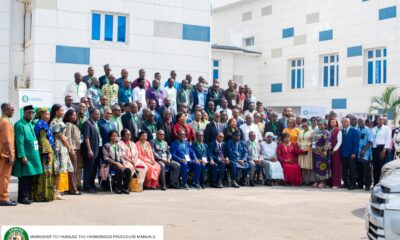

WAHO Advances Regional Health Integration Through Standardised Procedure Manuals
ShareBy David Torough, Abuja The West African Health Organization (WAHO) has commenced a regional workshop in Abuja to finalize procedural...


2027 Elections: CAN Disowns Man Claiming its General Secretary
ShareBy Laide Akinboade, Abuja The Christian Association of Nigeria (CAN) on Wednesday, disassociate itself from Archbishop Chivir Chianson and the...

INEC Seeks UN Partnership in Tackling Disinformation on 2027 General Elections
ShareThe Independent National Electoral Commission (INEC) has called for the partnership of the United Nations in combating disinformation in the...