
Metro
Kano Community Commends Yusuf for Approving School Renovation, Classroom Construction

From Rabiu Sanusi, Kano
The people of Jijitar community in Gabasawa Local Government Area have expressed profound appreciation to the Governor of Kano State, Alhaji Abba Kabir Yusuf for approving the construction of two blocks of four classrooms and the general renovation of Government Girls’ Secondary School (GGSS) Jijitar.
The community conveyed its appreciation during a courtesy visit to the Commissioner for Education, Gwani Dr.
Ali Haruna Abubakar Makoda, at the Ministry of Education.The delegation comprised the Village Head of Jijitar, the Chief Imam, the Principal of GGSS Jijitar, the Councillor representing Jijitar Ward, the Youth Leader, and other respected members of the community.
Speaking on behalf of the delegation, the Principal of GGSS Jijitar said the visit was to express the community’s heartfelt gratitude to Governor Abba Kabir Yusuf for the approval of the project. He noted that the construction of additional classrooms and the comprehensive renovation of the school would greatly enhance teaching and learning while providing a more conducive environment for students and teachers.
The Village Head of Jijitar commended the Governor for his unwavering commitment to improving education in Kano State, describing the intervention as a landmark achievement that would have a lasting positive impact on the school and the community.
As a mark of appreciation and recognition, the delegation presented Awards of Excellence to Governor Abba Kabir Yusuf and the Commissioner for Education, Gwani Ali Haruna Abubakar Makoda, in recognition of their outstanding contributions to the development of education and the transformation of GGSS Jijitar.
In his remarks, the Honourable Commissioner for Education, Gwani Ali Haruna Abubakar Makoda, disclosed that the approved project forms part of the present administration’s commitment to strengthening educational infrastructure across the state. He reaffirmed the Ministry’s resolve to ensure the successful execution of the project for the benefit of the students and the host community.
He also expressed gratitude to the delegation for the honour and assured them that he would personally present the Governor’s award to His Excellency on behalf of the community.
He thanked the people of Jijitar for their support and confidence in the administration, reiterating that Governor Abba Kabir Yusuf remains committed to providing a conducive learning environment through sustained investment in educational infrastructure across Kano State.
By David Torough, Abuja
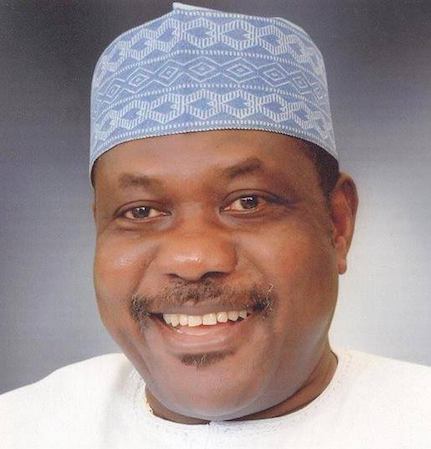
The Secretary to the Government of the Federation (SGF), Senator George Akume, has reaffirmed Nigeria’s unwavering commitment to broadening its longstanding strategic partnership with Japan, while calling for increased Japanese investment in key sectors of the Nigerian economy.
While receiving the Japanese Ambassador to Nigeria, Suzuki Hideo on Monday, in Abuja, the SGF noted that the administration of President Bola Tinubu has implemented far-reaching economic reforms aimed at improving the ease of doing business, ensuring macroeconomic stability, strengthening foreign exchange management, attracting foreign direct investment and promoting private sector-led growth under the Renewed Hope Agenda.
The SGF observed that 57 Japanese companies are currently operating in Nigeria and expressed optimism that the number would increase significantly in view of the favourable investment climate created by the present administration.
“We encourage greater participation of Japanese investors in Nigeria. With the ongoing reforms and improved investment environment, Nigeria offers enormous opportunities for mutually beneficial partnerships. We look forward to seeing many more Japanese companies establishing operations in our country,” he said.
He commended the Government of Japan for its consistent support towards Nigeria’s socio-economic development through technical cooperation, infrastructure development, healthcare, agriculture, education, disaster management, humanitarian assistance and capacity-building programmes. He also acknowledged the significant contributions of the Japan International Cooperation Agency (JICA) in financing and implementing critical infrastructure projects across Nigeria, noting that the partnership has continued to support national development objectives.
Highlighting emerging areas of collaboration, the SGF called for stronger cooperation in renewable energy, clean technology, energy efficiency, carbon reduction initiatives, climate resilience and environmental sustainability, stressing that Japan’s technological expertise would greatly support Nigeria’s energy transition agenda. He further appealed for the expansion of Japanese scholarship programmes, technical training initiatives and knowledge transfer schemes, noting that such programmes have continued to build the capacity of Nigerian professionals and remain highly beneficial to the country’s growing youthful population of over 220 million people.
On security cooperation, Senator Akume appreciated Japan’s support for peace-building, humanitarian assistance and stabilisation efforts in Nigeria, particularly in the North-East, while expressing Nigeria’s desire to deepen collaboration in maritime security, counter-terrorism capacity building, cybersecurity, border management and disaster risk reduction.
The SGF also identified Nigeria’s solid minerals sector as a major investment destination, assuring Japanese Investors that reforms in the sector have provided a transparent and predictable legal framework capable of supporting long-term investments in strategic minerals critical to the global economy.
The Japanese Ambassador to Nigeria, His Excellency Ambassador Suzuki Hideo, commended the bold economic and fiscal reforms being implemented by the administration of President Bola Tinubu noting that the measures were already yielding positive results. He observed that the increase in Nigeria’s foreign exchange reserves, the stabilisation of the naira against major foreign currencies and the improved macroeconomic environment have enhanced investor confidence and created a more favourable climate for business.
The Ambassador further noted that the consistent improvement in Nigeria’s sovereign credit ratings by major international rating agencies reflects growing global confidence in the country’s economic direction. He disclosed that these positive developments have been regularly communicated to the Government of Japan, particularly the Ministry of Foreign Affairs, as indicators of Nigeria’s improving investment landscape.
Speaking at the backdrop of the recent visit of the Chairman of the Policy Research Council of Japan’s Liberal Democratic Party (LDP), Takayuki Kobayashi to the SGF, Hideo disclosed that the Chairman briefed Japan’s Prime Minister and senior government officials on the importance of strengthening bilateral relations with Nigeria, particularly in the areas of trade and investment. He added that the visit has generated renewed interest in Nigeria among Japanese Policymakers and the Private Sector, further reinforcing Japan’s commitment to expanding economic cooperation and fostering mutually beneficial partnerships with Nigeria.
While acknowledging that recent global energy and resource security concerns have heightened interest in Nigeria, Ambassador Suzuki stressed that Japan’s engagement with Nigeria is not driven by short-term considerations. Rather, he affirmed that both the Japanese Government and the private sector are committed to building a long-term strategic partnership with Nigeria based on mutual trust, shared prosperity and sustainable economic development. He reiterated Japan’s readiness to continue working closely with the Federal Government to strengthen bilateral cooperation, expand trade and investment, and promote initiatives that will deliver lasting benefits to the people of both countries.
The courtesy visit was attended by five Permanent Secretaries (General Services Office, Political and Economic Affairs Office, Special Services Office, Ecological Project Office and Foreign Affairs) as well as some Directors in OSGF, Ministry of Foreign Affairs and officials from the Japanese Embassy.
From Ene Asuquo, Calabar
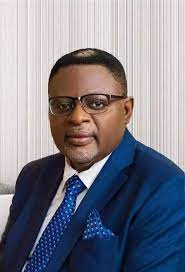
Cross River State Governor, Sen. Prince Bassey Edet Otu, has reshuffled his cabinet in a strategic move aimed at reinvigorating governance and positioning his administration for greater efficiency as it enters the electioneering phase.
The decision, announced at an emergency meeting of the State Executive Council in Calabar, saw some commissioners redeployed to new ministries while others retained their portfolios in recognition of their outstanding performance.
The Governor described the exercise as a deliberate recalibration of government machinery to consolidate the gains of his administration and accelerate the delivery of his People First agenda.
Addressing members of the Executive Council, Governor Otu emphasized that the reshuffling was neither punitive nor a reward system but a necessary leadership instrument designed to align talent with evolving governance priorities. “Government is a living institution; it must constantly adjust to new realities.
Otu maintained that the exercise is about injecting fresh energy, maximizing individual strengths, and ensuring that every member of this cabinet remains focused on the larger vision of transforming Cross River State. We have crossed the threshold of foundation-laying; this is the season of consolidation and accelerated delivery,” the Governor declared.
The Governor reminded council members that with the administration approaching another electoral cycle, the expectations of citizens had become even higher, insisting that only measurable performance, innovation, and unwavering commitment to public service would define the legacy of his government. “Electioneering must never distract us from governance.
The people will judge us, not by slogans, but by roads constructed, hospitals revitalized, schools improved, jobs created, and the quality of life we have enhanced. Every commissioner must see his or her ministry as a performance centre. There is absolutely no room for complacency,” he charged.
Governor Otu further urged members to regard their new assignments as opportunities for renewed service rather than personal victories or setbacks, stressing that collective success remained the administration’s ultimate objective.
“There are no superior or inferior ministries. Every portfolio is strategic because every ministry touches the lives of our people. Whether you have been reassigned or retained, your mandate remains unchanged to serve with integrity, discipline, creativity, and absolute loyalty to the people of Cross River State.
History will remember results, not titles,” he stated.
The Governor also called for stronger collaboration across ministries, departments, and agencies, noting that the complexities of modern governance demanded teamwork rather than institutional rivalry.
“This administration must continue to speak with one voice and work with one purpose. Let us eliminate bureaucratic silos, deepen inter-ministerial cooperation, and pursue every policy with urgency and accountability.
The confidence of our people is our greatest political capital, and we must justify it every single day through visible, impactful governance,” he said.
Members of the Executive Council welcomed the Governor’s decision, describing the reshuffle as timely and reflective of his determination to strengthen governance ahead of the next phase of the administration.
The renewed cabinet configuration is expected to inject fresh momentum into policy implementation, reinforce institutional efficiency, and sharpen the government’s development agenda, as Governor Otu reaffirmed his commitment to building “a stronger, more prosperous, and more united Cross River where performance remains the only enduring currency of public service.”

The World Health Organisation (WHO) on Monday donated two vehicles and other medical equipment to Kaduna State College of Nursing Sciences in Pambegua and Tudun Wada.
Speaking at the handover event in Kaduna, the WHO official, Dr.
Furera Zakari, said the support was made possible through the generous funding of the Foreign, Commonwealth and Development Office (FCDO) under the Education and Skills for Health Transformation Initiative (ESHTI) project.Zakari commended the sustained commitment of the FCDO to strengthening health systems and investing in the future of healthcare in Nigeria.
Zakari said a strong health system begins with a well-trained, competent and motivated health workforce.
According to Zakari, nurses and midwives remain the backbone of health care delivery, particularly at the primary healthcare level,where they provide essential services to millions of people every day.
“Recognising this important role, WHO and FCDO undertook comprehensive resource and risk assessment at the college of nursing science in Pambegua and Tudun Wada campuses.
“These assessments identified several gaps affecting teaching, practical skills acquisition, learning environments and institutional capacity.
”Based on these findings, a comprehensive package of interventions was developed to address the identified needs and support the colleges in meeting the required standards for nursing education.”
She listed the equipment donated to include two brand new school buses; one for each campus, medical simulation and clinical training equipment, ICT equipment, desktop computers, and solar power systems generators.
Others included, library furniture and educational resources, office furniture and equipment, classroom furniture, fire safety equipment and hostel furniture and fittings.
She said the investment represents more than physical assets and will significantly improve mobility for students and faculty during academic and clinical training activities.
According to her, the additional equipment will strengthen teaching and learning, improve practical skills acquisition and create a more conducive environment for producing competent nurses and midwives.
Also speaking, the Commissioner for Health, Umma Ahmed appreciated the partners for the equipment donated assuring them of proper utilisation.
She said proper deployment, maintenance and security will be given to the equipment for continuous benefits of future generations of healthcare professionals.
The commissioner assured them of continuous partnership in strengthening health systems, improving health workforce capacity, and advancing universal access to quality healthcare services.
In her speech, the Director Nursing Services, Naomi Kukah said the equipment are prerequisite to accreditation and for practicals.
Kukah said the vehicles will improve mobility for students and faculty academic and clinical training activities.


Kano Community Commends Yusuf for Approving School Renovation, Classroom Construction
ShareFrom Rabiu Sanusi, Kano The people of Jijitar community in Gabasawa Local Government Area have expressed profound appreciation to the...
Akume Reaffirms Nigeria’s Commitment to Expanding Bilateral Cooperation with Japan
ShareBy David Torough, Abuja The Secretary to the Government of the Federation (SGF), Senator George Akume, has reaffirmed Nigeria’s unwavering...
Over 15 PAP Offshore Scholarship Students Bag Master’s Degrees
ShareFrom Mike Tayese, Yenagoa Sixteen offshore post-graduate scholarship students of the Presidential Amnesty Programme have graduated with master’s degrees from...

Diri Raises Scrabble Classic Prize Money
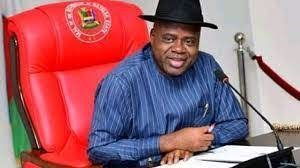
ShareFrom Mike Tayese, Yenagoa Bayelsa State Governor, Senator Douye Diri, has announced an increase in the prize money for the...


Herdsmen Kill Five, Abduct Nine, Destroy Farmlands in Imo
ShareFrom Wins Charity, Owerri The Traditional Ruler of Assa, Obosa-Umuepe Communities Eze Emmanuel Asor has decried insisant attack by Fulani...

Insurance Sector Recapitalization Ends, NAICOM Clears 53 Firms
ShareBy Tony Obiechina, Abuja The National Insurance Commission (NAICOM) has announced the successful completion of the insurance sector recapitalisation exercise,...
Niger Strengthens Surveillance to Protect Mineral Resources
ShareFrom Dan Amasingha, Minna The Niger State Government has intensified its campaign against illegal mining, warning that individuals and companies...

State Police: FG Unveils Seven-week Implementation Roadmap
ShareBy David Torough, Abuja The Federal Government has unveiled a seven-week implementation roadmap for the proposed National Policing Bill, with...
FG begins 2026 National Laureate Programme
ShareThe Tertiary Institutions National Laureate Committee has announced the commencement of the 2026 National Laureate Programme. The National Laureate Programme...
Still On Abubakar Malami, His Battles and Landmark Achievements
ShareBy Hajia Hadiza Mohammed As I stated in my previous article, some of my colleagues have queried my interest in...