
DEFENCE
KDSG Call for Research on Causes of Banditry, Kidnapping


Kaduna State Government has called for an extensive research on the actual causes of armed banditry and kidnapping in the country, saying the focus must go beyond the farmer-herder relations and conflicts.
Mr Samuel Aruwan, the Commissioner for internal Security and Home Affairs, said at a two-day meeting with stakeholder on the Farmer-Herder Relations and Banditry, that such a research will help in finding comprehensive and workable solutions to the menace.
According to Aruwan, the state is addressing some weIl-documented security challenges such as youth restiveness, drug abuse, rape, armed robbery and ethno-religious intolerance.
He noted that the challenges currently bedeviling most states in the North-West are the issue of farmer-herder clashes, homicide, kidnapping and collapse of the rural economy.
He stated that since the inception of the state administration in 2015, its position on the farmer-herder collision has been made clear and unambiguous.
“The government’s appeal has been for all residents to have recourse to the law. If a farmer in the course of farming comes under attack, or crops are destroyed, the admonition is to have recourse to the law.
“The same appeal goes to the herders, if in the course of grazing they are attacked or their cattle rustled, or they become victims of any security challenge.
‘Unfortunately, most individuals and communities involved in these clashes often choose self-help rather than the law.
“This complicates the conflict, and worsens the bloodshed,” he said.
He noted that media narrative is often not helpful in containing conflicts.
“When armed bandits kill innocent herders and farmers while attempting to kidnap for ransom, some media will report that it is an attack by herdsmen, thereby inflaming the violence between pastoralists and their hosts.”
Aruwan, therefore, called on the media and commentators on the need to research deeply and not just skim through present security challenges with emotions, sentiment, prejudices and biases.
He said that issues of banditry and farmer-herder clashes have had a strong impact on rural communities, as they directly involve farmers and herders, who live, operate and earn their livelihood in mainly rural settings.
He disclosed that the state government has established a peace commission to provide solutions to the lingering security issues in the state.
The commissioner explained that his ministry was also created to provide more dedicated focus on intelligence gathering and seamless coordination of security operations and collaboration.
“This is yielding positive results in terms of addressing security challenges and outright neutralization of criminal elements.”
Aruwan decried the politicisation of security challenges, saying those engaged in it are self serving and helping to magnify and complicate the issue.
Earlier, the CDD Director, Idayat Hassana, reiterated the centre’s commitment in partnering with the government and various stakeholders in addressing insecurity in the country.
Hassan, represented by Shamsudeen Yusuf, the Principal Programs Officer at CDD, disclosed that the meeting was conceived as a starting point to identify challenges and best ways to address insecurity in communities.
NAN reports that the meeting was attended by security Agencies, traditional and religious leaders.
On his part, the representative of the United States Institute for Peace (USIP), Mr Chris Kwaja, commended the centre for the initiative and engagement, and the people of the state for their resilience in keeping peace alive.
He commended the Kaduna state peace commission for its efforts towards organizing dialogue for peace across communities.
Hajiya Khadija Hawaja, a commissioner with the state peace commission, said the commission facilitates consultations and dialogue between diametrically opposed groups to dispel the myth of “us versus them”, and creating new ways of approaching and settling differences.
She noted that, working with different community, has exposed them to know that the conflict in Kaduna has nothing to do with religion or ethnicity, but mostly structural while some were personal.
She said that the peace commission has embarked on deconstruction of such narratives by calling people to reality of what is actually on ground. (NAN)







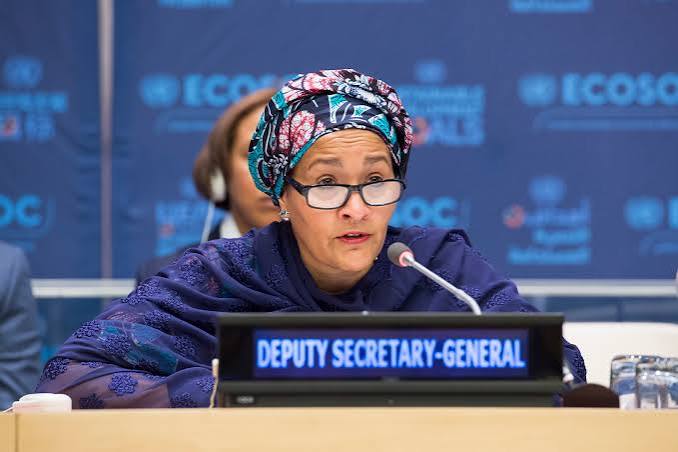
UN Deputy Secretary-General Amina Mohammed, has called for stronger intelligence sharing, public trust and responsible use of emerging technologies to strengthen Africa’s fight against terrorism and violent extremism.
Mohammed made the call in virtual remarks at the High-Level African Lessons Learned Forum on Counter Terrorism Cooperation, Intelligence Sharing and Emerging Technologies in Abuja on Monday.
She said terrorism continued to devastate families and communities across Nigeria’s North-East, the Lake Chad Basin, the Sahel and parts of East and Southern Africa.
“In Nigeria we know the cost of this scourge, the toll it is taking on families and communities across the North-East and the Lake Chad Basin,” she said.
Mohammed said the violence was claiming lives, displacing communities, disrupting economic activities and undermining development in vulnerable areas.
“Behind each of these numbers are people whose hopes for their children are no different from our own,” she said.
She welcomed the forum’s practical approach to examining successful counter-terrorism strategies, identifying failures and sharing lessons across countries.
The UN deputy secretary-general identified trust, emerging technology and community-centred interventions as critical priorities for strengthening counter-terrorism cooperation.
“Intelligence sharing begins with trust. That means trust between agencies, between nations and countries, and between the state and its people,” she said.
She said communities were more likely to share information when security institutions were accountable, justice was accessible and human rights were respected.
She stressed that trust was essential to building effective partnerships between citizens and security agencies in preventing terrorist attacks.
On emerging technologies, Mohammed warned that terrorist groups were adapting rapidly and exploiting artificial intelligence and synthetic media for recruitment and propaganda.
She noted that the same technologies could support early warning and prevention if deployed with appropriate safeguards and effective oversight.
She cautioned that military operations alone would not bring an end to terrorism, urging governments to complement security measures with rehabilitation, reintegration, justice and community support.
She cited Nigeria’s Operation Safe Corridor and similar programmes as examples of efforts to help individuals leave armed groups and rebuild their lives.
According to her, sustainable reintegration requires justice for victims and adequate support for communities receiving former associates of armed groups.
The UN official also called for greater investment in young people through education, decent employment and accessible public services.
She said addressing the needs of vulnerable populations was particularly urgent, with only four years remaining to achieve the 2030 Agenda for Sustainable Development.
“The United Nations stands with you. We will continue supporting solutions that Africa designs and leads,” she said.
Mohammed expressed hope that the lessons shared at the forum would strengthen cooperation and produce tangible improvements in the lives of communities affected by terrorism.
In his remarks, the European Union (EU) Ambassador to Nigeria, Mignot Gautier, announced 20 million euros in non-lethal military equipment to support the Nigerian Armed Forces in the fight against terrorism.
Gaitier said the support approved under the European Peace Facility (EPF), was designed to respond to Nigeria’s needs in tackling terrorism.
“Last week, the EU announced its decision to use for the first time the EPF to support the Nigerian armed forces in their fight against terrorism with 20 million euros of non-lethal equipment,” the ambassador said.
He added that the latest support complemented the EU’s longstanding assistance to the Multinational Joint Task Force (MNJTF) operating around the Lake Chad Basin.
According to him, the EPF has provided a total of 285 million euros in support of the multinational force over several years.
The ambassador reaffirmed the EU’s commitment to strengthening counter-terrorism cooperation with Nigeria, the African Union and other African partners.
He said terrorism and violent extremism required coordinated international responses, stronger intelligence sharing and sustained partnerships among security agencies and judicial institutions.
“Intelligence sharing is crucial and involves secure channels between agencies and the judicial system,” he emphasised.
The Country Representative, United Nations Office on Drugs and Crime (UNODC), Cheikh Touré, called for African-led counter-terrorism strategies, warning that terrorist groups were increasingly exploiting cross-border networks, organised crime and emerging technologies.
Touré said Africa had become a major centre of global terrorism, with the Sahel accounting for more than half of all terrorism-related deaths worldwide.
He said four of the five countries responsible for nearly 70 per cent of global terrorism deaths in the previous year were African: Burkina Faso, Nigeria, Niger and the Democratic Republic of the Congo.
Touré said terrorist groups were strengthening cross-border operations, collaborating with organised criminal networks and exploiting improvised explosive devices, drones, digital platforms and artificial intelligence.
He cautioned against adopting international counter-terrorism practices without considering the specific needs and institutional capacities of African countries.
“The groups we confront cross borders with a fluency that too often exceeds our own. Our response therefore must be equally fluent and be African-led,” he said.
He reaffirmed UNODC’s commitment to working through African institutions and regional frameworks, including the African Union, ECOWAS and the Abuja Process.
The forum brings together African and international stakeholders to discuss intelligence sharing, emerging technologies, counter-terrorism financing and strategies for preventing and countering violent extremism.
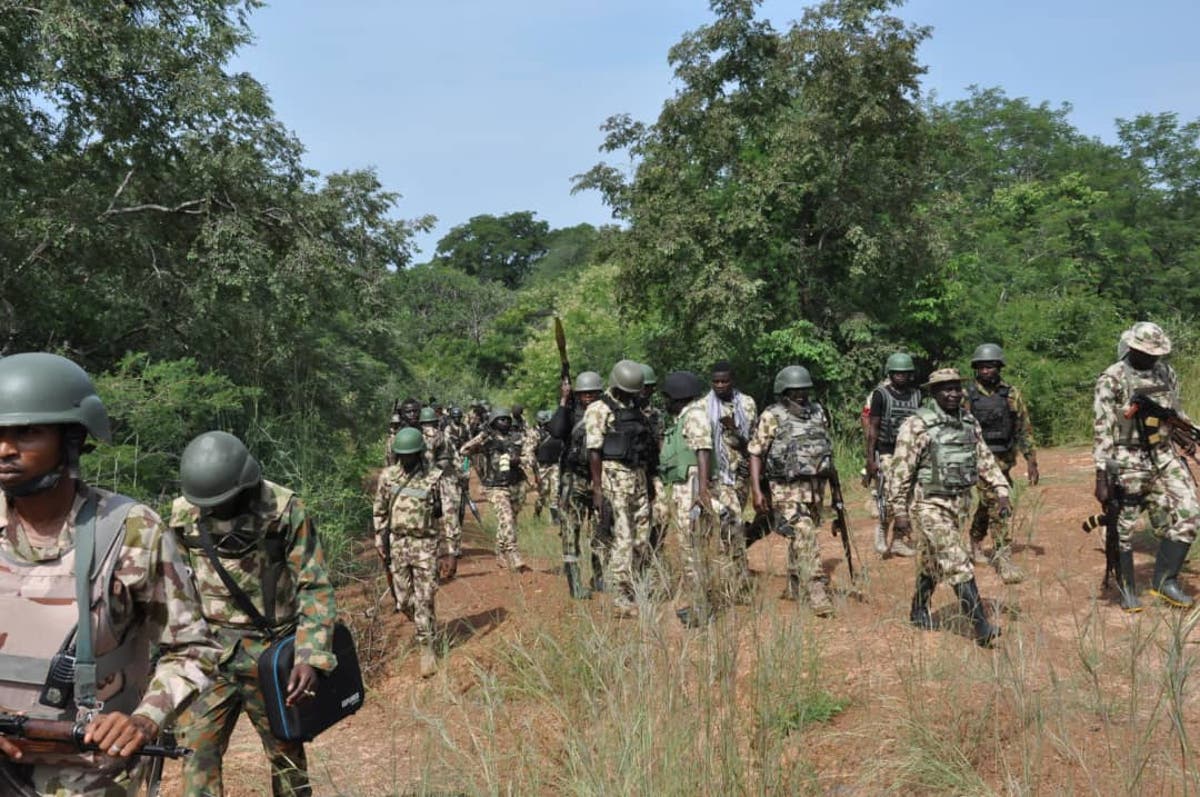
Troops of Sector 2, Operation FANSAN YAMMA, have rescued three kidnapped victims following an operation in Sakaba Local Government Area of Kebbi.
The Media Coordinator of the operation, Osoba Olaniyi, confirmed this in a statement on Sunday in Birnin Kebbi.
Olaniyi stated that the rescue took place on Oct.
24 adding that two victims were rescued at Makuku Village, while one was rescued at Dankolo village.“The rescued victims include A’isha Aminu, 46, Sumayya Aminu, 27, and Nana Abbas, 15,” the media coordinator said.
He disclosed that the victims were subsequently handed over to the District Head of Dirindaji, Alhaji Usman Muhammad, through the Chairman of Sakaba Local Government Area.
Olaniyi noted that the operation was concluded successfully without any incident, stressing that the troops remained committed to the protection of lives and property.
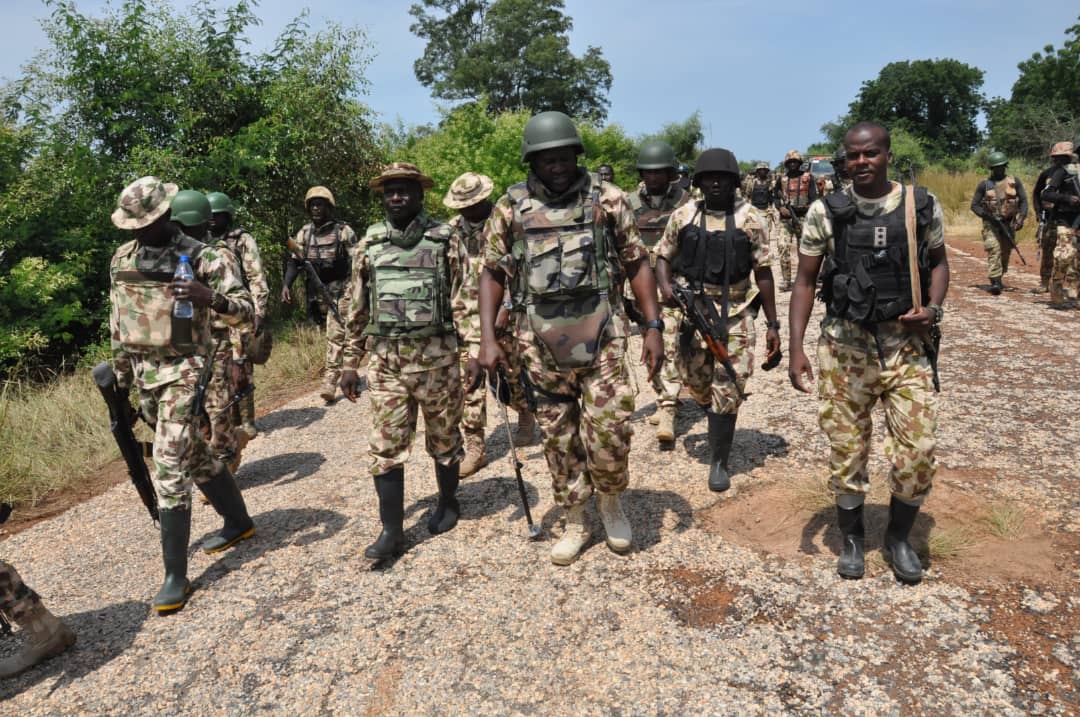
Troops of the Nigerian Army have neutralised six terrorists, arrested 11 suspected collaborators and received the surrender of a Jama’atu Ahlis Sunna Lidda’awati wal-Jihad (JAS) member in Borno.
This was contained in an operational report on Sunday in Abuja.
The report said the operations, conducted by troops of the Joint Task Force North-East, Operation Hadin Kai (OPHK), targeted terrorist fighters and suspected support networks in Kaga and Gwoza Local Government Areas.
It said troops of 29 Task Force Brigade Garrison, supported by Hybrid Force personnel, ambushed suspected Islamic State West Africa Province (ISWAP)/JAS terrorists along the Targejeri axis of Kaga at about 12:37 a.
m. on Oct. 25.According to the report, six terrorists were neutralised during the encounter, while troops recovered an AK-47 rifle, three magazines and 169 rounds of 7.62mm special ammunition.
“Other recovered items included two Android phones, three button phones and charms.
“In a related development, troops arrested six additional suspected terrorist collaborators during a follow-up raid in Benisheikh, Kaga, at about 6:20 a.m. on Oct. 24.
“The arrests brought the number of suspects apprehended in connection with the investigation to 11, including five earlier arrests.
“Items listed as recovered during the raid included an AK-47 rifle, three empty magazines, 169 rounds of 7.62mm special ammunition, three terrorist uniforms, a turban, a head mask, two Android phones, three button phones and charms,” it said.
The report said the suspects were undergoing investigation to establish their alleged involvement in terrorist activities and identify possible links to other members of the network.
It added that troops of 192 Battalion (Main), supported by Hybrid Force personnel at Hambagda Internally Displaced Persons (IDP) Camp in Gwoza, received a JAS member who surrendered at about 9:20 p.m. on Saturday.
According to the report, preliminary investigation indicated that the individual had escaped from a terrorist enclave in the Mandara Mountains area of Gwoza and decided to abandon terrorism.
“The individual surrendered with an AK-47 rifle and a magazine containing 28 rounds of 7.62mm special ammunition,” it added.
The report said the defector was in custody undergoing further investigation and processing in line with established procedures.
It said the operations underscore OPHK’s continued efforts to disrupt terrorist activities, dismantle support networks and encourage defections through sustained, intelligence-led operations.
The military urged members of the public to provide credible and timely information to security agencies to support efforts to restore peace and enable displaced communities to return safely. (NAN)



WAHO, ECOWAS Stakeholders Move to Harmonise Nursing, Midwifery Accreditation Standards Across West Africa
ShareBy David Torough, Abuja The West African Health Organisation (WAHO) has convened a three-day regional workshop in Abuja to finalise...


Okorocha Hails Court Victory as APC Insists Uzodimma Remains Candidate
ShareBy Tambaya Julius, Abuja Former Imo State Governor, Rochas Okorocha, has described a Federal High Court judgment recognising him as...


TRIBUTE: CHIEF GABRIEL GBAYAN, A LEGACY OF SERVICE TO BADMINTON
Share The late Chief Gabriel Gbayan was a distinguished sports administrator who served as a Two times Chairman of the...


Court Dismisses Emeka Ike’s N10bn Suit against Wike’s Aide
ShareThe Federal High Court in Abuja on Wednesday dismissed a N10bn fundamental rights suit filed by Nollywood actor Emeka Ike...


Reps Threaten to Arrest Telecom CEOs Over Poor Network Services
ShareBy Ubong Ukpong, Abuja The House of Representatives on Wednesday threatened to issue warrants of arrest against chief executives of...


A Guide to IFRS S1 and S2 Sustainability Implementation (4)
ShareBy Innocent Okwuosa The implementation of IFRS S1 and S2 must not be approached strictly from a regulatory compliance perspective....


2027: Reward Tinubu with Votes for Federal University – Wike
ShareBy Laide Akinboade Abuja The Minister of the Federal Capital Territory, Nyesom Wike, has said the Ogoni people of Rivers...


FCSC, Soft Alliance Explore IPPIS Integration to Improve Civil Service Management
ShareThe Federal Civil Service Commission (FCSC) and Soft Alliance and Resource Ltd. are exploring ways to integrate the commission’s statutory...


Tinubu Presides over FEC Meeting
SharePresident Bola Tinubu is presiding over a meeting of the Federal Executive Council at the Council Chamber of the State...

Wike Question Atiku, Obi, Contributions to Rivers State
ShareBy Laide Akinboade Abuja Minister of the Federal Capital Territory, Nyesom Wike, has challenged former Vice-President Atiku Abubakar and former...