
Agriculture
Kogi Gov Commissions Lokoja Rice Processing Centre

From Joseph Amedu, Lokoja
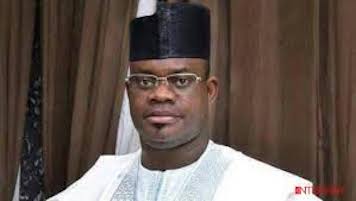
Governor Yahaya Bello of Kogi yesterday, commissioned Gaskiya Rice Processing Centre, constructed by Kogi Value Chain Development Programme (VCDP) under the FGN/IFAD assisted projects, at Kungbani, Lokoja Local Government Area of the state.
The commissioning was part of activities for the three-day Technical Implementation Support visit to VDCP projects in Kogi by President Muhammadu Buhari’s daughter, Hajia Fatima Buhari.
Our correspondent reports that Fatima Buhari, who is the Marketing Enterprise Development Advisor (MEDA) of FGN/IFAD-VCDP, had visited another Rice Processing Centre in ASCO Camp in Ajaokuta LGA of Kogi
In his remarks, Governor Bello commended the Federal Government for partnering with the State Government in empowering rural farmers and adding value to their products to increase their net revenue.
The governor, who was represented by his deputy, Dr Edward Onoja, reaffirmed the commitment of his administration to continue to invest in agriculture for economic diversification.
He enjoined the beneficiaries to take ownership of the rice processing centre and ensure proper maintenance for their own benfits.
He assured that government would continue to add values to the rural farmers through various projects and programmes, adding that four different agricultural programmes were going on concurrently in the state.
Speaking, Hajia Fatima Buhari, said she was highly impressed with what the state government was doing to support the VCDP projects in the state especially the counterparts funding.
”This is the first time in all the states we have all our projects, that VCDP will be given two years counterpart funding which has never happened before.
”We thank Kogi state government for the gesture as well as the Federal Government for the initiative,” she said.
The state’s Commissioner for Finance, Budget and Planning, Mr Asiwaju Idris, said Kogi was among the first states to sign the MoU for the VCDP project in 2017 with immediate payment of its counterpart funding.
He added that the governor had also given the approval for the payment of the counterparts fund for 2022 and 2023.
The state’s Commissioner for Agriculture, Mr David Apeh, commended the governor for his commitment to the VCDP project, saying it had impacted posively in the lives of the rural farmers in the state.
The Kogi State Coordinator, IFAD-VCDP, Dr Stella Adejoh, noted that the visit of the President’s daughter, would further strengthen the farmers’ trust in the programme thereby enhancing their commitment.
She expressed her delight with the feedback from the August visitor, saying it was an excellent one which had put Kogi on the limelight for the world to see.
”There is real hope for the farmers for sustainability of the programme because we have done a whole lot of capacity building along the value chain,” she said.
Two farmers, Halima Gimba, a processor and secretary of Kaskiya Cluster; and Hajia Lari Sule, a marketer, who spoke on behalf of the beneficiaries, said they had benefitted immensely from the VCDP project.
According to them, VCDP had taught them best modern way of processing rice, acquired leadership and management skills, market their products online, among others.


Some residents in Lagos State have expressed concern over the recent surge in the price of tomatoes, forcing many households to adopt alternatives.
The residents made their views known in separate interviews on Wednesday in Lagos.
A market survey showed that a 50kg basket of tomatoes now sells between N115,000 and N125,000, compared to between N35,000 and N40,000 recorded last month.
Olachi Igwe, a resident of Ago Palace, said the scarcity and high cost of tomatoes had disrupted her household’s meal plans.
“I contacted my usual vendor, but she said tomatoes were scarce and difficult to source.
“A small bowl we used to buy for between N3,500 and N4,000 now sells for as high as N6,000 to N7,000, when available.
“For now, my family will resort to palm nut stew (ofe akwu) until prices stabilise,” she said.
Another resident, Mercy Okeleye of FESTAC, said although her family prefers fresh tomatoes, rising prices have forced her to consider cheaper options.
“I cannot do without fresh tomatoes because of the taste, but I may have to buy broken ones, popularly called ‘esha’, which are relatively cheaper.
“I do not consider tomato paste a suitable substitute because it is not purely made from tomatoes,” she said.
Also speaking, Tope Babalola from Dopemu, said she might adjust her cooking methods if prices remain high.
“I have not bought tomatoes in over a month, but if the price is still high, I will use more onions and peppers.
“I will not resort to artificial additives; I prefer natural ingredients for my meals,” she said.
Joan Ogugua, another resident, said she had already switched to tomato paste to cope with the situation.
“I asked my son to buy tomato paste for our meals. I cannot justify spending excessively on fresh tomatoes when other basic needs must be met,” she said.
Also, Oge Ugwu, a civil servant at Lekki, said she would resort to cucumber stew with the recent price hike.
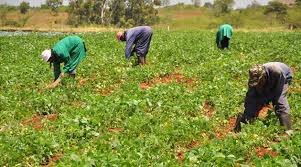
The Tomatoes Growers and Processors Association of Nigeria (TOPAN) has predicted a steady increase in the price of the produce between May and June 2026.
The Kaduna State Chairman TOPAN, Rabiu Zuntu, disclosed this in an interview recently in Lagos.
Zuntu noted that although there is no particular time for tomatoes planting season up north, seasonal weather variations can affect the production of the produce.
“Although we can plant tomatoes all-year-round, we cannot assure quality harvest all-year-round.
“Some farmers are harvesting now, while others are transplanting, and others are harvesting.
“Tomatoes are still available for sale but the price of the produce is gradually on the increase.
“Come May/June, the prices of tomatoes will be very expensive, so now is a good time to stock up the produce. There’s always a scarcity within that period.
“This is because of the nature of the weather in the north around that period, the weather is usually very hot and tomatoes cannot resist such hot temperature,” he said.
Zuntu said the price of tomatoes have started rising up in the north.
“A 50kg rafia basket of tomatoes sells from N20,000 as against N7,000 to N10,000 that was sold earlier in the year.
“While a crate of tomatoes up north is sold between N10,000 and N15,000 as against N5,000 to N6,500 sold earlier in the year.
“In most part of Kano State, where there is bumper harvest, they are rounding off their harvest. So, tomato is not that available there and most buyers have turned to where they can find it now, mostly within Kaduna State and some parts of Plateau State.
“So, that’s why the supply has decreased and the tomato supply and cost is determined by the law of demand and supply,” he said.
A 50kg basket of tomatoes in Lagos, at the moment, sells between N40,000 and N60,000 depending on the size and quality.
The Smallholder Women Farmers Organisation in Nigeria (SWOFON), Oyo State chapter, has said that the lack of irrigation facilities had become a major obstacle to dry season farming in the state.
The Chairperson of SWOFON in Oyo State, Atinuke Akinbade, said this in an interview in Ibadan on Monday.
Akinbade, who shared the experiences of women farmers in the state during the 2025 dry season, said that inadequate access to water for irrigation significantly affected the performance of many farmers during the period.
“It hindered many older farmers from participating in dry season farming and also prevented younger farmers from doing as much as they could in cultivating large acres of land,” she said.
Akinbade explained that farmers who managed to plant during the season struggled to access sufficient water to irrigate their farms, a situation worsened by the effects of climate change.
“Many farmers who depended on streams and wells to water their crops suffered major setbacks because those sources could not provide enough water for irrigation.
“Some farmers had to resort to buying water from commercial water tankers, which increased the cost of production, while at times it was even difficult to get water from the tankers,” she said.
The SWOFON chairperson warned that failure to address the problem could worsen food insecurity in the coming months.
“Even now, rainy season farming has not fully commenced because of the irregular rainfall pattern.
“This is a double burden, and if nothing is done, it may lead to serious hunger later,” she said.
Akinbade, however, acknowledged that the government had organised training for members of the association on home gardening.
She, however, said that little support was provided to address the challenges of dry season farming.
The chairman said that the home garden support package given to members consisted mainly of seedlings and one sprayer.
“They gave us two packs each of maize and pepper seeds, with six seeds in each pack, as well as one sprayer, so that we can grow food for household consumption,” she said.
Earlier, Oluwatoyin Oyedeji, SWOFON Coordinator in Oyo East, explained the severe hardship members of the organisation experienced in sourcing water for irrigation.
“Many farmers are already counting their losses because water was not available to irrigate their farms.
“Those who depended on streams and brooks were badly affected because many of them dried up, while the few that still had water had so little that farmers had to dig deeper into the ground in search of more,” Oyedeji said.
In the same vein, the Women Leader for farmers in Saki East, Musiliu Ashiru, said the absence of irrigation facilities also hampered dry season farming in her area.
According to her, many farmers still engaged in dry season farming have had to pay for water to keep their crops alive.
“Many of them buy water from the dam here to irrigate their crops. It has not been easy for them this year,” Ashiru said.




FG Moves to Automate Teachers’ Awards, Ends Manual Selection Process
ShareBy Tony Obiechina, Abuja The federal government has digitalised the selection process for the 2026 President’s Teachers’ and Schools’ Excellence Awards (PTSEA),...


Utsev Leads Nigerian Delegation to World Water Congress in Glasgow
ShareBy David Torough, Abuja Minister of Water Resources and Sanitation, Engr. Prof. Joseph Terlumun Utsev, will on Saturday, October 3,...


BBNaija Season 11: Keivo Becomes Second Housemate to be Disqualified
ShareKeivo has become the second Big Brother Naija housemate to be disqualified from Season 11. This follows his physical altercation...


Mofe-Damijo Envisions Bright Future for Nigeria at 66
ShareVeteran actor and public speaker, Richard Mofe-Damijo, has expressed optimism about Nigeria’s future, describing the country as a work in...


My Wife Paid $20k for Her Surgery Herself, Peller Fires Back at Carter Efe
ShareNigerian content creator and streamer, Peller, has fired back at Carter Efe after the streamer compared their relationships while praising...


I Didn’t Want to be in the Spotlight – Tems
ShareGrammy-winning Nigerian singer Temilade Openiyi, popularly known as Tems, has revealed that despite wanting musical success, she was uncomfortable with...
Nigeria at 66: Which Way Nigeria?
ShareBy Tochukwu Jimo Obi Sixty six years after independence, Nigeria should be asking itself a question that can no longer...


Nigeria at 66: Booming Banks, Struggling Nation, Where Is the Promised Prosperity?
ShareBy Blaise Udunze As Nigeria celebrates 66 years of independence, it must ask whether the country has delivered the prosperity...


Nigeria at 66: Leaders are Human, But Accountability is Non-negotiable
ShareBy Aderonke Ojediran As Nigeria marks its 66th Independence anniversary, the debate over leadership, public trust and accountability remains central...


Oborevwori Orders Julius Berger to Fix Washed-Out East-West Road at Agbarho
ShareFrom Francis Sadhere, Delta Delta State Governor, Rt. Hon. Sheriff Oborevwori, has directed Julius Berger Nigeria Plc to immediately commence...