
Business News
Lagos Commodities Exchange Set to List First Gold Instrument

The Lagos Commodities and Futures Exchange (LCFE) has concluded plans
to admit Dukia Gold‘s diversified financial instruments, backed by
gold as the underlying asset in a sector worth over N300 trillion.
Dukia Gold Chairman, Mr Tunde Fagbemi, said this at a media parley in Lagos.
Fagbemi said the instruments which would be in the form of Exchange
Traded Notes (ETN), Commercial Papers (CP) and other gold-backed
securities would enable the company deepen the commodities market in
Nigeria.
He added that it would increase capacity, generate foreign exchange
for the government to diversify external reserves and create massive
employment across the metal production value chain.
He noted that the crude oil and cocoa market would have had a better
outing if there were strategies put in place to regulate it right from
inception.
Fagbemi who applauded the Ministry of Mines and Steel Development and
the Securities and Exchange Commission (SEC) for supporting trading of
gold in Nigeria noted it remained one of the ways to diversify
Nigeria’s sources of foreign exchange.
“We are proud to be the first gold company whose products would be
listed on the Lagos Futures and Commodities Exchange,” he said.
“The listing shall enable us facilitate our infrastructure
development, expand capacity and create fungible products.
“This has potential to shore up Nigeria’s foreign reserve and create
an alternative window for preservation of pension funds,” he said.
He explained that a gold-backed security was a hedge against inflation
and convenient preservation of capital.
“We have refinery services to smelt metals with capacity to meet local
and international demand.
“As a global player, we comply with the practices and procedures of
London Bullion Market Association and many other international bodies.
“Our refinery will also have multiplier effects on the development of
rural areas anywhere it is located.
“There must be constant power supply, good road network and other
social amenities, apart from employment opportunities for the rural
dwellers,” he said.
Also speaking, Divisional Head, Strategy and Business Solutions,
Heritage Bank, Mr Olusegun Akanji, said the bank had created a buying
centre for verification of quality and quantity of gold and reference
price to ensure price discovery in line with the global standard.
Akanji said every transaction was auditable to protect investors.
The Managing Director, LCFE, Mr Akin Akeredolu-Ale, commended SEC for
issuing the Exchange a licence to trade gold.
He added that commodities exchanges played strategic roles introducing
structures into the ecosystem, which was in urgent need for
regulation, funding and data collation.
“Nigeria’s International Trade in Solid Minerals and commodities is
behind par and the absence of a listed gold investible instrument on a
commodities exchange limits export potential for the exploration of
solid minerals in Nigeria, particularly Gold.
“The need to harness the potential growth in the Nigerian solid
mineral/ gold sector and commodity trades justifies the timely
establishment of a gold trading platform and the objectives of the
promoters of Dukia Gold,” said Akeredolu-Ale.
He said the LCFE was ready to support all the stakeholders in the gold
sector in the areas of market creation, price discovery, dissemination
of market information, among others. (NAN)




By Tony Obiechina, Abuja
The Budget Office of the Federation has reaffirmed the integrity of Nigeria’s newly enacted Tax Reform Acts, cautioning against what it described as governance by speculation and unverified claims following allegations of post-passage alterations.
In a statement on Wednesday, the Budget Office said it had taken note of concerns raised by the Minority Caucus of the House of Representatives, stressing that the sanctity of the law is central to constitutional democracy and not a mere procedural formality.
According to the Office, any suggestion that a law could be altered after debate, passage, authentication, and presidential assent without due process would strike at the core of the Republic and undermine citizens’ right to be governed by transparent and stable laws.
However, it warned that democratic integrity is also endangered by the careless amplification of unverified claims. “A nation cannot be governed by insinuation or sustained on circulating documents of uncertain origin,” the statement noted, adding that public confidence, once shaken by speculation, is often difficult to restore.
The Budget Office emphasized that both government and citizens share a common interest in truth, clarity, and due process, noting that public finance depends heavily on trust in the legality and clarity of fiscal laws. It welcomed the decision of the National Assembly to investigate the allegations, describing institutional inquiry, not conjecture as the appropriate response to claims of illegality.
On public access to the law, the Office agreed that Nigerians and the business community are entitled to clear and authoritative texts of all laws they are required to obey. It clarified, however, that the authenticity of legislation is determined by certified legislative records and official publication processes, not by informal or viral reproductions.
The statement also underscored the importance of separation of powers, warning that claims suggesting Nigeria is being governed by “fake laws,” if not backed by established facts, risk eroding confidence in democratic institutions.
At the same time, it stressed that legislative scrutiny should not be dismissed by the executive, noting that oversight is a constitutional duty, not an act of hostility.
From a fiscal perspective, the Budget Office said legal certainty is essential for revenue projections, macroeconomic stability, budget credibility, and investor confidence. While it is not the custodian of legislative records, it maintained that uncertainty around operative tax provisions directly affects economic planning.
To restore confidence, the Office proposed a set of measures, including the publication of verified reference texts in a single public repository, orderly access to Certified True Copies for stakeholders, clear public explanations where discrepancies are alleged, and strict alignment of all implementing regulations with authenticated legal texts.
Addressing calls for suspension of the tax reforms, the Budget Office cautioned against allowing prudence to slide into paralysis. It argued that properly implemented tax reform is necessary to reduce dependence on borrowing and inflationary financing, while easing indirect burdens on vulnerable citizens.
“Where clarification is required, it must be provided; where correction is required, it must be effected; where investigation is required, it must proceed,” the statement said, adding that governance and reform should not be stalled by unresolved conjecture.
The Office concluded by describing taxation as a democratic covenant that binds citizens and the state, insisting that compliance depends on transparency and trust. It called on political actors to protect institutions as much as positions, urging citizens and businesses to rely on verified sources and resist the spread of unauthenticated information.
The statement was signed by Tanimu Yakubu, Director-General of the Budget Office of the Federation, who reaffirmed the agency’s commitment to fiscal transparency, institutional integrity, and reforms that advance national prosperity while safeguarding citizens’ rights.
By Jennifer Enuma, Abuja
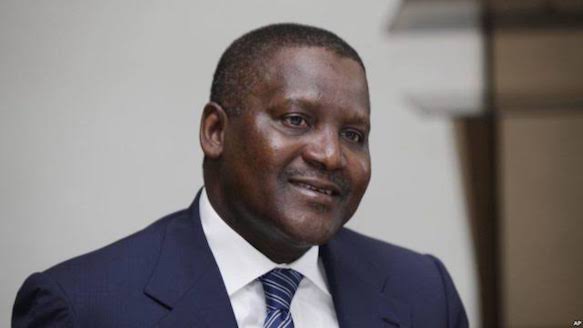
President Bola Tinubu has congratulated Alhaji Aliko Dangote, the President of Dangote Group, on his appointment to the World Bank’s Private Sector Investment Lab, a body tasked with promoting investment and job creation in emerging economies.
In a statement by Special Adviser on Media and Publicity, Bayo Onanauga, the President described the appointment as apt, given Dangote’s rich private sector experience, strategic investments, and many employment opportunities created through his Dangote Group.
The Dangote Group became one of Africa’s leading conglomerates through innovation and continuous investment.
Dangote Group’s business interests span cement, fertiliser, salt, sugar, oil, and gas. However, the $20 billion Dangote Petroleum Refinery and Petrochemicals remains Africa’s most daring project and most significant single private investment.
“President Tinubu urges Dangote to bring to bear on the World Bank appointment his transformative ideas and initiatives to impact the emerging markets across the world fully” the statement said.

The World Bank announced Dangote’s appointment on Wednesday, as part of a broader expansion of its Private Sector Investment Lab. The lab now enters a new phase aimed at scaling up solutions to attract private capital and create jobs in the developing world.
The CEO of Bayer AG, Bill Anderson, the Chair of Bharti Enterprises, Sunil Bharti Mittal, and the President and CEO of Hyatt Hotels Corporation, Mark Hoplamazian, are on the Private Sector Investment Lab with Dangote.
The World Bank said the expanded membership brings together business leaders with proven track records in generating employment in developing economies, supporting the Bank’s focus on job creation as a central pillar of global development.
By Joel Oladele, Abuja
The Nigeria Customs Service (NSC) has generated an impressive N1,751,502,252,298.05 in revenue during the first quarter of 2025.
The Comptroller-General (CG) of the Service, Bashir Adeniyi, disclosed this yesterday, during a press briefing in Abuja.
According to Adeniyi, the achievement not only surpasses the quarterly target but also marks a substantial increase compared to the same period last year, reflecting the effectiveness of recent reforms and the dedication of customs officers across the nation.
“This first quarter of 2025 has seen our officers working tirelessly at borders and ports across the nation.
I’m proud to report we’ve made real progress on multiple fronts—from increasing revenue collections to intercepting dangerous shipments,” Adeniyi stated.He attributed this success to the reforms initiated under President Bola Tinubu’s administration and the guidance of the Honourable Minister of Finance and Coordinating Minister of the Economy, Olawale Edun.
The CG noted that the revenue collection for Q1 2025 exceeded the quarterly benchmark of N1,645,000,000,000.00 by N106.5 billion, achieving 106.47% of the target. This performance represents a remarkable 29.96% increase compared to the N1,347,705,251,658.31 collected in Q1 2024.
Adeniyi highlighted the month-by-month growth, noting that January’s collection of N647,880,245,243.67 surpassed its target by 18.12%, while February and March also showed positive trends.
“I’m pleased to report the Service’s revenue collection for Q1 2025 totaled N1,751,502,252,298.05.
“Against our annual target of N6,580,000,000,000.00, the first quarter’s proportional benchmark stood at N1,645,000,000,000.00. I’m proud to announce we’ve exceeded this target by N106.5 billion, achieving 106.47% of our quarterly projection. This outstanding performance represents a substantial 29.96% increase compared to the same period in 2024, where we collected N1,347,705,251,658.31.
“Our month-by-month analysis reveals even more encouraging details of this growth trajectory,” Adeniyi said.
In addition to revenue collection, Adeniyi said the NCS maintained robust anti-smuggling operations, recording 298 seizures with a total Duty Paid Value (DPV) of ₦7,698,557,347.67.
He stated that rice was the most seized commodity, with 135,474 bags intercepted, followed by petroleum products and narcotics.
“From rice to wildlife, these seizures show our targeted approach,” Adeniyi remarked, noting the NCS’s commitment to combating smuggling and protecting national revenue.
Adeniyi also highlighted key initiatives, including the expansion of the B’Odogwu customs clearance platform and the launch of the Authorized Economic Operators Programme, which aims to streamline processes for compliant businesses. The NCS’s Corporate Social Responsibility Programme, “Customs Cares,” was also launched, focusing on education, health, and environmental sustainability.
Despite these achievements, the CG noted that the NCS faced challenges, including exchange rate volatility and non-compliance issues. Adeniyi acknowledged the need for ongoing adaptation and collaboration with stakeholders to address these challenges effectively.
Looking ahead, the NCS aims to continue its modernization efforts and enhance service delivery, ensuring that it remains a critical institution in Nigeria’s economic and security landscape.
“Results speak louder than plans; faster clearances through B’Odogwu, trusted traders in the AEO program, and measurable food price relief from our exemptions. We’ll keep scaling what works,” he concluded.
 |



Yahaya Swears in 23 Commissioners, 13 Aides
ShareGombe State Gov, Inuwa Yahaya, on Saturday swore in 23 new commissioners, 13 special advisers, and one permanent secretary, just...


SEC to Deliver Sustained Zero Trade Fail Rate in T+1 Settlement Cycle, Says DG
ShareThe Securities and Exchange Commission (SEC), said it is focused on delivering a sustained near zero trade fail rate under...
When Murder Allegations Trail a Public Official: The Case for Temporary Recusal
ShareBy Isaac Asabor Public office is built on one indispensable currency: trust. The authority exercised by elected and appointed officials...


NGO Trains Stakeholders on Advancing Voters Participation, Peaceful election
ShareFrom Sylvia Udegbunam, Enugu A non-governmental organization (NGO) known as Kimpact Development Initiative (KDI) has trained Journalists, CSO’s religious body,...


Fuel Price Uncertainty Forces Marketers to Temporarily Halt Supply – IPMAN
ShareThe Independent Petroleum Marketers Association of Nigeria (IPMAN) said uncertainty over petrol prices has forced many marketers to halt fresh...
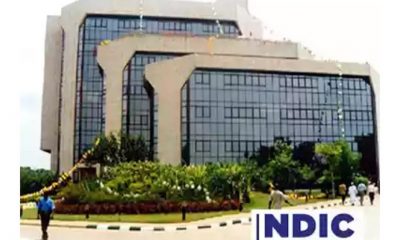

NDIC Hosts Africa Regional Committee Annual Meeting, Workshop in Abuja
ShareBy Tony Obiechina, Abuja The Nigeria Deposit Insurance Corporation (NDIC) will host the International Association of Deposit Insurers (IADI) Africa...


NECO Refutes ‘Miracle Centre’ Allegation over Kogi School
ShareBy Dan Amasingha, Minna The National Examinations Council (NECO) has dismissed claims that Government Secondary School, Olowa, in Dekina Local...
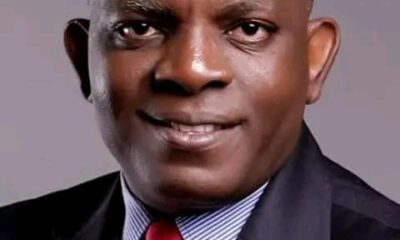

Pius Akutah: The Quiet Reformer Steering the Nigerian Shippers’ Council to New Heights
ShareBy David Torough It has become very safe, perhaps, to conclude that the Executive Secretary and Chief Executive Officer(CEO) of...


Troops Foil ISWAP Mass Abduction Attempt at FGGC Monguno, Rescue 46 Students
ShareFrom Muhammad Muhammad Al-amin, Maiduguri Troops of Operation HADIN KAI, in collaboration with personnel of the Nigeria Police Mobile Force...


NAICOM Boss Tasks CIIN on Professionalism, Ethics as New President Emerges
ShareBy Tony Obiechina, Abuja The Commissioner for Insurance, National Insurance Commission, Olusegun Ayo Omosehin has called on the Chartered Insurance...