
NEWS
Lawan Appoints DCoS, SA Media, Others

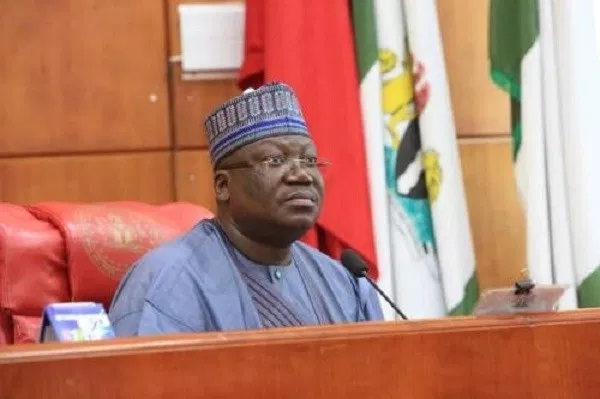
Senate President, Ahmad Lawan has approved the appointments of Karage Mohammed Mamman and Ola Awoniyi as his Deputy Chief of Staff and Special Adviser on Media respectively.
This was contained in a statement issued by the Special Assistant to the Senate President on Media and Publicity, Mohammed Isa.
Other appointments approved by the Senate President, according to the statement were that of Abubakar Sidiq Usman as Special Assistant on New Media, Kabir Adamu as Special Adviser on Security and Intellegence, and Muhammad Mukhtar Yawale as Special Adviser on Health.
All the appointments are with immediate effect.
The 58 year old Awoniyi, according to the statement, is a graduate of University of Ibadan where he obtained a B.
Sc in Psychology and holds Masters in Law Enforcement and Criminal Justice (MLC) and Masters in International Affairs and Diplomacy (MIAD) both from Ahmadu Bello University (ABU), Zaria. He also obtained a Post Graduate Diploma in Journalism from International Institute of Journalism, Abuja in 1997.He worked with Nigerian Tribune for over a decade before he joined the services of Agence France-Press (AFP), where he is the Head of Abuja office.
The new Deputy Chief of Staff to the Senate President, Karage, according to the statement is a graduate of University of Sokoto where he obtained Bachelor of Arts (Education).
He retired as Director in Federal Ministry of Education in 2018.
On his part, Usman, popularly know as Abu Sidiq, according to the statement graduated from Federal University of Technology, Minna where he obtained both his first and second degrees.
A reknown blogger, Abu Sidiq was the head of Social Media Unit of the Field Operations Directorate of All Progressive Congress (APC) during the 2019 general elections.


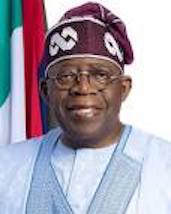



President Bola Tinubu has approved the establishment of the Sector-wide Coordinating Office-Programme Management Unit (SCO-PMU) domiciled in the Office of the Coordinating Minister of Health and Social Welfare.A statement on Friday by his spokesman, Chief Ajuri Ngelale, said the unit would ensure efficient, transparent and accountable management of external grants mobilised towards the implementation of the Nigeria Health Sector Renewal Investment Initiative (NHSRII).
Ngelale said SCO-PMU would report to a Steering Committee/Ministerial Oversight Committee chaired by the Minister, including the Minister of State, Permanent Secretary; Ministry of Finance, Ministry of Budget and Economic Planning and relevant development partners. “The SCO-PMU will serve as the secretariat and delivery unit for the NHSRII and is to be headed by a national coordinator (NC).“The functions of the SCO-PMU include programme management, monitoring and evaluation, engagement and supervision of Independent Verification Agents (IVAs) for NHSRII programmes and fiduciary management, among others.“Consequently, the President has approved the appointment of Dr. Muntaqa Umar Sadiq as the National Coordinator of SCO-PMU,” he said.Report says that Sadiq has over 17 years of experience in public health, impact investing, investment banking, energy, and climate financing across the health, finance, climate and energy sectors.He had served as Head of the Performance Management and Delivery Unit at the Federal Ministry of Health and Social Welfare and Chief Executive Officer of the Private Sector Health Alliance of Nigeria.He also served as Head of the Nigeria Energy Transition Office and Private Sector Engagement Adviser at the World Bank. (NAN)
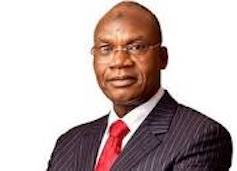
The Federal Government says it has no plan to slash scholarship students’ allowances as recently projected in the media.The Minister of Education, Prof. Tahir Mamman, stated this during a meeting with the leadership of the National Association of Nigerian Students (NANS) in Abuja on Friday.
Report says that there was a report that the ministry, through the Federal Scholarship Board, announced a slash in allowances of foreign scholars stranded in Russia, Morocco, and Algeria among others.
The slash in scholars’ allowances under the federal government’s Bilateral Educational Agreement Scholarship (BEA) was attributed to the economic crises.Mamman said that there was no slash in scholars` allowances but rather an adjustment due to Foreign Exchange fluctuations (FOREX).“We want to clarify what has been in the media on allowances paid to scholars under the Bilateral Scholarship Agreement.“We want to place it on record that the ministry and the Federal Government for that matter have not slashed the allowances due to students.“What happened is some adjustments in the amount due to them because of FOREX fluctuations, and as soon as we get the balance we have applied for, we will pay them.“But for now, what is in the budget is what we can pay. So, there is no slash, we will even be happy to increase, so this is what has led to the adjustments,” he said.(NAN)
By Laide Akinboade, Abuja
The Christian Association of Nigeria, CAN, on Friday, has urged Nigerians to calm and patient with Federal Government and should give the the government more time to address these pressing concerns.In a statement issued by CAN and signed by Archbishop Daniel Okoh ,President, CAN and made available to journalists in Abuja.
CAN also urged all Nigerians to consider alternative means of expressing their grievances. He however said CAN stands in solidarity with the citizens of nation during these challenging times of economic hardship and pervasive hunger. The statement reads in part, “As we navigate this period of crisis, it is imperative to uphold the constitutional rights of every Nigerian to peacefully protest and express their grievances. The right to assemble and voice discontent is a cornerstone of our democracy and must be protected and respected by all. Peaceful protests are a powerful tool for civic engagement, allowing the populace to communicate their concerns and hold leaders accountable. However, the anxiety related to the impending protests is heightening, especially given the volatile experiences in countries like Kenya and Pakistan.”We must also draw from our recent history. The #ENDSARS and #RevolutionNow protests, though rooted in genuine grievances, were marred by tragic incidents where miscreants hijacked the process. This led to widespread looting, destruction of properties, and unfortunate loss of lives. These experiences have shown us that mass demonstrations can quickly degenerate into chaos if not properly managed and coordinated.” In light of the planned protests scheduled to commence on 1st of August, CAN urges all Nigerians to consider alternative means of expressing their grievances. We recommend giving the government more time to address these pressing concerns. This period should be used to explore other legal avenues that will not easily give hoodlums the opportunity to hijack the exercise to destroy our national assets or endanger lives and properties. Dialogue, petitions, and town hall meetings are viable options that can yield positive results without the risk of disorder.”We call on the government to cut the cost of governance and expedite its efforts to alleviate the hardships in the land. The opulent lifestyle of political office holders must be addressed to demonstrate the sincerity of those in government to improve the living conditions of the people. Likewise, it is imperative that the government implements the newly approved national minimum wage to provide immediate relief to struggling families.”Furthermore, specific measures must be taken to put an end to kidnappings, banditry, and mass killings that have plagued various parts of our country. The security and well-being of every Nigerian should be paramount, and urgent action is required to restore peace and order.”We also call on the government to expedite its efforts to alleviate the hardships in the land. There is an urgent need for more refined and effective policies that address the root causes of the economic challenges we face. The government must deepen its consultations with stakeholders, including religious leaders, to create a more inclusive and comprehensive approach to problem-solving. By working together, we can devise sustainable solutions that reflect the needs and aspirations of the people.”In these trying times, let us all remember the words of our Lord Jesus Christ: “Blessed are the peacemakers, for they shall be called the children of God” (Matthew 5:9). As we seek to bring about positive change, let us do so with a spirit of peace, love, and unity. Our strength lies in our ability to come together, support one another, and work collectively toward a better Nigeria.”We pray for wisdom and discernment for our leaders, resilience and hope for our citizens, and divine intervention to guide us through these difficult times”.
Tinubu Approves Management Unit for Health Sector Renewal Investment Initiative
SharePresident Bola Tinubu has approved the establishment of the Sector-wide Coordinating Office-Programme Management Unit (SCO-PMU) domiciled in the Office of...

FG Denies Slash in Students’ Allowances
Share The Federal Government says it has no plan to slash scholarship students’ allowances as recently projected in the media.The...

Planned Protests: CAN calls for calm and patience
ShareBy Laide Akinboade, Abuja The Christian Association of Nigeria, CAN, on Friday, has urged Nigerians to calm and patient with...

Senate Consultant Scores Benue LG Bureau High on Projects Execution
ShareThe Consultant for Senate Standing Committee on States and Local Government Administration, Engineer Kayode Adegbayo has described the quality of...


Doctor Mark Ogbodo: A Man Destined for Success
ShareBy Paul Ugah Henry Miller once said, “Every man has his own destiny, the only imperative is to follow it,...


Ignore Anti -government Protests, Wike Begs Abuja Residents
ShareBy Laide Akinboade, Abuja Minister of the Federal Capital Territory, Barr. Ezenwo Nyesom Wike has called on residents of the...
Reps Commit to Ensure Legislations for Better Skills Acquisition, Management
ShareBy Ubong Ukpong, Abuja The House of Representatives on Thursday pledged its continuous commitment to ensure legislations that would align...
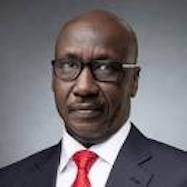

Economic Sabotage: Senate Summons Petroleum Minister, NNPCl, CBN, NPA, Others for Interrogation
ShareBy Eze Okechukwu, Abuja The Senate is blowing hot over alleged economic sabotage by stakeholders within the petroleum sector, thus...
Dialogue with Organisers of August 1 Protest, AANI Urges FG
ShareBy Johnson Eyiangho, Abuja The Alumni Association of the National Institute (AANI) has advised the Federal Government to dialogue with...


Stigmatization: CSO Urges Kogi Gov to Assent Bill Protecting HIV Patients
ShareFrom Joseph Amedu, Lokoja Civil Society Organisation, Initiative for Grassroot Advancement in Nigeria (INGRA), has called on the Kogi State...