
NEWS
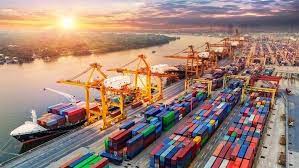
Leapfrogging Nigeria’s Economy Development through Free Trade Zone

By Martins Odeh
There appears to be deep-seated and conclusive negative opinions about the modus operandi of the Free Trade Zone Scheme among individuals in and out of government in Nigeria.
This global economic system is primarily aimed at encouraging economies of scale through seamless production and manufacturing for export and local markets.
It also aims to support backward linkages; industrialisation; infrastructure development; employment generation; foreign exchange earnings, and revenue generation among others.
A Free Trade Zone remains a global economic matrix with a distinct framework which gives this business ecosystem the status of “country within a country.
’’It, therefore, behooves any nation willing to adopt the concept to run it in line with the local law that regulates its operation.
This law is enshrined in the NEPZA Act 63 of 1992 and it is within the purview of international best practice and framework.
The Federal Government, seeing the benefits of the scheme to the national economy and development, adopted it some 30 years ago.
The scheme might not be at the growth level that the government had envisaged yet, but some stakeholders say excellent milestones have been attained.
For instance, 52 Free Trade Zones have been created, with over 600 enterprises operating within those business landscapes with a cumulative USD 30 billion investment lubricating the economy.
Deborah Dada, a legal practitioner, said the primary laws regulating the FTZs in Nigeria are the Nigerian Export Processing Zone Act 1992 (NEPZ Act) and the Oil and Gas Free Zone Act (OGFZ Act).
“NEPZA has also made specific regulations over the operation of specific FTZs like the Lekki Free Trade Regulations 2016.
“NEPZA has passed a regulation over the operation of FTZs in Nigeria known as the Regulations and Operational Guidelines for Free Zones in Nigeria 2004.
“Free zones in Nigeria provide rewarding opportunities that not only attract foreign investors but also provide employment opportunities to local citizens.
Thus, businesses should take advantage of these incentives to maximise industrial growth and economic development by taking steps to set up their businesses in a free trade zone in Nigeria.”
Some stakeholders say, in spite of challenges, investors and operators have found respite in the special interest of President Bola Ahmed Tinubu, to use the scheme to upscale industrialisation.
They cited how Tinubu, then governor of Lagos State, used the free trade zone concept to reconfigure the economic landscape of the Lekki Area of the state.
He also used it to abet the catastrophic submerge of the entire Victoria Island area of the state through the conversion of the then-ruptured Bar Beach into a world-class Eko Atlantic Free Trade Zone.
Today, the Lekki area harbours the Lagos Free Zone, Dangote Refinery Free Zone Enterprise, Alaro City, Deep Sea Port, and Lekki Free Trade Zone.
To the credit of the president, these accomplishments earned him the praise of stakeholders as the “brain behind modern free trade zone in Nigeria”.
The president’s attention must again be called to the gains and prospects of the scheme through sustained promotion of the economies of scale over the temptation of listing it as a pure revenue generation hub.
The concept of economies of scale promotes long-term and sustainable dividends for the country so long as the enterprises continue to reap low production cost advantages.
This will encourage continuous inflow of Foreign Direct Investments (FDIs), Direct Diaspora Investments (DDIs) as well as Local Direct Investments (LDIs) while keeping a grip on investments already attracted.
Regardless of the loud voices of anti-free trade zone campaigners, the scheme has made modest contributions to the economy.
How is it possible for the 52 Free Trade Zones and the over 600 enterprises currently in operation have not impacted the economy significantly?
The response to the above question was provided by the NEPZA Managing Director, Dr Olufemi Ogunyemi, while alluding recently that free trade zone was, however, not a ‘free meal ticket’ for the investors.
The import of this statement is simply to help grow public knowledge on the contribution of the free trade zones to the Domestic Gross Product (GDP) and National Gross Product (NGP) respectively.
The NEPZA Chief Executive Officer was emphatic when he said: “Free Trade Zones are business anchorages that have for decades been used to generate revenues for the Federal Government.”
He explained that the widely held notions that the scheme was a ‘free meal ticket’ for the investors thereby denying government revenues were incorrect.
“The NEPZA Act provides an exemption from all federal, state, and local governments taxes, rates, levies, and charges for FZE, of which duty and VAT are part.
“However, goods and services exported into Nigeria attract duty, which includes VAT and other charges.
“In addition, NEPZA collects over 20 types of revenues ranging from 500,000 USD-Declaration fees, 60,000 USD Annually as Operation License (OPL), and 3000 USD to 500 USD Registration fees in line with extant regulations on IGR remittances to the Federation Account.
“There is also the 100 USD to 300 USD Examination and Documentation fees per transaction which occurs daily’’, he said.
According to him, there are other periodic revenues derived from Vehicle Registration, Visa among others. The operations within the free trade zones are not free in the context of the word.
For instance, the Authority’s First and Second Quarters of the 2023 Key Performance Indicator (KPI) showed that a combined total of 21.3 million dollars was generated as Foreign Direct Investment while N9.8 billion accrued as Local Direct Investment.
Conversely, a total of 28.9 million dollars was generated as International Exports and N250.5 billion was accrued to the government as Domestic Exports while 338.9 million dollars and N36.3 billion were generated as International Imports and Domestic Imports.
Furthermore, the figure that accrued to the government as Custom Duty stood at N20 billion while that of PAYEE amounted to N346.8 million, and a total of 3, 776 employment was generated within the two quarters reviewed.
In total, the Authority’s 40 per cent contribution to the consolidated revenue in naira as of November 2023 stood at N1, 800,809,1773.38 with a similar 40 per cent margin of transfer to the account in dollars amounting to USD 1, 167,122.86.
The total of the figures generated in 2023, which included figures from Tender Fee; Withholding Tax (WHT); Value Added Tax (VAT); Stamp Duty; PAYEE as well as Customs Duty stood at N38, 879, 485, 774 568.90.
The KPI for 2022 also showed excellent flashes of gains made by the scheme which attracted a total of 28 new enterprises with a total of 90 million USD value of FDI and N80 billion value of Local Domestic Investment (LDI).
The record also placed the value of both the International and Local Exports at 36.8 million USD and N450.8 billion respectively.
The 2022 key performance indicator further highlighted the value of International and Domestic imports to be 999 million USD and N188 billion.
The report stated that a total of N34.215 billion was generated as Custom Duty while the amount generated from the free trade zone in 2022 by the Immigration Service stood at N702.7 million with a total of 3,555 employment created.
A session of stakeholders urges the authority to be aware of the need to ensure a transparent listing and deductions of mandatory duties and taxes.
One of the ways to achieve that, they say, is by digitalising its process and agreeing on the best ways for a dependable free trade zone tax administration with the relevant authorities.The scheme remains an economic development tool the country is using to leapfrog our economy and its sustainability and success should be our utmost concern. (NANFeatures)
From Agbo Emmanuel, Kaduna
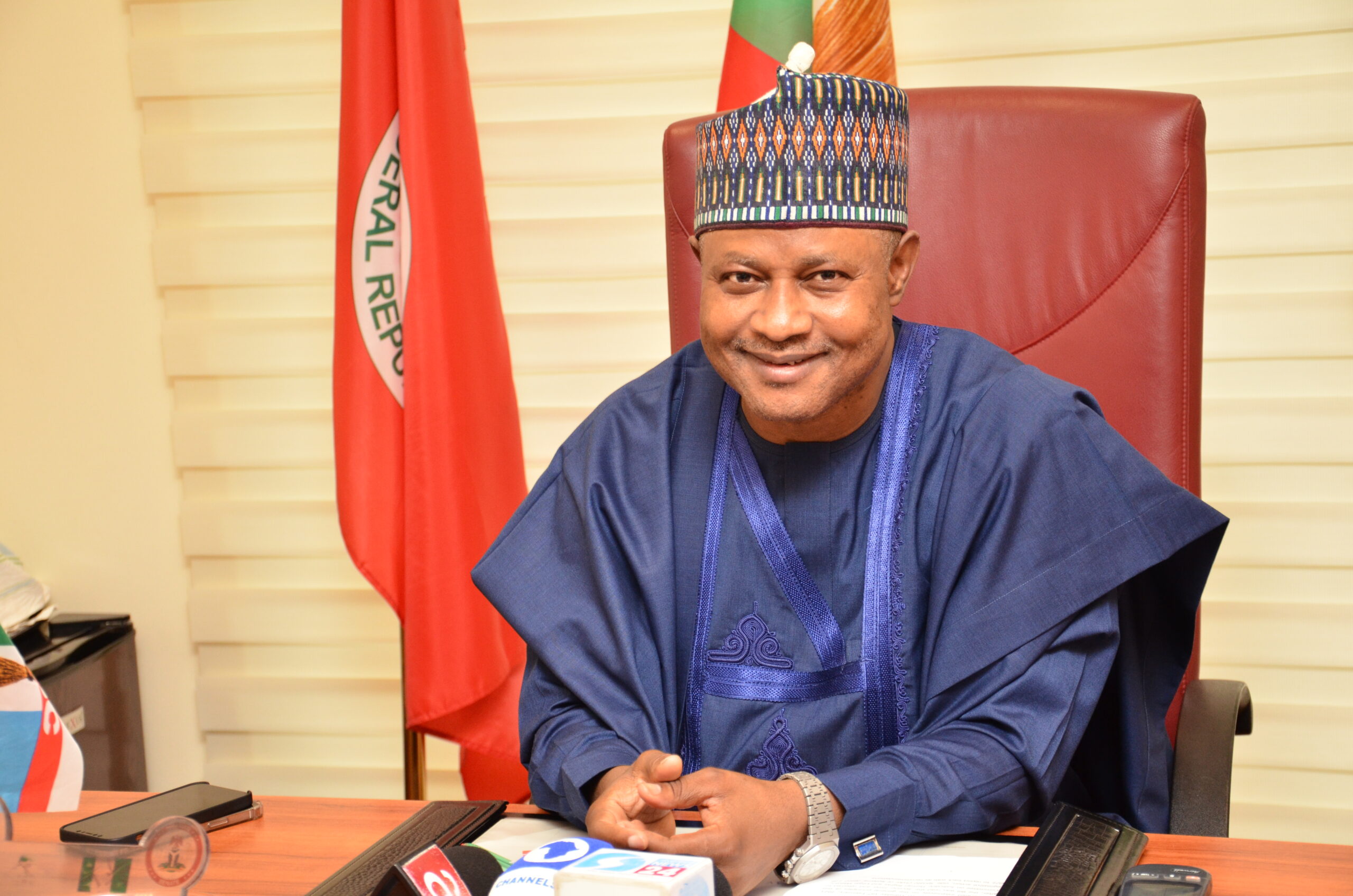
The Kaduna State Government has issued a firm directive for the immediate acceleration and completion of the Nnamdi Azikiwe Western Bypass, declaring ongoing delays “completely unacceptable” in the wake of repeated fatal accidents along the corridor.
The decision followed an emergency stakeholders’ meeting convened at the instance of Governor Uba Sani, who expressed grave concern over the rising number of crashes on the 21.
5-kilometre expressway stretching from Command Junction through the bypass to Mando Roundabout.Addressing journalists after the meeting, the Commissioner for Information & Culture, Mallam Ahmed Maiyaki, conveyed the Governor’s deep concern and urgency:
“His Excellency is profoundly disturbed by the tragic loss of lives recorded on this highway.
No level of progress can justify the continued loss of even a single life. This situation is intolerable, and decisive action must be taken immediately.”The high-level meeting brought together critical stakeholders, including representatives of the Federal Ministry of Works, the Federal Road Safety Corps (FRSC), KASTELEA, the main contractor Dangote Industries, subcontractors Tata & Sao, and leadership of transport unions such as NARTO, NURTW, and ACCOMORAN.
Maiyaki noted that although the project was awarded in 2021, prior to the current administration, progress had been sluggish until Governor Uba Sani personally intervened.
“Since the Governor’s direct engagement, we have seen a marked improvement in the pace of work. However, progress alone is not enough—timely completion is now non-negotiable.”
According to updates from the Federal Controller of Highways and contractors, approximately 19 kilometres of the road have been completed. Despite the official delivery timeline of December 2026, the Governor has now issued a clear directive for an earlier completion date.
“His Excellency has made it unequivocally clear: this project must be delivered ahead of schedule. Any further delay will not beOK tolerated.”
To ensure strict compliance, the government has established a multi-agency task force to monitor construction and enforce safety measures around the clock, particularly during the rainy season.
The task force, chaired by the Permanent Secretary of the Ministry of Public Works, includes the FRSC, KASTELEA, Federal Ministry of Works officials, contractors, community representatives, traditional leaders, and transport unions. The Ministry of Information has been mandated to lead an aggressive public awareness and behavioral change campaign.
Maiyaki underscored that unsafe road use has been a major contributing factor to the accidents, noting that several high-risk crossing points have been identified.
“Beyond infrastructure, human behaviour remains a critical challenge. We are working closely with communities to enforce safer road usage. Recklessness on our roads must stop.”
He further stressed that both construction standards and road usage must align with global best practices:
“We are committed to ensuring that this road meets international safety standards—not just in design, but in how it is used.”
The government’s intervention follows mounting pressure from community leaders and youth groups, who have described the situation along the bypass as a “serious public safety emergency” with far-reaching economic and social consequences.
With the new directive and enforcement mechanisms in place, the Kaduna State Government says it is determined to restore safety, accelerate delivery, and ensure that the Western Bypass serves its intended purpose without further loss of life.
By Tony Obiechina, Abuja
Lagos, Rivers and Kaduna states have emerged as Nigeria’s most indebted subnational governments, according to the latest data released by the National Bureau of Statistics (NBS), highlighting intensifying fiscal pressures across the country’s tiers of government amid a rising national debt profile.
The NBS, in its Nigeria Q4 2025 Domestic and External Debt Report published on Monday, disclosed that Lagos State continues to dominate the debt landscape, recording N1.
22trn in domestic debt alongside $1.17bn in external obligations.The figures reinforce Lagos’ position not only as Nigeria’s commercial hub but also as the most leveraged state, reflecting its extensive infrastructure financing needs and large-scale economic commitments.
Rivers State ranked second in domestic debt with N378.81bn, underscoring its continued reliance on borrowing to support expenditure, particularly in a volatile revenue environment tied to oil receipts. Kaduna State, meanwhile, stood out on the external debt front with $684.29m, placing it among the most exposed states to foreign currency liabilities.
The broader national picture points to a steady escalation in public debt. Nigeria’s total debt stock rose to N159.28trn (approximately $110.97bn) in the fourth quarter of 2025, up from N153.29trn ($103.94bn) recorded in the preceding quarter.
This represents a 3.90 per cent increase quarter-on-quarter, reflecting sustained borrowing at both federal and subnational levels to bridge fiscal gaps and fund critical expenditures.
A closer look at the composition of the debt shows that external borrowings stood at N74.43trn, accounting for 46.73 per cent of the total, while domestic debt reached N84.85trn, representing 53.27 per cent. The near-even split highlights Nigeria’s dual dependence on local and foreign financing sources, even as exchange rate pressures continue to elevate the cost of servicing external debt.
Beyond the top three states, the report identified several other sub-nationals with significant debt burdens. Bauchi State recorded $220.57m in external debt and N156.05bn domestically, while Delta State posted $63.42m in external obligations alongside N248.83bn in domestic debt. Enugu State also featured prominently, with $99.88m in external debt and N157.60bn in domestic borrowings.
In contrast, some states maintained relatively low debt profiles. Jigawa State reported the least domestic debt at N1.60bn, followed by Ondo State with N8.42bn.
On the external side, the Federal Capital Territory recorded the lowest exposure at $26.80m, with Zamfara State following at $41.93m, suggesting varying fiscal strategies and borrowing capacities across the federation.
The growing debt burden has become a focal point of concern for policymakers, economists and citizens alike, particularly as debt servicing obligations continue to absorb a significant share of government revenues.
Analysts warn that this trend could constrain fiscal flexibility and limit the government’s ability to respond to economic shocks or invest in long-term development priorities.
Economic analysts note that while Lagos, Rivers and Kaduna’s positions as leading debtor states partly reflect their economic size, population and development ambitions, the scale of their obligations raises important questions about debt sustainability at the subnational level.
They argue that without commensurate growth in internally generated revenue and more efficient public spending, the reliance on borrowing could heighten fiscal risks over time.
As Nigeria continues to navigate a complex economic environment marked by inflationary pressures, exchange rate volatility and constrained revenues, the trajectory of public debt, particularly at the state level, is expected to remain a critical issue for fiscal policy and economic stability.
From Rabiu Sanusi, Kano
Kano State Governor, Alhaji Abba Kabir Yusuf has lauded the House Prosperity and Empowerment-Cash Transfer program for achieving significant milestones in transparency, operational efficiency, and beneficiary outreach across the state.
He made the statement when reviewing the Minister of Humanitarian Affairs and Poverty Reduction, Dr.
Bernard M. Doro at Government House Kano on Monday.In a statement issued by the Chief Press Secretary to the Governor, Mustapha Muhammad on Monday, Governor Yusuf disclosed that the programme recorded 609,013 beneficiaries within the state.
He further revealed that citizens living below the poverty threshold received a total of N48,276,150,000 through the initiative.
“This achievement reflects the programmes far-reaching commitment to poverty alleviation, social inclusion, and economic empowerment,” the Governor stated.
Yusuf, who was represented by his Chief of Staff, Dr. Sulaiman Wali Sani urged beneficiaries to view the support not merely as temporary assistance, but as a seed and a catalyst for growth.
He expressed appreciation to Minister Dr. Bernard Doro for his visionary leadership, dedication, and consistent support toward the implementation of the National Social Safety Net Project-Scale Up (NA SSP-SU).
The Minister of Humanitarian Affairs and Poverty Reduction, Dr. Bernard Doro, informed the Governor that he was leading a delegation from the Ministry to meet with stakeholders and beneficiaries to assess the progress of the programme.
The minister noted that the volume of funds received by Kano citizens exceeds the combined total of four other states, and he commended the state government for maintaining transparency throughout the process.
In her welcome address, the State Commissioner for Women Affairs, Children and Persons with Special Needs, Hajiya Amina Abdullahi (HOD), confirmed that the programme is proceeding smoothly and noted that beneficiaries have expressed immense gratitude for the gesture.

APC Adopts Charter of Equity in Imo
ShareFrom Marcel Duru, Owerri The former Commissioner in Imo state on Environmental Transformation and General Supervisor and coordinator of All...
Ex-Zamfara Kaura, Declares Intention for Second Turn
ShareFrom Ifeanyichukwu Nwannah, Gusau A former Zamfara Senator, Tijjani Yahaya Kaura has declared his intention to contest for Zamfara North...

Tinubu Assigns Kalu to Lead Abia APC, Yari, Bamidele, Others Senate Return Ticket
ShareBy Eze Okechukwu, Abuja President Bola Tinubu has entrusted Senator Orji Uzor Kalu with the responsibility of coordinating the activities...

Kano Gov Warns over Branded Underwear
ShareFrom Aliyu Askira Kano Kano governor Abba Yusuf yesterday expressed displeasure over the display of branded underwear (pants) by some...
Kaduna Youths Move to Purchase Nomination Form for Dankasuwa Ahead Chikun 2027 Elections
ShareBy Agbo Emmanuel, Kaduna Youth groups and grassroots stakeholders in Chikun Local Government Area of Kaduna State have intensified support...
Ekiti 2026: Tight Security at Oyebanji Campaign Flag-off
ShareThere is tight security at the Ekiti Parapo Pavilion, Ado-Ekiti, venue of the flag-off of re-election campaign of Gov. Biodun...

Kano ADC Candidate Forum Demands INEC Chairman Resignation over Alleged Partisanship
ShareFrom Rabiu Sanusi, Kano The African Democratic Congress (ADC) Candidate Forum in Kano State has called for the immediate resignation...

Uba Sani Orders Immediate Completion of Western Bypass
Share From Agbo Emmanuel, Kaduna The Kaduna State Government has issued a firm directive for the immediate acceleration and completion of...

Lagos, Rivers, Kaduna States Emerge Nigeria’s Most Indebted Sub-nationals
ShareBy Tony Obiechina, Abuja Lagos, Rivers and Kaduna states have emerged as Nigeria’s most indebted subnational governments, according to the...

Yusuf Commends Success of Cash Transfer Programme in Kano
ShareFrom Rabiu Sanusi, Kano Kano State Governor, Alhaji Abba Kabir Yusuf has lauded the House Prosperity and Empowerment-Cash Transfer program...