
OPINION
Learning Impact CEO Calls for Shift From Certificates to Skills to Fix Nigeria’s Human Capital Gap


By David Torough, Abuja
The Chief Executive Officer of Learning Impact, Omagbitse Barrow, at a media briefing warned that Nigeria’s growing skills deficit poses a serious threat to innovation, productivity and national development, despite the country’s rising number of graduates and professional certificates.
Barrow said years of consulting work across public, private and non-profit sectors revealed a persistent gap between formal education and practical competence.
He described Nigeria as suffering from an “acute certificate syndrome,” where academic credentials are prioritised over real-world skills, leaving organisations with underprepared talent.Founded in 2010, Learning Impact is a management consulting firm that helps organisations translate strategy into measurable results. Its client base includes major institutions such as Stanbic IBTC, GTBank, Access ARM, Oando, the Central Bank of Nigeria, NDIC, FCMB, Cadbury and several other leading public and private sector organisations.
According to Barrow, the challenge is not the absence of education but the quality of human capital being produced. “We have certificates in abundance, but very little ‘sabificate’—the practical skills, emotional intelligence and adaptability required to succeed,” he said.
He identified three major opportunities to address the problem: preparing children and youth with life skills, expanding micro-learning through digital platforms, and reviving a strong culture of reading beyond sensational headlines.
On life skills, Barrow argued that Nigeria’s education system places excessive emphasis on intelligence quotient (IQ) at the expense of emotional and social intelligence (EQ).
Citing studies from Harvard University, he noted that up to 85 per cent of success is linked to EQ, yet curricula focus almost entirely on academic knowledge.
Through its Life Skills Africa initiative, Learning Impact develops curricula, games, storybooks and courses focused on leadership, communication, personal effectiveness, financial literacy, creativity, innovation and civic education for children and youth.
He also highlighted micro-learning as a practical solution for workforce development. Barrow said short, targeted learning modules—popular in Europe, Asia and North America—offer a more effective alternative to the “certificate-at-all-costs” mentality that fuels corruption and superficial learning. Learning Impact’s response is Online Efiko, a digital platform designed to provide tailored micro-learning content for personal and professional growth.
Addressing the decline in reading culture, Barrow expressed concern that digital media has encouraged shallow consumption of information, driven largely by headlines rather than depth and context. He said this trend weakens critical thinking and informed discourse, not only in Nigeria but globally. To counter this, Learning Impact is promoting digital access to full Nigerian newspapers through its EPaperVendor platform, aiming to blend traditional journalism with modern technology and encourage deeper engagement with news and ideas.
Barrow stressed that Nigeria’s future depends on intentional investment in skills, character and lifelong learning. “If we are serious about unlocking our full potential as a nation, we must move decisively from certificates to skills,” he said.
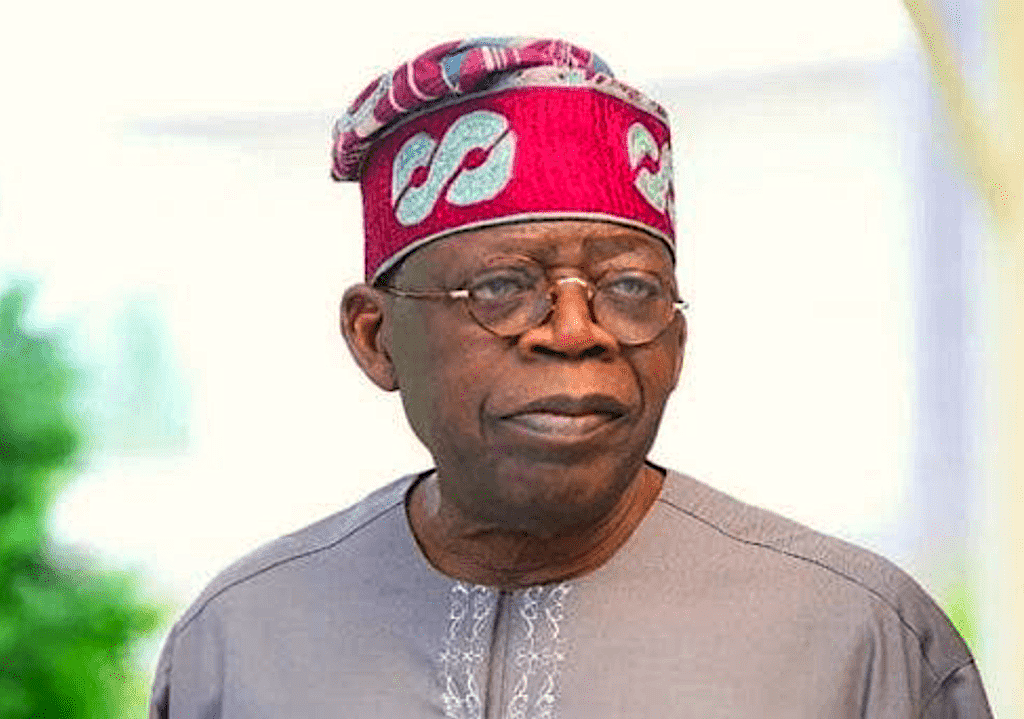
By Reuben Abati
President Bola Ahmed Tinubu returned to Nigeria on Saturday after a state visit to Turkey, during which Nigeria and Turkey signed a total of nine agreements covering defence, energy, military training, intelligence sharing, health, education and a shared target of trade investment valued at about $5 billion.
It is not enough to sign bilateral agreements, it is what follows after, the accruing benefits and advantages that matter.
Since the return to civilian rule in 1999, successive governments must have signed so many agreements of understanding, or cooperation, or collaboration, bilateral, multilateral and whatever such, that any storage room we may have for these would be filled to the brim, due in part to the absence of institutional memory or lack of capacity to clothe agreements with action in the overall best interest of the nation.Too often, the Nigerian government enjoys the ceremonies and rituals of diplomacy, and the tourism on the sidelines, without the seriousness that the commitments require. President Bola Ahmed Tinubu has focused heavily on economic diplomacy, and he has sustained the tradition, even with greater determination, of selling Nigeria to the world as a most preferred destination for foreign investment. It is good to see this.
Tinubu is an apostle of optimism, and a strong believer in the Nigerian potential. What is not clear is how much advantage the country has gained from his many trips abroad, beyond presence and voice.
Curiously, the country has consistently held the shortest end of the stick in international partnerships. Turkey is a strategic country, even if it is not yet a member of the European Union, but it is a strategically located, transnational country: the gateway between Europe and Asia; its capital, Istanbul, being the only city in the world that is in two continents; a melting point of history, cultures and civilisations.
Turkey may have high inflation, but it is a global powerhouse, a major manufacturing hub defined by productivity on a high, transformative scale, and a leading tourist destination. Without President Recep Erdogan’s human rights record, Nigeria indeed has a lot to learn from Turkey, a country with which it established diplomatic relations in 1960, and shares the membership of the Organisation of Islamic Countries and the D-8. President Recep Tayyip Erdogan visited Nigeria on 19 October, 2017, when President Buhari was Nigeria’s head of state. President Tinubu has also now visited Turkey in further pursuance of strong relations between both countries.
Under President Goodluck Jonathan, there were at least three visits between both countries. Sunday Dare, special adviser to the President on Media and Public Communication, in an article entitled “Nigeria: Why Turkiye?” (ThisDay, 27 January) has already made a strong argument for Nigeria-Turkey relations. But the big question as always is: What is in it for Nigeria? The Turkish have businesses in Nigeria, including the Turkish Eye and Specialist Hospital, Turkish Airlines, and about 48 other companies in manufacturing, energy, and road construction. How many Nigerian companies are doing business in Turkey? How can Nigerian businesses benefit more from the Nigeria-Turkey Business Council, and the additional agreements that have been signed? Nigeria has an obligation to draw the best possible benefits from the partnership agreements it signs with other countries.
Useful and worthy as Nigeria-Turkey bilateral relations may be, rhetoric is not enough. It would be sad if what comes out of this is just Turkish companies getting more contracts from the Nigerian government, and a minority group of ten per centers smiling at our expense!
Unfortunately, the conversation about President Bola Ahmed Tinubu’s visit to Turkey has been coloured more, not by the substance of the trip, but sheer mockery and partisanship. In the view of the cynics, the Turkey trip would be remembered more for the story about President Tinubu’s stumble during the welcome ceremony.
The snide and silly comments that this has generated should be deprecated. We are all human. We are not a nation of sadists and we should not keep projecting ourselves to the outside world as a people who are losing a sense of how to be human. The president places a foot wrong, stumbles, and that becomes an occasion for derisive commentary? How sad. But I blame the President’s protocol team. They did not do their home-work well enough, and that was glaring enough.
For a Nigerian president or any president at all going abroad for a visit, there are basic steps: accepting the invitation, preparing for the trip, which would entail an agreement with the host country on every detail of the programme, and then a careful review of the trip – a session during which the President will go over every speech that he has to make, talking points if necessary, and specific briefings by departments and state officials relevant to the trip, with proper liaison with the Nigerian Mission in the other country.
Everything is done to prepare the President. Every detail is worked out. Then an advance team comprising security, liaison officers, state house media, protocol officers, chefs and medical personnel is sent ahead to await the President’s arrival.
A major part of the trip is the arrival ceremony. The format differs from one country to another. In some countries, there is no saluting dais, as in the recent case in Turkey. When the visiting President arrives, diplomatic courtesy requires him to bow to the host country’s flag and pay respect. In the recent visit to Turkey, President Tinubu’s protocol dropped the ball. How come he did not know about showing respect to the flag, until his host directed him to where the flag was? We saw President Erdogan almost physically turning our President towards the Turkish flag. Where was Nigeria’s State Chief of Protocol? His advance team would ordinarily be on ground and they would have briefed him.
The other part of the receiving ceremony is the greeting line. The State Chief of Protocol goes in front and guides the President. It is unacceptable for the President to miss any name. And then when the greetings are done, and the President moves to the next venue, the State Chief of Protocol still goes in front leading the President and he himself is guided by the Protocol Liaison Officer (PLO) who would have been part of the RECCE team.
If the Protocol team were alive to their duty, either the PLO or the SCOP would have noticed if there was a bump ahead, or any rumpled carpet, and they would have guided the principal accordingly all the way to his seat. President Tinubu was left alone, and he tripped. This is a serious matter. Now that the President is back home, there must be an in-house review of what happened in
Turkey. Persons who travel with the President must realise they are on duty as Nigerian representatives, not as spectators. It all depends though on how confident the SCOP is.
The other fallout from the Turkey trip is the widespread complaint spear-headed by opposition party chieftains of the Action Democratic Congress (ADC), and the Peoples Democratic Party (PDP), who last Sunday alerted Nigerians to the fact that President Tinubu spent 23 days out of 31 days in January away from the country. Daily Trust newspaper put the tally at 22 days in January.
The days of absence could even have been longer if President Tinubu had added the World Economic Forum (WEF) in Davos, Switzerland to his itinerary. He went to Europe (which later turned out to be France) for 10 days, and from there to the United Arab Emirates (to attend the Abu Dhabi Sustainability Week Summit) for seven days. He returned to Nigeria briefly and then off he went to Turkey on a state visit for six days. In 2025, the President travelled to 10 countries.
The publishers of Sahara Reporters newspaper report that President Tinubu has spent ₦1. 5 billion on foreign trips in the last six months, and that he and his Vice President intend to spend ₦7.4 billion on foreign trips in 2026. The PUNCH newspaper says the Presidency has actually spent ₦34 billion on foreign trips in two years, with the bulk of that spent on foreign exchange purchases.
In a country where the middle class is having a serious mid-life crisis and the poor are already overburdened by government-enabled afflictions, to hear that a group of privileged persons spend billions to travel around the world, at the people’s expense can be disturbing.
In 2025, the Federal Capital Development Agency (FCDA) spent ₦39 billion to renovate the International Conference Centre in Abuja. Nigerians wonder what could have been achieved with ₦34 billion in terms of infrastructure in the last two years and they shudder.
Hence, Mr Peter Obi of the ADC complains that President Tinubu prioritises foreign trips and when he returns, it is to welcome defectors to his ruling APC at a time the country is passing through a distressing phase: killings, kidnappings, national grid collapses, closure of schools.
Mallam Bolaji Abdullahi, national publicity secretary of the ADC says the challenges in Nigeria “do not allow for a visiting President.” Others share the view that the President is now a visiting President. The spokesperson of the PDP, Ini Ememobong asks that the President should pay more attention to his work at home because his frequent trips are “not helpful.”
The ruling party has since fought back in like measure. Professor Nentawe Yiltwada, chairman of the APC insists that the President is making a sacrifice for us all, in “the national interest” and so does not deserve to be treated in an unfair manner by the opposition and the media. Ambassador-designate Femi Fani-Kayode, an APC chieftain, has also pushed back against those he calls “The Enemy Within” in a robust piece in ThisDay newspaper (Sunday, 1 February on pages 14 -15).
There is no doubt that the President is the chief image maker of the country, and so his various trips abroad align with the foreign policy functions of his office. But to the extent that domestic policy drives foreign policy, he must also be seen to be attentive to the needs of his people. He has promised Nigerians a renewal of hope in a season of consolidation.
The best way he can work hard on that task of consolidation is to be seen actively improving the people’s condition at home.
Frequent travels abroad convey a different impression. Nigerians are becoming uncomfortable with his trips to France in particular. Ini Ememobong of the PDP says “Nigerians deserve to know the truth, the whole truth and nothing but the truth.” While that is important in the spirit of transparency and accountability, politicians must also moderate their tone.
Nigeria must survive for all to realise their ambitions, not by taking political advantage of every situation. When the country faces critical challenges, all Nigerians must come together, irrespective of our differences. Ten years ago, when the extremist group, Al Shabab attacked the Westgate Shopping Mall in Nairobi, Kenya killing 71 persons, with 200 injured, the whole of Kenya came together, including opposition party leaders to support their country. One of the major problems in Nigeria is that politics is now so much in the way, everything has become political and conditional. The ruling elite must learn to work towards a basic consensus when national interest is involved.
Now that he is back, President Tinubu must prove that he means well, and he listens. There are urgent issues that he needs to deal with. The security situation is getting worse. We don’t need to depend solely on external intervention. Money spent on travels can be spent on security.
There is a lingering crisis in Osun State: the seizure of local government funds, and the disregard for court decisions by the APC in Osun State, backed by police rascality. As Governor in Lagos, President Tinubu fought for the separation of powers and the rights of local councils.
His sincerity is on trial in Osun. Fela, the Afro-beat legend has just been honoured at the Grammy Awards in Los Angeles, United States with a Lifetime Achievement Award. Fela is the prophet who was rejected at home but received honour abroad.
The Nigerian state owes him an apology and an act of atonement. He deserves a posthumous award in the category of a Grand Commander of the Niger (GCON). It is also time for Tinubu to rejig his cabinet and send politicians out of the cabinet, so they can go back home to do politics.
Tinubu needs a cabinet of technocrats at this time, so that the political ministers will stop dividing their time between work and endless trips to the village, while the urgent task of rebuilding Nigeria suffers.
Reuben Abati, a former presidential spokesperson, writes from Lagos.
Public confidence in government is the bedrock of a functioning democracy. When citizens trust their leaders, they are more inclined to support policies, participate in civic activities, and feel invested in national progress. However, government policy inconsistencies, summersaults and denials can significantly undermine this trust, leading to widespread disillusionment and erosion of public confidence.
Inconsistencies and denials, either by governments (national or sub-nationals) are strong pillars of distrust.
It is expected that government policies will shape public perception of governance. As such, when policies are inconsistent, wrong signals emerge that the government is unpredictable or unreliable.Nigeria’s frequent policy reversals on many key policy decisions have led to public skepticism about the government’s commitment to reforms. As a result, citizens no longer trust but question every motivation behind policy decisions, suspecting that they serve special interests rather than the public good.
In fact, denials fuel more suspicion. Arising from past experiences, once the government denies or downplay any issue, it fuels public suspicion. Denials of corruption allegations often ring hollow when evidence on ground suggests otherwise. Some notable instances where initial denials by the Nigerian government were later found to be true by the public include:
Tax Reform Laws. The government initially denied tampering with the tax reform laws passed by the National Assembly, but later admitted to “typographical errors” in the gazetted versions.
Ambassadorial nominations: Government had initially denied smuggling the name of a dead person into the ambassadorial nomination list, but later acknowledged an “administrative mix-up.”
Maryam Sanda Pardon: Government initially defended the pardon of Maryam Sanda, convicted of murder, but later reversed the decision amid public outcry.
Third Term Agenda: former President Obasanjo’s attempt to extend his term in office was widely criticized and ultimately unsuccessful. Though evidence abound of inducement and bribery, he has continued to deny any wrongdoing and even boasted “If he wanted, 3rd Term, he could have gotten it.”
The recent abduction of church worshipers in Kaduna state is a deeply troubling incident. On January 18, 2026, armed men attacked Kurmin Wali village in Kajuru Local Government Area, abducting around 177 worshipers from ECWA and Cherubim and Seraphim Churches. The Christian Association of Nigeria (CAN) immediately raised the alarm of the abductions, the Kaduna State government and the police initially denied the incident but later conceded.
A few out of many of those instances have contributed to public skepticism about government denials and fueled demands for greater transparency and accountability.
The erosion of public confidence has far-reaching consequences, which include; decreased civic engagement and participation, increased cynicism and apathy towards governance. The cumulative result is reduced compliance with laws and regulations, leading to increased social unrest and protests. It will take so much for this government to rebuild public confidence, considering decades of mistrust.
DAILY ASSET believes rebuilding public confidence will involve; accountability, transparency, clearly communicating policy decisions and rationale. And, where there are doubts, spokespersons of government should not be flippant by hastily dismissing any information sought. In this era of information superhighway, they must move quickly to ascertain the veracity and true position of things before responding to enquiries from the public.
It is also important for the government to immediately initiate thorough and mandatory training of senior government officials and spokespersons, including those of the military and paramilitary on public communications. The training should be undertaken by the Nigeria Institute of Public Relations (NIPR) and other organisations with expertise in public and media relations. By acquiring the relevant knowledge and practical skills, senior persons in government and spokespersons can demonstrate their commitment to serving the public interest and rebuild trust with citizens.
At present, public confidence and trust in government is fragile. Therefore, the government should move fast to ensure accountability and transparency through clear and concise communication to foster a more stable and prosperous society.
By Zayd Ibn Isah
I have visited the magnificent architectural edifice that is the Shehu Musa Yar’adua Centre on several occasions, and only a few of those visits were for events rather than courtesy calls on my elder brother and mentor, Olusegun Adeniyi. Curiously, despite my frequent visits, he never took me to the Shehu Musa Yar’adua Museum, until the day I came with my wife.
It was almost as if he had been waiting for me to get married before granting me the privilege of a peep into the life of Yar’adua.
When I complained that all the while I had been coming there he had never given me a tour of this historical monument, Mr. Adeniyi jokingly replied that he did not know me. Na so my elder brother take deny me o.I must admit that I never even knew there was a museum inside the Centre. In all honesty, it was my wife’s curiosity, about the Centre, how it came about, who owns it, and whether it belongs to the government or the Yar’adua family that eventually led us there.
At the museum, Mr. Adeniyi told the curator to give my wife a tour of the place; he specifically mentioned my wife. That was when I knew that na only me waka come, as we say in pidgin. The curator welcomed us to the Shehu Musa Yar’adua Museum and began by explaining the early life of the late sage: the primary school he attended, his early military career, his foray into politics, his imprisonment, and his eventual death in custody. Indeed, the museum is an encapsulation of Shehu Yar’adua’s remarkable life. I was struck by an epiphanous sense of what a good writer could write merely by visiting the place: an inspired biography.
Here’s a bit of national history to ponder on. Shehu Musa Yar’adua was incarcerated alongside former President Olusegun Obasanjo by the then military ruler, General Sani Abacha, over alleged coup fears. There was immense pressure from the international community on Abacha to release them. Several local and international bodies wrote letters of solidarity urging their freedom. One letter that stood out for me was Yar’adua’s letter of appreciation to former United States President Jimmy Carter, who made tireless efforts to secure their release.
From that letter, one could clearly see that Shehu Musa Yar’adua was more concerned about Nigeria’s freedom from bad governance than his own personal liberty. I would like to quote the last paragraph verbatim:
“Mr. President, my country is today in the grip of a very greedy and inept dictatorship. The once viable economy is in tatters, but even worse, its institutions are being destroyed. In the face of all this, one’s personal problems appear inconsequential. In short, Mr. President, much more than Gen. Obasanjo and myself, Nigeria needs saving. Please help save my country.”
Reading this paragraph at the museum nearly brought tears to my eyes, tears that still well up even as I write this article. After reading that letter, one need not ever question Shehu Musa Yar’adua’s love for his country. Anyone who has ever been to prison, not the VIP kind, understands the value of freedom. Yet for Shehu Musa Yar’adua, Nigeria’s freedom mattered more than his own, even if it meant dying in captivity.
Not only children in schools, but all Nigerians should read that letter. It ought to be translated into both major and minor languages across the country, so that every citizen, young and old, may learn, or relearn, the true meaning of patriotism: how to love one’s country, to put nation above self, and to serve without expecting anything in return. As citizens, we will never experience true freedom until our country itself is free from the shackles of self-serving leadership and corruption.
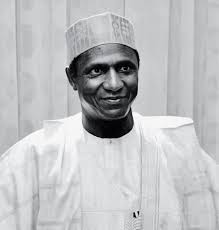
As we were about leaving the museum, we saw a portrait of Shehu Musa Yar’adua’s younger brother, Umaru Musa Yar’adua, the late President for whom Olusegun Adeniyi served as official spokesperson during his tenure. He stood still, staring at his late boss. “My oga,” he muttered. I wondered what was going through his mind at that moment; perhaps I will ask him someday.
Umaru Musa Yar’adua may not have completed his first tenure in office, but many Nigerians still regard him as one of the best Presidents the country has ever had. He governed with patriotism and altruism. Sadly, we did not fully appreciate him until he was gone, a classic case of not knowing what we had until we lost it. I truly understood the depth of the nation’s loss when Mr. Adeniyi once told me that, as presidential spokesperson, President Yar’adua did not provide him with an official vehicle. It took the intervention of the current UN Deputy Secretary-General, Amina J. Mohammed, for him to get a Prado Jeep. He governed by the principle of austerity, and that discipline helped steady the ship of state within the short period he ruled. Truly, Nigeria owes the Yar’adua family a deep debt of gratitude for their sacrifices and love for country.
From the museum, my elder brother took us to the unfinished bridge within the Centre, a structure I had never noticed despite my numerous visits. Once again, he had never thought it necessary to show me until I came with my wife. Perhaps there really are privileges attached to marriage, and I say this half-jokingly to single men: if you can afford it, please marry. There are certain blessings and favourable benefits, it seems, that only married men can enjoy. Such is the power of a woman.
But I digress. Back to the unfinished bridge. As Mr. Adeniyi explained, the bridge symbolises Shehu Musa Yar’adua’s life and struggle, a journey interrupted, a vision left unrealised. It stands as a silent reminder of what Nigeria lost: a man whose commitment to justice, democracy, and national renewal was cut short. The bridge does not lead anywhere, yet it speaks volumes and gives cause for serious contemplation.
Ultimately, it reminds us that the work Shehu Musa Yar’adua started remains unfinished, and that the responsibility of completing it now rests on all of us. Not too long ago, the Shehu Musa Yar’adua Foundation publicly launched an anthology themed “Letters to the Union We Hope to Become”. This anthology drew beautiful writing from a range of Nigerians who, like the icon which it honours, overlooked present circumstances and dared to believe in Nigeria.
And by Almighty God, if we were to all show as much love for this country as the Yar’aduas once did and still do, the Nigerian Dream will surely come to fruition in our lifetimes.
Zayd Ibn Isah can be reached at lawcadet1@gmail.com



ACTDA urges Businesses to Maintain Clean Environment, Sets N300,000 Fine for Defaulters
ShareFrom Sylvia Udegbunam Enugu The Awka Capital Territory Development Authority (ACTDA) has directed factories, companies and business operators within the...

Tinubu’s Many Travels and the Critics
ShareBy Reuben Abati President Bola Ahmed Tinubu returned to Nigeria on Saturday after a state visit to Turkey, during which...

FCT Assures Residents of Capacity to Treat Snake Bite
ShareBy Laide Akinboade, Abuja The Federal Capital Territory Administration (FCTA), on Monday assured residents that antivenom is fully stocked and readily accessible across...


How Premier League Rule Prevented Man United From Signing Me – Mikel
ShareFormer Super Eagles captain Mikel Obi has opened up on how his transfer to Manchester United failed to materialize. Recall that the former midfielder had agreed...


Trump Seeks $1bn in Damages from Harvard
ShareUS President Donald Trump announced he will be seeking $1bn (£730m) in damages from Harvard University in his administration’s ongoing...

Spain to Ban Social Media Access for Children Under 16
SharePedro Sánchez, Spain’s Prime Minister, said on Tuesday at the World Government Summit in Dubai that access to social media for...

Enugu Police Uncover another Human Trafficking Scheme, Arrest Suspect, Rescue Victim
ShareFrom Sylvia Udegbunam, Enugu The Enugu State Police Command has uncovered another transnational human trafficking scheme, rescued a 25-year-old female...

AMAC Chairmanship Polls: Shun Voters-apathy, SDP Candidate Tells Residents
Share…Gets Support of Traders, Community Leaders By Mike Odiakose, Abuja Ahead of the February February 21 FCT council elections, Dr....

Police Are Nigeria’s Mirror, a Global Force For Peace — Adebayo Declares In Lagos
ShareBy Mike Odiakose, Abuja Prince Adewole Adebayo, leader and former presidential candidate of the Social Democratic Party (SDP), on Monday...


Army Assures Onitsha Main Market Traders of Safety
ShareFrom Sylvia Udegbunam, Enugu The Headquarters 82 Division, Nigerian Army (NA) wish to commend the courageous and patriotic traders of Onitsha Main Market for their patriotic...