
NEWS
Lionel Messi Bids Farewell to Father who Guided His Career


Argentina football icon Lionel Messi bid farewell Sunday to his father, the global star’s emotional anchor and agent since childhood who passed away following a battle with cancer aged 68.
The eight-time Ballon d’Or winner touched down on a private flight from Miami late on Saturday with his wife Antonela Roccuzzo and their children and has remained surrounded by his close family since.
A private ceremony with a few teammates from the Argentine national squad is scheduled to take place at a cemetery in the town of Perez, adjacent to Rosario, later Sunday.
The gates of the town’s El Prado cemetery displayed handwritten messages from fans—”Stay strong, Leo, we love you” and “Stay strong, Messi family”—alongside a large floral wreath.
Messi’s teammates rallied around their captain following the announcement that Jorge Messi had passed away late Friday at a clinic in Rosario.
“It will surely do him good for us to be there,” Boca Juniors midfielder Leandro Paredes told journalists after his team’s match on Saturday.
“I need to speak with a few of my teammates to see if we go now or sometime tomorrow.”
According to some media outlets, midfielder Rodrigo de Paul — a close friend of Messi and his Inter Miami teammate — would travel to Argentina.
After scoring a goal in a 2-1 defeat to Monterrey in Miami on Saturday, De Paul paid tribute to his friend by taking off his shirt to reveal Messi’s number 10 jersey.
The cause of death was not disclosed, but local media reported that Jorge Messi had been suffering from cancer.
His unusual absence from the World Cup in June had already attracted attention.
Messi’s family asked the media for “humanity” during the tournament amid persistent rumours over Jorge’s health.
After bursting into tears after scoring against Algeria, 39-year-old Messi had admitted to dealing with “a situation outside of sports”.
“I went through a few difficult, complicated days,” he later acknowledged, “but I am grateful to the entire delegation and my teammates, because they stood by me, as always.”
Immediately after the World Cup final defeat against Spain, Messi returned to spend a few days with his family in Rosario.
A guiding figure throughout his son’s career, Jorge Messi was his first coach who left everything behind to accompany his son to Spain.
A metalworker in Rosario, 340 km north of Buenos Aires, Jorge managed youth teams at the small local club Grandoli.
He was the one who introduced Argentina’s future captain to the game aged four on vacant lots where local kids played.
His life changed course in 2000 when Barcelona invited the young prodigy, then aged 13, to Catalonia to continue treatment for a growth hormone deficiency while playing for the club’s youth teams.
Jorge left behind his job in Argentina, his wife, and his three other children to settle in Spain with Lionel.
“When we arrived in Barcelona, I used to lock myself in my room to cry alone, and my father did the same — either without me seeing him or thinking I didn’t see him. We pretended we were both fine, but we were struggling,” Messi later said.
His father was later the agent who negotiated astronomical contracts on his behalf, from Barcelona to Paris Saint-Germain and Inter Miami.
Messages of sympathy have poured in since Saturday from the football world, including from the clubs Messi played for and the Spanish Football Federation.
The Argentine Football Association (AFA) ordered a minute of silence before matches and that black armbands be worn at games across all age groups for the week.
By Grace Alegba and Lawal Hazeeb
The collapse of online investment platforms has become an all too familiar story in Nigeria.
In spite of repeated warnings from regulators, financial experts and law enforcement agencies, thousands of Nigerians continue to lose millions of naira to fraudulent investment schemes.
From civil servants and traders to university students and even secondary school students, the victims cut across different age groups and social classes.
The common thread is the promise of quick and extraordinary financial returns.
The recent crash of the National Reading Culture (NRC), an online investment platform, once again exposed the dangers of the growing appetite for instant wealth.
The National Institute of Credit Administration (NICA) says the increasing number of victims points to a deeper problem beyond financial fraud.
The Registrar and Chief Executive Officer of NICA, Prof. Chris Onalo, weighed in on the disturbing trend.
He said the desire to become wealthy overnight remained one of the biggest drivers of online investment scams.
In an interview with the News Agency of Nigeria (NAN), Onalo urged Nigerians to reject the culture of quick riches and embrace patience, hard work and proper financial planning.
According to him, fraudulent investment promoters thrive because they exploit people’s emotions, financial pressures and desire for rapid success.
“If I ask you to put your hand in burning fire, you won’t. In the same way, people should avoid investment offers that promise extraordinary returns without credible evidence.”
He stressed that genuine wealth creation required discipline, persistence and informed financial decisions rather than shortcuts.
Onalo advised prospective investors to ask questions, verify investment opportunities and conduct thorough due diligence before committing their funds.
“There are pathways to becoming successful. Start from where you are, work hard, ask questions and always carry out due diligence before making financial commitments.”
He also encouraged Nigerians to seek guidance from credible professionals and institutions before making investment decisions.
According to him, people should not allow peer pressure or the apparent success of others to influence their financial choices.
“Do not be intimidated because someone appears to be making money faster than you. Focus on your own growth and avoid the temptation to cut corners,” he advised.
For many victims, however, the lessons came only after losing their savings.
One secondary school student told NAN that he invested his two months feeding allowance after seeing classmates make impressive profits.
He said one of his friends earned more than N300,000 from the scheme, convincing him to invest N47,000.
Unfortunately, the platform collapsed shortly afterwards.
His friend later refunded him N20,000 while hoping to recover his own investment, but the platform eventually shut down after repeatedly promising investors that their funds would be returned.
Another Senior Secondary School 2 student said she joined the platform late after hearing about the profits made by other students.
According to her, early participants appeared to make money, while those who joined later lost their investments when the platform crashed.
The experiences were not limited to teenagers. Akano Omotayo, an undergraduate, said he was introduced to the scheme by a close friend who appeared to have achieved financial independence through the investment.
Although he was not fully convinced about the platform’s legitimacy, he said his friend’s success persuaded him to take the risk.
Omotayo said he even borrowed money from a loan application to increase his investment, believing that greater risks would produce greater rewards.
Instead, he lost everything when the platform collapsed shortly after he invested.
He said the experience left him struggling to repay the loan while dealing with the disappointment of introducing another friend who also lost money.
“I have learned that every investment should be properly researched before committing money to it.
“People should never invest borrowed funds or money they cannot afford to lose,” he said.
Another student, Abubakar Mubarak, said convincing withdrawal screenshots and positive testimonials shared on a Telegram group encouraged him to invest.
The platform promised daily returns of 1.7 per cent and assured investors that withdrawals could be made at any time.
Mubarak said he managed to recover part of his investment before the platform crashed, but many of the friends he introduced were unable to recover either their capital or expected profits.
According to him, the losses damaged friendships because those he invited questioned his intentions.
He said the experience taught him never to recommend investment opportunities without proper verification and advised Nigerians not to rely solely on social media testimonials.
Financial analysts say Ponzi operators often use the profits of early investors to attract more participants before the schemes eventually collapse when new investments slow down.
They note that the widespread use of social media, encrypted messaging platforms and digital payment channels has made it easier for fraudsters to reach thousands of potential victims within a short period.
Experts also say improving financial literacy, encouraging responsible investment practices and strengthening public awareness campaigns are essential to reducing the incidence of online investment fraud.
For many victims, the financial losses may eventually be recovered through hard work.
However, the emotional trauma, damaged relationships and loss of trust often take much longer to heal.
As economic pressures continue to push many Nigerians in search of alternative income, experts insist that the safest investment remains one built on transparency, proper regulation and realistic expectations.
Regulators, experts, and victims all agree: do not trust any investment that promises big profits with zero risk. If you see one in Nigeria, stop, check the facts, and walk away. (NAN)
NEWS
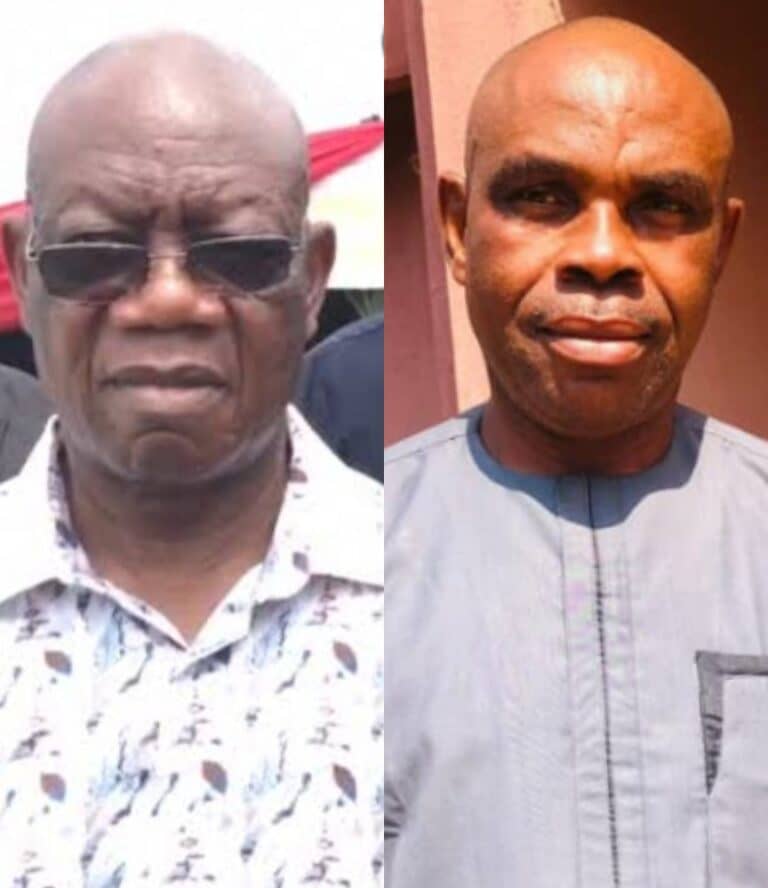
Ihuezeofia Leadership Tussle: No Bias, Govt Took Action in Overriding Public Interest – Commissioner Egumgbe
From Sylvia Udegbunam, Enugu
The Commissioner for chieftaincy affairs Enugu State, Chief Charles Egumgbe have said that Enugu State government have no malice or bias mind in Ihuezeofia community leadership tussle rather took action in overriding public interest.
Egumgbe disclosed this during an interview with Journalists in his office at the ministry of Chieftaincy affairs Enugu State Secretariat complex GRA Enugu.
It will be recalled that a factional leaders in Ihuezeofia village in Enuogu autonomous community, Nkerefi in Nkanu east local government area of Enugu State recently issued a press statement protesting over alleged marginalisation and misused of office by the Commissioner for chieftaincy affairs Enugu State, Charles Egumgbe.
The factional leaders claimed that during a meeting with the commissioner in March 2026, they informed him of what they described as a plan by the immediate past President-General of the community and other stakeholders to prevent the conduct of elections for the office of President-General.
According to them, the commissioner informed them that some prominent members of the community had written to Governor Peter Mbah and that, based on the governor’s directive, no election would be conducted in the community until further notice.
Rather than convening a reconciliation meeting involving all parties, the community leaders alleged that the commissioner constituted a caretaker committee and appointed as its chairman one of the contestants for the office of President-General
The Commissioner in his reaction noted that whatever decision the government took was for the interest of the public. Egumgbe noted that Nkerefi matter is an inherited issue from his predecessor
According to him, “The truth is that there was already this issue of town union problem in Nkerefi before I resumed office. Nkerefi matter is an inherited issue, and from the brief, I discovered that they were having problems. I felt that if they were not disposed to having an election, there could be a caretaker committee so that the town administratively can be having some functions while we make peace.
He pointed that this group that were complaining was the first to came to his office during the few months of his second missionary journey in office. “In my own opinion I invited the other group so that I can have broader view of what was happening. They were not happy when I extended the meeting so that I can have many views.
“The other group were majority In number. They lamented that this group that has been complaining are trying to bring havoc to their community. They accused them of masterminding some security threat in the community.
“So the law allows us to appoint a caretaker committee and I decided to do that to avoid vacuum. Ordinarily, we would have appointed them based on majority. The other group would have taken everything because they are majority, while the other group is minority but outspoken.
“So I told them what I intended to do, just to make sure they are part and parcel of what is happening. I am not from their community to know the degree of enemity that have risen among them in that Nkerefi. I told both groups to give me important names of their members with a view to analyze their CV’s and decide on what to do. They gave me their names and CVS.
“In this state no law excludes civil servants or member of any force from been a member of a town union. They are not excluded by any law. Eventually, when somebody’s name by virtue of my own analysis, their function and who to carry, emerge as Chairman. They said that the person is already contesting for the PG
“The law said somebody must Chair the committee. The law also said that you should try and do representation of some of this villages. I do not have any hidden agenda. I told them what I want to do. Infact this group was the first that I started operating with until I saw the other group.
“I appointed a member of the the other group as Chairman and their own member as Secretary and with other positions. I did not know they were not happy. At the end of the day, I heard that two of their group members said that they are not going to participate and left. I have to fill the gap so that the community will continue to operate. No individual will hold a community to ransom.
“I am a human being, I am not perfect. What I am trying to do is to see that there is integration, which is Cardinal. To make sure that the majority does not squeeze them away. So I do not have any malice. I can identify their group members but cannot identify the other group because they were coming all the time.
“If they said that the Chairman has a substantive job that he is doing, what I know is that there is no law that bared them. If the person have time to do it, so be it. I have friends who are permanent Secretary and they are PG’s in their town. It is not unlawful, not illegal. They do not know that I have a good training on this Job.
“We have issued a regulation that any caretaker Chairman will no longer contest election for substantive President General. They find it difficult to conduct election which is Cardinal for a PG to be put in place because they have limited time to do it and handover.
“This was not made before this constituted committee. The regulation was made due to some caretaker committee Chairmen failing to conduct election in accordance with terms of reference and communities were having problems.
“If I am dealing with four hundred and something communities, and two or three have a placard of unhappiness. It is not bad. They should know that I am a human being. They are small, but tougher and disturbing more than the other group. They have their freedom to complain.
Egumgbe furthermore speaking on the issue of which community constitution is authentic and the one that is not authentic said that it is not government business. According to him “As government, we do not decide on community constitution except the one we gazetted ourself.
“If both group were having challenges on the community constitution, and they went to court to ascertain the authenticity of a document which I did not know and did not impose on them.
“If at the end, the court determined the one they will use as a community constitution in a way of law, I cannot interfere. Even though I am a lawyer. I use to step aside and allow a competent court to decide on the authenticity or legality of particular documents that can be used.
From Attah Ede, Makurdi
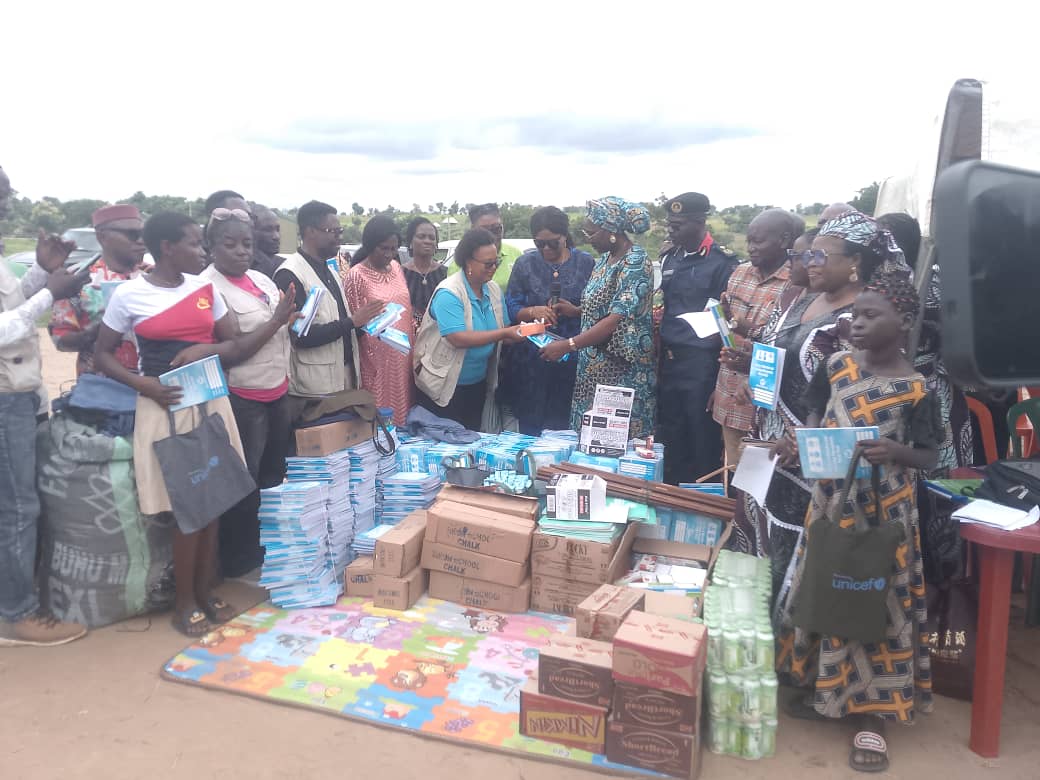
The United Nations Children Fund, UNICEF with funding from Swedish International Development Cooperation Agency(SIDA), has supported Benue State Government with 400 School-in-a-Box kits, containing notebooks, writing materials and teaching aids to enhance the full implementation of Building Rights to Access and Compulsory Education for Un-enrolled Pupils (BRACE-UP) Project in the state.
Speaking at the official flag-off of the teaching and learning materials and dissemination of the BRACE-UP implementation plan at SUBEB headquarters in Makurdi, Mrs.
Juliet Chiluwe, Chief of UNICEF Enugu Field Office, said they are making presentation of 330 tablets for digital learning, and the dissemination of the two-year Project BRACE-UP Implementation Plan.She maintained that the kits would benefit about 16,000 school children and strengthen classroom teaching and learning, stressing that the provision of 330 tablets to teachers earlier trained by UNICEF on digital literacy, will support the Nigerian Learning Passport and help expand access to digital learning in schools.
According to her The BRACE-UP Implementation Plan provides a clear roadmap to enrol more than 50,000 un-enrolled children over the next two years, while strengthening community mobilisation, teacher support, alternative learning pathways, data systems and accountability for results.
“With the leadership of the Benue State Government, SUBEB and the commitment of partners and communities, this plan can help reduce exclusion and improve education outcomes across the state.
“I commend the Government of Benue State and SUBEB for prioritising children’s learning, and I appreciate the dedication of teachers, parents, communities, traditional and religious leaders, civil society organisations and development partners”, Chiluwe stated.
Flagging off the distribution, deputy governor of Benue State State, Barr. Sam Odeh, maintained that state government has taken a decisive step toward fulfilling that promise by unveiling the detailed Implementation Plan developed by SUBEB in collaboration with UNICEF, and equally, graciously sponsored by UNICEF to guide the project over the next two years.
He noted that the plan would strengthening the capacity of teachers and stakeholders, deepening community and parental support, conducting data-driven mapping and enrolment of out-of-school children, running strategic outreach campaigns, empowering student marshals and LGA task teams.
He said it would reinforcing monitoring and quality assurance, expanding non-formal learning pathways for vulnerable children, and improving school infrastructure across the state.
Put together, these eight pillars address both the reasons children are kept away from school and the conditions that make school unwelcoming when they do arrive.
This initiative is not a cheap undertaking. The resources being committed to Project BRACE-UP run into hundreds of millions of naira. Yet, the Benue State Government under His Excellency, Rev. Fr. Dr. Hyacinth Iormem Alia, has chosen, without hesitation, to make this investment. We do so because we believe that no amount spent on the future of a Benue child is ever too much.
Today also marks the flag-off of the distribution of 400 School-in-a-Box kits donated by UNICEF, containing teaching and learning materials that will reach over 8,000 learners in public schools across the state.
“Alongside this, we flag off the distribution of sporting equipment to hundreds of schools spread across all three zones through the collaboration of SUBEB and UBEC. These items may appear modest to some, but to a school or to a pupil who has never owned a football or a sporting apparatus, they represent dignity, opportunity, and hope.
“To the stakeholders gathered here today, I say this: government cannot do this work alone. Every child deserves to reach their full potential, and you and I can help them achieve this. This is why the synergy between SUBEB, UBEC and UNICEF has come to fruition today. They have already, written their names in gold by investing in the future of Benue state through our children.
“To the teachers and headteachers who will receive these kits and equipment, I charge you to guard them jealously and put them to the use for which they are intended, which is the holistic education and development of our children”, Odeh maintained.




Lionel Messi Bids Farewell to Father who Guided His Career
ShareArgentina football icon Lionel Messi bid farewell Sunday to his father, the global star’s emotional anchor and agent since childhood...


NYSC, khaki and the Fight against Drug Abuse
ShareBy Fatih Lawal‑Garu A week before the United Nations International Day Against Drug Abuse and Illicit Trafficking, I walked into...
Online Investing and the Mirage of Easy Millions
Share By Grace Alegba and Lawal Hazeeb The collapse of online investment platforms has become an all too familiar story in...


Ihuezeofia Leadership Tussle: No Bias, Govt Took Action in Overriding Public Interest – Commissioner Egumgbe
ShareFrom Sylvia Udegbunam, Enugu The Commissioner for chieftaincy affairs Enugu State, Chief Charles Egumgbe have said that Enugu State government...


Troops Rescue 359 Victims, Arrest Terror Suspects, Destroy Oil Theft Networks Nationwide – DHQ
ShareBy David Torough, Abuja The Defence Headquarters (DHQ) has announced significant operational gains by the Armed Forces of Nigeria (AFN)...

UNICEF Support Benue Govt With 400 School-in-a-Box Kits For BRACE-UP Project.
ShareFrom Attah Ede, Makurdi The United Nations Children Fund, UNICEF with funding from Swedish International Development Cooperation Agency(SIDA), has supported...

Nigeria, Benin Republic Collaborate on Regional Security
ShareBy Tony Obiechina, Abuja The Minister of Defence, General Christopher Gwabin Musa has successfully concluded a strategic three-day working visit...
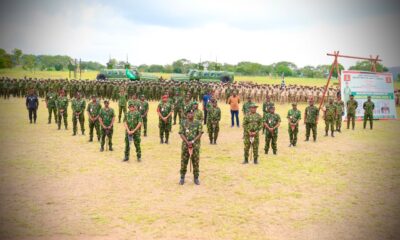

Nigerian Army Expands Combat Capability, Tasks Newly Trained Troops on Professionalism
ShareBy David Torough, Abuja The Nigerian Army has intensified efforts to strengthen its operational capability with the graduation of soldiers...


RMAFC Set to Enforce Oil Host Community Accountability
ShareBy Tony Obiechina, Abuja The Revenue Mobilisation Allocation and Fiscal Commission (RMAFC) has given the Nigerian Upstream Petroleum Regulatory Commission...

UNICEF Renovates Classrooms, Donates Educational Materials to IDPs Children in Benue
ShareFrom Attah Ede, Makurdi The United Nations Children’s Fund (UNICEF) with support from Swedish International Development Agency (Sida) has renovated...