
NEWS
Livestock Ministry to Partner ICRISAT on Conversation of Farm Residues into Animal Feed


By Raphael Atuu, Abuja
The Federal Ministry of Livestock Development has expressed readiness to collaborate with the International Crops Research Institute for the Semi-Arid Tropics (ICRISAT) on the use of locally fabricated and affordable Stover chopper machines designed to convert crop residues into viable animal feed with up to 90 percent utilization efficiency.
The Minister of Livestock Development, Idi Mukhta Maiha, made this known when he received a delegation from ICRISAT in his office in Abuja on Wednesday. Maiha emphasized that agricultural challenges can be transformed into opportunities through effective dialogue and collaboration on crop-livestock integration, machinery accessibility, and the strengthening of extension services to drive agricultural development in Nigeria.“People can take the grains, the foliage, and the residue, everything can be turned into animal feed,” the Minister said.He urged the Institute to begin by leveraging the crop varieties currently available before expanding into grass and pasture cultivation that can be integrated with crop residue utilization.The Minister also called on ICRISAT to intensify sensitization efforts among farmers and stakeholders, using various local languages to promote the adoption of residue-based animal feed as a cost-effective and sustainable alternative.Reaffirming the Ministry’s commitment to this partnership, Maiha disclosed that discussions are ongoing with state governors to advance livestock development nationwide.“We are commencing with five grazing reserves across Adamawa, Plateau, the FCT, and other selected states,” he stated.In his remarks, Dr. Ignatius Ijantiku Angarawai, Senior Scientist for Sorghum Breeding and ICRISAT Country Representative for Nigeria, highlighted that to consolidate and sustain this initiative, the Institute in collaboration with Crop Mandate NARES, has developed dual-purpose sorghum and millet varieties for farmers’ use.He added that research findings have shown that birds fed with Kaura sorghum recorded an 8-kilogram weight gain over those fed with maize, positioning sorghum as a viable substitute in poultry feed production.Dr. Angarawai reaffirmed ICRISAT’s readiness to collaborate with the Ministry in supporting the Nigeria Livestock Growth Acceleration Strategy (NL-GAS) through: The design of extension messages for dissemination via the Farmer Field School approach in partnership with NARs, and the development of a policy framework on staffing strategy and recruitment processes.
By Mike Odiakose, Abuja
Construction giant, Julius Berger Nigeria PLC, has reported strong financial performance for the 2025 financial year, as the construction company prepares to hold its 56th Annual General Meeting (AGM) on June 18, 2026 in Abuja.
The company, in its latest annual report, posted significant increases in revenue and profitability, underscoring what it described as a year of efficient project execution and sound financial management.
Revenue rose by 34.1 per cent compared to the ₦566.71 billion recorded in 2024, reflecting increased activity across its core business segments.
Profit Before Tax also recorded a notable jump of 38.5 per cent, reaching ₦40.95 billion, up from ₦29.57 billion in the preceding year.Net profit climbed to ₦30.17 billion, marking one of the company’s strongest performances in recent years, while earnings per share nearly doubled, increasing by 96 per cent to ₦18.69 from ₦9.54 in 2024.
On the back of the improved results, the Board of Directors has proposed a final dividend of ₦4.25 per share, translating to a total payout of ₦6.8 billion to shareholders, subject to approval at the AGM.
Julius Berger attributed the impressive performance to sustained delivery across its four main operational segments; civil engineering, building construction, services, and diversification.
During the year, the firm executed several major infrastructure and building projects across the country, further strengthening its position as a leading engineering construction company.
In a strategic move to expand its footprint beyond Nigeria, the company also established a new subsidiary in the Republic of Benin, signalling its entry into the broader West African market. The expansion is expected to open new opportunities and drive future growth.
The company also took steps to streamline its operations and focus on its core business. In September 2025, it approved the leasing of its cashew processing facility in Epe, Lagos State, to a specialist operator. The move is aimed at ensuring continued productivity of the facility while allowing Julius Berger to concentrate resources on its primary engineering and construction activities.
Looking ahead, the company remains optimistic about its growth prospects, given its strong financial position and technical expertise as key drivers for securing new projects both in Nigeria and regionally.
The upcoming AGM is expected to provide shareholders with further insights into the company’s performance and strategic direction, as Julius Berger continues to position itself for sustained growth in Nigeria’s infrastructure sector and beyond.
End
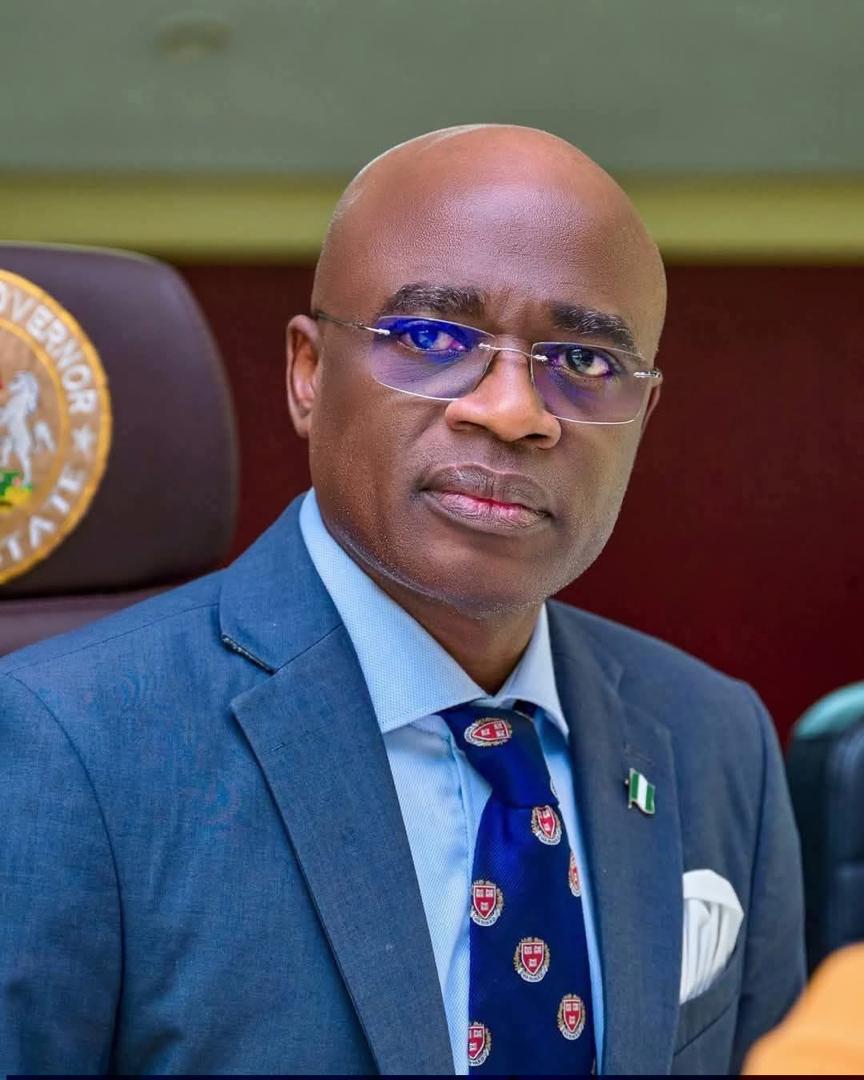
From Attah Ede, Makurdi
Benue State Governor, Rev. Fr. Hyacinth Alia, on Monday, gave assent to the Benue State Electricity Law.
The governor signing the law described it as a landmark piece of legislation that would transform the state’s power sector, attract investors, create jobs and strengthen consumer protection.
Alia who performed signing at government house Makurdi, noted that the new law established a legal framework for electricity generation, transmission and distribution within Benue State, in line with the powers granted to states under Nigeria’s electricity sector reforms.
He maintained that the legislation is expected to facilitate increased investment in the power sector, encourage competition, improve service delivery and expand access to electricity across the state and commended the Benue State House of Assembly for passing the bill, stressing that stable electricity remains a critical requirement for economic growth and industrial development.
According to him, no state can create a truly investor-friendly environment without reliable power supply. He expressed confidence that the new law would become a game-changer for Benue, helping to reposition the state as a destination for business and industrial investment.
“The electricity law I am assenting to today remains my prayer for a game-changer,” the governor stated, stressing that Benue must move beyond the perception of being merely a civil service state and begin fully exploiting its vast agricultural, mineral and economic potential.
Governor Alia explained that the law would strengthen the state’s position in dealing with electricity providers and investors, while ensuring that consumers receive fair treatment. He said the legislation would promote improved power supply for homes, businesses, schools, hospitals and industries, while creating mechanisms for enforcing consumer rights, ensuring fair billing practices, improving service delivery and accelerating the resolution of complaints.
The governor further noted that the law would encourage private sector participation in electricity generation and distribution, especially in underserved communities. He added that increased competition within the sector would ultimately help reduce electricity costs and stimulate economic activities across the state.
He revealed that the state government is already studying opportunities created by Nigeria’s Electricity Act and exploring ways to harness Benue’s abundant water resources for power generation. He said the River Benue, River Katsina-Ala and other water bodies present enormous opportunities for hydroelectric development and private sector investment.
Governor Alia also challenged electricity providers operating in the state to increase employment opportunities for Benue indigenes, arguing that communities hosting critical infrastructure should benefit directly from such investments.
Beyond the electricity law, the governor highlighted several ongoing initiatives aimed at driving economic growth and improving the welfare of citizens.
He pointed to the recent launch of the 2026 subsidized fertilizer and farm inputs distribution programme, under which farmers will purchase fertilizer at ₦28,000 per bag, with government covering a substantial portion of the cost. He said the intervention is intended to encourage commercial agriculture, increase food production and improve farmers’ incomes.
The governor urged farmers to embrace dry-season farming, describing it as more profitable than relying solely on rain-fed agriculture. He encouraged farmers to expand cultivation of citrus fruits, mangoes, pineapples, tomatoes, pepper and grains, assuring them of government support through subsidized inputs and access to tractors.
Governor Alia disclosed that a new concentrate processing company established in the state’s industrial layout has been completed and awaits commissioning.
According to him, discussions are already underway with major concentrate-producing companies, creating fresh opportunities for farmers to supply raw materials to processing industries.
While highlighting the progress of the Zeva Beer Company, the governor stated that market demand for the product has demonstrated the importance of retaining capital within the state and supporting local industries.
He called on civil servants, youths and other residents to take advantage of available agricultural opportunities, stressing that farming remains one of the most sustainable pathways to wealth creation.
“I encourage participation in the state’s Young Farmers Club initiative. Also residents should utilize available land, however small, for productive agricultural activities.
Speaking on governance, Alia said his administration has maintained consistent payment of salaries and pensions over the past three years, while simultaneously investing in road construction, school rehabilitation and healthcare infrastructure.
He maintained that these achievements are part of a deliberate development plan designed to reposition Benue for long-term growth.
The governor further disclosed that the state possesses significant deposits of oil, gas and other mineral resources, and emphasized the need for Benue to diversify its economy and reduce dependence on federal allocations.
Calling on citizens to support ongoing development efforts, Alia urged residents to reject negativity and focus on ideas that attract investment, stimulate enterprise and promote the overall growth of the state.
He expressed optimism that the newly signed electricity law would mark the beginning of a new era of industrialization, improved infrastructure and economic prosperity for Benue people.
“The train is moving,” the governor declared. “There is no looking back, there is no going back, and there is no stopping until we get to our final destination.”
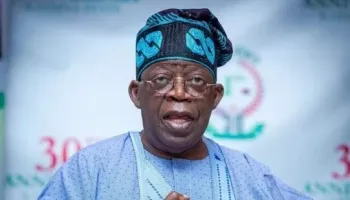
President Bola Tinubu on Monday swore-in two newly appointed ministers, Joseph Tegbe as Minister of Power and Sola Enikanolaiye as Minister of State for Foreign Affairs.
The swearing-in ceremony took place at the President’s Office in the State House, Abuja, shortly after Tinubu received Madagascar’s President, Michael Randrianirina, on a courtesy visit.
The Oath of Office was administered in the presence of Gov. Usman Ododo of Kogi, the Chief of Staff to the President, Femi Gbajabiamila, and other senior government officials.
The inauguration marks the formal commencement of the ministers’ responsibilities as members of the Federal Executive Council (FEC).
The swearing-in follows recent cabinet adjustments approved by the president to strengthen policy implementation and enhance performance in key sectors of government.
Tegbe, an indigene of Oyo State, is a fiscal, economic and institutional reform strategist with more than 35 years of experience spanning the public and private sectors.
He holds a First Class Degree in Civil Engineering from Obafemi Awolowo University, Ile-Ife, as well as Master’s degrees in Business Administration and Public Administration.
Before his appointment, he served as Senior Partner and Head of Advisory Services at KPMG Africa, where he led major transformational and public-sector reform initiatives.
His professional engagements have covered institutions such as the Nigerian Communications Commission (NCC), Nigerian Bulk Electricity Trading (NBET), Nigerian Electricity Regulatory Commission (NERC), Shell, Huawei, General Electric, MTN and Odu’a Group.
Enikanolaiye, from Kogi, holds a First Class Degree in Political Science from Ahmadu Bello University, Zaria, where he emerged the best graduating student in his faculty.
He also obtained a Master’s Degree in International Law and Diplomacy with Distinction from the University of Lagos.
The diplomat joined the Ministry of Foreign Affairs in 1982 and rose through the ranks to become Permanent Secretary, a position he held until his retirement in August 2017 after 35 years of service.
During his diplomatic career, he served in Nigeria’s missions in Ethiopia, Serbia, Canada and the United Kingdom, and was later appointed Nigeria’s High Commissioner to India.
Before his appointment as minister, Enikanolaiye served as Senior Special Assistant to the President on Foreign Affairs and International Relations in the Office of the Chief of Staff to the President.
He is a recipient of several honours, including the Presidential Civil Service Merit Award and the Presidential Distinguished Public Service Career Award.
The Senate in May screened and confirmed Tegbe and Enikanolaiye as ministers following Tinubu’s request.



Julius Berger Records Strong Growth Ahead 56th AGM
ShareBy Mike Odiakose, Abuja Construction giant, Julius Berger Nigeria PLC, has reported strong financial performance for the 2025 financial year,...


COAS Urges Media to Lead Fight Against Fake News, Dominate Information Space
ShareBy David Torough, Abuja The Chief of Army Staff (COAS), Lieutenant General Waidi Shaibu, has called on media professionals to...

State Police Debate: Adebayo’s Four-Year-Old Position Resonates
ShareBy Mike Odiakose, Abuja As Nigeria moves closer to renewed constitutional conversations around the creation of state police, comments made...
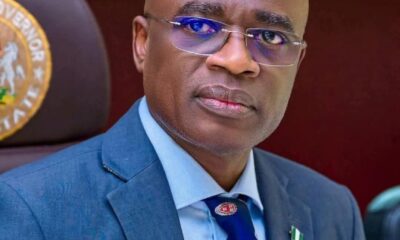

Gov Alia signs Benue electricity bill into law, promises steady power supply, employment
ShareFrom Attah Ede, Makurdi Benue State Governor, Rev. Fr. Hyacinth Alia, on Monday, gave assent to the Benue State Electricity Law. The governor signing the law described it as a landmark piece...

SWAN, Anambra FA Resolve over Two-year Feud
ShareThe Sports Writers Association of Nigeria (SWAN), Anambra State Chapter, and the Anambra State Football Association (AnSFA) have officially resolved their two-year-old feud. This was contained in a...

Tinubu Swears-in Power, Foreign Affairs Ministers
SharePresident Bola Tinubu on Monday swore-in two newly appointed ministers, Joseph Tegbe as Minister of Power and Sola Enikanolaiye as Minister of State for Foreign Affairs. The swearing-in ceremony took place...
Kebbi Extends Retirement Age for Medical, Vet Doctors to 65
ShareThe Kebbi State Executive Council has approved the extension of the retirement age for medical and veterinary doctors in the state civil service from 60 to 65 years, in a move...

WAEC Warns Schools, Supervisors against Candidate Extortion
ShareThe West African Examinations Council (WAEC) has warned schools and supervisors against extorting candidates through unauthorised charges, describing the practice as unethical and illegal. The...

Nigeria’s Trade Surplus Rises 341 Per Cent to N7.55tn in 2026 Q1 – NBS
ShareBy Tony Obiechina, Abuja Nigeria’s total imports value stood at ₦13,619.33billion in the first quarter of 2026, representing a 18.17%...


Labour Party Drags INEC to Court over Enugu North By-election
ShareFrom Sylvia Udegbunam, Enugu and Yagana Ali, Yola Political activities intensified across the country on Monday as the Labour Party...