
NEWS
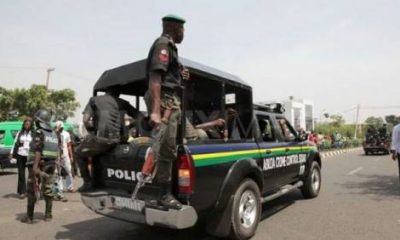
Lone Accident Claims 2 Lives in Onitsha


The Federal Road Safety Corps (FRSC) in Anambra said a lone accident at Upper Iweka in Onitsha claimed the lives of a male driver and a male passenger on Sunday night.
The FRSC Sector Commander, Mr Andrew Kumapayi, told the News Agency of Nigeria (NAN) in Awka, on Monday, said it occurred at about 11:30.
p. m.Kumapayi said the affected Toyota Hiace bus owned by GC Okoli ventures, with registration number AGL493XR, was said to have fallen into a gutter due to poor visibility following a heavy rainfall.
“Three persons were involved in the crash, which are the driver and two other passengers – a male adult and a female adult.
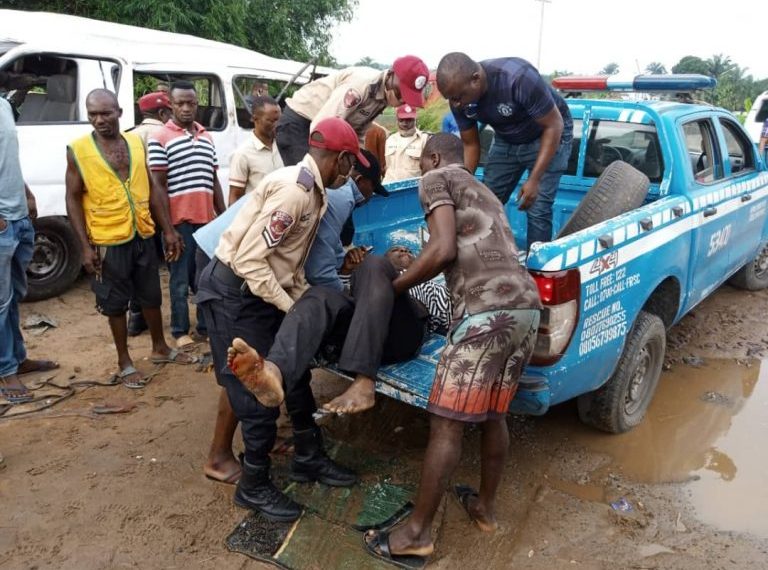
The female passenger sustained some degree of injuries.“They were taken to Toronto Hospital in Onitsha by the FRSC Rescue Team from Upper Iweka Outpost, where the driver and the male passenger were confirmed dead by the doctor on duty.”
The FRSC official said that body of the deceased had been deposited at the hospital’s mortuary.
He said that a heavy duty tow truck was deployed to assist in removing the vehicle trapped under the gutter on Monday morning.
Kumapayi condoled with the families of the deceased, warning motorists to exercise patience while driving in the rain.
“I’m appealing to motorists to always exercise patience while driving in the rain, especially when visibility is poor, they should stop and park in a safe place to avoid any form of traffic crash,” he said. (NAN)



NEWS
NGX’s Investment in Nairobi Securities Exchange: A New Chapter in Africa’s Capital Market Integration
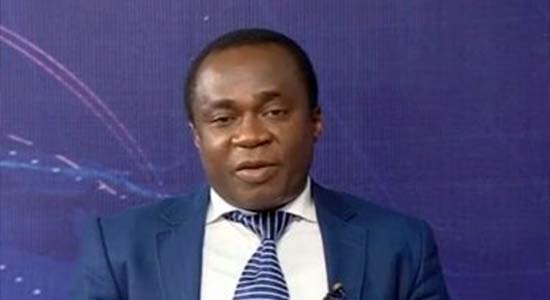
By Uche Joe Uwaleke
The Nigerian Exchange Group Plc’s (NGX Group) acquisition of a 10 percent strategic stake in the Nairobi Securities Exchange (NSE), announced on November 16, 2026, is a significant development in the evolution of African capital markets.
Beyond the immediate financial implications, the investment signals an ambition by a leading Nigerian financial market institution to expand its influence beyond domestic borders and participate more actively in the development of capital market infrastructure across Africa.
It also reinforces NGX Group’s strategy of evolving into a diversified, pan-African financial market infrastructure business.
The timing is particularly interesting, given NGX Group’s encouraging performance on the Nigerian Exchange, where its share price stood at N175 as at the close of trading on November 17, 2026.
Its market performance over the preceding year has been impressive, reflecting growing investor interest in the company and its prospects.
While share-price appreciation does not, in itself, establish the success of its investment strategy, it provides a positive backdrop for a Group seeking to consolidate its position and pursue new growth opportunities.
The Nairobi investment could further strengthen its long-term earnings diversification and growth prospects if effectively managed.
The investment also builds on NGX Group’s strategic participation in the Ethiopian Securities Exchange (ESX) in 2024, suggesting a deliberate effort to establish a presence in important African markets.
With Nigeria providing its West African base and Kenya and Ethiopia extending its reach into East Africa, NGX is gradually developing a regional investment footprint.
Kenya is a particularly attractive destination, given its position as an important financial and commercial centre in East Africa, with an established banking industry, institutional investment base and relatively developed securities market.
The investment provides NGX with exposure to a different economic environment and an opportunity to benefit from the long-term growth of the region’s capital markets.
For Africa, the most important potential benefit is the acceleration of capital market integration.
Despite the continent’s economic potential, its securities exchanges remain largely fragmented, operating under different regulatory frameworks, currencies, trading systems and settlement arrangements.
Consequently, cross-border investment is often difficult and expensive, while companies seeking to raise capital beyond their domestic markets encounter considerable operational and regulatory barriers.
Strategic relationships between exchanges could help address these challenges by promoting broker connectivity, reciprocal market access, harmonization of selected listing requirements and greater cooperation among regulators.
The overarching objective should be to make it easier for African investors to invest across national borders and for businesses to access a wider pool of capital.
It goes without saying that improved connectivity could also address the persistent liquidity challenges confronting several African exchanges.
By expanding the pool of potential investors, closer relationships between NGX and NSE could stimulate demand for listed securities, improve price discovery and encourage more companies to seek public listings.
Nigerian institutional investors could gain better access to Kenyan securities, while Kenyan investors could participate more easily in Nigeria’s equities and fixed-income markets.
Beyond equities, the relationship could create opportunities for cross-border bond issuance, dual listings, and other regional investment products. Such developments would help mobilize more African savings for investment within the continent and improve Africa’s attractiveness to international investors.
Nigeria stands to benefit considerably from this development. NGX Group’s regional expansion offers opportunities to diversify its earnings through dividends, capital appreciation and commercial partnerships, while reducing its dependence on developments in the domestic market.
More importantly, it could strengthen Nigeria’s position as a regional centre for capital formation and financial services.
With its substantial economy, established banking sector, institutional investment industry and network of financial market operators, Nigeria has the potential to serve as a gateway for companies and investors seeking access to opportunities across Africa.
NGX’s growing relationships with East African exchanges could help position Lagos as an increasingly important centre for regional investment distribution, capital raising and financial market infrastructure services.
Nigerian investors could equally benefit from improved opportunities to diversify their portfolios geographically.
Greater access to Kenyan and other African securities would provide exposure to different sectors and economic growth drivers, while creating opportunities for asset managers to develop Africa-focused investment funds.
Nigerian companies with regional operations could also benefit from access to investors beyond the domestic market. However, the realization of these opportunities will require appropriate arrangements covering foreign exchange conversion, taxation, custody, settlement and investor protection.
There are useful international precedents from which NGX can draw lessons. The London Stock Exchange Group’s combination with Borsa Italiana in 2007 strengthened its European presence and diversified its business, while Euronext’s acquisition of Borsa Italiana in 2021 further demonstrated the benefits of building a multi-country exchange platform.
Similarly, Nasdaq’s acquisition of OMX in 2008 brought together exchange operations across the Nordic and Baltic regions, creating opportunities for technology integration, operational efficiency and economies of scale.
The 2007 combination of the New York Stock Exchange and Euronext also illustrated the potential of cross-border exchange integration, although the subsequent acquisition of NYSE Euronext by Intercontinental Exchange in 2013 demonstrated that ownership structures can evolve as commercial priorities change.
The key lesson from these transactions is that the real value of exchange investments goes beyond equity ownership.
It lies in the ability to share technology, improve operational efficiency, develop new products, attract listings and generate additional revenue streams.
NGX should therefore approach its investments in Kenya and Ethiopia as platforms for deeper commercial and institutional cooperation rather than passive financial holdings.
Its Ethiopian experience is particularly relevant because the investment involved participation in the development of a new exchange, combining financial capital with institutional expertise.
The Nairobi investment, by contrast, provides an opportunity to strengthen relationships with an established exchange and explore new areas of cooperation.
Nevertheless, the strategy carries risks that must be carefully managed. A 10 percent shareholding does not confer control over NSE, and NGX’s influence will depend on the rights attached to its shares and the quality of its relationship with other shareholders.
Regulatory differences, currency fluctuations, taxation, settlement arrangements and potential conflicts of interest could also complicate cooperation.
Furthermore, NGX must avoid overexpansion at the expense of its domestic operations. Nigeria’s capital market still requires improvements in liquidity, investor participation, technology, product innovation and market depth.
International expansion should complement and strengthen the domestic business, not distract management and financial resources from it.
To maximize the benefits, NGX should develop a structured programme of cooperation with NSE, focusing on cross-border trading connectivity, dual listings, joint capital-raising initiatives, technology sharing and the development of regional investment products.
It should also leverage the African Exchanges Linkage Project, promoted by the African Securities Exchanges Association in collaboration with the African Development Bank.
The initiative seeks to connect participating African exchanges through an order-routing platform to facilitate cross-border securities trading. NGX should use its strategic relationships to strengthen this initiative and help transform technological connectivity into meaningful investment flows and commercial activity.
The investment also raises the prospect of further expansion by NGX into other African markets. Exchanges in Ghana, South Africa, Morocco, and the West African regional market, BRVM, could offer opportunities for future partnerships or strategic investments.
However, any further expansion should be guided by commercial viability, regulatory feasibility and the potential for genuine operational synergies, rather than the pursuit of geographical presence for its own sake.
In some markets, technology partnerships and joint ventures may be more appropriate than equity acquisitions.
For Nigerian policymakers and capital market stakeholders, this development presents an opportunity to support a broader regional integration agenda.
The Securities and Exchange Commission should strengthen regulatory cooperation with its counterparts in Kenya and other African markets, particularly in cross-border investment, investor protection and market surveillance.
Policymakers should also examine barriers that discourage Nigerian institutional investors from investing in other African markets, while asset managers and pension fund administrators should explore suitable Africa-focused investment products within the applicable regulatory framework.
Nigerian companies with regional ambitions should be encouraged to consider cross-border listings and capital raising. Above all, Nigeria must continue strengthening its domestic market to sustain its aspiration of becoming a leading African financial hub.
Over the next 12 to 24 months, the success of the investment should be assessed against tangible outcomes.
These include NGX’s governance representation and influence within NSE, the emergence of joint trading and technology initiatives, progress in dual listings and cross-border capital raising, and growth in cross-border trading volumes.
The financial performance of the investment, including dividend income, capital appreciation and its contribution to NGX Group’s earnings, will also be important.
Any further strategic investments and progress in the African Exchanges Linkage Project will provide additional indications of the direction and effectiveness of the Group’s regional expansion strategy.
All said, I consider the NGX Group’s acquisition of a 10 percent stake in the Nairobi Securities Exchange as a statement of intent about the future direction of Nigeria’s financial market infrastructure and the role Nigerian institutions can play in developing African capital markets.
If effectively executed, the investment could strengthen NGX Group’s earnings diversification, enhance Nigeria’s regional financial influence and contribute to a more connected, liquid and competitive African capital market.
The real measure of success, however, will not be the number of exchanges in which NGX acquires stakes, but the additional capital mobilized, cross-border investments facilitated, improvements in market liquidity and sustainable value created for shareholders and the wider economy.
Uche Uwaleke FCMA is Nigeria’s renowned Professor of Capital Market at the Nasarawa State University Keffi and President of the Capital Market Academics of Nigeria
By Tambaya Julius, Abuja
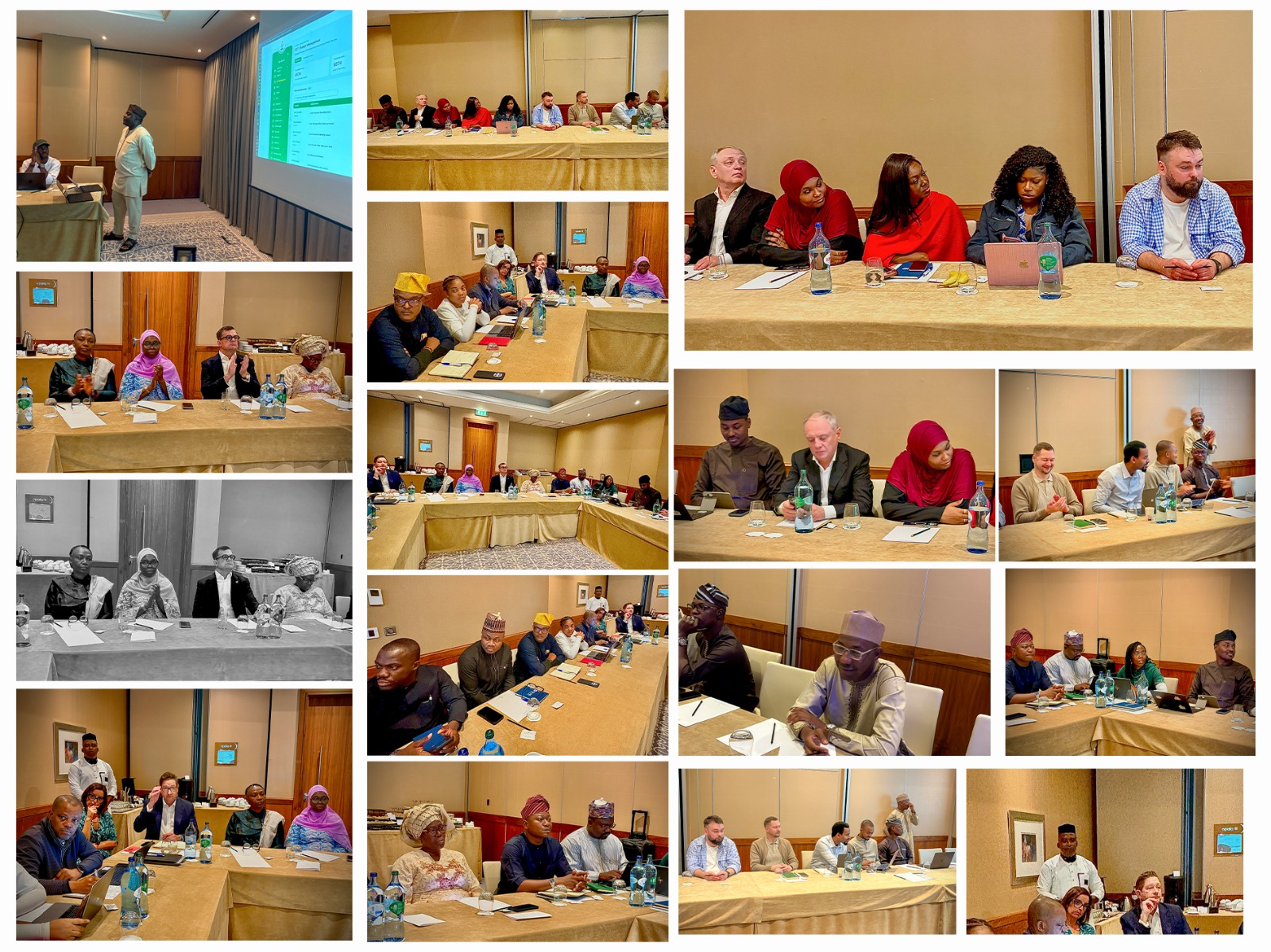
The Nigeria Customs Service (NCS) has concluded a three-day review of its B’Odogwu Unified Customs Management System in Lisbon, Portugal, with a renewed commitment to addressing operational challenges, accelerating cargo clearance, strengthening cargo tracking and improving revenue collection.
The workshop, held from November 9 to 11, 2026, at the Corinthia Hotel, brought together NCS management and officers, representatives of Trade Modernisation Project Limited (TMPL) and CB-XP to assess the system’s performance and identify areas requiring technical and operational improvements.
Speaking at the opening ceremony, the Deputy Comptroller-General of Customs in charge of ICT Modernisation, Oluyomi Adebakin, commended the Comptroller-General of Customs, Adewale Adeniyi, for his commitment to innovation and capacity development within the Service.
The Managing Director of TMPL, Jummai Umar-Ajijola, who represented the Chairman, Saleh Ahmadu, disclosed that the B’Odogwu system had attracted the interest of the African Continental Free Trade Area (AfCFTA) Secretariat.
She noted that improvements to the platform had contributed to increased revenue generation and strengthened the country’s revenue ecosystem.
According to her, the workshop provided an opportunity to consolidate the gains recorded since the implementation of the system and develop a roadmap for its future improvement.
“We are to work to find a concrete plan not only to consolidate but to build a change roadmap going forward at the assessment of the three years so far,” Umar-Ajijola said.
She also commended the NCS Public Relations Unit for its consistent efforts in reporting the project’s progress.
Among the key resolutions reached at the workshop were plans to upgrade the Electronic Cargo Tracking System (ECTS), strengthen bond and transit management, automate customs procedure code approvals and improve the processing of import, export, re-importation and transit declarations.
Participants also agreed on the need to harmonise procedure code nomenclature to promote consistency, efficiency and accountability in customs operations.
On cargo tracking, the workshop considered integrating the upgraded ECTS with B’Odogwu and replacing 200 obsolete electronic seals with 2,000 newly procured units.
The discussions further covered individual container tracking for relevant transit declarations, improved bond registration and validation, as well as stronger controls over bonded cargo movements to prevent diversion.
The workshop also examined the integration of B’Odogwu with the Nigeria Export Processing Zones Authority (NEPZA), improvements to the Transire Processing System and upgrades to the platform’s reporting dashboard, search filters and Harmonised System (HS) Code search functionality.
Other areas identified for improvement included access to previously processed declarations, better monitoring of procedure code applications, system alerts to reduce processing errors and the incorporation of Time Release Study requirements.
Participants equally reviewed the Standard Operating Procedures (SOPs) for Bond Management, Transire Commands and Export Commands to ensure compliance with the Nigeria Customs Service Act 2023.
They further resolved that all requests for system modifications must undergo review and approval by the Officer in Charge of the Project Management Office before deployment.
The project’s communication plan was also reviewed to strengthen stakeholder engagement and improve coordination among relevant parties.
The Deputy Comptroller-General of Customs in charge of Finance, Administration and Technical Services (FATS), Kikelomo Adeola, stressed the importance of effectively implementing the resolutions reached at the workshop.
The ceremony featured a presentation by the Customs Area Controller, Comptroller Murtala Mu’azu, as well as goodwill remarks by the Chairman of CB-XP, Edward Bowen.
To ensure effective implementation, specific responsibilities were assigned to relevant NCS and TMPL units to translate the resolutions into practical improvements
By Reuben Abati
When a proper audit of the current electoral process is conducted, it would be interesting to evaluate the manner in which the art of dancing has dominated the campaign season in Nigeria. No political campaign is complete without the main campaigners and their supporters breaking out in dance, and we have seen a broad range of dance styles, which help to turn political campaigns into pure entertainment, while adding colour, hype and drama.
The dancing is, of course, accompanied by music, for it would be odd for a man on stage to dance to an imaginary sound at a political rally, even if there are such art forms as mime and pantomime, but those genres are not exactly for the arena of political campaigns with their high-octane levels of performance, sound, and melodrama.
Dancing is also not unexpected in African settings, given the established tradition of the African being a lover of movement, sound and rhythm, as a culturally and physically expressive race that connects with the surrounding space through shape, sound, and sense.Dance, by the way, is a universal language: a very strong, spatial definition that projects the human body in a series of non-verbal deployments in space and time. Dance is pure art. It is communication, and it can be used as a tool to express joy, hope, energy, physical fitness, and the full range of human moods. It can also be used as a vehicle of protest.
Its elasticity is seen in how since the beginning of time, it has served man as one of the oldest tools of connection; indeed man learnt to move his body before he learnt language and writing. Nigeria is in the season of elections, and whereas the politicians have always danced as human beings, we have seen a greater fascination with dancing as politics this time around, bordering on competition, with some politicians putting their bodies and hearts into it, as if they are planning to win a prize.
Dance is not just an art; it is also a technique. It is language in motion. But we observe a telling absence of technique in the way our politicians have been dancing on stage. Because dance is ultimately a form of expression, it allows the man who is moved by the sound to do a variety of things. You can dance sitting down, and shuffle your body while seated, or move your head or hands, or you can just sway. While standing, you get an opportunity to occupy space. You can jump, hop, run, throw your hands about, rotate in one spot, squat and stand.
You can choose to be fast or slow. You can even roll on the floor. The theory, however, is that dancing must be graceful, disciplined and dignified. Amateurs do not know this, and so we witness today a variety of dancing styles that do not necessarily follow the rhythm. Many of our politicians would probably need the services of choreographers, the professionals who teach dance and for whom dance is work and art.
These campaign rallies that we see engage the services of professional musicians, event decorators, stage designers, food suppliers, MCs, fashion designers, sound experts, entertainment groups, but they leave out the dance teachers. The high point is when the politicians themselves choose to entertain the electorate with dance steps.
They are oftentimes uncoordinated. I do not propose that politicians should become professional dancers, perhaps their clumsiness, the sheer innocence of their exertions, is probably part of the fun. The consistency of a few of them, who are now being imitated by others, is so amusing. It is as if to be a Nigerian politician, you must learn to move your body. Even President Bola Ahmed Tinubu dances.
He has been dancing during campaign rallies in recent times and to get him off his feet, or get him into the mood would seem to require two triggers, two songs: “Omo Ologo” by Rarara or his signature tune, “Bola, On Your Mandate We Stand”.
These two songs make the President’s head to swell like garri in a bowl of iced water. He would smile and show excitement, and break into a dance. Dauda Kahutu Rarara, composer of the “Omo Ologo” lyrics is probably one of the most prominent musicians in Nigeria today. He sang for President Muhammadu Buhari. He has now found bigger favour with President Bola Ahmed Tinubu. He is a Hausa from Kano State. Tinubu is Yoruba.
Rarara has more or less displaced King Wasiu Ayinde Marshall (KWAM 1), currently Nigeria’s foremost Fuji exponent, as Tinubu’s preferred musician, although KWAM 1 continues to hold sway in the South-West, suffering under a weight of over-subscription that he manages competently with his creativity and talent for hardwork.
Rarara’s pitch is “Omo Ologo”, composed in a benevolent moment of the Muse’s visitation. “Omo Ologo” means “a child of glory” in Yoruba in a literal sense, a most fitting description of President Tinubu’s rise from grass to glory.
That kind of reminder strikes a psychological chord, and for Yorubas who are brought up to appreciate the meaning of panegyrics and appellations, Rarara simply got it right. He may in fact be on his way to becoming a palace musician, following a tradition that dates back to antiquity, with the poet-musicians, the Minnesingers of the German courts in the 12th and 13th Centuries; Johann Sebastian Bach in 18th Century Germany; and Antonio Salieri, director of the Habsburg Court, who dominated Vienna until 1792, the bitterest rival of Wolfgang Amadeus Mozart, as fictionalised in Peter Shaffer’s Amadeus (1979), and closer home, the traditional “ajirobas” in Yoruba palaces and the blowers of the Kakaki, the long, royal trumpet, or the Maroki and Marokiya in Northern Nigeria.
Being a favourite of the monarch as an artist has its own special privileges. When it is not Omo Ologo, the other dance that gets the Nigerian President dancing is “Bola, On Your Mandate We Shall Stand”. The author of that song is unknown and undisclosed but it is the stand-out music of the All Progressives Congress (APC) led by President Bola Ahmed Tinubu – it is sycophantic, yet a rallying call for the party foot-soldiers, and Tinubu loves it. Whenever it comes on, he breaks into a smile. He sways sideways. He raises his hands. He submits to his own humanity.
Every politician, black, brown or white, loves to be praised. Praise-singing is the oxygen of politics. It brings movement to the body and we saw Tinubu dancing in Dutse, Jigawa State to “Omo Ologo.” In Uyo, Akwa Ibom State, the President shuffled to Duncan Mighty’s “Port Harcourt Boy.” He could relate. He is also famously known as “City Boy”, the city in his case being Lagos. “On Your Mandate” was also sung in Uyo.
His usual dance style is the movement of his hands, gyrating in one spot. He raises his hands. He lowers them. He moves them sideways. Then he shuffles a little sideways. His fans find it entertaining. We are likely to see him again dancing before the polls.
But now to turn to other dancing politicians on the political scene, the man to start with is Governor Ademola Nurudeen Jackson Adeleke of Osun State. He is the main Nigerian symbol of dance as politics. He practically danced his way to a second term in Osun State.
He is such an unmistakable, dominant personality, a Golden Leaf (John Player, 1980s), Michael Jackson kind of person that whenever he shows up, even at the most serious state functions, the audience will consider the event incomplete if they don’t see him dancing or singing. Even when there is no music, he moves to an inner rhythm of his own, and he pleases the crowd.
He stands out, not just because of his consistency, humility or the gift of emotional intelligence, but more because of a cultivated persona: the impression that this is a man who has no worries in the world, no malice, who just sees the sunny side of things all the time.
He is more interesting because he also plays musical instruments: the talking drum, the Sakara and the Bandiri, and on top of it all, he speaks both Igbo and Yoruba. But Adeleke’s dancing persona is a mask. He is probably one of the smartest politicians from the South-West.
His popularity with the people of Osun State, whom he governs, is not derived from dancing and singing; he has been able to meet the people at their points of need, and despite the massive, intimidating federal presence in his state, literally and politically, and the collapse of the People’s Democratic Party (PDP), the platform that brought him to power, he has managed to dance his way around the challenges and he is back in the Okefia Government House.
Jackson was not part of his original, given names. He got the name as an epaulette for his love of dancing. Michael Jackson, the American pop star was a legend. Like Michael Jackson, Adeleke can move every part of his body. Even his toes. How he does that with all that mass of protoplasm is what intrigues most people, and he always just looks like a guy enjoying himself and having fun. He has now joined Tinubu’s campaign, although he is the founder of a Special Purpose, survival vehicle called Accord Party, which exists only in Osun State.
Rhythm runs in his family and in his veins. He is the father of B-Red, the Afrobeats songwriter and singer, and the uncle of Davido, the Afrobeats superstar. He does his politics with a language that attracts attention and communicates in an unobtrusive manner. The Silverbird Group just crowned him, Nigeria’s Man of The Year – a tribute to his clever balancing acts.
This is perhaps why he has, in a way, become a source of inspiration to others. These days almost every other governor in Nigeria dances. The governor of Ondo State, Lucky Orimisan Aiyedatiwa, who has won the Silverbird Governor of the Year Award, is ordinarily a quiet, self-effacing personality, but a few times, he has been caught displaying some energetic foot-works – notably at Ondo Night of Praise Concert (September 2025), political events, and at Ilaje cultural events.
Governor Babajide Sanwoolu of Lagos also dances, his most recent outing being his celebration with the trophy-winning Flamingo Champions, winners of the FIFA U-17 Women’s World Cup.
Other governors who have been seen dancing enthusiastically include Prince Dapo Abiodun of Ogun State, Professor Chukwuma Charles Soludo of Anambra State, in his own case, either at rallies or with his famous musician-son, Ozonna, and of course, the news-making Governor Monday Okpebholo, the Akpakomiza of Edo State – Okpes Baby also loves to dance. Interestingly, can your governor dance better than my own governor (?) although dancing is not stated anywhere in the Nigerian Constitution as a requirement for becoming a political leader.
The governor of Benue State, Father Hyacinth Alia, is a Catholic priest on sabbatical in politics. He dances too, forcing people to ask whether a Catholic priest should be seen dancing in public. The truth is that the Catholic Church is a very liberal institution contrary to received opinion. Father Hyacinth Alia is a perfect illustration of the saying that “when you are in Rome do like the Romans”.
And he has learnt the game of Nigerian politics so well, he even knows how to move to all the popular tunes, including, “Buga oh.’ He dances with his whole body, and moves in a series of contortions that excites his audience. He has been shown dancing with children in a pair of jeans and a T-shirt and at political rallies. Whenever he seeks to return to his original calling as a Catholic priest, he may need a period of re-orientation, perhaps purgation, not in his home parish in Gboko, Nigeria but at the Vatican City in Rome.
A review of dancing politicians ahead of the 2027 polls must note that some prominent ones have been very restrained, like Peter Obi and Atiku Abubakar. Do they know rhythm? But we have received further entertainment from the likes of Comrade Adams Oshiomhole and Vice President Kashim Shettima, both of the APC.
Senator Oshiomhole is 74 years old but he will defeat an 18-year-old at any dancing competition. He can dance to any music, whether it is KWAM 1 or Kizz Daniel. A master of calisthenics, his energy level is incomparable, a complete side attraction at any APC rally, and he has been just as consistent as Governor Adeleke. KWAM 1 calls him “Baba Kekere” but he is a giant on the dancing floor. And then enters Senator Kashim Shettima, the Vice President. Known for his wit and sharp barbs, the vice president is also fast emerging as a major presence on the dance floor. He brings energy and charisma, with his hands flying in the air in all directions, some form of preparation it seems before he takes the microphone, and he releases stinging, verbal salvos against opponents – a porcupine.
Osita Iheme, our brother in Nollywood, has railed against all dancing politicians. He says they should stop dancing and focus on issues – after all, “they are not going for a Grammy.” I differ. The issues are important, yes, but some entertainment does no one any harm. Let the politicians sing and dance!
Reuben Abati, a former presidential spokesperson, writes from Lagos.



NGX’s Investment in Nairobi Securities Exchange: A New Chapter in Africa’s Capital Market Integration
ShareBy Uche Joe Uwaleke The Nigerian Exchange Group Plc’s (NGX Group) acquisition of a 10 percent strategic stake in the...

Customs Moves to Upgrade B’ODOGWU, Targets Cargo Clearance
ShareBy Tambaya Julius, Abuja The Nigeria Customs Service (NCS) has concluded a three-day review of its B’Odogwu Unified Customs Management...

NAPE 2026: TotalEnergies Spuds Nigeria’s First Deep Offshore Exploration Well in Decade
ShareTotalEnergies EP Nigeria Limited has commenced drilling of the Akpo Far East B exploration well, days after its Country Chair...
Dance as Politics: Dancing to 2027
ShareBy Reuben Abati When a proper audit of the current electoral process is conducted, it would be interesting to evaluate...


Oborevwori Woos CAN Support, Promises Land for Prayer Retreat Centre
ShareFrom Francis Sadhere, Delta Delta State Governor, Rt. Hon. Sheriff Oborevwori, has pledged his administration’s support for the proposed Christian...

Wike Promotes 4,220 FCT Teachers, 3,494 Other Civil Servants
ShareBy Laide Akinboade, Abuja The Federal Capital Territory (FCT) Minister, Nyesom Wike, on Tuesday approved the promotion of 4,220 Teachers...

Flag-Off Of Tinubu/Alia 2027 Campaign Benue State
ShareBenue State is Ready for a New Chapter of Renewed Hope, Consolidated Progress And Greater Development! The Tinubu/Alia Campaign Council...


AfDB Approves $102m Facility to Finance SMEs in Nigeria
ShareThe African Development Bank (AfDB) has approved a 102 million dollar financing package for Sterling Bank Nigeria Ltd. to expand...

2027: Jonathan, Sambo Warn Against Looming Post-Election Crisis
ShareBy David Torough, Abuja Former President Goodluck Jonathan and former Vice-President Namadi Sambo have raised the alarm over growing political...

Tinubu Unveils N100m Mortgage Scheme at 9.75 Per Cent Interest
ShareBy David Torough, Abuja President Bola Tinubu has unveiled a Federal Government-backed housing finance initiative offering eligible Nigerians mortgages of...