
NEWS
Majority of the Ongoing Road Projects are 98% Completed -Wike


By Laide Akinboade, Abuja
Minister of the Federal Capital Territory FCT Minister, Nyesom Wike, at the weekend , said majority of the ongoing road projects in Abuja, are at 98% completion.
The FCT Minister said this after a monitoring inspection on most major projects including the Southern Parkway from the National Christian Centre to Ring Road 1, the development of the Outer Southern Expressway OSEX from Villa Roundabout to Ring Road 1, and the Vice President’s official residence.
The Minister therefore said the proposed commissioning of the roads on or before May 29th the first anniversary of President Tinubu is on cause.
Speaking to journalists after the inspection , Wike said, “We have kept our promise to the residents of Abuja. These projects not only fulfill a commitment but also showcase the potential for improved urban mobility and infrastructure under the Renewed Hope Agenda.”
Additional projects close to completion include the B6 and B12 Circle Road, also known as Independence and Constitution Avenue, and the full scope development of the Arterial Road N20 from Northern Parkway (Shehu Musa Yar’Adua Expressway) to Outer Northern Expressway (Murtala Mohammed Expressway).
“The Wuye Interchange and Guzape Lot II District Infrastructure are also on track for completion and are expected to be operational by May.”
The minister stated “The President has given us tremendous support, and we are committed to ensuring that these projects are completed on time to ease traffic congestion and enhance connectivity within the city.”
Executive Secretary of the Federal Capital Development Authority FCDA, Engr. Shehu Hadi Ahmad, who agreed with the Minister’s statements , pin- pointed the expected benefits in reducing traffic congestion and improving transportation efficiency in Abuja.
Also, the contractors handling the projects reassured the minister that they are working towards meeting the May deadline.
This is in accordance with the Renewed Hope Agenda of President Bola Ahmed Tinubu’s Administration to providing necessary infrastructure improvements to support the city’s growth and development.
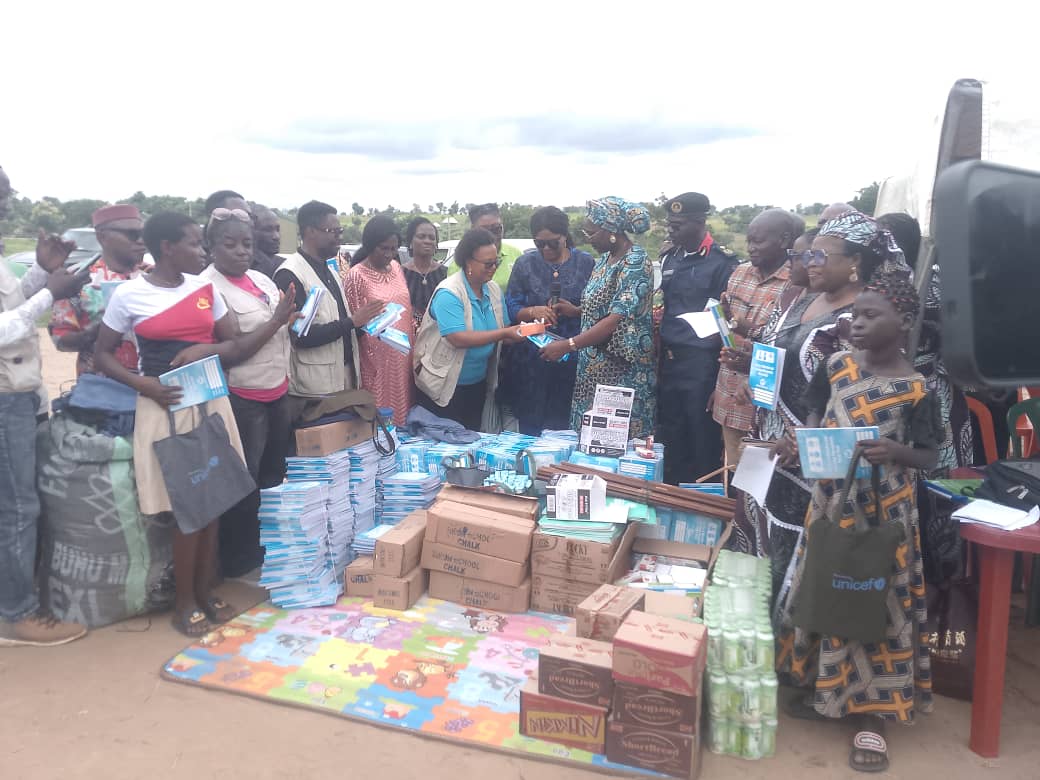
From Attah Ede, Makurdi
The United Nations Children Fund, UNICEF with funding from Swedish International Development Cooperation Agency(SIDA), has supported Benue State Government with 400 School-in-a-Box kits, containing notebooks, writing materials and teaching aids to enhance the full implementation of Building Rights to Access and Compulsory Education for Un-enrolled Pupils (BRACE-UP) Project in the state.
Speaking at the official flag-off of the teaching and learning materials and dissemination of the BRACE-UP implementation plan at SUBEB headquarters in Makurdi, Mrs.
Juliet Chiluwe, Chief of UNICEF Enugu Field Office, said they are making presentation of 330 tablets for digital learning, and the dissemination of the two-year Project BRACE-UP Implementation Plan.She maintained that the kits would benefit about 16,000 school children and strengthen classroom teaching and learning, stressing that the provision of 330 tablets to teachers earlier trained by UNICEF on digital literacy, will support the Nigerian Learning Passport and help expand access to digital learning in schools.
According to her The BRACE-UP Implementation Plan provides a clear roadmap to enrol more than 50,000 un-enrolled children over the next two years, while strengthening community mobilisation, teacher support, alternative learning pathways, data systems and accountability for results.
“With the leadership of the Benue State Government, SUBEB and the commitment of partners and communities, this plan can help reduce exclusion and improve education outcomes across the state.
“I commend the Government of Benue State and SUBEB for prioritising children’s learning, and I appreciate the dedication of teachers, parents, communities, traditional and religious leaders, civil society organisations and development partners”, Chiluwe stated.
Flagging off the distribution, deputy governor of Benue State State, Barr. Sam Odeh, maintained that state government has taken a decisive step toward fulfilling that promise by unveiling the detailed Implementation Plan developed by SUBEB in collaboration with UNICEF, and equally, graciously sponsored by UNICEF to guide the project over the next two years.
He noted that the plan would strengthening the capacity of teachers and stakeholders, deepening community and parental support, conducting data-driven mapping and enrolment of out-of-school children, running strategic outreach campaigns, empowering student marshals and LGA task teams.
He said it would reinforcing monitoring and quality assurance, expanding non-formal learning pathways for vulnerable children, and improving school infrastructure across the state.
Put together, these eight pillars address both the reasons children are kept away from school and the conditions that make school unwelcoming when they do arrive.
This initiative is not a cheap undertaking. The resources being committed to Project BRACE-UP run into hundreds of millions of naira. Yet, the Benue State Government under His Excellency, Rev. Fr. Dr. Hyacinth Iormem Alia, has chosen, without hesitation, to make this investment. We do so because we believe that no amount spent on the future of a Benue child is ever too much.
Today also marks the flag-off of the distribution of 400 School-in-a-Box kits donated by UNICEF, containing teaching and learning materials that will reach over 8,000 learners in public schools across the state.
“Alongside this, we flag off the distribution of sporting equipment to hundreds of schools spread across all three zones through the collaboration of SUBEB and UBEC. These items may appear modest to some, but to a school or to a pupil who has never owned a football or a sporting apparatus, they represent dignity, opportunity, and hope.
“To the stakeholders gathered here today, I say this: government cannot do this work alone. Every child deserves to reach their full potential, and you and I can help them achieve this. This is why the synergy between SUBEB, UBEC and UNICEF has come to fruition today. They have already, written their names in gold by investing in the future of Benue state through our children.
“To the teachers and headteachers who will receive these kits and equipment, I charge you to guard them jealously and put them to the use for which they are intended, which is the holistic education and development of our children”, Odeh maintained.
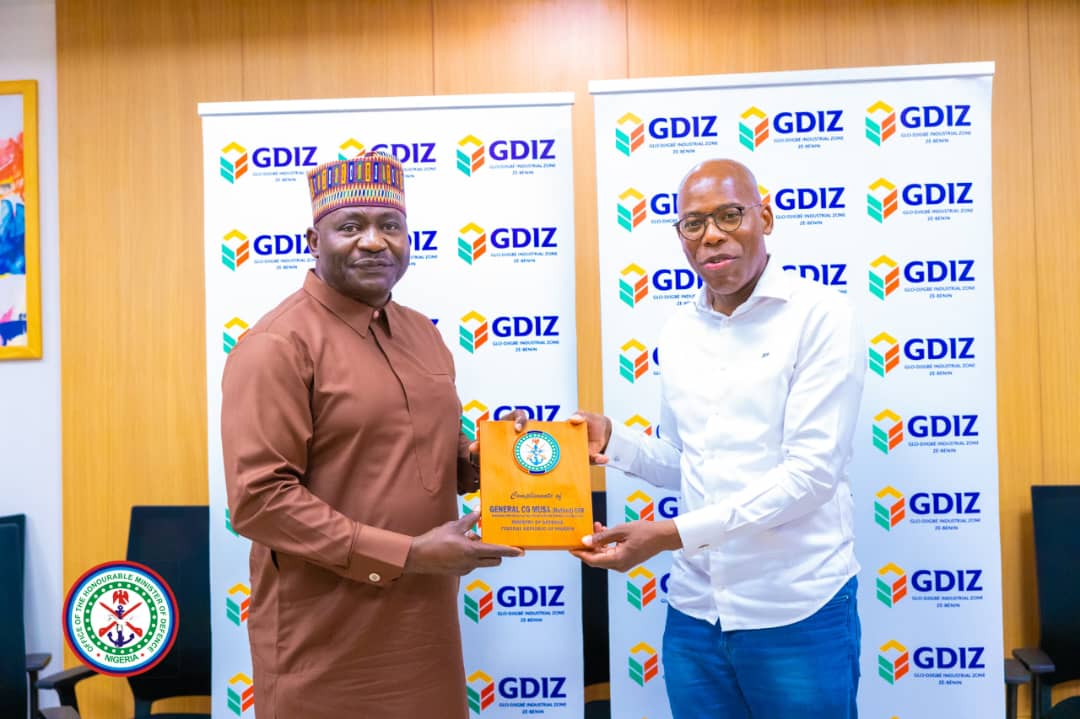
By Tony Obiechina, Abuja
The Minister of Defence, General Christopher Gwabin Musa has successfully concluded a strategic three-day working visit to Cotonou, Republic of Benin.
The high-level delegation focused on deepening bilateral defence cooperation, harmonising regional security frameworks, and reinforcing joint strategies to eliminate cross-border security threats across West Africa.
Hosted by his Beninese counterpart, Minister of National Defence Mr. Gildas Agonkan, the visit delivered actionable commitments across sectors.
According to a statement by the minister’s media adviser, Leah Katung Babatunde on Friday, General Musa in separate meetings with Mr Agonkan, the Beninese Minister of National Defence and the high military command urged greater alignment between regional security blocs to confront West Africa’s evolving security landscape.
They all reaffirmed their commitment to safeguarding democratic governance, stabilising land borders, and securing the Gulf of Guinea against piracy and maritime crime.On enhanced intelligence sharing, the consensus was to establish seamless, real-time intelligence fusion mechanisms. This actionable intelligence pipeline will allow both militaries to track, trace, and neutralise transnational criminal networks and insurgent cells before they execute operations.
Reaffirming the Federal Government’s zero-tolerance stance against terrorism, the Minister charged his host to work with Nigeria to aggressively deny safe havens to violent extremist organisations attempting to exploit shared borderlands and declared that in Nigeria, security forces are showing no mercy to terrorists, bandits, and armed extremists.
To reinforce border security, Nigeria offered Benin an olive branch to allow security personnel wider pursuit range at the borders to prevent insurgent spillover and illegal trafficking.
The Honourable Minister and his delegation were also at the Centre for Post Conflict Demining and Explosive Ordnance Disposal (EOD) Operations (CPADD) and the Glo-Djigbe Industrial Zone (GDIZ). The aim of the visits to these locations was for local capacity building in line with the operation pillar 3 of the Minister; Intelligence-Driven and Technology-Enabled Defence. The sessions availed both countries the opportunity to exchange ideas aimed at boosting development and industry of both nations in line with ECOWAS protocols on trade and the Africa Continental Free Trade Area.
During the visit, General Musa inspected Nigerian Army troops deployed in Togbin, Cotonou, deployed on the Peace Support Mission in the Republic of Benin under Operation ATILEYIN ALAFIA II.
While boosting the morale of the troops, the Honourable Minister re-echoed his insistence on no mercy for terrorist, “We are going to partner with the troops of the Republic of Benin to ensure that we stop all those bandits, all those criminals that are killing people in our own countries, so that we can deal with them. One of the reasons for my visit is to come here and meet their own Minister of Defence so that we can sit down and see how we can work out our operations together, so that we can stop these people from infiltrating through our borders.”
General Musa assured of the Federal Government’s commitment to improving their welfare and providing necessary support.
“A lot of good things that Mr President is preparing for you, we are following up to ensure that you live very well. We are providing the necessary aspects so that you can do your job. We know our job is very, very difficult, and most times people don’t appreciate what we are doing. But God knows we are doing our best, and we are securing Nigeria,” he said.
The Minister during the visit held diplomatic talks with Nigeria’s Ambassador to Benin, Mrs. Mopelola Ibrahim, reiterating President Bola Ahmed Tinubu’s commitment to military welfare and regional peace.
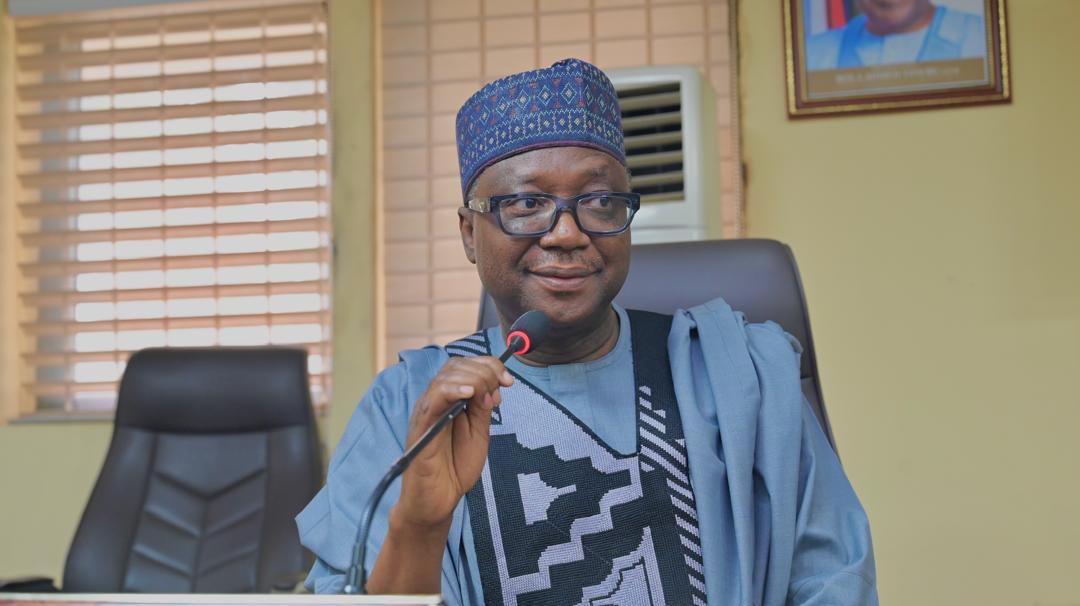
By Tony Obiechina, Abuja
The Revenue Mobilisation Allocation and Fiscal Commission (RMAFC) has given the Nigerian Upstream Petroleum Regulatory Commission (NUPRC) a 48-hour ultimatum to dissolve the Host Community Development Trust (HCDT) set up for communities hosting Sterling Oil Exploration and Energy Production Company (SEEPCO), as the commission escalated pressure over unmet obligations to oil-producing communities.
The directive came at an investigative hearing held Thursday, August 6, 2026, at RMAFC’s headquarters in Abuja, where the commission’s Investment Monitoring Committee scrutinised SEEPCO’s compliance with the Host Community Development Trust provisions of the Petroleum Industry Act (PIA).
The Committee expressed strong concern over SEEPCO’s repeated failure to honour invitations to appear before it despite previous engagements. Dr. Enefe maintained that the Commission would not tolerate attempts by any operator to evade legitimate oversight.
Addressing the Nigerian Upstream Petroleum Regulatory Commission (NUPRC), chairman of the Investment Monitoring Committee and Federal Commissioner representing Anambra State at RMAFC, Dr. Ekene Enefe maintained that RMAFC’s constitutional mandate requires it to hold every institution within the petroleum value chain accountable for the effective discharge of its statutory responsibilities.
He consequently directed NUPRC to immediately address concerns surrounding the Host Community Development Trust established for the affected communities, declaring: “We are going to give you 48 hours to dissolve that host community development trust.”
RMAFC Chairman, Dr. Mohammed Bello Shehu reaffirmed the commission’s commitment to protecting the interests of host communities, describing the hearing as a critical national responsibility.
He commended the Committee for its diligence and said RMAFC’s constitutional mandate demands firm oversight, transparency and accountability in managing the nation’s revenue assets.
The Chairman commended the committee for its diligence and urged members to remain resolute, noting that RMAFC’s constitutional mandate requires firm oversight, transparency and accountability in the management of national revenue assets.
He expressed confidence that the investigation would strengthen trust in the petroleum sector and ensure that host communities receive the full benefits guaranteed under the Petroleum Industry Act.
He said the committee would conclude its investigation and forward its findings to the appropriate authorities, insisting RMAFC would discharge its oversight role without fear or favour.
Earlier, an NUPRC delegation led by Mrs. Ufondu Ejiro, Director, host communities, told the committee the trust had been duly incorporated, funded and structured in line with the law.
She presented documentation on community consultations, governance structures, funding matrices, Community Development Plans and contributions made into the Trust, maintaining that NUPRC operates within the framework of the PIA and the Host Community Development Regulations.
Responding for the affected communities, Mr. Peter Chukwudi., disputed NUPRC’s submissions, saying the communities did not recognise several of the persons presented as their representatives and that adequate consultations had not taken place before the Trust was constituted.
He questioned the level of development recorded despite years of oil production.
Prof. Charles Ofoegbu, commissioner for Petroleum and Mineral Resources in Anambra State, called for closer collaboration between NUPRC and the State Government in verifying community representation, urging greater transparency in statutory contributions, operational expenditure and project execution.
Federal Commissioner for Rivers State, Amb. Desmond Akawor, noted a disconnect between the regulator and affected state governments and expressed concern over SEEPCO’s absence from the hearing.
Federal Commissioner for Kogi State, Hon. Abdulazeez Idris King, questioned whether reliance on operator-submitted documents alone could establish that genuine community consultations had occurred.
Federal Commissioner for Jigawa State, Hon. Hauwa Umar Aliyu, urged regulators to maintain professionalism and impartiality, stressing that host community interests deserve equal attention alongside operators’.
Also present were Federal Commissioners Aruviere Egharhevwa (Delta), Abdullahi Mukhtar Muhammad, MON (Kaduna), Dr. Nathaniel Adojutelegan (Ondo) and Sen. Marafa Bashir Abba (Taraba); Secretary to the Commission, Comrade Tosin Adeyanju; and Mrs. Zainab Larai Adamu, director, gas and investment, who serves as the committee’s secretary.
Dr. Enefe said every submission and piece of documentary evidence would be carefully examined as the committee continues pursuing its constitutional mandate on behalf of the Federation and the affected communities.




Troops Rescue 359 Victims, Arrest Terror Suspects, Destroy Oil Theft Networks Nationwide – DHQ
ShareBy David Torough, Abuja The Defence Headquarters (DHQ) has announced significant operational gains by the Armed Forces of Nigeria (AFN)...

UNICEF Support Benue Govt With 400 School-in-a-Box Kits For BRACE-UP Project.
ShareFrom Attah Ede, Makurdi The United Nations Children Fund, UNICEF with funding from Swedish International Development Cooperation Agency(SIDA), has supported...
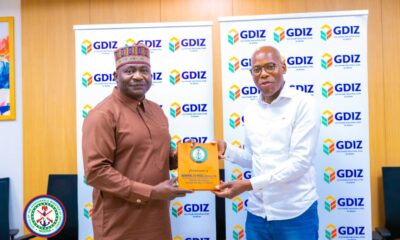

Nigeria, Benin Republic Collaborate on Regional Security
ShareBy Tony Obiechina, Abuja The Minister of Defence, General Christopher Gwabin Musa has successfully concluded a strategic three-day working visit...
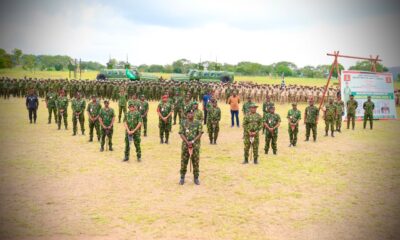

Nigerian Army Expands Combat Capability, Tasks Newly Trained Troops on Professionalism
ShareBy David Torough, Abuja The Nigerian Army has intensified efforts to strengthen its operational capability with the graduation of soldiers...
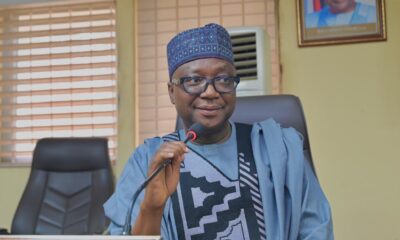

RMAFC Set to Enforce Oil Host Community Accountability
ShareBy Tony Obiechina, Abuja The Revenue Mobilisation Allocation and Fiscal Commission (RMAFC) has given the Nigerian Upstream Petroleum Regulatory Commission...

UNICEF Renovates Classrooms, Donates Educational Materials to IDPs Children in Benue
ShareFrom Attah Ede, Makurdi The United Nations Children’s Fund (UNICEF) with support from Swedish International Development Agency (Sida) has renovated...


NAMA Demands 56 Per Cent Share, Aviation Varsity 10 Per Cent of Aviation Statutory Charges
ShareBy Ubong Ukpong, Abuja The Nigerian Airspace Management Agency (NAMA) on Thursday, asked the National Assembly to increase its share...
FCT Closes Unregulated Motor Parks as New Bus Terminals Become Operational
ShareBy Laide Akinboade, Abuja The Federal Capital Territory (FCT) Administration (FCTA), on Thursday, said it has concluded arrangements to clamp...
Mahmoud Urges MAN to Embrace Smart Technology, Capital Restructuring For Growth
ShareBy Laide Akinboade, Abuja The Minister of State, Federal Capital Territory (FCT), Dr. Mariya Mahmoud, has called on manufacturers to...
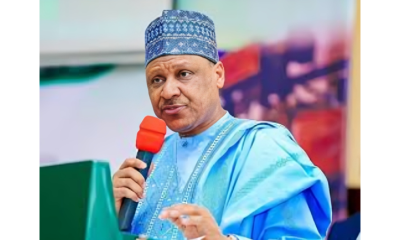

Advertising, Creative Industries Key Drivers of Economic Growth – Idris
ShareBy David Torough, Abuja The Minister of Information and National Orientation, Mohammed Idris, has said the Tinubu Administration recognises Nigeria’s...