
NEWS
Maka Oganiru Begins Operatikns, Pledges Africa’s Investment-ready Projects

By Tony Obiechina, Abuja
New Africa-focused advisory firm aims to connect high-potential opportunities with global capital, institutional investors and strategic partners
Maka Oganiru, an Africa-focused project development and strategic advisory firm, has launched with a mission to help turn high-potential opportunities across the continent into credible, structured and investment-ready projects.
Operating under the philosophy “Africa Focused | Global Outlook,” the firm says it is addressing one of the most persistent challenges in African project development: the distance between identifying an opportunity and building a project that can withstand rigorous commercial, financial and institutional scrutiny.
Significant opportunities continue to emerge across Africa in infrastructure, energy, agriculture, manufacturing, technology, transport, healthcare, real estate, housing, industrial development, logistics, tourism and other strategic sectors, the firm notes. Yet many promising ventures remain at the conceptual stage because they lack the feasibility analysis, commercial architecture, financial modelling, governance structures, risk frameworks and investment documentation needed to advance towards financing and execution.
“Our objective is to help bridge the gap between opportunity and execution,” said Ogwu Henry, Founder and CEO of Maka Oganiru. “Across Africa, there are businesses, infrastructure needs, entrepreneurs, institutions and governments with enormous potential. Our role is to help develop those opportunities, create the necessary structure around them, and prepare them for the right capital and strategic partnerships.”
From opportunity to investment readiness Maka Oganiru works across the project lifecycle, supporting clients from the early identification of an opportunity through structuring, investment readiness and execution planning. Its development framework follows five stages: Discover, Develop, Structure, Bank and Execute. The firm’s services are:
Opportunity identification and development, Project development and strategic roadmapping, Feasibility and viability assessment, Commercial and financial modelling, Bankability and investment readiness, Capital strategy and partnership advisory.
This work can include assessing market demand, structuring ownership and partnerships, determining capital requirements and preparing investment materials for engagement with appropriate sources of capital. Projects for businesses, governments and institutions.
The firm works across the private and public sectors, focusing on opportunities where strategic development, structuring and capital planning can materially improve the prospects for execution.
Small and medium-sized enterprises (SMEs) and growth companies: support can cover expansion strategies, new ventures, financing preparation, market entry and investment readiness.
Mid-sized and larger enterprises: work can extend to major expansion programmes, new business platforms, infrastructure initiatives, strategic partnerships, market development and capital planning.
Governments and public institutions: the firm can support the development and structuring of strategic projects designed to attract private capital, development finance, institutional investment, technical partners and other forms of long-term support.
Connecting African projects with global capital While its mandate is firmly focused on Africa, Maka Oganiru takes a global approach to capital, expertise and strategic partnerships. It seeks to position qualified African projects for engagement with private equity firms, institutional investors, strategic investors, financial institutions, development finance organisations, technology companies and other capital and technical partners.
The firm’s approach recognises that successful capital raising begins well before an investor enters a transaction. Its objective, it says, is not simply to identify capital for an idea, but to help build the underlying project that capital can evaluate: one with a credible commercial proposition, a clearly defined market, an appropriate structure, realistic financial assumptions, identifiable risks, strong governance and a practical path to execution.
The launch comes as African economies continue to pursue investment in the sectors critical to long-term economic growth. The firm believes a sustainable investment pipeline requires projects that are sufficiently developed, structured and prepared to move through investment and implementation processes.
By Tambaya Julius, Abuja
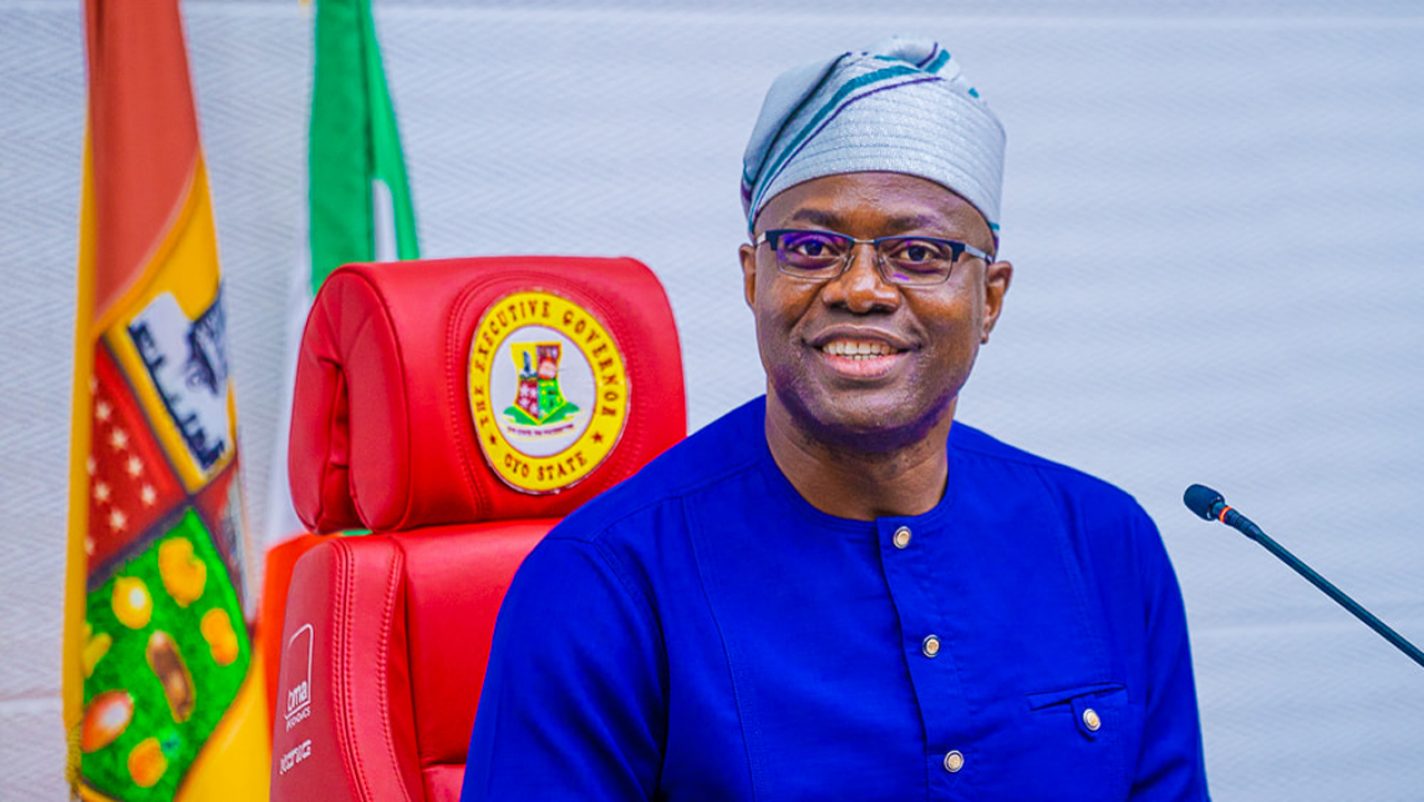
The Presidency has dismissed claims by Oyo State Governor Seyi Makinde that the Federal Government is withholding ₦250 billion in Nigeria Liquefied Natural Gas (NLNG) dividends for each state until after the 2027 general elections.
The Presidency described the allegation as misleading, arguing that the figures cited by the governor do not align with the established revenue-sharing formula or NLNG’s historical dividend payments.
In a statement issued on Sunday, the Special Adviser to the President on Information and Strategy, Bayo Onanuga, urged Nigerians to disregard the claim, warning that it could create unnecessary public distrust of the Federal Government.
Makinde had raised the issue on Friday at the 2027 Budget Stakeholders’ Consultative Engagement held at the Olola Ogunlana Hall, International Conference Centre, University of Ibadan.
The governor alleged that the Federal Government had delayed the distribution of funds due to states until after the 2027 general elections, despite the money being expected to support development projects.
However, Onanuga said distributing ₦250 billion to each of the 36 states would amount to ₦9 trillion, excluding allocations to the Federal Government, the Federal Capital Territory (FCT) and the 774 local government councils.
He explained that states collectively receive 26.72 per cent of distributable Federation Account revenue under the Federation Account Allocation Committee (FAAC) sharing formula.
According to him, for the states to receive a combined ₦9 trillion, the total NLNG dividend payment would have to exceed ₦33.68 trillion, equivalent to approximately $25 billion, in a single declaration.
Onanuga maintained that NLNG had never made a single dividend payment of that magnitude into the Federation Account, describing the figures cited by Makinde as economically implausible.
Providing historical context, he said NLNG had paid approximately $21.5 billion in dividends to the Federation over the past 25 years, with less than $3 billion realised since President Bola Tinubu assumed office.
The presidential spokesperson questioned how a single dividend payment allegedly being withheld could exceed the company’s cumulative distributions over more than two decades.
He also recalled that Makinde had previously described increased financial inflows from the Federation Account to states, including Oyo, as “voodoo.”
Onanuga accused the governor of allowing his presidential ambition to influence his public statements on government finances, alleging that some of his claims were politically motivated rather than based on verifiable information.
He said the Presidency expected greater restraint from the Oyo governor, accusing him of making what he described as “false and unguarded statements” during political engagements.
While acknowledging Makinde’s constitutional right to pursue his presidential ambition, Onanuga cautioned against what he termed the spread of falsehoods and disinformation during political campaigns.
The Presidency maintained that discussions about Federation Account revenue and allocations should be guided by verifiable financial records to prevent misinformation and protect public confidence in government institutions.
Makinde had alleged that the Federal Government spent NLNG dividends meant for distribution to states and that each state was entitled to ₦250 billion. He claimed the payment had been deferred until after the 2027 general elections.
The governor said his administration had already identified strategic projects to be funded with Oyo State’s expected allocation, warning that the alleged delay could affect development planning and economic growth.
“Each state was supposed to get ₦250 billion. We had already identified projects that would expand Oyo State’s economy. But they have now said the money will not be paid until after the election. Is the election more important than the people of Nigeria?” Makinde said.
By Cleopas Agada
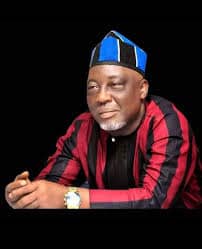
For seven years in the National Assembly, what has Benue South actually felt? For a man who rose to national prominence on the back of a national tragedy, Senator Abba Moro’s continued stay in the Senate has become a symbol of recycling, stagnation and non-performance.
Benue South, the Idoma nation, deserves more than a senator whose name is more associated with press statements than with projects, more associated with Abuja politics than with home development.
The Immigration Saga That Nigeria Cannot Forget
We cannot write the story of Abba Moro without writing the darkest chapter.
On March 15, 2014, as Minister of Interior under President Goodluck Jonathan, Abba Moro presided over the infamous Nigeria Immigration Service recruitment exercise.Young Nigerians, tens of thousands of unemployed graduates desperate for a job, were gathered in stadiums across the country. In their desperation, they paid N1,000 each for application. The organization was chaotic, inhumane and deadly. At the end of that day, over 20 innocent Nigerian youths died in stampedes in Abuja, Port Harcourt, Minna and other centres. Scores were injured.
It was a national scandal that drew international condemnation. Families are yet to recover. Till today, that tragedy remains a permanent stain on his public service record.
Seven Years of What Exactly?
Since 2019 when he went to the Senate, and now serving his second term (2019-2027), the question on the streets of Otukpo, Oju, Obi, Ado, Okpokwu, Apa, Agatu, Ohimini and Ogbadja is simple: Where are the dividends?
DAVID MARK vs ABBA MORO: THE REAL SCORECARD
To understand Abba Moro’s failure, look at what he inherited and what he did with it:
- The Otobi-Akpa Dam Legacy vs Failure:
Senator David Mark initiated the Dam at Otobi-Akpa as one of his greatest legacy projects. The purpose was clear: It was to stop the sufferings of the people from hardship faced from lack of water in Otukpo and its environs. It is even big enough to generate power for the area if it is completed and commissioned.
Today, the Federal Government is really not making further payments on that contract. The project is abandoned, contractor has left site. Otukpo people are back to buying water from tankers.
What has Abba Moro, as Senate Minority Leader who sits on budget committees, done to push for its completion? No motion. No lobbying. No budget insertion. He allowed a multi-billion naira legacy that would have solved water and power for Otukpo to die.
- The Oweto/Loko Bridge Legacy vs Failure:
David Mark lobbied for the Oweto/Loko Bridge which today serves as a gateway between the North and the South and opened up Agatu to the rest of Nigeria. Before this bridge, Agatu was hitherto a closed enclave. Today, economic activities flourish in Oweto market and other markets in Agatu.
What did Abba Moro do to consolidate? Nothing. No link roads from Oweto to interior Agatu. No federal market infrastructure. No strong voice to attract security intervention despite herdsmen killings in Agatu, Apa and Oju. The bridge is there, but the dividends that should follow are missing.
- Federal University of Health Sciences, Otukpo (FUHSO) vs No New Institution:
David Mark attracted FUHSO, bringing development, jobs and students to Otukpo. In seven years, Abba Moro cannot point to one new federal institution, cannot even secure a Teaching Hospital for FUHSO, and cannot attract one transformative signature project that has changed the economic fortune of Zone C. - Federal Jobs vs Handouts:
Mark used his position as Senate President to give Idoma sons and daughters federal appointments and national visibility.
Abba Moro’s model is handouts: motorcycles, grinding machines and N20,000. Our youths need jobs, functional skills acquisition centres linked to industries, and federal appointments. Compare to a fresher like Senator David Jimkuta of Taraba South who in less than two years empowered over 1,000 constituents with cars, motorcycles, refrigerators and business tools. Benue South has one of the highest rates of unemployment in the North Central.
- Legislative Silence and Disconnected Leadership:*
In the 9th and 10th Assembly, his legislative contributions have been largely pedestrian. No landmark bill for the economic liberation of Benue South, no strong advocacy that has brought federal intervention to killings in Apa, Agatu and Oju. A senator should be at home, but Abba Moro’s politics is Abuja-centric.
THE JUDGEMENT TABLE FOR EVERY IDOMA SON AND DAUGHTER*
DAVID MARK ACHIEVEMENTS ABBA MORO FAILURES
FUHSO: Established Federal University in Otukpo No Institution: No new federal institution in 7 years
Oweto/Loko Bridge: Opened up Agatu, gateway North-South, boom in Oweto market Failed to Consolidate: No link roads, no security for Agatu/Apa
Otobi-Akpa Dam: Initiated dam to stop water hardship in Otukpo, big enough to generate power Abandoned Dam: FG stopped payments, contractor left, Otukpo back to tanker water. No motion from Minority Leader to revive it
Federal Appointments: Gave Idoma jobs and national voice Handouts: Motorcycles and N20k, no jobs
Respected Zone C Nationally Abuja Press Statements
Benue South Needs a New Voice
The Idoma nation is blessed with brilliant, younger, more dynamic leaders. Idoma Renaissance, led by Johnson Ogwuche and Philip Okoh, has made it clear: “It is no longer business as usual. Any non-performing lawmaker will not be voted back.”
2027 is not far. Senator Abba Moro has served as Minister and two terms in Senate. It is time to go home, rest, and allow a new generation with fresh ideas, clean hands, and genuine love for the land to take Zone C to the promised land.
Benue South cannot afford another four years of motion without movement.
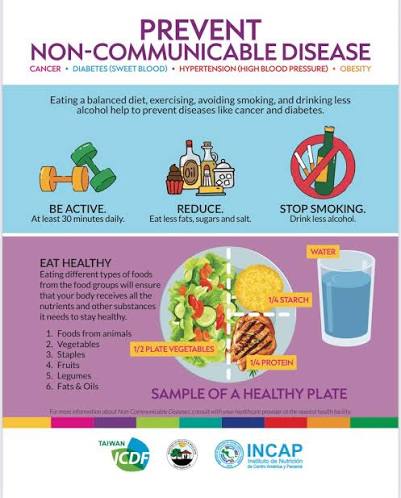
The Coordinating Minister of Health and Social Welfare, Prof. Muhammad Pate, said Non-Communicable Diseases (NCDs) have become one of the fastest-growing segments of Nigeria’s disease burden, requiring urgent health system readiness.
Pate said this on Thursday in Abuja at the unveiling of a book on Nigeria’s NCDs and health reforms, organised by the Health Reform Foundation of Nigeria (HERFON).
He said hypertension, diabetes, cardiovascular diseases, stroke, sickle cell disease, cancers and neurological conditions were increasing due to lifestyle changes and an ageing population.
The minister said Nigeria’s health reforms began more than 20 years ago, culminating in the National Health Act, with significant progress recorded in the last three years.
He said the Maternal and Neonatal Mortality Reduction Innovation Initiative (MAMI) had reduced maternal deaths by 22 per cent and newborn deaths by 10 per cent.
He added that a recent mini Demographic and Health Survey showed increased skilled birth attendance, antenatal care and contraceptive prevalence.
Pate said that malaria incidence had dropped to 15 per cent, the lowest in 20 to 30 years, based on survey statistics, but said HIV, tuberculosis and maternal mortality remained challenges.
He said the Federal Government, through the Health Sector Renewal Investment Initiative, had strengthened governance by bringing federal, state and local governments, civil society and the private sector together.
Pate said the federal health budget allocation had increased to six per cent from about three to four per cent previously, while states were being encouraged to increase their funding.
According to him, the government had expanded the primary healthcare system, retrained nearly 80,000 frontline health workers in three years and doubled admission quotas for medical and nursing students.
Pate said three of six world-class tertiary centres had been commissioned in Azare, Enugu and Benin.
He added that 10 world-class diagnostic centres equipped with MRI, CT scanners and catheterisation laboratories had been completed in partnership with MedServe and the Nigeria Sovereign Investment Authority (NSIA), including two recently completed in Ibadan and Bauchi.
He further added that the Federal Executive Council had recently approved more than N268 billion for major infrastructure projects at the National Hospital, Abuja.
Pate said the government was promoting prevention through the National Health Promotion Policy and the Know Your Numbers campaign, which had reached 10 million Nigerians with checks for blood pressure, blood sugar, cholesterol and prostate-specific antigen.
He said the government had also introduced Medipool, a group purchasing organisation, to ensure the availability of quality, affordable medicines at primary healthcare centres and improve treatment compliance for hypertension and diabetes.
Pate said affordability remained critical because NCDs required lifelong treatment, noting that more than seven million Nigerians had been added to health insurance in the last three years through the National Health Insurance Authority (NHIA).
He added that local pharmaceutical manufacturing was being expanded through the Presidential Initiative for Unlocking the Healthcare Value Chain (PVAC).
Pate commended HERFON and the book’s authors for providing analysis and recommendations to guide Nigeria’s response to NCDs.
Also speaking, the Chairman of HERFON’s Board of Trustees, Alhaji Idris Muhammed, said the foundation advocated better healthcare for Nigerians through policy advocacy, capacity building and evidence generation at local, state and national levels.
He said HERFON had a presence in all 36 states and the Federal Capital Territory (FCT) and had contributed to major health sector achievements, including the enactment of the National Health Act, 2014.
Muhammed said the book was the product of months of review by more than 70 subject experts from Nigeria, South Africa, the Middle East, the United Kingdom and the United States.
“The book tells us where we are, what we are doing wrong and what we must do right to stem the tide of NCDs,” he said.(NAN)


Maka Oganiru Begins Operatikns, Pledges Africa’s Investment-ready Projects
ShareBy Tony Obiechina, Abuja New Africa-focused advisory firm aims to connect high-potential opportunities with global capital, institutional investors and strategic...

FG Tadks Varsities on Specialised Health Degree Programmes
ShareBy Tambaya Julius, Abuja The Federal Government has urged vice-chancellors of Nigerian universities to introduce degree programmes that address critical...

Presidency, Makinde Clash Over Alleged ₦250bn NLNG Fund for States
ShareBy Tambaya Julius, Abuja The Presidency has dismissed claims by Oyo State Governor Seyi Makinde that the Federal Government is...

UBA Wins N156bn Debt Recovery Case Against Stallion Group
ShareThe Court on Friday ruled in the Bank’s favour on all issues and granted all its prayers. United Bank for...

Senator Abba Moro: It is Time to Go Home
ShareBy Cleopas Agada For seven years in the National Assembly, what has Benue South actually felt? For a man who...

NCDs Fastest-growing Disease Burden in Nigeria — Pate
ShareThe Coordinating Minister of Health and Social Welfare, Prof. Muhammad Pate, said Non-Communicable Diseases (NCDs) have become one of the...

2027: Adeleke Inaugurates Aare Asejere’s Campaign Council
ShareFrom Ayinde Akintade, Osogbo The Governor of Osun State, Senator Ademola Adeleke, yesterday charged newly inaugurated members of the Osun...

INEC Seeks Stakeholders’ Collaboration for Credible, Peaceful Elections
ShareThe Independent National Electoral Commission (INEC) has reaffirmed its commitment to strengthen collaboration with the National Orientation Agency (NOA), security...

Reps Reject Child Marriage, Demand Protection of Girl Child
ShareBy Ubong Ukpong, Abuja The House of Representatives on Thursday unanimously called for urgent and coordinated actions to protect Nigerian...

Court Awards N125, 000 Cost against Odumodublvck
ShareAn Abuja High Court on Wednesday awarded N125, 000 against a rapper, Tochukwu Ojogwu, popularly known as “Odumodublvck”, for asking...