
BUSINESS
MAN Faults CBN’s e-valuation, e-invoicing Guidelines, Seeks 90-day Extension of Commencement


From Anthony Nwachukwu, Lagos
Citing a lack of dialogue with stakeholders who the policy will adversely affect, the Manufacturers Association of Nigeria (MAN) has urged the Central Bank of Nigeria (CBN) to postpone by 90 days the commencement of its recently released import/export guidelines billed to take effect on February 1, 2022.
The 90-day window will enable the apex bank clarify and review contending issues, the MAN Director-General, Segun Ajayi-Kadir, explained in the association’s reaction to the January 21st mandate titled, “Guidelines on the Introduction of e-Valuation, e-Invoicing for Import and Export in Nigeria.
”Among the issues, MAN stated that though the guidelines were intended to sanitise foreign trade transactions, as they have some impact on Nigeria’s foreign exchange profile, the 11-day grace before implementation is “hasty.
”“A circular on monetary or fiscal guidelines requires adequate adjustment time,” it argued. “This is more so when it involves international trade and transactions, where a minimum of 90 days allowance is normally required, as many operators would have opened Form M and concluded deals either for import of export.
“One must say that transactions already embarked upon before the commencement of the guidelines should be exempted and the commencement date extended by a minimum of 90 days.”
Stating that the regulations are primarily to achieve a near accurate value of imports and exports in Nigeria, it noted that by implication, any Form M or NXP that bears a unit price in excess of 2.5 per cent of the verified global checkmate price will not be approved.
“This is concerning, as it will checkmate the opportunity of our exporters to derive higher value for their exports. Besides, we are worried about the determination of global price verification mechanism and benchmark prices.
“What happens if some companies are able to negotiate better prices due to their scale of order and are able to get competitive lower prices? Will these competitive prices be within the benchmark? “Clearly, this aspect of the policy will lead to several challenges on valuation down the line, including a floodgate of valuation issues with the Nigeria Customs Service (NCS).”
MAN also seeks clarification on the CBN’s directive that “…the content of the electronic invoice authenticated by Authorised Dealer Banks is only advisory for the Nigeria Customs Service (NCS),” stating: “This means that the NCS may vary it, probably uplift the FOB when issuing the PAAR.
“MAN considers CBN and NCS as agencies of the Federal Government and hence should harmonise their functions in this regard, otherwise, businesses and indeed our members will be subjected to paying unnecessary and additional FOB uplift by the NCS.
“This is in addition to a situation that may arise where the CBN forces such importer or manufacturer to reduce price if considered not in conformity with the benchmark pricing.” It also faulted the directive to suppliers and buyers to transmit their authenticated invoices through the CBN appointed service provider to the Nigeria Single Window portal.
Accordingly, “while MAN considers this measure a step to check perceived malpractices, we believe that the essence of single window policy is being diminished and this could introduce unnecessary bureaucracy with attendant multiple charges. It will also be a disincentive to local and foreign investors.
Also, “the annual subscription fee of $350 per authentication by suppliers on the portal meant to maintain the system is a clear disincentive to suppliers of imports to Nigeria, particularly raw materials and spares for manufacturers. “This has potential of triggering a run-on on Nigerian businesses by their foreign partners and simultaneously encourage these suppliers to look elsewhere in the region as well as the continent.”








The first female pilot of the Nigeria Customs Service (NCS), Nafisat Balogun, has secured a commercial multi-engine pilot licence in the United States of America.
The NCS spokesperson, Abdullahi Maiwada, made this known in a statement made available to newsmen on Sunday in Abuja.
Maiwada said that following the feat, the Superintendent of Customs was honoured at a ceremony organised by the Nigeria Customs Technical Hangar Service recently.
He said Balogun’s achievement marked a historic milestone as she became the first female pilot in the NCS, a field dominated by men.
He described her resilience, discipline and determination as a motivation for officers to strive for success and leverage new opportunities within the service.
Speaking at the celebration, the Managing Director of the Customs Technical Hangar Service, Captain Kuhi Mbaya, described Balogun’s journey as inspiring and transformative.
Mbaya described her achievement as a pride to the service, noting that the officer rose from being a cabin attendant to a fully-fledged commercial pilot.
“This is a great achievement not only for her but for the entire service,” he said.
Mbaya said that her accomplishment had set a precedent in the service and reflected the evolving opportunities within it.
“For the first time, we now have a female pilot in the NCS. She has set a record and it is important that we celebrate and recognise this milestone,” he said.
He urged women to take Balogun’s accomplishment as a charge to pursue their ambitions in specialised fields without fear, as barriers were being broken for them to thrive.
“This achievement shows that there are no limits. The glass ceiling has been shattered, and with determination and consistency, more women can achieve their dreams,” Mbaya said.
He also commended the Comptroller-General of Customs (C-G), Bashir Adeniyi, for his leadership and constant support for gender inclusion within the service.
Responding, Balogun thanked the NCS for believing in her capacity and supporting her to achieve the feat.
She reaffirmed her commitment to discharge her duties diligently and to continue to serve with dedication, integrity and professionalism.
Recall that in 2024, the NCS announced Balogun as making history as the first female pilot in the service, rising from a cabin crew member to a trailblazer in aviation.

The International Monetary Fund (IMF) has endorsed Nigeria’s ongoing bank recapitalisation drive.
It said that stronger capital buffers are cushioning the financial system against external shocks and strengthening resilience amid intensifying global uncertainties.
Tobias Adrian, Financial Counsellor and Director of the Monetary and Capital Markets Department of the IMF, said this during the Global Financial Stability Report presentation.
He stated this during the IMF/World Bank Spring Meetings in Washington DC on Tuesday.
Adrian said that robust fiscal positions remained critical for emerging markets to withstand volatile global capital flows.
He said this would reduce exposure to sudden market reversals, and maintain macroeconomic stability under uncertain financial conditions.
He stressed the growing importance of bank recapitalisation during the periods of heightened financial stress globally.
Adrian said that building a well-capitalised banking sector remained essential to sustaining global financial stability, particularly as economies confront persistent uncertainty.
He also said that tightening financial conditions, and evolving risks across international capital markets was crucial for economic sustenance.
According to him, the benefits of bank recapitalisation become most evident during stress periods, as stronger capital positions enable financial institutions to absorb shocks, sustain lending activities, and support broader economic stability across markets.
Adrian said that ensuring debt sustainability and maintaining stronger fiscal positions are foundational to IMF engagement with countries, particularly across Sub-Saharan Africa, where tailored programmes address diverse economic challenges and vulnerabilities.
On capital flows to Sub-Saharan Africa, he said: “I have observed the ongoing Middle East conflict have triggered an outsized reaction, with movements roughly twice as large as those recorded during early stages of Ukraine crisis.”
Adrian said that in spite of the significant shifts in capital flow volumes, price reactions have remained relatively contained, reflecting broadly healthy global risk appetite.
He also called for continued investor confidence across financial markets in spite of prevailing geopolitical tensions worldwide.
Jason Wu, Assistant Director in the Monetary and Capital Markets Department at the IMF, said that the capital flows to emerging markets are increasingly driven by debt rather than foreign direct investment and equity.
He said that the raising concern was about long-term financial stability outlook globally.
Wu said that countries with stronger fiscal positions generally enjoy improved access to international markets and lower borrowing costs.
He also underscored the need for sustained fiscal reforms to guard against sudden capital outflows.
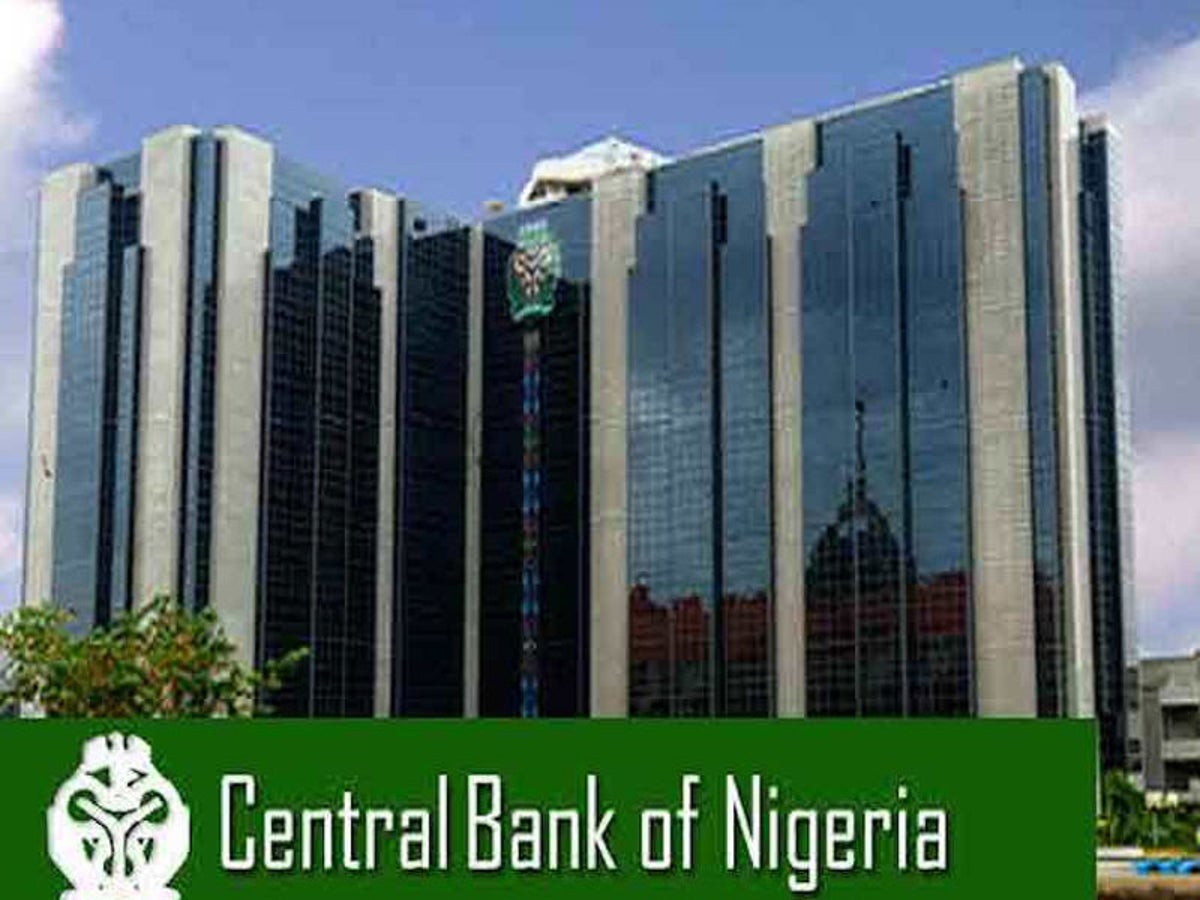
The Central Bank of Nigeria has proposed the establishment of a mediation panel to serve as the first point of resolution for loan-related disputes, reducing immediate recourse to courts in secured lending transactions.
The proposal was contained in a circular issued on Tuesday, inviting stakeholders to comment on draft guidelines for the establishment of a Mediation and Dispute Resolution Panel under the Secured Transactions in Movable Assets framework.
The circular was signed by the CBN’s Acting Director of the Development Finance Advisory Department, P.
I. Oluikpe.“The Panel shall, to the exclusion of any court of law or body in Nigeria, exercise first instant jurisdiction to hear and determine any dispute arising from the operation and application of the Act,” the apex bank stated.
The bank said the initiative was part of efforts to strengthen the financial ecosystem and improve the resolution of disputes arising from lending backed by movable assets.
It added, “The Central Bank of Nigeria is developing guidelines and modalities for the operation of a Mediation and Dispute Resolution Panel.”
According to the circular, the panel is designed to provide “a specialised, cost-effective platform for resolving disputes arising from creation, perfection and enforcement of security interests in movable assets.”
The move is anchored on the Secured Transactions in Movable Assets Act, 2017, which established the panel as the first recourse for mediation and settlement of disputes between creditors and borrowers.
The CBN noted that the objective of the guidelines is to ensure a structured, efficient system for managing disputes while boosting confidence in movable-asset-backed lending.
“The key objective of the MDRP guidelines is to establish a clear and standardised procedure for managing STMA-related disputes, while ensuring transparency, fairness and efficiency,” the CBN said.
The guidelines state that the panel will adopt alternative dispute resolution mechanisms, with a focus on preserving relationships between the parties and ensuring a quicker resolution of disputes.
It also stated that the panel is expected to deliver decisions within 90 days of the first hearing of any petition before it.
Under the proposed framework, parties to a dispute must consent to the panel’s jurisdiction and demonstrate that they made efforts to resolve the issues through informal means before escalation.
“Parties shall demonstrate that they had made efforts to resolve the dispute through other informal means such as negotiations before escalation to the Panel,” the document added.
The guidelines further stipulate that disputes eligible for mediation must involve a valid security agreement, include a mediation clause, and be registered with the National Collateral Registry.
The panel will comprise professionals from law, banking, finance, and dispute resolution, each with at least 10 years’ experience.
The CBN said it would appoint 30 members, from which panels of three persons would be constituted on a rotational basis.
Each panel will be headed by a chairperson and supported by a secretariat responsible for administration, case management, scheduling and documentation.
The mediation process will involve the submission of claims and supporting documents, administrative review, and scheduled hearings, which may be conducted in person, virtually, or through a hybrid arrangement.
The guidelines also state that the panel’s decisions will be legally binding and enforceable in court as consent judgments.
“The award shall be legally binding on the parties and enforceable in court as a consent judgment or consent award,” the document stated.
However, parties retain the right to appeal decisions on limited grounds relating to law or mixed law and fact, subject to specified timelines.
The framework emphasises confidentiality, noting that proceedings and information shared during mediation sessions must be protected.
Funding for the panel will come from CBN subventions, administrative fees paid by disputing parties, and contributions from other sources.
The bank said it was seeking stakeholder input as part of its inclusive policymaking process.
“Comments should be submitted not later than 9th October 2026,” the circular stated.
The development comes about a month after the CBN directed banks to limit access to certain banking services for large borrowers with non-performing loans, in a move aimed at strengthening credit discipline and protecting financial system stability.
In a letter dated March 12, 2026, and signed by the Director of Banking Supervision, Olubukola Akinwunmi, the apex bank instructed lenders to tighten restrictions on such obligors.
The CBN stated that borrowers whose facilities have been classified as non-performing and captured in the Credit Risk Management System or any licensed private credit bureau would be barred from obtaining new credit.
It added that the measure was designed to curb loan defaults and improve overall risk management across the banking sector.



Wike Waives C-of-O Fees for Nigerian Law School
ShareBy Laide Akinboade, Abuja The Minister of the Federal Capital Territory (FCT), Nyesom Wike on Thursday gave an immediate waiver of fees for the Certificate of...
Study Links Alcohol to Higher Cancer Burden in Australia
ShareAustralian researchers on Thursday revealed that alcohol consumption causes a higher proportion of cancers in Australia than previous estimates. According to a statement of...


C’River Debunks False COVID-19 Report, Confirms Only One Case
ShareFrom Ene Asuquo, Calabar The Cross River State Government has refuted a publication by online platforms alleging the discovery of 10 new...


NCC Orders Airtime Credits for Poor Network Service
ShareThe Nigerian Communications Commission (NCC) said telecom operators will compensate subscribers for poor network quality through airtime credits under a strengthened regulatory enforcement framework...


CBN Orders Banks on Monthly Report of Mobile, ATM Transactions
Share The Central Bank of Nigeria has directed banks and other financial institutions to submit monthly reports on failed electronic...


Tinubu Seeks Senate Nod for $516m Sokoto–Badagry Superhighway Loan
ShareBy Eze Okechukwu, Abuja President Bola Tinubu has formally requested the National Assembly’s approval for a $516.3 million external loan...

2027: APC Begins Sale of Forms, Adopts Consensus, Direct Primaries
ShareBy David Torough, Abuja The All Progressives Congress (APC) has rolled out a comprehensive and revised timetable for its 2027...


Grant Pardon to Henry Okah, Niger Delta Activists Tells Tinubu
ShareBy Raphael Atuu, Abuja Popular Niger Delta activist Nengi James OON, alongside other youths under the aegis of Advocates for...


NCoS Places Facility on Red Alert over Alleged Attack Threats in Niger
ShareFrom Dan Amasingha, Minna The Nigerian Correctional Service (NCoS) in Niger State has placed all custodial centres across the state on red...


FIBA WWC: D’Tigress Land in Tough Group B with France, Hungary, Korea
ShareNigeria’s D’Tigress will face France, Hungary, and Korea in Group B at the 2026 FIBA Women’s World Cup. The draw set up the D’Tigress for...