
BUSINESS
MAN Tackles FG over Policy Inconsistency in Manufacturing Sector

From Anthony Nwachukwu, Lagos
Among the numerous problems hampering the nation’s manufacturing sector, the Manufacturers’ Association of Nigeria (MAN) has listed the Federal Government’s policy inconsistency as very dangerous as it makes the economy unpredictable and discourages prospective investors.
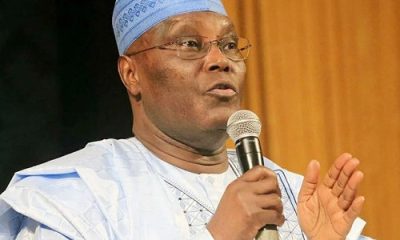
MAN President, Mansur Ahmed, stated that “to a large extent, hindrances experienced in the production sector are largely caused by policy inconsistency and somersaults which leave no room for proper planning and projection.
According to Ahmed, who spoke during the 2022 edition of the MAN Reporter of the Year Award/Presidential Media Luncheon in Lagos, “indeed, this has led many manufacturers to close shop, and (also) discouraged prospective investors who are unsure what government’s next move will be.”He disclosed that during MAN’s recent visit to President Muhammadu Buhari, he was presented with the sector’s critical areas of need, including “the hardship being experienced by manufacturers in obtaining forex to procure raw materials and spare parts that are not locally available.”
According to him, the forex problem has even worsened “in spite of the several Central Bank of Nigeria (CBN) policies such as the Naira4dollar scheme, Ban of Sale of Forex to BDCs and most recently, the proposed RT 200 FX Programme which stands for the “Race to $200 billion in FX Repatriation.”
MAN noted that though the CBN might have good intention with these policies, “particularly to drive support for the real sector of the economy, there is need to establish mechanisms for robust monitoring and evaluation, which ought to be part of the plan to ensure that the support to drive export really comes to fruition.
“MAN, who represents the interest of manufacturers in Nigeria, has offered to be a part of this process. We shall continue to offer recommendations to the government that will increase manufacturing sector’s contribution to the nation’s GDP.
“You are equally aware of the N10/per litre excise duty on non-alcoholic, sweetened carbonated drinks, which the association has vehemently spoken against due to the negative impact on the economy, with the end-users left to bear the cost.
“Evidently, the sector will be negatively affected by the excise duty beyond the increase in production cost, while the impact of Covid-19 on our business environment will equally weaken the sector’s recovery process.”
These shortcomings notwithstanding, MAN assured of continued efforts to proactively engage policymakers through evidence-based advocacy, so that government could see through the eyes of operators and contribute to the growth and development of the nation’s economy by right policy choices. Ahmed had earlier commended the media for their contributions as partners in building a productive and prosperous nation by joining to advocate for conducive manufacturing environment through objective and quality news feature and broadcasts.
While noting the plethora of challenges that members face in the course of production, he called for a more critical attention to the manufacturing sector, hoping that such consistent push and noticeable collaboration would bring about improvement in the manufacturing landscape.
“This year, we shall endeavour to work more closely with you our partners, to explore innovative and more strategic advocacy mechanisms that will scale up the performance of the manufacturing sector and its contribution to the economy,” he stated.









By Tambaya Julius, Abuja
The Nigeria Customs Service (NCS) has auctioned 22,175 litres of Premium Motor Spirit (PMS) seized by Operation Whirlwind along the Lagos-Ogun axis, with a Duty Paid Value (DPV) of N32.1 million.
The National Coordinator of Operation Whirlwind, Deputy Comptroller Abubakar Aliyu, disclosed this on Monday at the public auction held at the Customs Training College, Ikeja, Lagos.
Aliyu said the exercise was carried out on the directive of the Comptroller-General of Customs, Bashir Adewale Adeniyi, to ensure transparency, accountability and proper handling of seized petroleum products in line with extant laws and approved procedures.
He said Customs operatives intercepted 887 jerry cans, each containing 25 litres of petrol, bringing the total to 22,175 litres. Five vehicles used to convey the products were also seized.
According to Aliyu, the seizures were made at identified smuggling flashpoints, including Imeko, Ilara, Ilaro, Idiroko and Seme-Badagry, following credible intelligence.
He put the combined DPV of the seized petrol and means of conveyance at N32.1 million, describing the operation as targeted and intelligence-driven.
Aliyu said Operation Whirlwind was focused on stopping the illegal movement, diversion and cross-border smuggling of petroleum products to neighbouring countries.
He said the NCS had stepped up surveillance, intelligence gathering and enforcement along routes identified as vulnerable to petroleum product smuggling.
The initiative, he added, was aimed at protecting the country’s economic interests, strengthening national energy security and ensuring that products meant for domestic consumption were not diverted.
Aliyu urged participants and stakeholders to follow the approved auction guidelines to ensure a fair and transparent exercise.
He commended the Comptroller-General and the NCS management for their support and strategic direction, while also appreciating the Office of the National Security Adviser (ONSA) and the Nigerian Midstream and Downstream Petroleum Regulatory Authority (NMDPRA) for their continued collaboration.
He praised officers and men of Operation Whirlwind Zone A for their professionalism and commitment to duty, warning smugglers that the operation would continue to dismantle illegal networks through intelligence-led enforcement.
The Customs coordinator also called on border communities to provide timely information on suspicious activities, stressing that tackling smuggling required the cooperation of all stakeholders.
The Acting Commandant of the Customs Training College, Ikeja, Deputy Comptroller Patience Ita, said the Comptroller-General had maintained a zero-tolerance stance on the smuggling of petroleum products and other goods.
Ita, who hosted the auction, said the exercise should serve as a warning to smugglers, noting that even small-scale diversion of petroleum products could have serious consequences for the national economy.
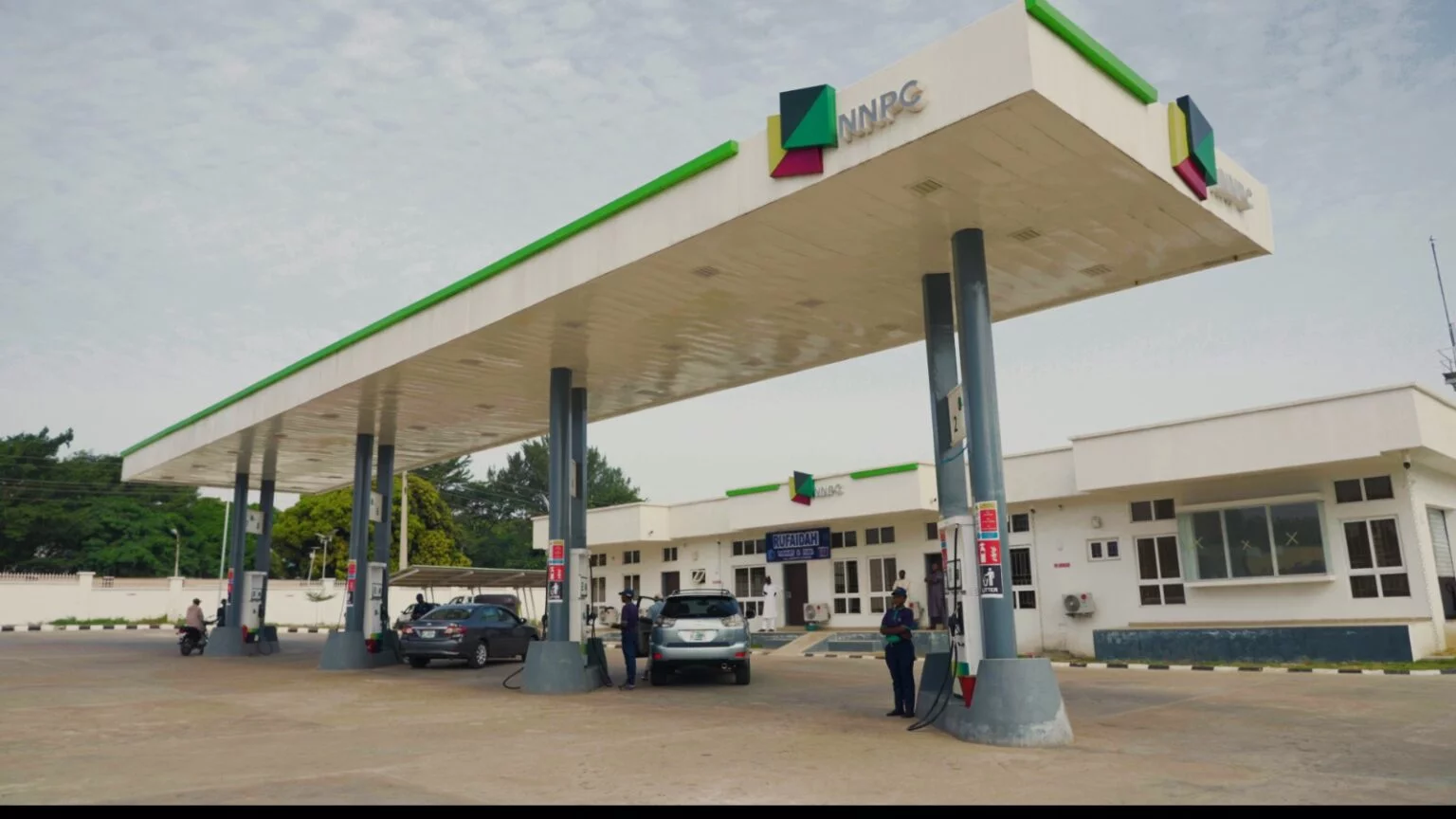
The Nigerian National Petroleum Company Ltd. (NNPC Ltd.) recorded N7.2 trillion Profit After Tax (PAT) in 2025, a 33 per cent increase from N5.4 trillion.
Group Chief Executive Officer, Bayo Ojulari, disclosed this on Tuesday in Abuja at a media briefing after the company’s AGM and second Earnings Call.
Revenue declined to N34.
5 trillion from N45.1 trillion in 2024.Ojulari attributed the 24 per cent revenue decline to lower crude oil prices and reduced product volumes following market deregulation.
He said earnings per share rose to N35.
90 from N27.07, while return on equity improved by 200 basis points to 16 per cent.The company’s declared dividend increased by 35 per cent to N5.8 trillion, while taxes, royalties and other government remittances rose 39 per cent to N22.3 trillion.
“Stronger earnings in spite of this pressure demonstrate the resilience of NNPC Limited’s operations,” Ojulari said.
He said profit grew because NNPC had improved its operations and maintained discipline across its businesses.
Ojulari said crude oil and condensate production reached a five-year peak of 1.77 million barrels per day.
He added that gas supply reached a three-year high of 7.2 billion standard cubic feet per day.
“Stronger performance gives NNPC Limited more capacity to invest, contribute to public revenue and strengthen Nigeria’s energy security,” he said.
On infrastructure, Ojulari said the mainline of the Ajaokuta-Kaduna-Kano gas pipeline had been completed.
He said work was ongoing on tie-ins to delivery points, beginning with Abuja, followed by Ajaokuta and Kaduna.
According to him, the next milestone is to commence gas flow through the pipeline to industries and power plants.
Ojulari said the company completed the Obiafu-Obrikom-Oben (OB3) gas pipeline in 2026 after several years of challenges.
On the refineries, he said prospective partners under NNPC’s technical equity partnership model had conducted a three-month onsite review.
He said more than 34 engineers participated in the review, adding that NNPC was now concluding the report.
Ojulari said the company was targeting self-sustaining and profitable refineries, with a pathway expected to be defined soon.
He reaffirmed NNPC’s target of producing two million barrels of crude oil daily by 2027 and three million barrels by 2030.
He said gas production targets were 10 billion cubic feet per day by 2027 and 12 billion by 2030.
“NNPC plans to mobilise over 60 billion dollars of investment across the energy value chain,” he added.
Ojulari said more than 1,000 newly recruited professionals joined NNPC in 2025 under its Talent to Value programme.
He said the recruits completed a one-year internship and training programme before being deployed across the company. (NAN)

The Federal Competition and Consumer Protection Commission (FCCPC) says there is a need for sustained capacity building in competition reporting and issues.
The Executive Vice Chairman of FCCPC, Tunji Bello, said this in a statement made available to the News Agency of Nigeria (NAN) in Abuja on Sunday.
Bello described competition matters as a relatively new area in the country adding that it required specialised knowledge among journalists, regulators and other stakeholders.
He said that competition law and consumer protection regulations had made stakeholders’ education a priority for the commission.
Bello said that the FCCPC recently supported the training of judges through the National Judicial Institute (NJI) to deepen understanding of competition-related matters.
He noted that members of the judiciary also required exposure to the nuances of the emerging field.
“We recognised that because it is a new terrain, the judges themselves are not familiar with the nuances.
”So we brought in experts on competition,” he said.
Bello stressed that the media had a critical role in promoting public understanding of competition and consumer protection issues.
“If FCCPC is becoming more known to the public, it is as a result of the kind of publicity you have given us,” he said. (NAN)




Portuguese Football Federation Backs Ronaldo to Continue with Portugal
ShareThe Portuguese Football Federation has reaffirmed its support for Cristiano Ronaldo’s continued involvement with the national team, with president Pedro...

A Nation Divided as Ronaldo Left with Big Decision on Portugal Future
ShareAs Lionel Messi prepares to get a hero’s farewell for his successful international career, Cristiano Ronaldo’s could have ended with...


FG Establishes 10 Radio Diagnostic Centres to Boost Healthcare Service Delivery
ShareThe Federal Government said it has established 10 radio diagnostic centres to enhance diagnosis and treatment of diseases in the...


Customs Auctions 22,175 Litres of Seized Petrol for N32.1m
ShareBy Tambaya Julius, Abuja The Nigeria Customs Service (NCS) has auctioned 22,175 litres of Premium Motor Spirit (PMS) seized by...


NNPCL: Accounting for Fuel Subsidy
ShareBy Uddin Ifeanyi I am not an accountant, so my opinion on the NNPCL’s recently released 2025 annual financial report...


Can ECOWAS Parliament Turn Climate Commitments into Regional Action?
ShareBy Mark Longyen West Africa’s climate crisis is becoming harder to separate from the region’s familiar struggles with poverty, displacement,...


2027 Elections: INEC Voter Register Hits 103m
ShareBy Tambaya Julius, Abuja The Independent National Electoral Commission (INEC) said Nigeria’s voter register has risen to more than 103...


Niger 37: FG Pledges Accountability Over Deaths of Miners in NSCDC Custody
ShareBy Tambaya Julius, Abuja The Federal Government has assured families of the 37 suspected miners who died in the custody...


11-year-old Girl Found Dead in Suleja Well, Church Guard Arrested
ShareFrom Dan Amasingha, Minna The disappearance of 11-year-old Christabel Albert after she left home for a birthday celebration has ended...


Jonathan Receives Bayelsa East APC Candidates
ShareFrom Mike Tayese, Yenagoa Former President of Nigeria, His Excellency, Dr. Goodluck Ebele Jonathan, has commended the quality, experience and...