
NEWS
Mark @ 76: IBB, Atiku, Ogbeha, Moro, others Salute Him


Some eminent Nigerians have felicitate the former President of the Senate, Sen. David Mark on his 76th birthday.
In separate messages, the leaders praised him for his good conduct and steadfastness over the years.
This is contained in a statement issued by his Media Adviser,Paul Mumeh in Kano on Sunday.
Former Military President, Ibrahim Babangida described Mark as a very diligent and hardworking officer who earned the reputation as a distinguished officer and gentleman.
“Mark epitomises an inimitable example of a thorough-bred army general who has made a name for himself in both the military and democratic administration,”he said.
He said that Mark has demonstrated what true courage is in almost unassailable situations in the course of executing tasks and responsibilities.
Babangida said Mark is a combination of trust, devotion, diligence,resilience, perseverance and determination.
He wished him good health, peace and wisdom in the years ahead.
On his path, former vice president Atiku Abubakar praised Mark for his indomitable spirit.
He recalled that Mark as President of the Senate provided quality leadership and brought sanity and stability to the polity.
” Mark’s colleague and friend, Sen. Tunde Ogbeha described him as a reliable and dependable brother,”he said.
On his part, Retired Brig-Gen. Tunde Ogbeha said that Mark is a man of many parts who excels in every assignment.
Senate Minority leader Sen. Abba Moro appreciated Mark for being a great mentor, and urged him not to relent in making his reservoir of knowledge available to the younger generations.
Moro expressed optimism that history will be kind to Mark for his contributions to the development of the country.
The immediate past governor of Delta, Sen. Ifeanyi Okowa prayed that God in his infinite mercy continue to grant Mark good health, wisdom and courage.
Okowa hoped that Mark will continue to make his wealth of experience in leadership available for the younger generation to emulate.
Sen. Adolphos Wabara, former Senate President and chairman, Peoples Democratic Party (PDP) Board of Trustees (BOT), described Mark as a unique leader who has the gift of managing human and material resources successfully.
Wabara recalled Mark’s leadership of the Senate nay National Assembly, when he invoked the ‘doctrine of necessity’ to solve intractable constitutional crisis that almost bedeviled the nation in 2010.
Former Sokoto State governor, Sen. Aminu Tambuwal described Mark as a foremost leader who has made positive impact in the leadership of Nigeria, especially in the legislature.
Former Senate leader, Sen.Victor Ndoma-egba (SAN), said Mark is a leader of inestimable value.
He urged him to establish a leadership foundation where he would mentor and lecture young Nigerians on the rudiments of administration and leadership.
Mark was born on April 8, 1948. He was military Governor of Niger, Communications minister and Senator. ( NAN)
The Tertiary Institutions National Laureate Committee has announced the commencement of the 2026 National Laureate Programme.
The National Laureate Programme is a Federal Government initiative aimed at recognising outstanding academic research and innovation in Nigerian tertiary institutions.
The programme, backed by an annual research prize fund of ₦365 million, is designed to reward exceptional undergraduate dissertations, master’s theses and doctoral research from accredited higher institutions across the country.
The committee’s spokesperson, Ita Ekpenyong, disclosed this in a statement issued on Sunday in Abuja.
Ekpenyong said, “The initiative underscores the Federal Government’s commitment to strengthening Nigeria’s research ecosystem, promoting innovation and positioning scholarship as a driver of national development.”
He said the programme, inaugurated under the leadership of the Minister of Education, Dr Tunji Alausa, would identify, assess and reward outstanding research produced in accredited universities, polytechnics, colleges of education, monotechnics, military institutions and other eligible tertiary institutions.
As part of preparations for the 2026 edition, the committee directed all eligible institutions to begin internal arrangements for participation by setting up Institutional Laureate Selection Committees made up of experienced academics with proven research credentials.
The institutions are also required to submit the names and designations of committee members, who will coordinate their participation in the programme.
Following internal assessments, “Each participating university is expected to nominate up to 18 research works, comprising six undergraduate dissertations, six master’s theses and six doctoral theses.”
Equivalent submissions will be accepted from polytechnics, monotechnics, colleges of education and other tertiary institutions.
The research entries will be drawn from six thematic areas, including Agriculture, Teaching Innovation, Medicine and Health Sciences, Engineering, Science and Technology, Law, and Arts and Social Sciences.
Under the programme, winners in the undergraduate category will receive ₦35 million, while the master’s and doctoral categories will attract prizes of ₦50 million and ₦100 million, respectively.
In addition, the committee said 15 Thematic Laureate Awards worth ₦12 million each would be presented to other outstanding researchers.
The committee stated that all nominated research works must first be submitted to the Nigeria Education Repository and Databank and assigned a valid National Document Number before they can qualify for consideration.
It explained that the requirement was intended to strengthen research integrity, improve documentation and preserve Nigeria’s academic output within the country’s knowledge infrastructure.
The committee also said the programme would adopt a three-stage assessment process involving institutional, regional and national evaluations to ensure transparency, fairness and merit in the selection of winners.
It urged participating institutions to conduct their internal assessments with professionalism, noting that only the highest-rated research would progress to the next stages.
The committee further called on professional bodies across agriculture, engineering, science, medicine, law, education, arts and related fields to nominate distinguished scholars for appointment to Regional Laureate Selection Committees in the six geopolitical zones.
According to the committee, nominations will be screened based on merit, experience, integrity, diversity and conflict-of-interest requirements.
Institutions and professional associations have until August 15 to constitute their committees and nominate experts, while the submission of institutional entries will remain open until August 31.
Speaking on the initiative, Chairman of the National Laureate Committee, Prof. Abubakar Sambo, said the programme was conceived to promote academic excellence and recognise research capable of driving national development.
Sambo said the programme was designed to elevate academic excellence to national prominence, encourage world-class research, inspire innovation and recognise scholars whose work has the potential to transform lives, industries and the future of Nigeria
He urged all eligible tertiary institutions and relevant professional associations to participate actively in the inaugural edition of the programme.
By Hajia Hadiza Mohammed
As I stated in my previous article, some of my colleagues have queried my interest in Abubakar Malami, SAN. And, I have maintained that as a social activist and advocate, I am interested in justice and those whose lives and activities have touched lives especially those of the poor and the vulnerable.
I am interested in those who have served the public conscientiously and whose lives mirrors justice, rule of law and patriotism. I am interested in those who have used their positions to promote our values and national ethos. And that is why Malami our two-time Attorney-General and Minister of Justice is not the first public officer and achiever that I have written about. But, my interest on Abubakar Malami is based on his accomplishments while in office as the nation’s number law officer between 2015 and 2023, his act of philanthropy and his current travail in the hands of the nation’s security and anti-graft agencies, something many believed was politically motivated.Malami served as the Attorney-General and Minister of Justice in a moribund regime that will go down as one of the worst in the political history of this country but Malami stood out as a lodestar among those assembled by Buhari to work with him. During the Buhari era, Malami appeared to be the most active minister in is team. During the COVID-19 pandemic in 2020 when other ministries and other government offices were in a state of inertia, Malami’s Ministry of Justice and Ministry of Health appeared to be the only government ministries that was active. Malami served with patriotic zeal and uncommon dedication, exhibiting his administrative ingenuity to the admiration of the staff of the ministry and our judicial officers. His dedication to his assigned mandate led him to introduce reforms aimed at improving our judicial and legal system. He served with integrity and skills. His astuteness was brightly displayed when he helped negotiated and obtained landmark international settlements in favor of our country and the recovery and repatriation of the nation’s funds illegally stashed away in foreign banks by our unscrupulous public officers in the past.
When I browse through Malami’s published personal memoir entitled: “Traversing the Thorny Terrain of Nigeria’s Justice Sector: My travails and Triumphs”, I had a clearer understanding of his battles and his determination to make an impact despite institutional challenges, obstacles and oppositions. I see the courage in a man that has iron determination to succeed in whatever he feels is worth doing. And indeed, he recorded visible accomplishments. The evidence can be seen. You may not need to read his memoir to see it.
While in office as the Attorney-General and Minister of Justice, Malami consulted widely in his effort to make appreciable impact by working with the established institutions and available legal platforms including the body of states’ Attorneys-General for “reforms in the justice sector, law reforms through legislations and judicial decisions which expounded our jurisprudence.”
In his decisions while in office, Malami was always guarded by the goal of national interest, unity and development. That is why in his valedictory address to the body of attorneys-general, he advised them thus: “We should not shy away from offering our knowledge and wealth of experience in office to promote development in all spheres of our national life.”
Also, Malami realizes the importance of the government as a living entity to maintain its legal obligations and hence he established an electronic National Depository of Treaties that will serve as the depository of all treaties entered into between the Government of the Federation and any other country of any Ministry, Agency or Department. This is in line with Section 4 of the Treaties (Making Procedure, Etc.) Act Cap. T20 Laws of the Federation (LFN) 2004, which domiciled the National Depository of Treaties in the Federal Ministry of Justice.
Again, Malami was interested in speedy resolution of conflict and pursuit of justice through arbitration. That was why he inaugurated members of the National Arbitration Policy Committee charging them to come out with a comprehensive policy that will, among other things, ensure that domestic transactions originating and terminating in Nigeria are arbitrated in the country.
Additionally, during his tenure in the Federal Ministry of Justice, Abubakar Malami made tremendous effort to improve the welfare of serving and retired judicial officers. The aim is to motivate the staff of the ministry and judicial officers to ensure operational efficiency in the dispensation of justice without which the administration of law and the legal system will negative affected.
Clearly, there are many other programs and reforms introduced by Malami which would not be captured here for want of space but will be highlighted in the subsequent essays but suffice it to say that Malami’s era in the Federal Ministry of Justice was a huge success.

By Chinedu Moghalu
Elon Musk has a gift for reducing significant anxiety to a sentence. “Nigeria alone had 4 million more births than the entire EU last year!” he recently wrote on X.
The statistic admits two readings.
In an ageing Europe, it sounds like a warning. In an Africa commonly described through poverty and scarcity, it can be received as evidence of future power. Neither reading goes far enough.For much of the modern development debate, African population growth has been viewed through a Malthusian lens: more people competing for limited food, employment and public services.
Musk begins from the opposite fear, as he has consistently canvassed, that falling fertility will leave societies without enough people to renew themselves. Nigeria’s birth figures bring both anxieties into the same argument.Eurostat recorded 3.55 million births in the European Union in 2024, when fertility fell to 1.34 children per woman, the lowest in the present series. The EU’s median age had reached 44.9 years by the beginning of 2025. Nigeria’s population structure is markedly younger.
By 2050, Africa is expected to have about 2.5 billion people, close to one-quarter of humanity. Under the medium projection in the United Nations’ World Population Prospects 2024, Nigeria will approach 360 million. The infants represented in Musk’s post will then be young adults. Their health, education and prospects will already have been largely determined.
Musk’s argument therefore reaches beyond fertility. If human numbers matter to civilisation, Africa’s children cannot sensibly be regarded mainly as future customers, data producers or migrant labour. The companies and governments expecting to benefit from Africa’s demographic scale have a direct interest in the health, education, research capacity and productive systems that will shape it.
Potential Is Not A Dividend
A high birth rate alone does not amount to a demographic dividend. Rapid growth can increase the dependent population faster than schools, clinics, housing, sanitation and employment can expand. A dividend becomes possible when children survive, families become smaller by informed and voluntary choice, women gain greater agency, and the working-age share of the population rises. Employment and productivity must grow with it.
In a published essay, Muhammad Ali Pate, Nigeria’s Coordinating Minister of Health and Social Welfare, makes the essential distinction: a large population creates possibilities, not prosperity. He calls the health, nutrition, learning and skills built over a lifetime “grey matter infrastructure.” Human capability determines how well a society uses every other form of capital.
A child born today is not yet an engineer, farmer, physician, teacher or entrepreneur. Between infancy and adult life lie years of exposure to nutrition, disease, insecurity, family income, teaching quality and public institutions. Childhood stunting can impair cognitive development. Weak foundational learning makes later education harder. Certification without competence narrows the range of useful work.
Nigeria’s human capital deficit gives the argument urgency. In the World Bank’s 2025 Human Capital Index Plus, the country scores 64 on education, compared with a median of 88 among lower middle-income countries. Nigeria also faces maternal and child mortality, malnutrition, exclusion from school, and learning poverty. National averages conceal wide regional, rural-urban and income differences. Unequal welfare today becomes unequal productive capacity tomorrow.
Women cannot be treated as instruments in a contest over fertility. A sound demographic transition depends upon girls remaining in school, women surviving childbirth, access to reproductive healthcare, and families having the freedom to decide their size. African governments should resist Western alarm that presents African births as a threat, and African boasting that neglects the women who bear and raise the children.
Human Capital and Mobility
Population acquires economic weight when capability meets opportunity. Health and education cannot carry the burden alone. Power, transport, finance, industry and trade must support firms able to employ skilled people. Otherwise, Africa may educate workers for richer economies, while remaining short of the professionals it trained.
Europe’s ageing creates an awkward dependence. Its health services, care systems, engineering firms and technology companies need workers, while migration has become one of its most divisive political questions. Africa, for its part, may spend scarce public and family resources training professionals who leave because the economies that educated them cannot offer work equal to their abilities. The issue concerns where skills are formed, where productive opportunity is located, and which societies receive the return on investment in human capability.
Workers must remain free to leave. Mobility should be organised more fairly. Nigeria’s National Policy on Health Workforce Migration and World Health Organization guidance point towards ethical recruitment, circular pathways and co-investment by destination countries in the systems from which they recruit.
Where a richer country repeatedly draws from a fragile health service, it should help to enlarge the training pipeline. That is the defensible meaning of a human capital royalty: the worker remains free, while the systems that produce scarce capability share the cost more fairly. Joint training institutions, faculty support, better laboratories and recognised qualifications can strengthen source and destination systems alike.
Human capital is also a matter of sovereignty. A continent that exports raw materials, data and trained labour, while importing the most valuable products of knowledge will remain dependent, however large its population becomes.
A Continental Bargain
The African Union’s demographic dividend roadmap joins four areas too often separated in national policy: employment and entrepreneurship; education and skills; health and wellbeing; and rights, governance and youth empowerment. Skills have little value without work; growth remains fragile where health and rights are weak.
At the African Development Bank, President Sidi Ould Tah’s Four Cardinal Points place demography within a wider economic programme: Unlock Africa’s Capital; Rebuild Africa’s Financial Sovereignty; Turn Demographics into Dividends; and Build Resilient Infrastructure and Competitive Value Chains. African savings and institutional funds must finance productive investment. Infrastructure must support industry, and industry must create work on a scale equal to the continent’s growing labour force.
The African Continental Free Trade Area belongs in the same argument. Fragmented national markets limit the scale of firms and weaken bargaining power. A connected market approaching 2.5 billion people could support regional value chains, larger investments, and more specialised production.
Global technology companies already see Africa as a major market for connectivity, artificial intelligence, finance and energy. African governments should negotiate from the same fact. Foreign capital and technology remain necessary, but their terms should leave more knowledge, production and ownership within Africa. Market access and public procurement can support local suppliers, research, technical training, data infrastructure and domestic manufacturing.
The Test of Delivery
Continental plans cannot teach a child to read, keep a mother alive in childbirth or provide electricity to a small manufacturer. Delivery remains national and local. In Nigeria, primary healthcare, basic education, nutrition, water, sanitation, and economic opportunity depend as much upon states and local governments, as upon Abuja.
Institutions should be judged by results: mothers who survive, children who are nourished and learning, young people with useful skills, and firms able to employ them. Budgets are demographic documents. They reveal what governments are prepared to invest in citizens who cannot yet vote and whose adult lives will begin after many present office-holders have left public service.
Musk’s comparison does not settle a contest of fertility. Europe is wealthier, more productive and better equipped to turn individual ability into economic value. Nigeria and Africa have time, youth and scale. Whether these become power will depend on decisions now being made in homes, clinics, classrooms, workplaces and public institutions.
The figure that should concern Nigeria is how many of its children will reach adulthood healthy, educated, skilled and able to find dignified work.
By 2050, numbers will have altered the world’s demographic balance. Power will depend on what societies have made of those numbers.
Elon Musk has counted Nigeria’s births. History will count what Nigeria did with them.
Chinedu Moghalu is a lawyer, strategic communications expert, and public policy adviser with over two decades of leadership across government, international organisations, and development institutions. Currently, senior special adviser to Nigeria’s coordinating minister of health and social welfare.


FG begins 2026 National Laureate Programme
ShareThe Tertiary Institutions National Laureate Committee has announced the commencement of the 2026 National Laureate Programme. The National Laureate Programme...
Still On Abubakar Malami, His Battles and Landmark Achievements
ShareBy Hajia Hadiza Mohammed As I stated in my previous article, some of my colleagues have queried my interest in...


Why Nigeria’s Births should not Worry Elon Musk
ShareBy Chinedu Moghalu Elon Musk has a gift for reducing significant anxiety to a sentence. “Nigeria alone had 4 million...
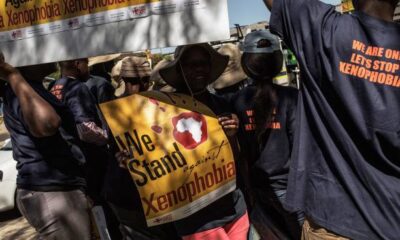

Neutralizing South Africa’s Xenophobic Excesses
ShareBy Chidi Amuta Nelson Mandela must be churning in his resting place. An exemplary life lived and a myth created...
Enugu Joint Security Operatives Rescue Abduction Victim
ShareFrom Sylvia Udegbunam, Enugu A joint security team comprising Police operatives, Forest Guards, and members of the Neighbourhood Watch Group...


Police Uncovers Two Illegal Arms Factories in Benue
ShareFrom Attah Ede, Makurdi Police in Benue State uncovered and destroyed two illegal firearm manufacturing factories, recovered three AK-47 rifles...


Troops Foil Bandits’ Attack, Rescue Nine Kidnap Victims in Zamfara
ShareFrom Ifeanyichukwu Nwannah, Gusau Troops of Sector 2, Operation FANSAN YAMMA, deployed at the Forward Operating Base (FOB) in Kasuwan...
The Fake DG Saga Holds a Mirror to All of Us
ShareBy Akin Fadeyi A man got tired of his wife’s alleged belligerent behaviour. She was never “available” and whenever she...


OPay is Okay: Trust Is Not Claimed – It Is Earned
ShareFor tens of millions of people across Nigeria, digital finance has changed everyday life. Paying bills, sending money, saving, and...


Wike Directs Immediate Demolition of Suspected Criminal Hideout in Abuja
ShareBy Laide Akinboade Abuja Minister of the Federal Capital Territory (FCT), Nyesom Wike has directed the immediate demolition of an...