
Oil & Gas
Marketers Attribute Price Decrease in Cooking Gas to International Activities

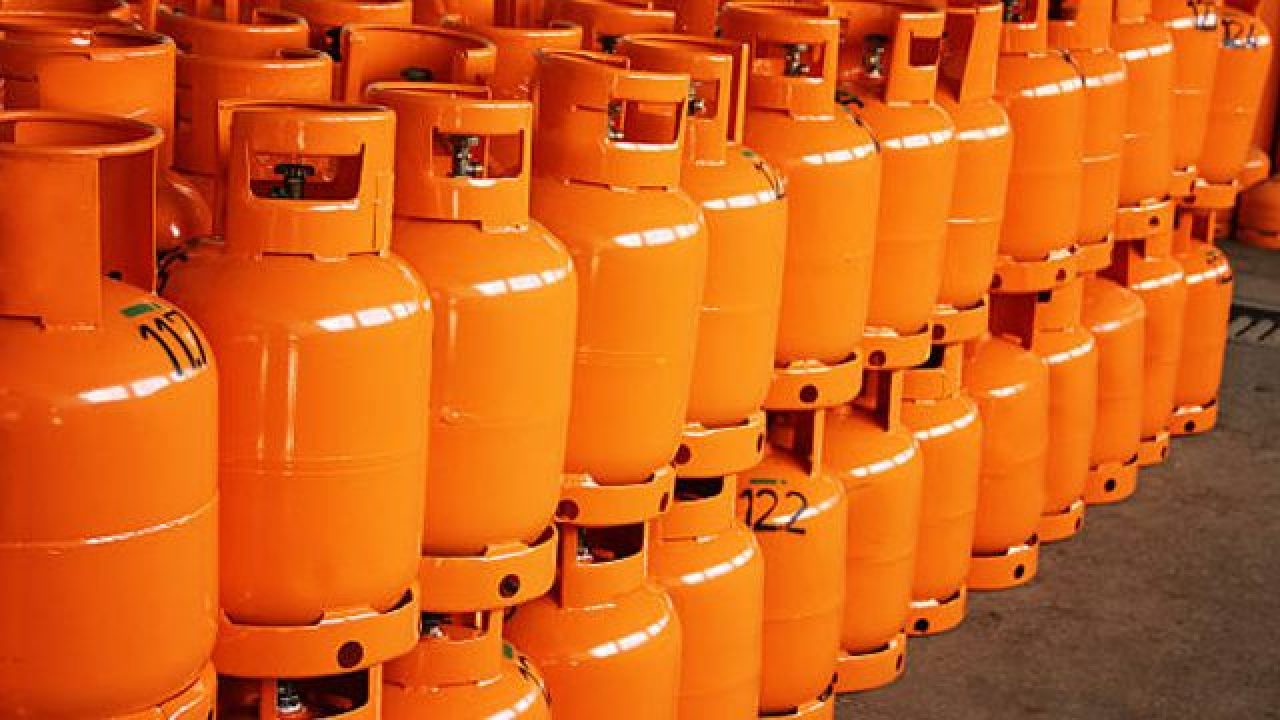
Former President, Nigeria Liquefied Petroleum Gas Association (NLPGA), Mr Nuhu Yakubu, has attributed the decrease in the retail price of cooking gas in the country to the fall in price of the product at the international market.
Yakubu said this in an interview on Thursday in Lagos, against the backdrop of reduction in price of Liquefied Petroleum Gas (LPG) in Nigeria.
According to the U.
S. Energy Information Administration, the current price of natural gas dropped by 76.1 per cent to 2.10 per one million dollars British Thermal Units (BTU) on May 31 from 8.78 per one million dollars BTU.Yakubu said that the price of LPG dropped because the international reference price in USD had dropped, amidst relatively stable Naira exchange rate.
“So, the ripple effect is being felt locally in retail pump price reduction.
“Current price of LPG depends on location, as you know it’s operating in a deregulated market.
“However price is averaging at N730 per kilogram or N417 per litre,” he said.
Yakubu, also Group Chief Executive Officer, Banner Gas Ltd., said that government had no role in LPG pricing, except to levy taxes on the product.
He said: “So, government can only help with reducing taxes.
“Government can also help address the issues challenging gas supply as feedstock to major LPG producers like NLNG.
According to him, it will enable increased production of LPG and domestic supply.
“With improved domestic supply comes better retail pump pricing.”
Mr Oladapo Olatunbosun, the President, Nigerian Association of Liquefied Petroleum Gas Marketers (NALPGAM), said that the reduction in price of LPG was a commendable effort.
Olatunbosun said that the association was monitoring the development; watching the decline in market price while believing it would continue.
“All our assessment and recommendations are reserved till when we have a full cabinet of the new government,” he said.
A correspondent, who monitored cooking gas prices at the retail market, gathered that the cost of cooking gas had reduced by 15 per cent.
Between April and May, the price of refilling a 12.5kg cylinder of Liquefied Petroleum Gas (cooking gas) has reduced between 12 per cent and 10 per cent on the back of lower crude oil prices and a decline in international gas prices.
A survey in Lagos indicated that the price of cooking gas is trending downwards to N8,700 currently from N10,500 in April and May.
Mr Chinedu Okonkwo, a gas retailer at Somolu, Lagos, said that the price fell from N850 per kg by April 30, to N700 and N750, but that still sold at N900 per kg at other local gas retailers in the area.
He said that the development ease some of the burden on cash-strapped households, who had been dealing with a hike in the price of the commodity since January 2022 coupled with surge in petrol prices as a result of subsidy removal.
Okonkwo said that LPG was an international commodity with about 65 per cent of domestic gas coming from imported sources.
Mrs Sekinat Lawal, a gas retailer at Ikeja, said that gas prices in the country were linked to an international benchmark called Mont Belvieu, which had been on the downward slope for the last couple of months.
She said that Mont Belvieu was the site of the largest underground storage facility for liquefied petroleum gas in U.S.
“The U.S. LPG market pricing indicator is driven primarily by the Mont Belvieu market and reported daily by the U.S. Energy Administration” she said.
Lawal said that imported gas prices were declining and therefore reflected at the local market.
Another retailer, Mr Francis Evans, Managing Director, Floppy Oil and Gas, said crude oil prices typically influence domestic LPG prices in the international market, adding that as the price of crude oil rise, LPG prices often follow suit.
“The currency exchange rate is another factor, as importers require dollars to import LPG.
“The rise in the cost of local and international shipping and the surge in demand for LPG during a cold winter are also factors affecting the price of LPG,” he said.
“The United States of America and Argentina are the major suppliers of gas to Nigeria.
“But the Russia-Ukraine war, which started in February last year, triggered a surge in gas prices in these countries, especially the U.S.
But recently, the prices have been falling,” he said. (NAN)
By David Torough, Abuja
The Nigerian National Petroleum Company Limited (NNPC) said it saved $3.4bn through contract restructuring and optimisation over the past year, while increasing its contribution to government revenue to N19.
5tn and boosting crude oil and gas production.Group Chief Executive Officer, Bayo Ojulari, disclosed the figures on Tuesday while presenting the company’s one-year performance scorecard at the opening of the 25th NOG Energy Week in Abuja.
According to Ojulari, the contract optimisation programme reduced operating costs by $3.
4bn without disrupting operations, strengthening commercial efficiency and improving the competitiveness of Nigeria’s oil and gas industry.The scorecard showed that crude oil production rose by six per cent year-on-year to 569.7 million barrels, while gas production increased by 8.1 per cent to 2,576 billion standard cubic feet. NNPC’s contribution to government revenue also climbed by 21.8 per cent to N19.5tn.
Ojulari said Nigeria’s crude oil production has reached about 1.71 million barrels per day, the highest level in five years, while NNPC Exploration and Production Limited achieved a record output of 365,000 barrels per day.
He said the company aims to increase crude oil production to two million barrels per day by 2027 and three million barrels per day by 2030. Gas production is projected to rise from 7.62 billion cubic feet per day this year to 10 billion cubic feet per day in 2027 and 12 billion cubic feet per day by 2030.
The NNPC boss also reported significant improvements in export infrastructure, noting that crude export terminals recorded an average 98 per cent recovery factor between April 2025 and May 2026. He added that major evacuation pipelines, including the Trans Niger, Trans Escravos, Trans Ramos, Trans Forcados and Oando-Brass lines, are operating at 100 per cent availability.
Ojulari further disclosed that NNPC maintained 100 per cent compliance with its Joint Venture cash-call obligations throughout 2025 and into June 2026, although some partners remained in default, increasing the company’s funding responsibilities.
On the commercial front, he said NNPC signed gas sale and purchase agreements covering 1.29 billion standard cubic feet per day for long-term LNG feed gas and 750 million standard cubic feet per day for domestic industrial gas supply to DFL FZE and Dangote Refinery. The agreements are expected to attract more than $20bn in investments, with seven additional transactions under negotiation.
He also highlighted governance reforms, including the resumption of monthly remittances to the Federation Account in July 2025, the restoration of monthly business performance reporting and the company’s first earnings call in November 2025.
Ojulari urged governments, investors, regulators and operators across Africa to strengthen collaboration, arguing that strategic partnerships would be critical to unlocking the continent’s energy potential and attracting greater investment.
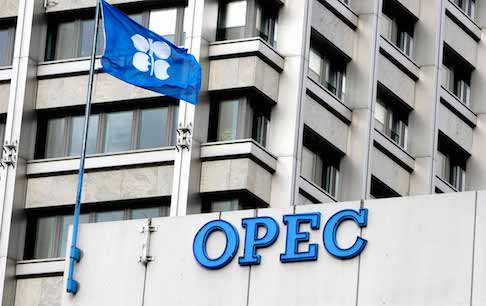
The Organization of the Petroleum Exporting Countries (OPEC), has revised downward its 2026 global oil demand growth estimates, citing expected slower consumption growth in advanced economies, where collective demand will rise by only 100,000 barrels per day.
The cartel said it now expects global oil demand growth to reach 1.
2 million barrels per day in 2026, down from its previous forecast of 1. 4 million barrels per day, explaining that the revision would bring total global oil consumption to 106.3 million barrels per day.In Europe, oil demand will decline by 30,000 barrels per day as weaker economic activity weighs on consumption, OPEC, said in its monthly oil market report.
The OPEC also expects some Asian economies, particularly Japan, to record slower demand growth. The organization forecast Japanese oil consumption to fall by 80,000 barrels per day.
However, strong demand from major emerging economies partly offset these weaker signals.
The OPEC said China would add 250,000 barrels per day to global demand, supported by its petrochemical industry. The organization also forecast India to increase demand by 200,000 barrels per day, driven by infrastructure spending and growth in vehicle ownership. Overall, OPEC expects emerging economies and developing countries to contribute an additional 1.1 million barrels per day to global oil consumption in 2026.
The OPEC’s revision aligns with a broader reassessment of global oil demand expectations.
In its May 2026 report, the International Energy Agency projected a much sharper downturn. The agency forecast a contraction of 420,000 barrels per day in global oil demand for the full year rather than a slowdown in growth.
The gap between the two institutions now exceeds 1 million barrels per day, highlighting the uncertainty surrounding the market outlook.
Both reports identified the near-closure of the Strait of Hormuz as a major factor behind market instability. According to the U.S. Energy Information Administration, six Gulf countries collectively reduced production by 10.5 million barrels per day in April, marking what the agency described as an unprecedented contraction outside pandemic periods.
As supply shortages intensified, oil producers outside the Middle East moved to increase production to offset part of the missing volumes. Several African producers, including Nigeria, Libya and Angola, benefited from rising demand for Atlantic Basin crude among Asian and European buyers that lost access to Gulf oil supplies, according to the IEA.
However, not all African producers can fully capitalize on the opportunity. Nigeria, Africa’s largest oil producer and an OPEC member, nonetheless showed encouraging momentum. According to provisional data published on May 15 by the Nigerian Upstream Petroleum Regulatory Commission, the country increased oil production from 1.546 million barrels per day in March to 1.663 million barrels per day in April 2026.
The Nigerian Content Development and Monitoring Board (NCDMB) has reaffirmed that compliance with Nigerian Content regulations in the oil and gas industry remains non-negotiable.
The Executive Secretary of NCDMB, Felix Ogbe, stated this on Tuesday at the 2026 Nigerian Oil and Gas Midstream and Downstream Stakeholders Summit in Lagos.
Ogbe was represented by Austin Uzoka, Head of the Directorate of Planning, Research and Statistics.
He said the midstream and downstream sectors remained vital to Nigeria’s economic expansion, industrialisation and job creation efforts.
The summit focused on the theme, ‘Unlocking, Growing and Sustaining Nigerian Content Development in Nigeria’s Oil and Gas Midstream and Downstream Sectors.’
Ogbe described the gathering as a strategic platform for shaping the future direction of Nigeria’s energy industry and strengthening indigenous participation.
According to him, reforms, improved regulatory clarity and growing investor confidence are repositioning Nigeria as a leading oil and gas investment destination in Africa.
He noted that the Board, established under the Nigerian Oil and Gas Industry Content Development Act 2010, continued promoting local capacity development and technology transfer.
Ogbe added that the Board had also advanced employment opportunities for Nigerians across several segments of the oil and gas industry.
He said Nigerian companies had recorded significant achievements in upstream operations, particularly in exploration, drilling, engineering, fabrication and project management activities.
According to him, the next growth phase lies within the midstream and downstream sectors of the nation’s petroleum industry.
He identified gas processing, transportation infrastructure, storage facilities, LPG and CNG distribution, refining and petrochemical development as major investment opportunities.
Ogbe said Nigeria was gradually reducing dependence on imported refined petroleum products through increased local refining and processing capacity.
He described the Dangote Refinery as a strong symbol of Nigeria’s industrial ambition, energy independence and economic self-sufficiency.
Ogbe stated that modular refineries were equally opening fresh opportunities for indigenous participation, local investment and improved national energy security.
He also highlighted ongoing gas commercialisation projects as important drivers of industrialisation and value addition within the domestic economy.
The NCDMB boss specifically referenced the Nigeria LNG Train 7 project and the Federal Government’s Presidential Initiative on Compressed Natural Gas.
According to him, both initiatives would strengthen domestic gas utilisation and support broader industrial growth across the country.
While emphasising the Board’s regulatory responsibilities, Ogbe insisted that compliance with Nigerian Content requirements remained central to industry operations.
“Compliance remains non-negotiable, but it must also be practical, implementable and supportive of investment and business growth,” he said.
He urged policymakers, investors, operators and service providers to deepen collaboration in order to maximise opportunities within the sector.
Ogbe said stronger partnerships would help drive sustainable economic growth, industrial capacity and long-term competitiveness in Nigeria’s energy industry.
The two-day summit attracted major stakeholders from the oil and gas industry to discuss strategies for expanding local content development.
Participants also examined ways to strengthen industrial capacity and improve Nigeria’s competitiveness within the global energy market.




Troops Rescue 359 Victims, Arrest Terror Suspects, Destroy Oil Theft Networks Nationwide – DHQ
ShareBy David Torough, Abuja The Defence Headquarters (DHQ) has announced significant operational gains by the Armed Forces of Nigeria (AFN)...
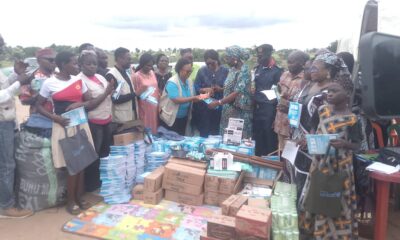

UNICEF Support Benue Govt With 400 School-in-a-Box Kits For BRACE-UP Project.
ShareFrom Attah Ede, Makurdi The United Nations Children Fund, UNICEF with funding from Swedish International Development Cooperation Agency(SIDA), has supported...


Nigeria, Benin Republic Collaborate on Regional Security
ShareBy Tony Obiechina, Abuja The Minister of Defence, General Christopher Gwabin Musa has successfully concluded a strategic three-day working visit...


Nigerian Army Expands Combat Capability, Tasks Newly Trained Troops on Professionalism
ShareBy David Torough, Abuja The Nigerian Army has intensified efforts to strengthen its operational capability with the graduation of soldiers...


RMAFC Set to Enforce Oil Host Community Accountability
ShareBy Tony Obiechina, Abuja The Revenue Mobilisation Allocation and Fiscal Commission (RMAFC) has given the Nigerian Upstream Petroleum Regulatory Commission...

UNICEF Renovates Classrooms, Donates Educational Materials to IDPs Children in Benue
ShareFrom Attah Ede, Makurdi The United Nations Children’s Fund (UNICEF) with support from Swedish International Development Agency (Sida) has renovated...


NAMA Demands 56 Per Cent Share, Aviation Varsity 10 Per Cent of Aviation Statutory Charges
ShareBy Ubong Ukpong, Abuja The Nigerian Airspace Management Agency (NAMA) on Thursday, asked the National Assembly to increase its share...
FCT Closes Unregulated Motor Parks as New Bus Terminals Become Operational
ShareBy Laide Akinboade, Abuja The Federal Capital Territory (FCT) Administration (FCTA), on Thursday, said it has concluded arrangements to clamp...
Mahmoud Urges MAN to Embrace Smart Technology, Capital Restructuring For Growth
ShareBy Laide Akinboade, Abuja The Minister of State, Federal Capital Territory (FCT), Dr. Mariya Mahmoud, has called on manufacturers to...

Advertising, Creative Industries Key Drivers of Economic Growth – Idris
ShareBy David Torough, Abuja The Minister of Information and National Orientation, Mohammed Idris, has said the Tinubu Administration recognises Nigeria’s...
Pingback: NALPGAM urges FG to ensure gas price stability Daily Asset Online