
Education
Massive JAMB Failure Sparks Concern Over Education Standards


The 1.5 million candidates who scored below 200 out of the 1.9 million who sat for the 2025 UTME conducted by the Joint Admissions and Matriculation Board (JAMB) have ignited national concern.
The concerns are in relation to the quality of education and students preparedness in the examination.
Reacting to the development, Ike Onyechere, Founder, Exam Ethics Marshall International (EEMI), in an interview on Tuesday, said that the outcome was not surprising.
According to Onyechere, the examination is now being administered with ethics and professionalism hence the massive failure.
He added that the massive failure had exposed the deep-rooted problems in the nation’s education system.
”JAMB has made commendable efforts to ensure the integrity of the examination process by reducing opportunities for malpractice.
”I don’t think the JAMB statistical analysis should surprise anybody,” he said.
He emphasised that universities were increasingly alarmed by the academic quality of incoming students, noting that many of them lack basic foundational knowledge necessary for tertiary education.
Onyechere attributed the trend to systemic issues, including inadequate preparation, the inclusion of underqualified candidates, and a widespread cultural dependence on exam fraud.
”There’s moral infrastructure decadence in the system. It’s not just about the students. It involves stakeholders; schools, parents, and the government.
“Many students rely on fraudulent means to pass, and now that JAMB has blocked those avenues, their lack of preparedness is glaring,” he added.
He also noted that many candidates were not academically ready, as some were still in SS2 or underage, having not completed the syllabus.
He proposed a reform in the registration process, suggesting that only candidates with five credits in WAEC or NECO be allowed to sit in future for the UTME.
According to him, this will significantly reduce the number of applicants from nearly 2 million to about 1 million and ensure a more qualified candidate pool.
He also dismissed claims that the Computer-Based Test (CBT) format could be a barrier to performance.
”The CBT is easier in many ways. It’s mostly objective, and technology is now part of everyday life, even market women are technologically inclined. We can’t blame CBT for the poor results,” added.
Onyechere urged students to focus on talent discovery and career alignment rather than chasing certificates.
“Exams are not rocket science. It’s about working hard and understanding your strengths. Education should be a journey of self-discovery, not just certification,” he said.
He applauded government efforts to prioritise trade and vocational subjects in the curriculum, underscoring the importance of practical skills in today’s world.
He called on education stakeholders to reflect on the deeper issues in the examination failure and implement reforms to save the future of Nigeria’s academic system
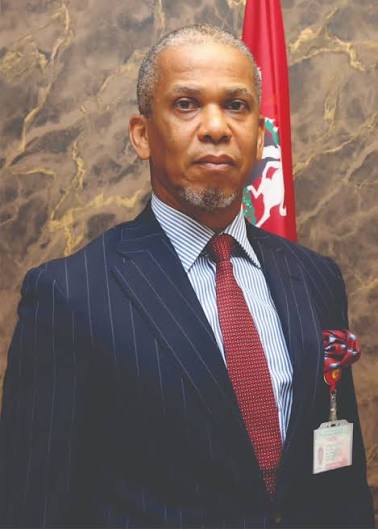
The University of Agriculture, Orerokpe Bill, sponsored by Senator Ede Dafinone, representing Delta Central Senatorial District, has passed through its third reading in the Senate.
Dafinone announced the development in a statement, describing the passage of the bill as a major step towards expanding access to education, promoting agricultural development and creating opportunities for young people in Delta State.
The senator said the proposed institution would help unlock the agricultural potential of the area while providing greater educational opportunities for future generations.
“This is more than the passage of a bill; it is a statement of purpose, a promise of progress, and an investment in generations yet unborn,” he said.
Dafinone urged constituents and other stakeholders to sustain their support for the proposed university, stressing the need to translate the legislative milestone into lasting benefits for the people.
He said the initiative was aimed at strengthening education, encouraging agricultural innovation and creating opportunities that would benefit generations to come.
“The future of our children is too important to leave to chance. Together, let us champion education, drive agricultural innovation, create opportunities, and build a legacy that generations will celebrate,” the senator said.
He described the passage of the bill as a significant milestone in the effort to advance development in Delta Central and expressed optimism about the vision behind the proposed institution.
A Kwara based Public Affairs Analyst, Comrade Ishowo Olanrewaju, weekend called on the Kwara State government to urgently convert the recently established Kwara State University of Education (KWASUED) to a specialised medical university to address the worsening and chronic shortage of doctors and other healthcare professionals in the state hospitals.
He therefore cited the Bayelsa Medical University in Bayelsa State, the state University of Medicine and Applied Sciences in Enugu State, and the University of Medical Sciences in Ondo State as existing examples.
Ishowo made the call in Ilorin while speaking with newsmen on the sidelines of the incessant strike embarked upon by medical doctors in the state hospitals.
Ishowo however expressed concern over the shortage of medical personnel in the state, noting that the available doctors were already overstretched and overwhelmed by the sheer volume of patients they were required to attend to daily.
He lamented that this situation made industrial action embarked upon by the doctors particularly troubling.
He argued that the state government should have prioritised a medical university over a university of education, insisting that Kwara’s more pressing challenge was the severe shortage of healthcare professionals rather than educators.
According to him, existing institutions, including the University of Ilorin, Kwara State University (KWASU) and Al-Hikmah University, already have faculties of education that produce graduates annually.
He added that several public and private colleges of education across the state also train teachers.
“The number of educators we produce far exceeds what we need or can employ. Our challenge is not a lack of teachers. It is a dangerous shortage of doctors, nurses and other medical professionals.
“That reality should have informed the government’s decision when it was considering establishing a new university,” he said.
Ishowo maintained that establishing a specialised medical university would help build a steady supply of doctors and other healthcare professionals to meet the state’s needs and serve other parts of the country.
“To address the persistent shortage of doctors and other medical personnel, I am calling for the conversion of KWASUED into a specialised medical institution,” he said.
He also proposed scholarships for Kwara indigenes admitted to the proposed institution, with beneficiaries required to sign a five-year service bond to work in the state after graduation before seeking opportunities elsewhere.
Ishowo said the arrangement would help retain locally trained medical professionals and strengthen the state’s healthcare system.
“Let the government provide scholarships for Kwara indigenes who want to study medicine and other related health courses, and bond them to serve the state for five years post-graduation.
“This is how we begin to systematically solve the shortage of medical personnel that has plagued us for years,” Ishowo noted.
He further stated that some state governments across Nigeria had already recognised the value of dedicated medical universities and taken steps to establish them.
According to Ishowo, “The Lagos State government is also pursuing plans to establish a standard one university of medicine and health sciences to tackle the doctor and healthcare worker deficit in the state.
“These states identified a need and responded to it strategically. Kwara can and should do the same. The conversion of KWASUED into a specialized medical university will be a response to a documented crisis that is costing Kwarans their health and their lives.”

The Joint Admissions and Matriculation Board (JAMB) has warned universities against issuing admission letters to candidates, insisting that only admissions processed through its Central Admissions Processing System (CAPS) are legally recognised.
The Board said universities had no statutory authority to issue official admission letters, warning that candidates who accept admission offers outside the approved system risk obtaining documents that may not be recognised for official purposes, including mobilisation for the National Youth Service Corps (NYSC).
JAMB Registrar, Prof. Segun Aina, gave the warning when he received a delegation from Veritas University, Bwari, Abuja, during a courtesy visit to his office.
Aina said the Federal Ministry of Education had expressly directed that all admissions into tertiary institutions be processed through CAPS, stressing that any admission conducted outside the platform was illegal and invalid.
He explained that JAMB remained the only body statutorily empowered to issue official admission letters to candidates seeking entry into universities, polytechnics and colleges of education across the country.
The registrar expressed concern that candidates often assume admission letters purportedly issued by universities are authentic simply because they carry the institutions’ identities.
He urged universities engaging in the practice to desist, while directing them to ensure that candidates obtain the appropriate admission documents from JAMB.
Aina further stressed that institutions could not substitute their own admission letters for the official documents issued by the Board after candidates had accepted their offers on CAPS.
He warned that admissions not processed through the approved platform would not be recognised for purposes such as NYSC mobilisation, underscoring the need for institutions and candidates to comply with established admission procedures.



UN, EU Seek Trust, Technology to Strengthen Africa’s Counter-Terrorism Fight
ShareUN Deputy Secretary-General Amina Mohammed, has called for stronger intelligence sharing, public trust and responsible use of emerging technologies to...


University of Agriculture, Orerokpe Bill, Passes Third Reading in Senate
ShareThe University of Agriculture, Orerokpe Bill, sponsored by Senator Ede Dafinone, representing Delta Central Senatorial District, has passed through its...

Ishowo Urges Kwara to Convert KWASUED to Medical Varsity
ShareA Kwara based Public Affairs Analyst, Comrade Ishowo Olanrewaju, weekend called on the Kwara State government to urgently convert the...
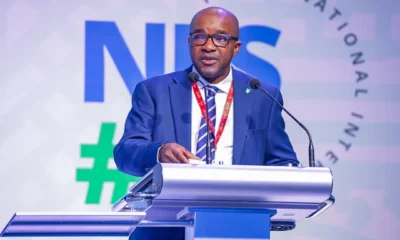

NESG Chairman Urges Shift from Economic Reforms
ShareChairman, Nigerian Economic Summit Group (NESG), Olaniyi Yusuf has urged the Federal Government to translate economic reforms into tangible results,...
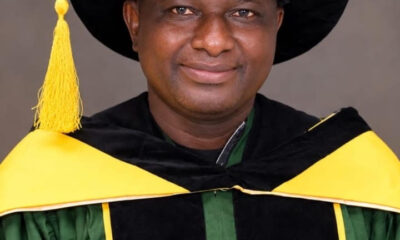

Yakubu Receives Fellowship Of Nigerian Institute Of Town Planners
ShareBy Raphael Atuu, Abuja TPL Chief Amb Hon. Stephen Shekwonce Yakubu, the District Head (Hakimi of Garki Shekwope), had his...


Much Ado About the PBAT Door-to-Door Movement
ShareBy Catherine Agbo In the unfolding drama of Nigerian political discourse, few things excite the commentary circuit quite like a...

WAHO, ECOWAS Countries Move to Tackle Health Worker Shortages, Brain Drain
ShareBy David Torough, Abuja The West African Health Organization (WAHO) has called for stronger regional collaboration and practical policy interventions...

Afreximbank’s Net Income Rises 24 Per Cent to $813.5 Million in Nine Months
ShareThe African Export-Import Bank (Afreximbank) and its subsidiaries have reported a 24 per cent increase in net income for the...
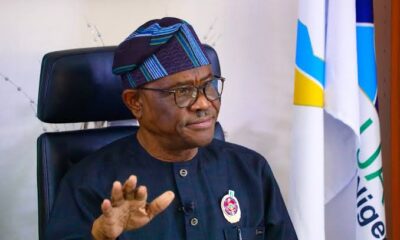

Wike-Led FCTA Committed to Quality Healthcare, Stronger Medical Institutions – Mahmoud
ShareBy Laide Akinboade, Abuja The Minister of State, Federal Capital Territory (FCT), Dr. Mariya Mahmoud, has reaffirmed the commitment of...


Enugu Police Arrest 28 Year Old Suspect for Robbing POS Operator
ShareFrom Sylvia Udegbunam, Enugu The Enugu State Police Command has arrested a 28-year-old male suspect, Michael Ayisa, for allegedly robbing...