
NEWS
Mba Assigns Portfolios to Newly Appointed Commissioners


Sylvia Udegbunam, Enugu
The Governor of Enugu State, Peter Mba, has allocated portfolios to the 20 newly appointed Commissioners following their inauguration.
The Secretary to the State Government, Prof Chidiebere Onyia, announced this while briefing journalists shortly after the inaugural meeting of the Executive Council at the Government House in Enugu on Friday.
The Commissioners and their respective portfolios are as follows:
Prof Ndubueze Mbah: Education
Mrs Ngozi Enih: Children, Gender Affairs, and Social Development
Prince Lawrence Ezeh: Lands and Urban Development
Patrick Nwabueze Ubro: Agriculture and Agro-Industrialization
Pharm.
Chika Ugwoke: Labour and EmploymentDr Kingsley Udeh: Attorney General and Commissioner for Justice
Prof Emmanuel Obi: Health
Deacon Okey Ogbodo: Local Government, Rural Development, and Chieftaincy Affairs
Dame Ugochi Madueke: Culture and Tourism
Barr. Lloyd Ekweremadu: Youth and Sports
Engr. Gerald Otiji: Works and Infrastructure
Nathaniel Uramah: Finance and Economic Development
Dr Malachy Agbo: Human Development and Poverty Eradication
Mr Aka Eze Aka: Information
Adaora Chukwu: Trade Investment and Industry
Dr Martin Chinweike: Housing
Obi Ozor: Transport
Prof Sam Ugwu: Environment and Climate Change
Ajogwu Sunday Emeka: Special Duties
Dr Felix Nnamani: Water Resources.




By Ifeanyichukwu Nwannah, Gusau
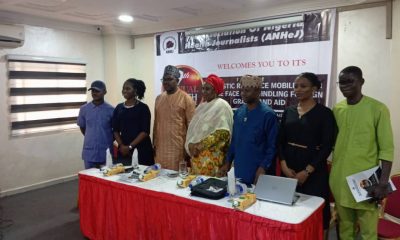
The Zamfara State Government has reaffirmed its commitment to addressing gender-based violence (GBV) and other forms of social violence across the state.
This was stated by the Commissioner, Ministry of Women Affairs and Social Development, Dr.
Aisha MZ Anka, during a coordination meeting with the Gender-Based Violence Technical Working Group (TWG), held today at the ministry’s conference hall.The Commissioner, who was ably represented by the Permanent Secretary of the ministry, Barrister Suwaiba Ibrahim Barau, noted that the present administration of Governor Dauda Lawal, in collaboration with UNICEF, has demonstrated strong dedication by establishing a Sexual Referral Centre aimed at examining and supporting survivors of GBV, as well as strengthening community resilience against harmful social norms.
Dr. Anka emphasized that gender-based violence remains a major hindrance to social wellbeing and human development, stressing that the government is fully committed to ensuring justice, protection, and support for all individuals in the state.
“We encourage all stakeholders to engage deeply, share insights openly, and work constructively as we assess our progress, identify areas for improvement, and strengthen our strategies for prevention, protection, and response,” she added.
The Director of Gender in the ministry, Hajiya Asama’u Madawaki, highlighted the rising insecurity bedeviling the country as a major factor fueling GBV.
She also noted that many parents and victims fail to report cases to the appropriate authorities.
She urged parents and guardians to promptly report all incidents of GBV and encouraged stakeholders to intensify community awareness campaigns.
Madawaki further appealed to the Zamfara State Government and international partners to increase funding for GBV prevention and response initiatives.
During the technical presentations, the first speaker, Malam Yusuf Sabo Tsafe, discussed strategies for strengthening GBV prevention and response mechanisms.
He called on partners to collaborate with the state government to harmonize GBV data and advocated for the establishment of Gender Desk Officers across the fourteen local government areas.
The second speaker, Dr. Amina Moh’d Hassan, delivered a presentation on understanding and addressing online harassment.
She emphasized the increasing role of digital technologies in facilitating impersonation, hate speech, and other forms of online gender-based violence.
Dr. Amina recommended strengthening legal frameworks and improving law enforcement capacity to address these emerging challenges.
After extensive deliberation, the GBV Technical Working Group agreed on some key actions intensifying awareness campaigns on digital safety and responsible online behavior, strengthening advocacy with security agencies, community leaders, and religious leaders, creatingreating a State SGBV Response Team and an SGBV Offenders Register and harmonizing referral pathways across the state
In his vote of thanks, the Director of Administration of the ministry, Malam Sani Shehu Ibrahim, commended all participants for their dedication toward addressing gender-based violence in Zamfara State.
From Attah Ede, Makurdi
The Tiv Kingdom has conferred honorific chieftaincy titles on prominent sons, daughters and friends of the Tiv Nation, including Benue State Governor, Rev. Fr. Hyacinth Alia; APC National Chairman, Engr. Prof. Nentawe Goshwe Yilwada; and former Benue State Governor, Senator Dr.
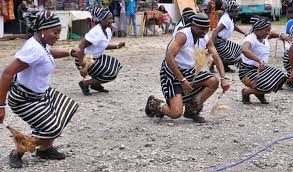
Gabriel Torwua Suswam, as the Tor Tiv, His Royal Majesty, Prof. James Ortese Iorzua Ayatse, moved to deepen unity and cohesion among Tiv people at home and in the diaspora.The conferment took place at the grand finale of the 2025 Tiv Day celebration held at the JS Tarka Stadium, Gboko, with the theme “The Rebirth of the Tiv Nation.” The event featured colourful cultural displays, reflections on Tiv history, renewed calls for peace and unity, and the formal launch of a Tiv–English Dictionary aimed at preserving and promoting the Tiv language.
Governor Alia described the Tiv Nation as one of the most identifiable ethnic nationalities in Nigeria, stressing that the sacrifices of past leaders who fought for the identity, dignity and freedom of the Tiv people must never be forgotten. He urged Tiv sons and daughters to remain proud of their heritage, peaceful and united, noting that unity was key to development across Tiv land.
The governor, who expressed gratitude for the title of Asôrtar-u-Tiv, described Tiv chieftaincy titles as honours that come with responsibility and service. He said the recognition would further inspire him to intensify development efforts across Benue State.
Also speaking, the Secretary to the Government of the Federation, Senator George Akume, said Tiv Day remained a celebration of identity, unity and cultural pride. He recalled that the annual event, instituted in 1977, was meant to foster unity among Tiv people worldwide, and commended the Tiv Nation for its contributions to national development and its role during the Nigerian Civil War. Akume assured the Tiv people of President Bola Tinubu’s commitment to equity and inclusiveness, acknowledging that ongoing reforms were necessary for long-term national stability.
In his address, the Tor Tiv thanked President Tinubu for timely interventions following recent security challenges in Benue State and commended Governor Alia for supporting the revival of Tiv Day after years of suspension. He explained that the Tiv Area Traditional Council approved the conferment of chieftaincy titles in recognition of outstanding service to the Tiv Nation and Nigeria.
Those honoured included Prof. Nentawe Goshwe Yilwada (Zegebar-u-Tiv); Senator Dr. Gabriel Suswam (Vande-u-Tiv); and several others drawn from academia, politics, security and the private sector. The monarch disclosed that eight additional honourees would receive their titles at a later date.
The Tor Tiv also outlined ongoing cultural reforms focused on eliminating harmful practices, empowering women, promoting Tiv language development and supporting youth education through initiatives such as the Tiv Scholarship Trust Fund and related foundations. He urged Tiv people to heal political and social divisions and work collectively for the future of the nation.
Former Governor Suswam, in his remarks, appealed to Tiv people to rise above partisan differences and support constituted authorities in the interest of development, while the President General of Mzough-u-Tiv Worldwide, CP Iorbee Ihagh (Rtd.), described the celebration as a call to reflection and action, stressing that peace and unity were indispensable to progress. He appealed to the Federal Government to intensify efforts to end insecurity and facilitate the return of displaced Tiv people to their ancestral homes.
Responding on behalf of the honourees, Engr. Prof. Nentawe Yilwada thanked the Tiv Nation for the recognition and called for reconciliation and unity within the political space, noting that internal cohesion was critical to overcoming external challenges.
Meanwhile, in a related move to strengthen Tiv unity nationwide, the Tor Tiv has appointed 19 Uter (Vassal Kings) across various states of the federation to serve as emissaries of the Tiv throne and custodians of Tiv culture outside Benue State. The appointments, which cut across Adamawa, Zamfara, Borno, Katsina, Sokoto, Ebonyi, Imo, the Federal Capital Territory, Ogun, Bayelsa, Abia, Nasarawa, Enugu, Kaduna, Kano, Kogi, Kebbi, Rivers and Lagos states, were formalised at a ceremony at the Tor Tiv Palace in Gboko.
Presenting certificates and letters of introduction to the appointees, the monarch charged them to be worthy ambassadors of the Tiv throne, warning against greed and conduct capable of eroding integrity. He said the creation of the Uter structure nationwide was aimed at uniting Tiv people under one umbrella, ensuring recognition, inclusiveness and access to opportunities in their states of residence.
The Ter Tiv of Kogi State, Chief Moses Chinor Vor, who spoke on behalf of the appointees, expressed gratitude to the Tor Tiv and pledged their commitment to promoting unity, peace and the ideals of the Tiv Area Traditional Council across the country.

US Secretary of State Marco Rubio has said Rwanda’s actions in eastern Democratic Republic of Congo are “a clear violation of” the peace deal brokered by Donald Trump last week.
In a post on X, he said the US would “take action to ensure promises made to the President are kept”, without going into details.
Trump hailed the deal signed with great fanfare in Washington between DR Congo’s President Félix Tshisekedi and Rwanda’s President Paul Kagame as “historic” and “a great day for Africa, great day for the world”.
But the M23 rebel group said it has “fully liberated” the key city of Uvira in an offensive the US and European powers say is backed by Rwanda.
UN experts have previously accused it of having “de facto control” of the rebel force’s operations.Rwanda denies the allegations, however, its presence in Washington was a tacit acknowledgment of its influence over the M23.
The rebels were not signatories to Trump’s deal – and have been taking part in a parallel peace process led by Qatar, a US ally.
The latest fighting risks further escalating an already deeply complex conflict.
Prof Jason Stearns, a Canada-based political scientist who specialises in the region, said that the view in M23 circles was that “they need more leverage in the negotiations”, while the feeling in the Rwandan government is that Tshisekedi cannot be trusted.
He added that the assault on Uvira, in South Kivu province, “flies in the face of all the negotiations that are under way”.
The M23’s new offensive in South Kivu started a few days before Kagame and Tshisekedi flew to Washington last week to ratify the agreement first hammered out in June.
Bram Verelst, a Burundi-based researcher with the Institute for Security Studies (ISS) think-tank, said the assault appeared to be an attempt to force Burundi to withdraw the troops it had in eastern DR Congo backing the army against the rebel forces and Rwanda.
He pointed out that Uvira – which lies just 27km (17 miles) from Burundi’s capital, Bujumbura, on the northern tip of Lake Tanganyika – was of strategic importance because of the presence of at least 10,000 Burundian troops in South Kivu.
Yale Ford, an Africa Analyst for the Critical Threats Project at the American Enterprise Institute, pointed out that Uvira, which had a population of about 700,000, was the DR Congo government’s last major foothold and military hub in South Kivu.
He added that the M23 was now likely to establish a parallel administration in the city, and use its military gains “as a bargaining chip in peace talks”.
As for the DR Congo government, it has not acknowledged its latest military setback, but says that the “gravity of the situation is compounded by the now proven risk of regional conflagration”.
Burundi has been a natural ally of DR Congo for years because of its enmity with Rwanda.
Both accuse the other of backing rebel groups seeking to overthrow their respective governments.
The neighbours share a similar language and ethnic make-up – with Tutsi and Hutu communities often vying for power – and both have suffered terrible ethnic-based massacres.
But unlike Rwanda, which is headed by a Tutsi president, the majority Hutus are in power in Burundi.
Burundi’s government fears that if the M23 cements its presence in South Kivu, it would strengthen a Burundian rebel group called Red Tabara.
Based in South Kivu, it is mainly made up of Tutsis – and has attacked Burundi in the past.
In an apparent attempt to placate Burundi’s fears, the M23 said it had “no sights beyond our national borders”.
Burundi has shut its border with DR Congo, but, according to Mr Verelst, it is still allowing people to cross into its territory after carrying out security checks.
Aid agencies say that about 50,000 people have fled into Burundi in the past week.
Burundian troops – along with the Congolese army and allied militias – fought to block the rebel advance towards Uvira, but the city itself fell “without much fighting”, Verelst said.
The fall of Uvira would hit Burundi’s already struggling economy as the country has been suffering from a severe shortage of foreign currency and fuel, and had been heavily dependent on eastern DR Congo for both, he said.
The M23 began a major advance earlier this year when it captured Goma, the capital of North Kivu province, on the border with Rwanda.
At the time, South African troops were deployed to help DR Congo’s army, but they were forced to withdraw after the M23 seized the city in January.
Shortly afterwards the rebels captured the next big city in eastern DR Congo, Bukavu, capital of South Kivu.
The move on Uvira came after the rebels broke the defence lines of the DR Congo army, militias allied with it and Burundian troops.
Prof Stearns said the M23 was estimated to have more than 10,000 fighters, but there was likely to have been an “Influx” of Rwandan troops for the recent offensive to capture Uvira.
The US lays the blame for the recent fighting squarely on Rwanda.

2027 Election: Igbo’s Community Promises Votes for Eno
ShareFrom Christopher Tom, Uyo Non-indigence in Akwa Ibom State especially the Igbo’s community has promised to give the highest number...

Zamfara Reaffirms Commitment to Address Gender-based Violence
ShareBy Ifeanyichukwu Nwannah, Gusau The Zamfara State Government has reaffirmed its commitment to addressing gender-based violence (GBV) and other forms...

Nentawe, Alia, Suswam, Others Bag Chieftaincy Titles from Tiv Kingdom
ShareFrom Attah Ede, Makurdi The Tiv Kingdom has conferred honorific chieftaincy titles on prominent sons, daughters and friends of the...


World Human Rights Day: NGO Takes Medical Outreach to Okaka Correctional Center
ShareFrom Mike Tayese, Yenagoa The 8th edition of Prof. Seiyefa Brisibe Outreach has celebrated the 2025 World Human Rights Day...

Coup in Guinea-Bissau and the Dilemma of ECOWAS
ShareBy Hakeem Jamiu In his seminal work, Political Order in Changing Societies (1968), Professor Samuel P Huntington argues that political...

Chelsea End Winless Run with Comfortable Brighton Victory
ShareChelsea ended their four-game winless streak in the Women’s Super League with a comfortable 3-0 away victory against Brighton. A...

Liverpool ‘United as One’ after Salah Return – Van Dijk
ShareCaptain Virgil van Dijk said Liverpool “are absolutely united and go forward as one” after Mohamed Salah returned to the...
Mikaelian Beats Jack to Regain WBC Title
ShareNoel Mikaelian beat Badou Jack by a unanimous points decision in Los Angeles to regain the WBC cruiserweight title. Mikaelian...

Mobile Phone Association Pillar of Modern Commerce, Driving communication, Says Mamas
ShareFrom Ayinde Akintade, Osogbo The National President of Association of Mobile Phone and Allied Products Traders of Nigeria (AMPAT), Hon....


Nigeria’s Merchandise Trade Grows to N38.9trn in Q3 2025
ShareBy Tony Obiechina, Abuja Nigeria’s total merchandise trade increased to N38.9 trillion in the third quarter of 2025, reflecting positive...