
Foreign News
Military Seized Power in Sudan to Avoid Civil War – Burhan


Sudan’s top general defended the military’s seizure of power, saying he had ousted the government to avoid civil war, while protesters returned to the streets on Tuesday to demonstrate against the takeover after a day of deadly clashes.
Speaking at his first news conference since he announced Monday’s takeover, military leader Abdel Fattah al-Burhan said the army had no choice but to sideline politicians who were inciting against the armed forces.
“The dangers we witnessed last week could have led the country into civil war,” he said, an apparent reference to demonstrations against the prospect of a military takeover.
Prime Minister Abdalla Hamdok, who was arrested on Monday along with other members of his cabinet, had not been harmed and had been brought to Burhan’s own home.
The general said: “The prime minister was in his house.
“However, we were afraid that he’d be in danger so he has been placed with me at my home.”
Burhan had appeared on TV on Monday to announce the dissolution of the Sovereign Council, a body set up to share power between the military and civilians.
The Facebook page for the office of the prime minister, apparently still under the control of Hamdok’s loyalists, called for Hamdok’s release and that of the other civilian leaders.
Hamdok remains “the executive authority recognised by the Sudanese people and the world”, it said.
It added that there was no alternative other than protests, strikes, and civil disobedience.
Images on social media showed renewed street protests on Tuesday in the cities of Atbara, Dongola, Elobeid, and Port Sudan. People chanted “Don’t give your back to the army, the army won’t protect you.”
Khartoum and its twin city Omdurman across the Nile were partly locked down, with shops shut and plumes of smoke rising from where protesters were burning tyres.
Calls for a general strike were played over mosque loudspeakers. Streets and bridges were blocked by soldiers or protester barricades.
The military takeover brought a halt to Sudan’s transition to democracy, two years after a popular uprising toppled long-ruling autocrat Omar al-Bashir.
An official at the health ministry said seven people had been killed in clashes between protesters and the security forces on Monday.
Burhan said the military’s action did not amount to a coup, as the army had been trying to rectify the path of the political transition.
“We only wanted to correct the course to a transition. We had promised the people of Sudan and the entire world.
“We will protect this transition,” said Burhan.
He added that a new government would be formed which would not contain any typical politicians.
Western countries have denounced the coup, called for the detained cabinet ministers to be freed, and said they will cut off aid if the military does not restore power-sharing with civilians.
Sudan, for decades a pariah under Bashir, has depended on Western aid to pull through an economic crisis in the two years since Bashir was toppled.
Banks and cash machines were shut on Tuesday, and mobile phone apps widely used for money transfers could not be accessed.
“We are paying the price for this crisis,” a man in his 50s looking for medicine at one of the pharmacies where stocks have been running low said angrily.
“We can’t work, we can’t find bread, there are no services, no money.”
In the western city of El Geneina, resident Adam Haroun said there was complete civil disobedience, with schools, stores, and gas stations closed. (NAN

By Eze Okechukwu, Abuja
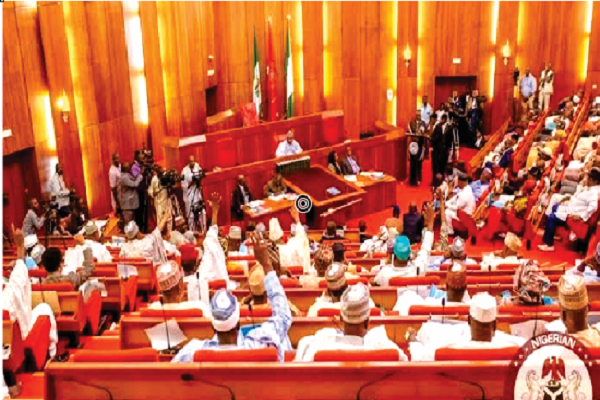
The Senate yesterday ordered mandatory health screening for every international passenger arriving Nigeria airports, seaports, land borders as Ebola resurfaces in the Democratic Republic of Congo with a scare case reported in the FCT.
The resolution followed an urgent motion by Senator Francis Fadahunsi, who warned that with Lassa fever already ravaging states, Nigeria cannot afford another outbreak.
“Protecting our entry points is far cheaper than managing Ebola,” Fadahunsi told the chamber.
Lawmakers insisted screening must be total and indiscriminate — no exemptions based on nationality or departure country because infected travellers can transit through safe-listed nations.
Senator Diket Plang raised the stakes further, demanding immediate funding for NCDC and Port Health Services, including release of withheld funds and emergency budget.
Senate President Godswill Akpabio said the Federal Government has started releasing Ebola response funds but ordered relevant committees to track every kobo.
“Ascertain whether the funds were released and judiciously utilised. Any outstanding debt must be released by the Finance Ministry without delay,” Akpabio directed.
At least 72 civilians who had been prospecting for gold in a border region of Sudan have been killed in air strikes, a regional rights group said.
Emergency Lawyers, based in the Sudanese capital, Khartoum, said jets targeted the so-called artisanal miners at a popular gold mining site on Saturday.
Neither the Egyptian government nor the de facto Sudanese authorities have so far commented.
Cairo has previously faced accusations of deadly strikes on gold prospectors as part of a crackdown on illicit activity along its southern border.
Emergency Lawyers noted the previous alleged attacks and said they represented not only a violation of Sudan’s sovereign territory but demonstrated the government’s lack of control over the region.
“The deliberate targeting of unarmed civilians violates international humanitarian law and the right to life,” it said in a statement on Sunday. “These acts may constitute war crimes.”
It noted that its death toll was provisional and could rise.
The Paris-based Sudan Tribune reported that the death toll could far exceed the number reported by Emergency Lawyers, citing a survivor of Saturday’s attack who said many more people had been injured.
Eyewitnesses said the attack began around 06:00 local time (04:00 GMT), with the aircraft firing more than five missiles directly at the miners’ camps, destroying them and excavation pits with people still inside, the newspaper wrote.
The Sudan Tribune reported claims in June that Egyptian forces had used drones and artillery to target artisanal mining sites in the same region, killing several, after sporadic incidents of Egyptian border guards of burning equipment, torching temporary shelters, and firing live ammunition to disperse mine workers.
Days later, Egypt’s border agency announced that it and the military had begun a sweeping security campaign along the border to foil illegal migration, drug smuggling and illegal mining.
At the same time, Sudan’s de facto leader announced an investigation into the alleged strikes, which were said to have killed dozens.
Gold lies at the core of the border tensions.
Sudan’s ongoing civil war has led to a surge in artisanal mining – and often risky practice conducted by civilians with rudimentary tools and without official permission – particularly in remote areas near its borders.
Gold-rich areas lie along porous borders in terrain historically associated with cross-border smuggling routes, with artisanally mined gold potentially feeding into those channels.
Egypt’s border force said in June that it had seized 86 tonnes of gold ore along with amateur prospecting equipment.
Artisanal mining has also reportedly continued in Sudan’s conflict zones and smuggled gold may be a source of income for armed insurgent groups.
This has raised concerns of illicit Sudanese gold undermining the legitimate Egyptian gold market.
Several German fighter jets will take part in the Northern Atlantic Treaty Organisation (NATO) annual nuclear defence exercise this week as troops from 17 countries take part in the Steadfast Noon drill.
The German Air Force said three Tornado jets will take part in the exercise hosted by Italy, which starts Tuesday and runs for about a week and a half.
The jets are normally stationed in Büchel in the German state of Rhineland-Palatinate.
NATO has not revealed the exercise scenario but said its scale would be comparable to last year’s drill, which involved around 2,000 personnel and more than 70 aircraft.
Last week, NATO’s head of nuclear policy, Nassima Barrows, said the exercise was designed to demonstrate the alliance’s readiness and ability to defend its territory.
No real nuclear weapons will be used, she added.
NATO said the exercise was not linked to current events or directed at any specific country.
Military experts say the drills, held regularly in October, include practising the safe transport of weapons from underground storage facilities to aircraft and mounting them on fighter jets.
Only practice bombs without real nuclear warheads are used during the drills.



Customs Moves to Upgrade B’ODOGWU, Targets Cargo Clearance
ShareBy Tambaya Julius, Abuja The Nigeria Customs Service (NCS) has concluded a three-day review of its B’Odogwu Unified Customs Management...


NAPE 2026: TotalEnergies Spuds Nigeria’s First Deep Offshore Exploration Well in Decade
ShareTotalEnergies EP Nigeria Limited has commenced drilling of the Akpo Far East B exploration well, days after its Country Chair...
Dance as Politics: Dancing to 2027
ShareBy Reuben Abati When a proper audit of the current electoral process is conducted, it would be interesting to evaluate...


Oborevwori Woos CAN Support, Promises Land for Prayer Retreat Centre
ShareFrom Francis Sadhere, Delta Delta State Governor, Rt. Hon. Sheriff Oborevwori, has pledged his administration’s support for the proposed Christian...

Wike Promotes 4,220 FCT Teachers, 3,494 Other Civil Servants
ShareBy Laide Akinboade, Abuja The Federal Capital Territory (FCT) Minister, Nyesom Wike, on Tuesday approved the promotion of 4,220 Teachers...


Flag-Off Of Tinubu/Alia 2027 Campaign Benue State
ShareBenue State is Ready for a New Chapter of Renewed Hope, Consolidated Progress And Greater Development! The Tinubu/Alia Campaign Council...


AfDB Approves $102m Facility to Finance SMEs in Nigeria
ShareThe African Development Bank (AfDB) has approved a 102 million dollar financing package for Sterling Bank Nigeria Ltd. to expand...
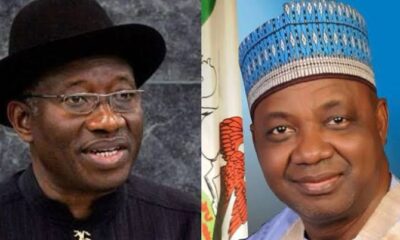

2027: Jonathan, Sambo Warn Against Looming Post-Election Crisis
ShareBy David Torough, Abuja Former President Goodluck Jonathan and former Vice-President Namadi Sambo have raised the alarm over growing political...
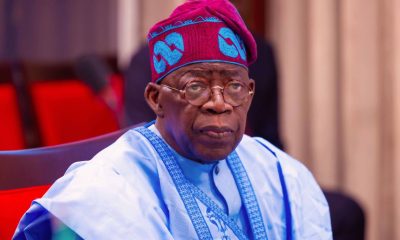

Tinubu Unveils N100m Mortgage Scheme at 9.75 Per Cent Interest
ShareBy David Torough, Abuja President Bola Tinubu has unveiled a Federal Government-backed housing finance initiative offering eligible Nigerians mortgages of...
Afe Babalola Send Education Reform Proposals to Tinubu
ShareThe Founder and Chancellor of the Afe Babalola University Ado-Ekiti (ABUAD), Aare Afe Babalola has announced plans to forward proposals...