
NEWS
Mixed Reactions Trail FG’s Rice Allocation, Governance in Niger, Kogi, Nasarawa

Some residents of Kogi have expressed mixed feelings on the state government’s commitment in actually delivering its mandate to the citizens based on its monthly allocations and revenue.
A cross section of the residents that spoke with our correspondent in Lokoja on Monday, were divergent in their views on efforts of the government in utilising resources aimed at reducing the hardship in the state.
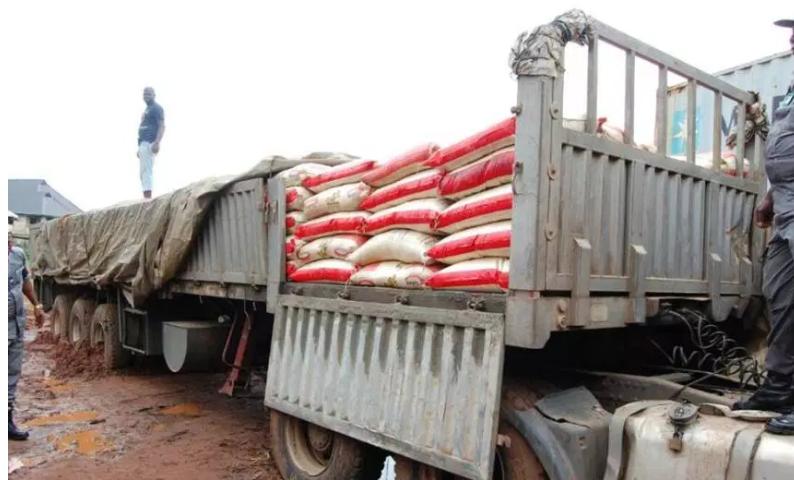
While some claimed ignorance of the distribution of the Federal Government’s recently donated 20 trucks of rice to the state to deliver to the vulnerable residents.
Some of the respondents confirmed that they have heard that the rice was received but that it has not been shared yet.
Mr Ocholi Enemona, Executive Director, Centre for Economic Research and Fiscal Transparency, said that the Usman Ododo-led government has shown great empathy, responsiveness and leadership over the past months to ameliorate the harsh economic reality.
Enemona said that the increase in monthly allocation to Kogi had afforded the government more opportunities to deliver on her promises.
“As a CSO that is very familiar with the grassroots of the state, we can confirm that the government has provided far reaching international programs and support to ease the condition the removal of fuel subsidy has caused.
“The courageous step of the government to distribute food palliative to the entire 239 wards of the state on four(4) different occasions in the last six months of its administration is laudable.
“The distribution of several trailers of rice, millet, maize and other food items have impacted significantly on the well-being of the citizens on the lower rung of the economic ladder.
“Another area the Kogi government has assisted to promote economic renaissance is the interventionist MSMEs support for business stability in the current economic situation.
” The Kogi government under several programmes has provided financial support to businesses across the state, ” he said.
Amb. Idris Muraina, Chairman, Kogi NGOs Network (KONGONET), said that recent history of the second tier of government’s spending aimed at bringing succor to their citizens has been epileptic generally across the board.
Muraina said that the Kogi state situation was not far from the general challenge being faced by the 36 states and the Federal Capital Territory, Abuja.
He argued, “The current administration led by Alhaji Usman Ododo has stepped up to the challenges of poor remuneration of the local government workers who hitherto receive percentage salaries.”
According to Muraina, few internal road construction projects have been identified across two senatorial districts while some construction projects are ongoing.
On agricultural intervention, he said that the state has committed some resources towards increasing food production aimed at combating skyrocketing food prices in the state.
Muraina said, “Interestingly, after several months of taking the lead as the most expensive state in terms of food costs, a recent statistical outlook shows that the state came second behind Edo State in July.
“On the receipt and distribution of palliative from the federal government generally, we are aware that the state had received some items from the federal government some months ago.
”But, the distribution process is mostly shrouded in secrecy as the distribution committee is not clearly known to all.
“It’s very unfortunate that no member of the civic space is co- opted into the committee to ensure transparency and accountability, though we are aware of some food distribution through social media months ago.
“In recent times, we are not aware of any 20 trucks of rice said to have been disbursed from the national office to the state.
“The Kogi Government systems as far as the management of palliative is concerned seemed to be tagged as top secret matters of the state of which members of the CSOs are deliberately prevented from having access to information on how it is managed.”
”It is on record that the Kogi NGOs Network (KONGONET), the apex coalition of civil society organizations networks in the state wrote the Governor on the importance of including members of the civil society organizations in the palliative distribution committee, it was all to no effect.
“The current administration seems to be on track at delivering some level of impact in terms of Healthcare delivery service, Agriculture and education, but we believe they can do better toward the growth and development of the state, ” he said.
Also speaking, Idris Miliki-Abdul, Executive Director, Conscience for Human Rights and Conflict Resolution (CHRCR), Lokoa, described as unfortunate the state’s current situation and level of development, compared to the resources available to both the immediate past and the present government .
Miliki-Abdul asserted that despite the Billions of Naira that have been received by the present Kogi government, the residents were yet to experience any meaningful impact in the last seven months of Gov Usman Ododo’s administration.
“There’s no social protection policy in the state. The palliatives distribution, lack genuine impact, as party politics determine the distributions,
“The question the people ask and even the CSOs is, who are the committee members at both state and local government level?” he asked.
To the civil activist, there should be sincerity and transparency in Ododo’s administration, especially in it’s implementation of people oriented policies and programmes that could help cushion the effects of hardship and poverty in the state.
A civil servant, Mrs Esther Anderson, described Ododo as a God-sent, considering some of his policies and programmes, which were really impacting on the lives of residents of the state.
Anderson said that the governor has successfully changed the tide in the civil service, thereby raising the hopes of the workers at both the state and Local Government levels.
“Ododo has abolished percentage salary, effects promotions and payments of leave and promotion allowances to workers.
“In Kogi, that sense of atmosphere and insecurity have been eradicated and the residents are moving and talking very freely today.
“In fact, a few days after Ododo’s assumption of office, three palliative distributions were successfully carried out, aimed at cushioning the economic hardship being experienced by the people of the state, ” she said.
She expressed the belief that the 20 trucks of Rice donated by the Federal Government to the state would soon be distributed to the citizens as expected.
Ibrahim Adeiza, a wielder, said that for the fact that Ododo has demonstrated a sharp deviation from the style of governance of Ex-Gov Yahaya Bello, much needed to be done to transform the state.
Adeiza claimed he has not DF directly benefited from the distribution of palliatives but was aware that some people have benefitted.
“All some of us are asking is for the distribution of palliatives reach some of us in the streets and not only political party members or supporters, ” he said.
Mr Kingsley Fanwo, the state commissioner for information, said that the administration of Usman Ododo is delivering on his mandate based on the monthly allocations to the state.
The commissioner said that Ododo has concentrated on funding the capital projects he inherited from his predecessor in line with his campaign promise of Consolidation and Continuity.
According to him, massive funds have been allocated to projects such as the ongoing GYB Junction -Zango-Shettima-Barracks-Zone 8 road as well as the Zone 8 to Crusher road .
“This particular road links the Central Bank of Nigeria, WAEC, NECO, JAMB, State High Court, Federal High Court, DSS Office, Zone 8 Police Headquarters, Confluence Stadium as well as the State House of Assembly.
“Massive infrastructural projects are also ongoing at the Kogi State University, Kabba as well as the fencing of the Confluence University of Science and Technology, Osara among many other projects in the school and other tertiary institutions in the State.
“About twelve major towns in the state are wearing a new look as the Ododo Administration has commenced massive township roads construction and reconstruction. Rural communities are witnessing massive development.
“Simultaneously, 74 Primary Healthcare Centres are being upgraded to render Secondary Healthcare services across the state. The previous administration built world class tertiary health facilities.
“In the spirit of continuity, the current administration is upgrading and rehabilitating Primary Healthcare Centres to cater for rural dwellers.
“The state government is also deploying resources into strengthening the State Health Insurance Scheme to capture more indigent citizens and reduce the cost of healthcare,” he said.
Fanwo further explained that the Ododo administration has put funds into AcResal which was being used to raise the level of agricultural development among rural dwellers including youth and women.
He said that to reduce the impact of the economic situation in the country, the State Government has invested billions in agriculture.
He disclosed that 72 Farm Centers have been opened up and tens of tractors and other farm machineries procured and distributed for massive agricultural production with the aim of crashing the prices of foodstuffs in the State.
“The administration has also sustained the free education inherited from the immediate past administration to cushion the effects of the economic challenges in parents.
“Palliatives have been provided on a quarterly basis to meet the immediate food needs of the poorest of the poor homes across the state.
“We are grateful to Mr President for his consistent support to our administration to deliver democracy dividends to the people.
“Just last week, the First Lady of Nigeria, Her Excellency Sen. Oluremi Tinubu, gave Recapitalization Grants to 1000 petty traders in the State.
“We are building on all the support we have graciously received from the Federal Government,” he said.
Similarly, the Niger Government says the State has received 20 trucks of rice palliative donated recently by the Federal Government.
Alhaji Musa Bosso, the state Commissioner for Agriculture and Food Security, said that the government had distributed the commodity across its 25 local government areas.
“We have received the 20 trucks of bags of rice donated recently by the Federal Government to each of the 36 states and FCT.
“Here in Niger, we have since distributed the rice palliative to our 25 local government areas for onward distribution to our people, especially the vulnerable to cushion effect of the hardship,” he said.
Bosso, who did not give more details on the distribution of the rice, said that the state government was keeping a tab to ensure that the item gets to the vulnerable persons across the state.
He said that earlier, the state inaugurated sales of 50,000 metric tons of grains at 50 per cent discount subsidized rate against the current market price of the commodity to mitigate the hardship occasioned by the subsidy removal.
The commissioner said that the measure was another strategy by the state government to help reduce the prices of foodstuffs in the market.
Bosso explained that the grains included rice, beans, maize, sorghum and millet.
He said that the state government was planning to establish farm settlements across the state, toward revolutionizing agriculture to boost food production.
Some residents of the state, who spoke to our correspondent expressed dismay on the pattern adopted by the government to distribute the federal government rice palliative.
Hajiya Binta Aliyu, a resident of Minna, part of Chanchaga Local Government told newsmen that her immediate household, family and extended family got not more than five measures (mudus).
“So, you can imagine such a large family who will be left out.
“Therefore something is wrong somewhere, either they are not bringing the rice out for sharing or large quantity is diverted before the sharing,” she said.
Alhaji Abubakar Shehu from Bida local government area, said that they were yet to receive the rice in their area.
According to him, the federal government announced recently that they donated rice to state governments but we have not received it or seen it.
Similarly, Mrs Justina Iliya from Shiroro local government area of the state simply said,”we only hear about all this things on the news.
“We never get to see or receive any, this is not the first time.”
When approached some local governments Chairmen on the issue, they declined comments and pleaded anonymity.
The Federal Government shared the free rice recently as part of efforts to cushion the harsh effect of the fuel subsidy removal and effects of other economic policies to regenerate the economy on the people.
NAN recalls that a recent market survey in the state revealed that the prices of foodstuffs have not reduced.
In the survey, Mr Innocent Ani, a provision shop owner in Abdulkadir Kure Market said that the year 2023 was better because he sold 50kg bags of foreign rice for N50,000 and the local rice for N40,000.
While the same foreign rice is selling for N85,000 now, the local brand goes for N80,000.
In Nasarawa State, Mr Peter Ahemba, Senior Special Assistant (SSA) on Public Affairs to Gov. Abdullahi Sule, said that the information about the recent distribution of additional 20 trucks of rice to the state was misinterpreted.
According to Ahemba, the state took delivery of the 20 trucks of rice as palliative from the Federal Government in March.
He said that the rice was equitably distributed to the poor and vulnerable citizens across the 13 local government areas of the state.(NAN
NEWS
UNICEF Training: Communication experts charge media practitioners to champion child-rights protection

From Attah Ede and Sylvia udegbunam, Port Harcourt
Seasoned communication experts and veteran broadcasters, on Thursday, enjoined media practitioners both in broadcast and print media to remain upright and act as child-rights champions to ensure that the dignity and the rights of every child are fully respected in every circumstance.
They also said journalists must prioritize a child’s psychological and social well-being over the “newsworthiness” or financial gains of a catchy headline and obtain valid parental or guardian consent alongside the child’s personal assent before conducting any media interview or engagement.
They thrown the challenge during the two-day UNICEF Zonal Workshop on Ethical Reporting of Children held in Port Harcourt, Rivers State, capital.
Key experts including; Dr. Jide Johnson (Deputy Provost of the Nigerian Institute of Journalism), Lanre Idowu (CEO of Diamond Awards for Media Excellence and rights activist), ex- broadcaster with Nigerian Television Authority, Nansel Nimyel and Dr. Geoffrey Njoku led the presentations, raging from newsroom protocols, media responsibility, regulatory requirements and trauma-informed journalism as well as NUJ code press council legal consequences and rewriting harmful headlines into ethical alternatives.
Dr Jide Johnson, in his presentation on the Media and Child Rights – Call to Action, described the media as an important actor in promoting and protecting children’s rights.
He reminded media practitioners on their watchdog role, stressing that they have constitutional responsibilities under Section 22 of the 1999 Constitution as amended, noting that its gatekeeping and agenda-setting roles gave it enormous influence over societal perceptions.
“The one who writes the story frames the world,” he said, urging journalists to use quality data, statistics, features, cartoons, jingles and local languages to draw attention to issues affecting children.
He called on journalists to become advocates for children by reporting issues such as out-of-school children, infant mortality, malnutrition, child labour and inadequate educational facilities
Presenting a paper on Drafting Newsroom Guidelines on Child Reporting Protocol, Nansel Nimel maintained that journalists narratives could either protect children or expose them to further harm.
He insisted that newsrooms to establish dedicated child-reporting desks, assign trained correspondents and introduce child-sensitive language and pre-publication reviews for reports involving minors.
“Reporting can either protect the child or harm the child,” Nimel said, stressing the need to protect children’s identities through measures such as pseudonyms, voice masking and image blurring.
He also advocated regular staff training, internal complaints mechanisms, newsroom audits and collaboration with child-protection agencies.
On the legal and regulatory consequences of unethical reporting, the facilitators highlighted provisions of the Nigerian Broadcasting Code and the codes of the Nigerian Union of Journalists and Nigerian Press Council.
They stressed that the identities of children involved in criminal or legal matters should not be disclosed, while journalists must avoid interviews or programming that could expose minors to ridicule, stigma, exploitation or psychological harm.
The facilitators noted that the principle of the “best interest of the child” remained central to ethical reporting, adding that Nigerian broadcasting standards were consistent with broader international principles.
The workshop also examined trauma-informed journalism, with Johnson warning that repeated exposure to accidents, violence, sexual assaults, malnourished children and displaced persons could affect journalists’ mental health.
He advised journalists to prioritise their well-being, develop accountability partners and approach traumatised sources with care, allowing them to determine which questions they are comfortable answering.
The communication gurus noted that ethical child reporting requires journalists to cross-check accounts, avoid re-traumatising victims and balance stories by highlighting children’s resilience rather than portraying them only as victims.
They urged journalists to always mask or hide the identities, names, and faces of child victims of abuse, trafficking, or conflict to avoid lifetime stigmatization and always reporting away from “pity-driven” individual exposure and move toward highlighting broader, systemic institutional failures.

From Attah Ede and Sylvia Udegbunam, Port Harcourt
The United Nations Children’s Fund (UNICEF), on Wednesday, opened a two- day training for journalists on ethical reporting and child rights protection.
The three-day zonal capacity-building workshop, which is holding in Port Harcourt, Rivers State capital is funded by UNICEF and organised in collaboration with the Broadcasting Corporation of Abia State(BCA), brought together journalists, editors, and state correspondents from print, broadcast, and digital media across Benue, Enugu, Abia, Imo, Anambra, Rivers, Cross River and Delta states to deepen their understanding of the legal and ethical frameworks guiding child-focused reporting in Nigeria.
In her keynote address titled “Why Ethical Reporting of Children Matters in Nigeria,” the Chief Field Officer, Enugu Field Office, UNICEF, Juliet Chiluwe, said journalists were “not merely observers of society” but “shapers of society.”
She said the responsibility of journalists became even greater when reporting stories involving children, stressing that a child featured in the media “is not simply a subject for a story.”
“That child is a person with dignity, rights, aspirations, and a future,” Chiluwe said.
She maintained that the training reflects UNICEF’s commitment to strengthening its partnership with the media, adding that journalists play a crucial role in giving a voice to children, who often cannot speak for themselves.
She noted that ethical reporting is vital in a diverse society like Nigeria, where the media can either unite people or deepen divisions and commended Nigeria journalists for their tremendous and developmental reportage.
“The way we report on children can have a lasting impact on their lives.Ethical journalism — marked by accuracy, fairness, and balance — protects vulnerable children by preserving their identities, prioritising their best interests, and ensuring a future free from shame and harm.
“An unnecessary disclosure of identity can follow a child for years. Ethical reporting must never be treated as an option or an extra add-on to good journalism,” she said.
Chiluwe advised journalists to consider the best interests of children before publishing stories involving them and encouraged participants to use the training to sharpen their skills in covering child-related issues responsibly.
In his remark, the Director General of Broadcasting Corporation of Abia State (BCA), Mr Francis Nwaubani, described the training as important and timely, stressing that children remain among the most vulnerable members of society and depend on adults and professionals to protect their rights and dignity.
Nwaubani insisted that children could be exposed to unintended harm through sensational reporting, inappropriate identification, intrusive interviews and the publication of information that could compromise their safety and privacy.
He explained that journalists and media professionals wield considerable influence through their reports, broadcasts, headlines, documentaries and digital platforms, making responsible reporting about children both a professional requirement and a moral obligation.
“The way we report a child who is a victim of violence, abuse, exploitation, conflict, displacement, poverty or other forms of vulnerability can either contribute to the child’s protection and recovery or inadvertently prevent the child from recovering and exclude them further,” he said.
The DG however enjoined journalists to consider the possible consequences of their reports before publishing or broadcasting stories involving children, stressing journalists must ask themselves whether a story would protect or endanger the child, respect the child’s dignity and privacy, and serve the child’s best interests.
Nwaubani stressed that ethical reporting did not mean avoiding difficult stories involving children, but required journalists to tell such stories accurately, sensitively and responsibly while promoting solutions and protecting children’s rights.
The workshop is expected to features paper presentations on overview of UN CRC and the Nigeria Domestication of CRA (2003) and institutionalisation of child rights, media as protector or violator: foundation of child rights, privacy, dignity and protection of identity consent and parental approval avoiding harmful stereotypes and sensationalism and ethical dilemmas: abuse, crime when to report vs when not to report etc.
The training objectives include equipping participants with knowledge of the legal and ethical frameworks governing the reporting of children in Nigeria, including the Child Rights Act and relevant international conventions.
Participants are also expected to learn to identify and mitigate risks associated with reporting on children, apply best practices in interviewing children and handling sensitive information, and report critical child rights issues, such as abuse, exploitation, education, health, and the impact of conflict, responsibly.
Some council chairmen in Lagos have urged residents to preserve Yoruba cultural heritage while celebrating the 2026 Isẹ̀ṣe Day.
They made the call in separate statements made available to newsmen on Thursday in Lagos.
The chairmen felicitated traditional rulers, traditionalists, chieftains and residents, describing Isẹ̀ṣe as a sacred link to Yoruba ancestry.
They said the annual celebration offered an opportunity to reconnect with cultural roots, preserve traditions and strengthen communal identity.
Chairman, Kosofe Local Government, Moyosore Ogunlewe, said Isẹ̀ṣe allowed residents to reconnect with their roots and appreciate inherited cultural values.
“Today, we pause to honour Ìṣẹ̀ṣe, the sacred thread that binds us to our ancestors, our values and our identity,” he said.
Ogunlewe said Yoruba traditions were not relics of the past, but living wisdom that continued guiding community relationships and conflict resolution.
“Our traditions are not relics of the past; they are living wisdom, guiding how we treat one another,” he said.
He urged residents to embrace Yoruba culture proudly, teach it to their children and preserve it for future generations.
“Let us continue to embrace our culture with pride, teach it to our children, and preserve it for those yet unborn,” he said.
The chairman wished residents a peaceful and memorable Isẹ̀ṣe Day celebration, urging continued appreciation of Yoruba cultural values.
Similarly, Ayodele Benson, Chairman, Imota Local Council Development Area, congratulated traditional institutions, rulers, chieftains, traditionalists and residents.
Benson said Isẹ̀ṣe Day provided an opportunity to reconnect with ancestral roots and preserve traditions that define the Yoruba people.
He commended residents for showcasing their customs, cultural expressions, creativity and artistry during the celebration.
“These traditions serve as a bridge between our past, present, and future, reminding us of the importance of preserving our heritage,” he said.
Benson also commended residents for maintaining peaceful coexistence despite religious differences, assuring them of his administration’s commitment to equal opportunities.
He urged residents to promote peace, unity, mutual respect and harmony while supporting Imota LCDA’s development and economic advancement.
“I give thanks to the Almighty God for sparing our lives to witness another Isẹ̀ṣe Day,” he said.
Benson prayed that Yoruba cultural heritage would continue flourishing while bonds of unity and peaceful coexistence strengthened among residents.
“May our cultural heritage continue to flourish, and may the bonds of unity and peaceful coexistence among our people grow stronger,” he said.
He wished residents a happy Isẹ̀ṣe Day, while praying for peace, progress, prosperity and economic advancement in Imota and Nigeria.


UNICEF Training: Communication experts charge media practitioners to champion child-rights protection
ShareFrom Attah Ede and Sylvia udegbunam, Port Harcourt Seasoned communication experts and veteran broadcasters, on Thursday, enjoined media practitioners both...


UNICEF Trains Journalists on Ethical Reporting
ShareFrom Attah Ede and Sylvia Udegbunam, Port Harcourt The United Nations Children’s Fund (UNICEF), on Wednesday, opened a two- day...


Grammy-winning Singer, Angelique Kidjo Immortalised on Hollywood Walk of Fame
ShareFive-time Grammy winner, Angelique Kidjo, has become the first African musician to be honoured with a star on the Hollywood...


Singers Wande Coal, Davido Clash over Unreleased Collaboration, ‘Come My Way’
ShareNigerian singers Wande Coal and Davido have clashed on social media over an unreleased collaboration,“Come My Way”. The disagreement was...


Tonto Dikeh to Renovate Churches in Birthday Tribute to Pastor Jerry Eze
ShareActress and humanitarian Tonto Dikeh has announced a church support initiative through The New Wine Prophetic Tabernacle to mark the...


BBNaija S11: Kamsy Reveals Plans after Reality Show Exit
ShareEvicted Big Brother Naija Season 11 housemate, Kamsy Uzoma, has revealed her plans for life after leaving the reality show,...


Bobrisky Slams Nigerians for Dragging Kaycee Luxury over NDLEA Arrest
ShareCrossdresser, Bobrisky, has blasted Nigerians dragging luxury shopper, Kaycee Luxury, online following his arrest by the National Drug Law Enforcement...


2Baba Teases New Album ‘Oldest Young Man’
ShareMusic icon Innocent Idibia, popularly known as 2Baba, has announced plans to release a new album titled ‘Oldest Young Man’....
2027 Elections: IGP Cautions Youths against Political Violence, Misinformation
ShareThe Inspector-General of Police, Olatunji Disu, has cautioned Nigerian youths against being used for political violence, misinformation and digital intimidation...
Council Chairmen Urge Yoruba Heritage Preservation
ShareSome council chairmen in Lagos have urged residents to preserve Yoruba cultural heritage while celebrating the 2026 Isẹ̀ṣe Day. They...