
NEWS
Mob Sets Serial Motorcycle Snatcher Ablaze in Benue


From Attah Ede, Makurdi
A suspected serial motorcycle snatcher, was on Tuesday, set ablaze by a mob opposite the NNPCL mini station, located closed to Tito-gate along the Ibrahim Kashim road in Makurdi, the Benue State capital.An eyewitness, who identified himself as Andrew Tergu, said the incident happened “This morning at about 8:30 am when people were taking commercial motorcycles either to work or markets”.
He said the suspected bike snatcher had picked the Okada man and directed him to drop him at behind total filing station, around railway quarters, off Ibrahim Kashim road in Makurdi.Tergu stated further that, on reaching the area, the suspected thief immediately came down from the motorcycle, stabbed the okada rider multiple times and zoomed off but a mob gave him hot chase after someone raised the alarm.He said the rider of the motorcycle died instantly due to heavy bleeding from his stomach and chest.According to him, a man who came out of his house around the area to also picked bike to work, stormed into the situation and started shouting, calling for help, which attracted the mob who chase the thief to the nearby mainroad and descended on him and killed him at the spot.”They used stones, plunks and iron on the thief and thereafter, put tyre on his neck, then set fire on his body. This is good for the thief. I believe others who engage in this kind of criminality would see what happened today. Maybe next time, they will not try such thing again.”Just imagine this morning by this kind time where people were going out to look for their daily breads, then, someone would come and murder you? It shall never been well this armed robber whom even though, has been killed also”, Tergu stated.Also, a staff of the NNPCL mini station who watched the thief be set ablaze, who preferred anonymity, confirmed the incident, lamenting incessant cases of motorcycle snatching in the area.”This kind of incident usually happens all the time especially during early hours of the day when Okada rider go out to isolated areas to scout for passengers or drop them.”Just yesterday at about this time, a youngman parked his motorcycle over there, then another person suspected to be thief, took the bike away.”Every day, you will hear that two or three okada riders are either killed or injured by motorcycle thieves and escaped with their bike. This is too bad. Government must do something about this situation,” he said.However, when our correspondent visited the area, some staff of the Benue State Sanitation Agency, in company of police personnel were seen evacuating the remains of the suspected bike snatcher.When contacted, Benue State Command Police Public Relations Officer DSP Udeme Edet, confirmed the incidence, saying suspected bike snatcher was recently released from Makurdi Correctional Center for similar offence.According to her, the suspect was caught in the act of stealing a motorcycle around railway quarters and in the process, group of youths beat him.”We got the report and our men were drafted to the area but before police could get there, he was set ablaze.”The commissioner of police is seriously against jungle justice and for people taking laws into their hands. The CP has ordered for investigation to unravel those behind the jungle justice and arrest them.”There is even release to that effect where the CP warns members of the public to desist from taking laws into their hands and also warn individuals to state out of criminality”, Edet said.







From Sylvia Udegbunam, Enugu
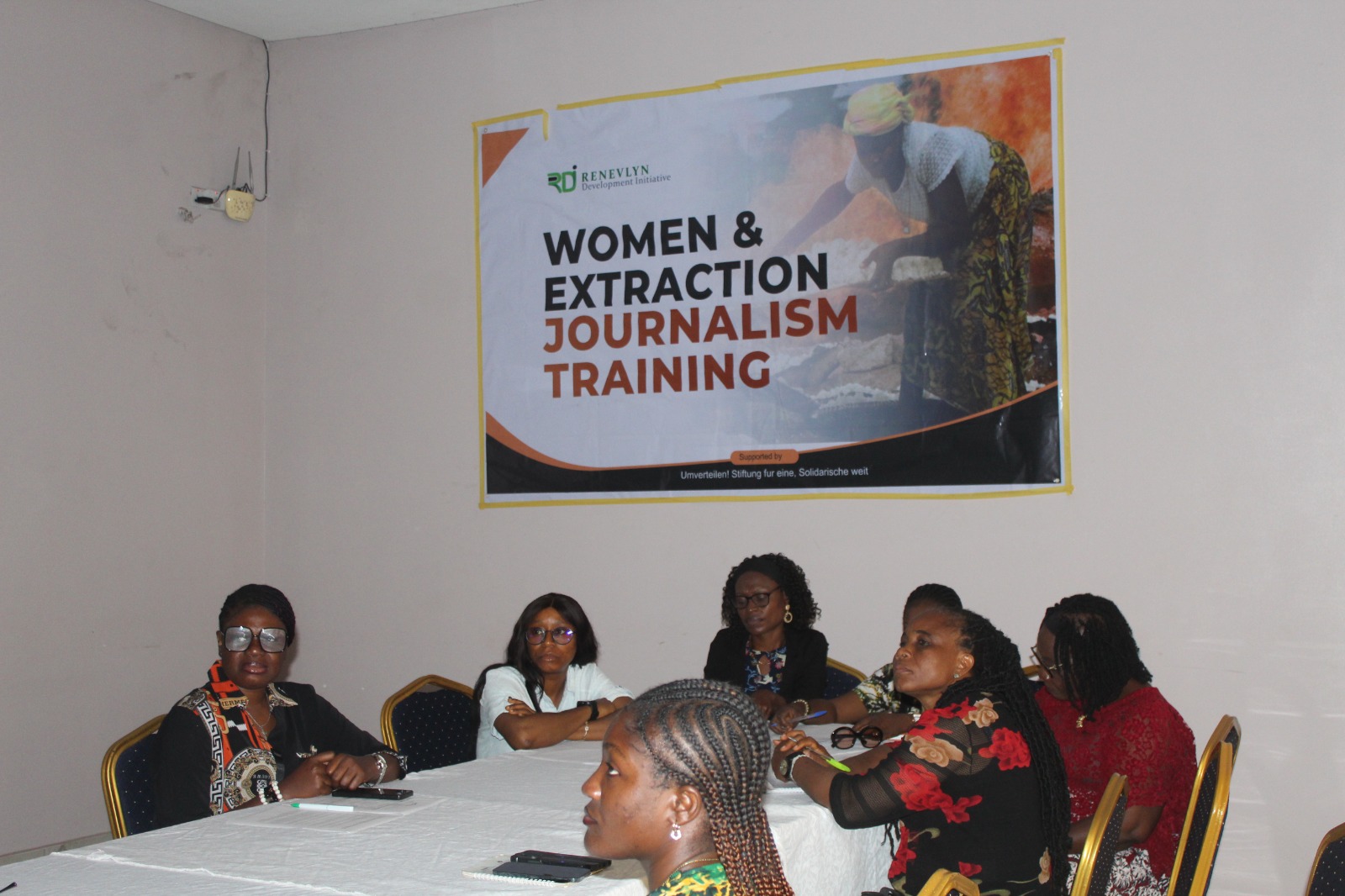
A non-governmental organisation, Renevlyn Development Initiatives, has called on women journalists in Enugu State to intensify investigative and gender-sensitive reporting on the environmental and socio-economic impacts of extractive activities on women in host communities.
The Executive Director of the organisation, Philip Jakpor, made the call during a one-day training on Agenda for Women and Extractive Journalism held at Hotel Sylvia, Independence Layout, Enugu, with the theme, “Empowering Women Journalists for Effective Reporting of Extractive Impacts in Nigeria.
”Jakpor stressed that discussions on extractive activities in Nigeria, particularly in Enugu State, would remain incomplete without addressing the devastating environmental consequences of coal mining.
He noted that women in host communities bear a disproportionate burden of mining activities because of their roles as caregivers, providers and major users of natural resources, including land and water.
He regretted that despite bearing much of the consequences of environmental degradation, women are often excluded from decision-making processes and policies concerning extractive activities in their communities.
He therefore urged female journalists to adopt gender-sensitive reporting approaches that amplify, document and adequately present the experiences of affected women.
Earlier, the Project Officer of Renevlyn Development Initiatives, Tracy Ohovwore, acknowledged the contributions of journalists in drawing attention to environmental challenges but observed that the specific experiences of women affected by extractive activities remained largely underreported.
She raised concerns over pollution in Iva Valley, Akwuke, Onyeama, Okpara and Awhum, alleging that the Ekulu and Nyaba rivers, which residents depend on for domestic water, had been contaminated by wastewater containing heavy metals, including arsenic, cadmium, lead and mercury.
Also speaking, the Executive Director of New Life Community Care Initiative (NELCCI), Mrs Florence Ifeanyi Aneke, said environmental degradation undermines community development by threatening livelihoods, food security, healthcare, education and access to clean water.
She added that pollution and land destruction could expose women to serious health risks, including reproductive health challenges, while increasing the economic hardship faced by families.
Aneke called on the Enugu State Government to harness the state’s natural resources in ways that create economic opportunities without destroying the environment or imposing further hardship on host communities.
She also advocated compensation for affected communities, particularly women and persons with disabilities, while urging the government to ensure their active participation in decisions concerning extractive activities.
In her contribution, a journalist, Ebere Ekeopara, shared her experiences growing up in a coal-mining community, highlighting poor remuneration for miners, health hazards and the impact of mining activities on women and family livelihoods.
She urged journalists to go beyond routine reporting through sustained investigative journalism that identifies environmental hazards, establishes institutional responsibilities and examines available interventions for affected communities.

By Tony Obiechina, Abuja
The Chairman of the Revenue Mobilisation, Allocation and Fiscal Commission (RMAFC), Dr. Mohammed Bello Shehu has charged Directors and Heads of Departments (HODs) to demonstrate commitment, accountability and professionalism in the discharge of their duties to ensure the successful implementation of the Performance Management System (PMS) in the Commission.
The Chairman gave the charge at the signing of Performance Contracts by Directors and Heads of Departments at the Commission’s headquarters in Abuja.
He described the exercise as more than the signing of official documents, noting that it represented a covenant of accountability and a commitment to delivering on the Commission’s strategic objectives through improved productivity and measurable results. He also noted that the initiative aligned with the Federal Government’s Renewed Hope Agenda under President Bola Tinubu, which prioritises institutional efficiency, good governance and improved service delivery.He explained that the PMS represents a deliberate shift from routine administrative activities to a result-oriented system that measures institutional and individual performance against clearly defined objectives. He noted that the Commission had recorded significant progress towards its implementation through the development of a dedicated IT platform, organisation-wide staff training, capacity building for PMS champions, management sensitisation sessions and change management initiatives.
He emphasised that the system was not designed to be punitive but to empower officers, clarify responsibilities, identify capacity gaps and promote fairness in performance assessment. He therefore urged Directors and HODs to ensure that departmental targets and key performance indicators were realistic, measurable, time-bound and aligned with the Commission’s strategic objectives.
Shehu assured staff of management’s commitment to providing the necessary support and enabling environment, while urging all officers to embrace the initiative and make accountability, professionalism and improved service delivery their guiding principles.
The Chairman of the Personnel Matters Committee (PMC) and Federal Commissioner representing Cross River State, Ntufam Eyo-Nsa Whitley, described staff as the driving force behind the success of the Commission, urging them to demonstrate discipline, diligence, emotional intelligence and dedication to their responsibilities. He encouraged officers to take the performance management exercise seriously and give their best towards achieving the Commission’s objectives.
He further urged staff to support one another, embrace the reform process and avoid attitudes that could undermine teamwork and institutional progress. Hon Ntufam called on the PMS champions to demonstrate commitment and provide guidance to their colleagues, stressing that collective responsibility, discipline and effective implementation would ensure the success of the initiative.
In his address, the Secretary to the Commission, Comrade Tosin Adeyanju, described the signing ceremony as a significant milestone in the Commission’s history, marking the transition from intention to action, planning to execution, and traditional performance evaluation to a modern, data-driven performance management system. He appreciated the Chairman’s leadership and the Commissioners’ support, while acknowledging the critical roles of Directors and HODs in driving the transformation.
He urged management staff to take ownership of their performance agreements and ensure regular engagement, feedback and monitoring to achieve the desired results. He stressed that the success of the PMS would depend not merely on signing the contracts but on the Commission’s ability to translate agreed targets into improved productivity, efficiency and measurable institutional achievements.
The Director overseeing the Administration and Human Resource Department, Alhaji Ahmed Rufai Gidado, explained that the Commission had undertaken a series of activities towards the implementation of the Performance Management System and that the signing of the performance contracts represented a major milestone in the process, marking the transition from preparatory activities to the implementation phase.
In his lecture on The Role of Performance Management in Public Sector Transformation, Mr. Nwachukwu John, Head of Economy Team Performance Management at the Office of the Head of the Civil Service of the Federation (OHCSF), commended RMAFC for the progress recorded in adopting the PMS framework. He noted that the Commission’s commitment demonstrated its readiness to embrace public service reforms and align individual responsibilities with institutional and national development objectives.
He explained that the PMS was designed to connect the responsibilities of individual officers with departmental targets, the Commission’s strategic plan and the Federal Government’s priorities. He urged Directors and HODs to ensure that performance contracts were cascaded to other levels of staff through regular engagement and feedback, emphasising that the system was a productivity tool rather than a promotion exercise.

The National Drug Law Enforcement Agency (NDLEA), Kaduna State Command, said it secured 18 convictions and arrested 130 suspects for drug-related offences in October.
The command also said it filed seven new charges and seized 2,015.
688 kilogrammes of illicit drugs and psychotropic substances during intensified operations across the state.The Command Press Officer, Assistant Superintendent of Narcotics Sani Garba, disclosed this in a statement issued on Thursday in Kaduna.
Garba said the operations, conducted under the leadership of the State Commander, Maijama’a Mohammed, also led to the dismantling of 46 drug distribution joints across the state.
He said cannabis sativa accounted for the largest quantity of substances seized, with 1,967.107 kilogrammes.
Other seizures included 42.94 kilogrammes of tramadol, 5.464 kilogrammes of various psychotropic substances, 0.154 kilogrammes of methamphetamine and 0.023 kilogrammes of cocaine.
He listed some of the other substances seized as diazepam, rohypnol, pentazocine, codeine, pregabalin and ketamine.
According to him, the dismantled drug joints were located in Kakuri, Kudenden, Gonin-Gora, Black Street, Badarawa, Narayi, Kabala West, Karji, Tirkaniya, Kantiaga, Tudun Wada, Nasarawa, Unguwan Dosa, Kawo and Television, among other locations.
Garba said the command had also sustained its drug demand reduction activities through counselling, treatment, rehabilitation and public sensitisation.
He disclosed that five clients successfully completed their counselling, treatment and rehabilitation programmes during the period, while 12 others received brief interventions.
He added that 314 persons underwent drug integrity tests as part of efforts to address substance abuse.
The spokesperson said the command was combining enforcement operations with preventive interventions to address both the supply and demand sides of the drug problem.
He quoted the State Commander as urging residents to provide timely and credible information to assist the agency in identifying drug dealers, traffickers and distribution networks.
He stressed that tackling drug abuse and illicit drug trafficking required collective efforts, urging members of the public to cooperate with NDLEA operatives.
He reaffirmed the command’s commitment to sustaining operations and expanding its counselling, treatment and rehabilitation initiatives to address drug abuse in the state. (NAN)



Group tasks Women Journalists on Reporting Impact of Coal Mining in Enugu
ShareFrom Sylvia Udegbunam, Enugu A non-governmental organisation, Renevlyn Development Initiatives, has called on women journalists in Enugu State to intensify...

RMAFC Chairman Tasks Directors, Others on Accountability, Productivity
ShareBy Tony Obiechina, Abuja The Chairman of the Revenue Mobilisation, Allocation and Fiscal Commission (RMAFC), Dr. Mohammed Bello Shehu has...


NDLEA Secures 18 Convictions, Arrests 130 Suspects in Kaduna
ShareThe National Drug Law Enforcement Agency (NDLEA), Kaduna State Command, said it secured 18 convictions and arrested 130 suspects for...
Gen Z No Longer Think for Themselves, Ayra Starr’s Mother Blames Social Media
ShareNene Aderibigbe, mother of Nigerian singer Ayra Starr, has criticised the influence of social media on Gen Z, claiming that...


Davido, Chioma Arrive in Style for Zlatan, Davita’s Wedding in Morocco
ShareNigerian music star, Davido, and his wife, Chioma Adeleke, have arrived in style in Marrakesh, Morocco, for the wedding celebration...


Lessons from the 2023 Presidential Elections: Obi Vs Wike
ShareBy Sunday Adelaja My goal in this article is to go beyond promoting a particular candidate like I did in...
Certificates Without Jobs: The Uncomfortable Reality of Nigeria’s Education System
ShareBy Idris Rufai Welcome to Nigeria, where young people are highly educated, professionally qualified and, unfortunately, increasingly experienced in the...


FG Generates N33tn Revenue in 10 Months – Oyedele
ShareBy Tony Obiechina, Abuja The Federal Government generated N33tn in revenue between January and October 2026, while about 90 per...


Terrorists Flee Strongholds, Military Block New Bases – DHQ
ShareBy David Torough, Abuja The Defence Headquarters (DHQ) has dismissed reports and suggestions of a ceasefire with Boko Haram terrorists,...


Court Nullifies Mark-led ADC Leadership, Atiku’s 2027 Candidacy
ShareBy David Torough, Abuja The Federal High Court in Abuja has nullified the leadership of the African Democratic Congress (ADC)...