
General News
Monuments, Yelwata and the Boy Who ‘Rushed’ Tinubu


By Stephen Angbulu
If buildings could talk, the new 300-bed specialist hospital in Kaduna’s Millennium City would have gasped, “You again?” as it was named after President Bola Tinubu, who unveiled it last Thursday.
Just the Tuesday before, FCT Minister Nyesom Wike rechristened the 34-year-old International Conference Centre the Bola Ahmed Tinubu International Conference Centre, following a N39bn facelift.
If the ICC could speak, it might have replied, “Fine. I can take a new name from anyone willing to pamper me with N39bn.”
At least eight federal assets now bear Tinubu’s name: the Minna airport, a stretch of the Southern Parkway, a National Assembly library tower, an army barracks, a polytechnic, an immigration tech hub, the ICC, and now, the Kaduna hospital.
Word is that the Federal University of Nigerian Languages in Abia may be next. In two short years, Nigeria has acquired a Nomenclature-in-Chief.
While promoters swear the President is not behind most of the renamings, some Nigerians aren’t buying it.
One joked, “I won’t be surprised if his face lands on a naira note.” Another scoffed, “We go just wake up one day hear say we don become Tinubu Republic.”
The current tally: eight monuments named after Tinubu versus more than six facilities renamed in honour of others.
Some federal airports now bear names like Muhammadu Buhari and Obafemi Awolowo. Lagos’ National Theatre wears Prof Wole Soyinka’s name.
A highway in Abuja honours Shehu Shagari, while two universities now celebrate Yakubu Gowon and Maitama Sule.
On paper, that suggests symbolic equity. On the streets, it’s a battle for collective memory.
We could spend the day guessing what might be renamed next as Tinubu heads to Nasarawa to unveil more projects. But we can’t, because while plaques were being polished, armed herders massacred more than 200 people in Yelwata, Benue State.
Although the Presidency’s initial statement included renewed orders to security chiefs, the bloodshed, understandably, outraged millions of Nigerians as Benue re-entered the spotlight. This time, critics saw the perfect opportunity to pelt the President for what they described as a lack of empathy.
When the President stepped foot on Benue soil last Wednesday, he visited some victims of the attack recuperating at the Benue State University Teaching Hospital.
Afterwards, he held a town hall meeting with political, religious, and traditional leaders.
There, Tinubu publicly called out the Inspector General of Police for failing to make arrests. He directed the Chief of Defence Staff and Intelligence Chiefs to intensify surveillance, and created a peace committee, but stopped short of visiting the very site of the killings. Nigerians did not hide their disappointment.
Some faulted the ceremonial tone of the trip; others thought his outfit too cheerful for a condolence visit.
Perhaps the icing on the cake was the concern over why the President did not brave the floods and poor roads to visit Yelwata and console grieving families.
On a normal week, I might have unpacked the fears some Nigerians shared, that the President’s pressure on the IGP could lead to half-baked arrests and scapegoating. But this was no normal week. Because while Tinubu was busy unveiling, a young man in Kaduna made a poor decision: he sprinted toward the President mid-speech.
You’ve probably heard the story: someone almost attacked the President in Kaduna, right? Well, that’s only half the truth. I was there. Step closer for the gist.
Once upon a time in Murtala Square, Kaduna, a mystery runner came sprinting, not toward the President, but toward the canopy where the governor and other dignitaries were seated. Let’s call him Bilyaminu.
Clad in a cream kaftan, Bilyaminu never reached the President. Security agents flattened him within seconds. I wasn’t sure what was going through his mind. Did he lose a pinky-finger bet with friends? Was he seeking his governor’s attention? And was he really targeting the President?
I saw no weapon on Bilyaminu. But within seconds, he was receiving the beating of his life from several security men for daring to raise the President’s blood pressure.
If we had more time, we could linger on Bilyaminu’s fate. But events moved on. As security whisked him away, the President resumed the ceremony, conferring national honours. This time, a former military governor of Katsina was in the spotlight.
“Let me use this opportunity to correct an omission that I made during the Democracy Day honouring of some Nigerians. I missed out the name of Col. Abubakar Dangiwa Umar. I now have the honour of awarding him Commander of the Order of the Federal Republic,” Tinubu said.
Only a week earlier, the President had honoured 68 Nigerians, including Nobel laureate Wole Soyinka, civil rights lawyer Femi Falana, Bishop Matthew Kukah, editors Dapo Olorunyomi and Kunle Ajibade, and a platoon of fallen heroes.
Posthumous honours were also conferred: Kudirat Abiola, Shehu Musa Yar’Adua, and the entire Ogoni Nine received medals, including a presidential pardon.
The logic: “Those who braved the guns to give us democracy deserve medals, and maybe apologies.”
Add these names to Buhari’s farewell honours list and Tinubu’s earlier rounds, and we now have about 5,800 people wearing national honours in the past 63 years.
The National Orientation Agency (NOA) and the Speaker of the House of Representatives, Tajudeen Abbas, have launched a campaign against drug abuse and domestic violence in the Northwest.
The Director General (DG) of NOA, Lanre Isah, disclosed this during a visit to the Emir of Katsina, Dr Abdulmuminu Kabir-Usman at his palace on Monday.
Represented by David Akoji, Director of Special Duties and State Operations, Isah said the campaign was designed to address the growing challenges of drug abuse and domestic violence, particularly among young people in the region.
He explained that the campaign had earlier been launched in Kaduna State, adding that Katsina was the next destination in the regional initiative.
According to him, the delegation visited the palace to seek the support of traditional institutions, whose influence could help mobilise communities and promote awareness of the dangers of the two social vices.
“After this visit to the palace, we will visit religious leaders to solicit their support and collaboration in sensitising youths against drug abuse and violence,” he said.
Isah said activities lined up for the campaign included town hall meetings in Katsina and Daura, stakeholder engagements and roadshows to educate residents and encourage community participation.
He added that a roadshow would also be organised in Daura to expand the campaign’s reach and strengthen public engagement.
The DG said the initiative aimed to reduce drug abuse among young people and discourage violence that threatened peaceful coexistence and national development.
He said the National Drug Law Enforcement Agency (NDLEA), a partner in the campaign, would educate participants on commonly abused substances and their harmful effects on health, livelihoods and society.
Isah also emphasised the need to sensitise residents to the consequences of violence and encourage them to reject practices that threatened peace and security.
He, however, urged people affected by drug abuse not to lose hope, saying the NDLEA had rehabilitation centres where they could access treatment and support.
“We are saying to those already affected that all hope is not lost. They should voluntarily present themselves at the rehabilitation centres for treatment so that they can become useful to themselves, their families and society at large,” he said.
Isah called for collective action by traditional rulers, religious leaders, community stakeholders and relevant government agencies to address drug abuse and domestic violence.
Responding on behalf of the Emir, the Kauran Katsina and District Head of Rimi, Alhaji Aminu Abdulkadir, commended the initiative.
Abdulkadir said the Katsina Emirate Council was ready to provide the necessary support to combat drug abuse, describing the problem as a serious concern to the traditional institution.
He said the Emir, as the Grand Patron of the NDLEA in Katsina State, had been playing a vital role in efforts to build a society free of drug abuse.
In a separate engagement, Sheikh Yakubu Musa, the Katsina State Chairman of Jama’atu Izalatil Bid’ah Wa Iqamatis Sunnah (JIBWIS), urged the government to intensify efforts to address drug abuse and domestic violence.
Musa warned that without stronger commitment and sustained action, the problems could escalate, raising concerns about the potential consequences for the quality of future leadership.
The state Chairman of the Christian Association of Nigeria (CAN), Rev Father Richar Shuaibu-Liti, represented by Assistant Secretary, Apostle Tunde Faise, assured support of religious leaders.
According to him, the campaign is for all, because once a child is affected, it affects the society, saying that the issue is a serious menace that needed serious attention.(NAN)
By Raphael Atuu, Abuja
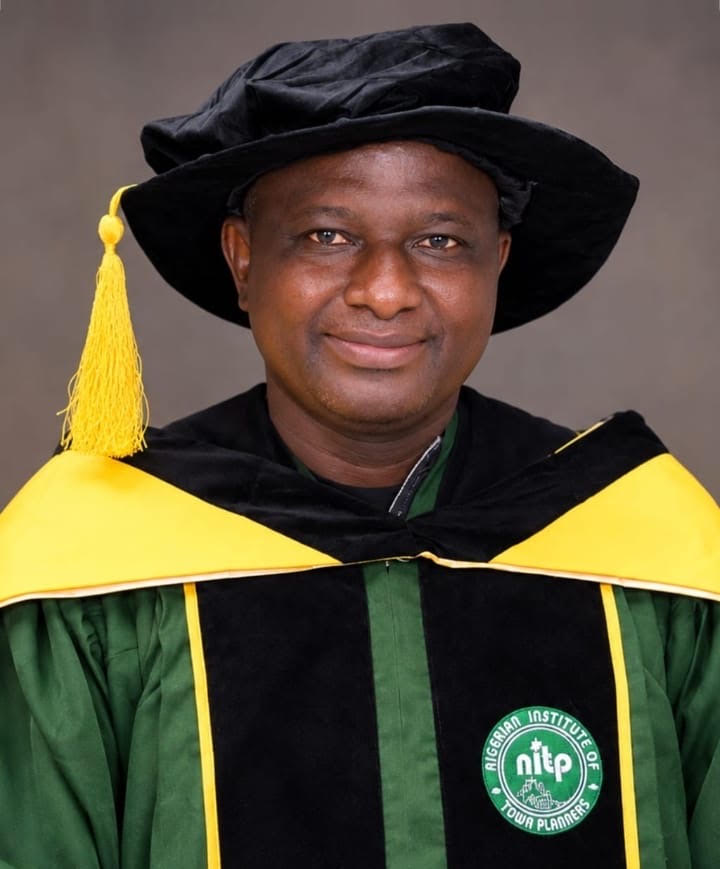
TPL Chief Amb Hon. Stephen Shekwonce Yakubu, the District Head (Hakimi of Garki Shekwope), had his investiture with the prestigious Fellowship of his profession, the Nigerian Institute of Town Planners (NITP).
The investiture ceremony took place at De Podium Centre, Aromire Avenue, Ikeja, Lagos, on Saturday, October 24, last part of activities surrounding the institute’s National Conference and Annual General Meeting (AGM).
The conferment of the fellowship marks an important milestone in Yakubu’s professional journey and recognises his standing within the Town-Planning Profession.
The Nigerian Institute of Town Planners is a professional body committed to promoting excellence in Urban and Regional Planning, sustainable human settlements, and the orderly development of communities across the country.
The fellowship distinction is an important professional recognition and the peak within the institute, highlighting the value of professional experience, commitment to the discipline, and contributions to the advancement of Town Planning.
Yakubu’s investiture also underscores the importance of professional development and the role of qualified Town Planners in addressing the challenges associated with rapid urbanisation, population growth, housing deficits, and infrastructure development in Nigeria.
Town Planning remains critical to the creation of organised, functional, and sustainable communities.
Professionals in the field contribute to land use management, environmental protection, infrastructure coordination, and the development of urban and rural settlements.
The NITP National Conference and AGM, scheduled for October 26 to 30, 2026, provides a platform for professionals to discuss emerging issues in the built environment, exchange ideas, and explore strategies for improving planning practices and sustainable development.
Yakubu’s recognition is expected to further encourage professional engagement and highlight the importance of Town Planning in Nigeria’s development process.
The investiture represents a significant moment for the new Fellows, his associates, and well-wishers, as he joins the distinguished community of professionals recognised by the institute who are now charged with the slogan “From Recognition to Responsibility”.
From Sylvia Udegbunam Enugu
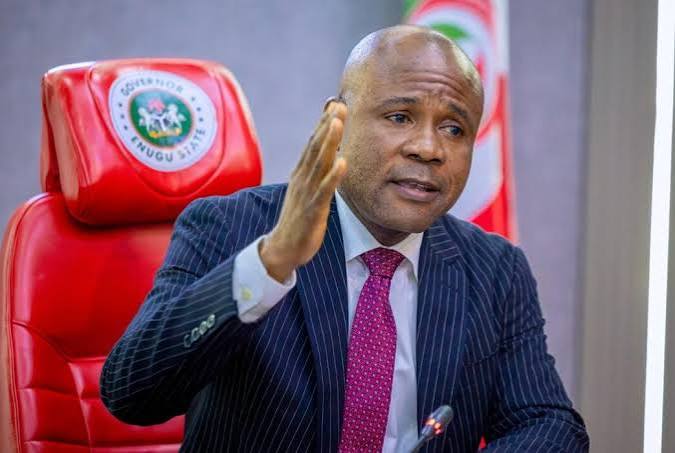
Governor of Enug State, Dr. Peter Mbah, has doubled down in his support for the removal of fuel subsidy by President Bola Tinubu’s administration, saying it was undebatable and inconceivable for anyone to imagine a return to the old order.
Mbah spoke at the “Meet the Candidates” town hall meeting organised by Afia TV in Enugu on Wednesday, where he also said that his administration had delivered good governance to the people of the state across all sectors.
He described it as a pathetic misconception of the country’s situation and the direction it was headed for anyone to talk about the reintroduction of fuel subsidy.
“If you reintroduce fuel subsidy today, we will lose ten times whatever we are currently trying to gain in terms of the removal of subsidy. The poverty rate that you are going to experience will be very high because the naira would be automatically devalued.
“We cannot go back to subsidy. And I do not think it is in the interest of the country for us to even debate that.
“Again, we should not even debate it because we do not want to send a signal to prospective investors that we are contemplating it. That would take us back. It is going to create panic in the system. It is going to get investors to pull back.
“Those that are coming in today to invest in that sector will become jittery. So, it is not even a subject to debate. It is something that we have moved on from, and we should be thinking about how to ensure that the natural benefits cascade to the households, create jobs and generate wealth for our people,” he said.
He said the nation should focus on how to further encourage private capital to flow, noting the growth the nation had experienced in the stock exchange space.
He added that Tinubu’s policies had stabilised the macro indicators, thus encouraging foreign direct investment.
“You can see quite a lot of funds coming into our country, not just portfolio investments, but also direct investments. It is also going to strengthen because the macro indicators are right,” he stated.
Mbah maintained that whereas fuel subsidy removal enables the government to target the less privileged, fuel subsidy as earlier practised benefited the rich more.
“By the way, I do not think the subsidy we practised before the President removed it was even the right one for the country because even the people we were looking at benefiting from it were only insignificantly benefiting from it. It was largely beneficial to our wealthy folks.
“But now, you can almost notice that the government is doing that in targeting the poor, using proceeds from subsidy removal. The government is aggressive on cash transfers. There is also the programme where the government is targeting 1,000 persons per ward across the entire country to be able to provide seed capital for them to become productive,” he added.
Meanwhile, on his stewardship so far, Mbah said his administration had kept faith with the people of Enugu State, delivering good governance across all sectors in line with his campaign manifesto.
He said the people of the state only needed to imagine where the state was before his inauguration as governor and where it is currently headed.
“Let us imagine the Enugu we knew four years ago. Let us just imagine an Enugu without Hotel Presidential. Let us imagine an Enugu without the International Conference Centre. Let us imagine an Enugu without Enugu Air. Let us imagine Enugu without the transport terminals, the 268 Smart Green Schools, 260 Type 2 Primary Healthcare Centres.
“You do not want them to imagine an Enugu without the International Hospital. You do not want them to imagine an Enugu without the CNG buses, the Nigergas. I think the list is endless.
“But I even think that we can stretch that imagination further because the work ahead will be more profound. Just imagine an Enugu where our children are receiving education that prepares them for the world because they have been imbued with evolving 21st-century skills. Imagine again an Enugu where you do not have any part of the city with an unpaved road.
“Also, imagine an Enugu in four years’ time that generates 660 megawatts of electricity; where we are able to provide 24-hour power supply; where you cannot come into your house and have the light off; and where people can run their businesses for a whole week without worrying about the cost of diesel. Just imagine an Enugu where you generate electricity and the people of Enugu are buying that at 120 naira because they own the coal that feeds the power plant.
“Imagine an Enugu where you now have to ride, not just on our CNG buses, but you have the monorail that can take you from point A to point B. Imagine an Enugu where you can fly from here to the United Kingdom, to the United States and other parts of the world,” he charged the electorate.
He urged the people to keep faith with the journey of greatness, growth and development, defending the gains of his first term and guaranteeing the promises of his second term by working for his re-election.
“If these imaginations capture our fancy, then we have a duty to fight for it. We do have a duty to continue to make sure that the bar does not come down and that the standard we have set in Enugu is sustained,” he concluded.



NOA, Speaker Mobilise Northwest against Drug Abuse, Domestic Violence
ShareThe National Orientation Agency (NOA) and the Speaker of the House of Representatives, Tajudeen Abbas, have launched a campaign against...

FG Calls for Stronger Agricultural Value Chains to Boost Food Security
ShareThe Federal Government has called for a stronger agricultural value chains, increased agro-industrialisation and improved market access to boost food...

Ododo Donates N35m for Takete-Ide Town Hall Project
ShareFrom Joseph Amedu, Lokoja Kogi State Governor, Ahmed Ododo has donated N35 million for the completion of the ongoing community...


NELFUND Loan Improves Graduate’s GPA to 3.50
ShareA graduate of the University of Maiduguri, Shianya Ebwaseh, said the Nigerian Education Loan Fund (NELFUND) helped improve her Grade...

FG Seeks Synergy Among Housing Agencies to Boost Housing Delivery
ShareThe Minister of Housing and Urban Development, Dr Muttaqha Darma, has called for synergy among government agencies in the housing...

Ondo SUBEB Charges 637 Newly Absorbed Teachers on Professionalism
ShareThe Ondo State Government has congratulated the 637 newly absorbed teachers and other personnel into the state public teaching service,...

NDDC Officials, Journalists Inspect 600-Metre Otuogori Bridge Project in Bayelsa
ShareFrom Mike Tayese, Yenagoa Officials of the Niger Delta Development Commission (NDDC), and journalists on Monday inspected the ongoing construction...

WAHO Seeks Uniform Standards for Health Professionals’ Education in ECOWAS
ShareBy David Torough, Abuja The West African Health Organisation (WAHO) has reaffirmed its commitment to harmonising the training, accreditation and...

2027: INEC Engages Adamawa PWDs on Electoral Process
ShareThe Independent National Electoral Commission (INEC) in Adamawa has sensitised Persons Living with Disabilities (PWDs) on the electoral process ahead...
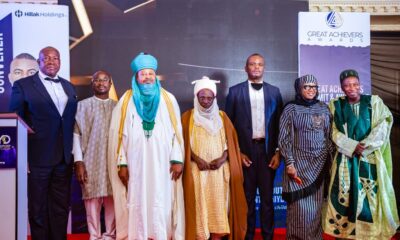

GAIYD Reaches 49,585 People, Targets 100 Per Cent Growth in Youth Devt Impact
ShareBy David Torough, Abuja The Great Achievers Initiative for Youth and Community Development (GAIYD) says it reached more than 49,585...