
BUSINESS
MTN Unveils ‘Next Afrobeats Star’ to Groom, Discover Musical Talents


MTN Nigeria has unveiled a new reality television show called, “Next Afrobeats Star”, to groom musical talents by providing a lifetime opportunity to turn their dreams and aspirations into reality.
Speaking at a news conference in Lagos at the weekend, Chief Marketing Officer of MTN Nigeria, Onyinye Ikenna-Emeka said the show would feature a competition and grooming sessions to discover and elevate the next global icon of Afrobeats.
According to her, the winner of the show will receive a record deal valued at 100,000 dollars, which is N155 million.
She explained that the top four finalists will also be rewarded with deals ranging from 25,000 dollars to 75,000 dollars, to support the production of their debut projects.
She said: “Tonight, we are not just launching a show, we are launching a dream. A dream that will rise from the streets of Lagos, echo through the valleys of Jos, and reach the furthest corners of Nigeria.
“At MTN, we believe in progress, not just as a brand stance but a purpose. We believe that every Nigerian, regardless of background, location, or education, deserves a chance to be connected, seen, heard, and celebrated.
“That is why we are taking this message to every corner of Nigeria from the bustling cities to the most remote villages so that no youth is left behind, because talent knows no boundaries, and neither should opportunity.
“It is a platform where raw talent meets real opportunity. Where the rhythm of Nigeria meets the reach of the world.”
According to Ikenna-Emeka, the initiative also aligns with the Federal Government’s bold vision to transform Nigeria into Africa’s creative capital.
She said through the Destination 2030 strategy, the government was working to position Nigeria as a leading global hub for creative excellence by the year 2030.
“This vision is about more than economic growth, it’s about cultural pride, global influence, and national identity.
“It is about creating an enabling environment for artistic brilliance, promoting diversity and creativity, and preserving the rich heritage that makes Nigeria unique.”
She called on the youth to embrace the opportunity to make a difference on the global stage.
According to her, the “Next Afrobeats Star” is a bold initiative by MTN Nigeria, in partnership with Ultima Studios and ONErpm.
Also, Temilolu Salako, Senior Manager, Youth Segment at MTN Nigeria, noted that renowned afrobeats producers would be engaged as judges and mentors during the show.
“Today, we’re not just launching a talent search, we are kicking off a movement. The Next Afrobeats Star is more than a campaign. It’s a spotlight.
“It is a microphone, a stage for the next voice that will shake the charts and shape the sound of Nigeria and beyond, and powering this bold journey is a brand that’s all about youth empowerment, creativity, and self-expression, that is MTN Pulse.”
Alexander Uwaifo, known professionally as Andre Vibez, a music producer who is one of the judges for the show, said: “I am excited to showcase my experience in helping to discover the crop of stars in the Afrobeats business.”
Another judge for the show, Femi Ayeni, Chief Executive Officer of Ultima Studios said, “Nigerians should expect that this will be different from other talent shows.”
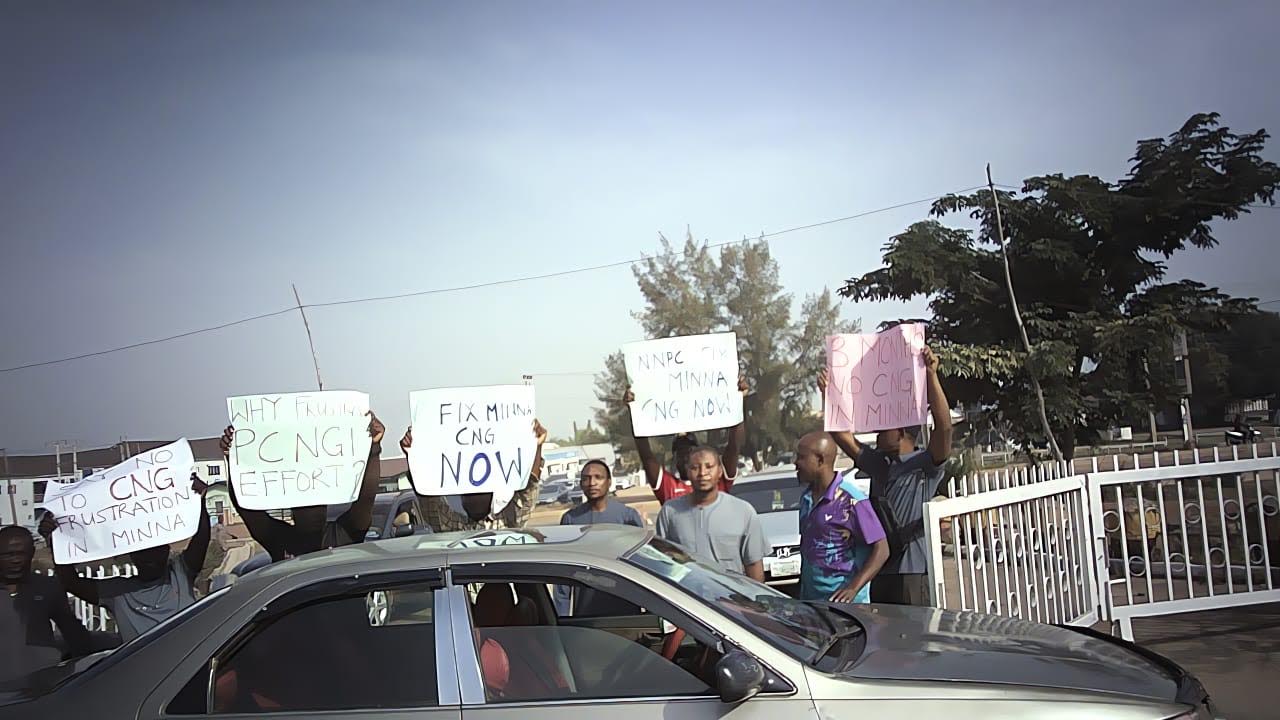
From Dan Amasingha, Minna.
Angry vehicle owners on Sunday staged a peaceful protest at the NNPC Mega Station along the Western Bypass in Minna, Niger State, over the alleged three-month shutdown of the facility’s Compressed Natural Gas (CNG) dispensing service.
The protesters, who accused the station’s management of failing to address the persistent shortage, said the development had frustrated the Federal Government’s initiative to promote CNG as a cheaper alternative to Premium Motor Spirit (PMS), popularly known as petrol.
They lamented that despite investing hundreds of thousands of naira and, in some cases, over ₦1 million to convert their vehicles to run on CNG, they had been unable to access the product in the state capital for months.
Findings indicated that a component of the station’s CNG dispensing equipment had reportedly developed a fault but had allegedly remained unrepaired, leaving motorists who rely on the alternative fuel with little choice but to return to the more expensive petrol.
The persistent outage, the protesters said, had not only undermined the economic benefits of converting their vehicles but had also imposed additional financial burdens on vehicle owners already grappling with rising transportation and fuel costs.
Speaking during the protest, one of the motorists, Engr. Israel Ogbonnaya, described the situation as discouraging, alleging that repeated visits to the station to obtain explanations from the management had yielded no meaningful response.
“It is so discouraging that for three months now, the CNG station at NNPC Minna has not functioned. Imagine that since January, some people did conversion and have not recovered their money,” he said.
Ogbonnaya expressed disappointment that motorists had allegedly received no satisfactory explanation regarding the prolonged breakdown.
“The CNG broke down, nobody has spoken to us. We have come here several times demanding answers from the management, and nobody is talking.
“So, for now, we want to bring the attention of Nigerians and those in authority to the situation in Minna.
CNG is the heartbeat of the President. He commissioned a committee to look into this scheme, and these people are taking us for granted,” he added.
Another protester, Mohammed Doko Saidu, questioned the rationale behind encouraging motorists to convert their vehicles to CNG without ensuring the availability of adequate dispensing facilities to meet demand.
Saidu disclosed that he had spent more than ₦1 million converting his vehicle, only to discover that the product was unavailable in Minna.
“The frustrating aspect of all is that I just installed CNG, spending over a million naira, without a single gas in Minna; hoping that it is going to be fixed today, it is going to be fixed tomorrow, and up till this moment, there is nothing.
“Nobody is saying anything. The station is just lying fallow. In short, I had to disconnect some of the cylinders installed in my car because there is no gas.
What kind of government are we in? It is frustrating,” he said.
The protesters called on the NNPC Mega Station’s management and other relevant stakeholders to urgently repair the faulty equipment and restore CNG supply to Minna.
They warned that failure to resolve the problem could trigger another protest involving a larger number of aggrieved motorists, including commercial tricycle operators who also depend on CNG to reduce their operating costs.
The motorists maintained that the prolonged unavailability of the product had defeated the purpose of the conversion programme, forcing them to bear the cost of installing CNG systems while continuing to spend more on petrol.
The development raises concerns among affected motorists over the reliability of CNG supply infrastructure and the need for prompt maintenance of facilities established to support the Federal Government’s alternative-fuel initiative.
Efforts to obtain comments from the manager of the NNPC Mega Station were unsuccessful as of press time, while attendants on duty declined to speak on behalf of the management.
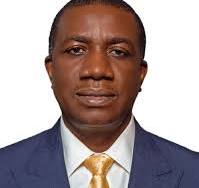
By Tony Obiechina, Abuja
The Development Bank of Nigeria Plc (DBN) has launched DAWN: DBN Action for Women in Nigeria, unveiled its Impact Report and presented MSME Data Assets at the seventh edition of Annual Lecture held in Abuja.
DBN, in a statement on Thursday, said while delivering a welcome address, its Managing Director and Chief Executive Officer, Dr Tony Okpanachi, said the central challenge was no longer reforms themselves but ensuring benefits reach businesses at end of the chain.
He asked how to make sure benefits reach traders in Onitsha, fabricator in Aba, farmer in Kebbi and young founder in Yaba, noting that MSMEs accounted for about half of Nigeria’s GDP and more than eight in every ten jobs, adding that when reform works for MSMEs it works for most Nigerians.
He explained that reform becomes prosperity only when entrepreneurs can act on it whether through long tenor loans to buy equipment, banks willing to take risk or skills and records needed to grow.
He said working through Participating Financial Institutions DBN provides longer term funding, partial credit guarantees through subsidiary Impact Credit Guarantee Limited and capacity building including Entrepreneurship Training Programme.
He disclosed that as at December 2025 DBN had disbursed a cumulative N1.4 trillion to MSMEs through 84 Participating Financial Institutions creating about 1.6 million jobs nationwide.
Under the new five year strategy, the Bank aims to reach more than two million MSMEs with deliberate targets for women led businesses, youth led businesses and underserved states.
On DAWN, Okpanachi said finance alone had not enabled enough women-led businesses to scale.
He said initiative brings together financing, guarantees and credit support, technical assistance, outcome linked grants and market linkages delivered through banks, microfinance institutions, fintechs, aggregators, cooperatives and direct channels.
Its priority sectors are agriculture and exports, healthcare, arts and creatives, technology and green business.
He said DAWN is about moving gender focused lending beyond intention and turning access into opportunity.
On the sidelines of the lecture DBN and African Development Bank held a signing ceremony of AfDB DBN 61 million United States dollars Gender Line of Credit development that reinforces Bank commitment to women led enterprises.
Okpanachi urged Participating Financial Institutions to extend lending into sectors and states where access to finance has been limited, policymakers and regulators to measure reform by what changes for business at end of chain and MSMEs to formalise, keep good records and use support now available.
The Vice President as Special Guest of Honour was represented by Dr Fred Iklaga Senior Technical Adviser in the Office of Special Adviser to the President on Economy.
Keynote speakers were Chief Executive Officer of MTN Nigeria, Dr Karl Toriola, and Chairman of Nigeria Sovereign Investment Authority, Dr Segun Ogunsanya.
Fireside chat featured Chief Executive Officer of Sterling Bank Abubakar Suleiman, manufacturing and trade entrepreneur Mrs Omoyemi Chukwurah and by video Kola Masha of Babban Gona.
The Secretary to the Government of Federation, represented by Augusta Warren Bekaredebo, said 2026 tax reforms would bring relief to many small businesses expressing optimism that a lot of businesses will be smiling by next year because they will be exempted from tax.
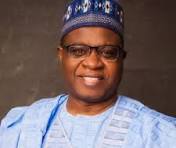
Alh. (Dr) Umaru Kwairanga, Group Chairman, Nigerian Exchange Group (NGX Group), has been named as the Top10 Magazine’s Man of the Year 2026. He emerged from among many other distinguished personalities in a multi-stage rigorous selection and screening process.
He succeeds Alh. Nasiru Haladu Danu, OFR, Chairman of Casiva Ltd, who was the magazine’s Man of the Year for 2025. He joins a club of distinguished Nigerians who have won the crown since the inception of the award over 10 years ago, with Dr. Herbert Wigwe, the late Group Managing Director of Access Bank, as the pioneer winner of the award in 2016. Also on the magazine’s roll of honour are Umar Abdullahi, Chairman, Cosgrove Group (2020); Chief Samuel Onyishi, Chairman of Peace Mass Transit (PMT) and Founder of Maduka University (2022); Muhammad Nami, former Chairman, Federal Inland Revenue Service, FIRS (2023), Senator George Akume (2024), among others.In a letter conveying Alhaji Kwairanga’s selection as the Man of the Year 2026, the Board of Editors of the Magazine said it was in recognition of his towering leadership as custodian of Nigeria’s capital market, his role in driving national economic development, his championship of corporate governance, transparency, integrity and influence that defined Nigeria’s economic narrative in 2026. These, the givers of the award said, clearly stand him out as a man of excellence worthy of celebration, “hence the decision of our management to accord you this special recognition as the Top10 Magazine’s Man of the Year 2026,” the letter said.
In a year marked by economic reforms, market volatility and renewed investor search for trust and transparency, Dr. Kwairanga stood tall as a symbol of stability, integrity and visionary leadership. Under his watch, the Nigerian Exchange has emerged as one of Africa’s best performing markets, restoring investor confidence, attracting foreign inflows and providing capital for enterprise growth that creates jobs for millions of Nigerians.
As overseer of NGX Regulation, he has championed board accountability, shareholder protection, ESG compliance and global best practices, elevating Nigerian corporate governance to world standard. His influence goes beyond the trading floor of Marina. He is a trusted counsel to regulators, a respected voice in the Presidency’s economic circle, a bridge between the private sector and government, and a mentor to a generation of investors and entrepreneurs who see in him the embodiment of ethical capitalism.
A man of unblemished integrity, quiet philanthropy and profound intellect, Dr. Kwairanga represents the best of Northern and Nigerian leadership – humble yet powerful, principled yet pragmatic, traditional yet globally minded. In a nation in search of role models who prove that one can be successful without cutting corners, powerful without being oppressive and wealthy without losing humanity, Alhaji Kwairanga stands as a beacon.
“For his towering leadership as custodian of Nigeria’s capital market, his role in driving national economic development, his championship of corporate governance and transparency, his integrity and influence that defined Nigeria’s economic narrative in 2026, the Board and Management of the Top10 Magazine unanimously select Alh. (Dr.) Umaru Kwairanga as Man of the year 2026”, stated publishers of the Top10 Magazine.
The Top10 Magazine is a monthly publication established over ten years ago as a platform to celebrate excellence and people of excellence from all human endeavours.
The Top10 Man of the Year Award was also instituted the same year as an annual award by the magazine as the highest honour reserved annually for one distinguished Nigerian whose leadership, integrity, influence and national impact have defined the year.
This year’s recipient, Alhaji Umaru, a man of untainted character and impeccable reputation, is renowned for his unwavering commitment to success. Dr. Kwairanga has 25 years’ cognate experience in the banking, pensions, investment, manufacturing and commercial sectors. He has served previously as a Council member of the Nigerian Stock Exchange and is currently a Council member of the Institute of Directors of Nigeria; and an active director on the boards of many quoted/listed and unquoted companies including Ashaka Cement Plc where he served for over ten years, first as a director and later as chairman of the Board. He is currently the GMD/CEO of Finmal Finance Services Limited.
He is a Fellow of Chartered Institute of Stockbrokers, Fellow of Certified Pension Institute Nigeria (2005) and Fellow of Institute of Directors of Nigeria. He is Chairman – Commerce, Trade and Investment subcommittee of Gombe State transition committee.
Dr. Kwairanga has a B.Sc (Hons) Business Administration (1991) and MBA (1995) both from University of Maiduguri and M.Sc. Finance & Governance from Liverpool John Moores University (2007).
Mr. Tony Iji, Publisher/Editor-In-Chief of the Top10 Magazine, said the award will be presented to Alhaji Umaru at the Top10 Magazine’s Annual Excellence Awards night slated for November 22, 2026 which will be graced by crème de la crème of the society.
To mark this high-profile event, the magazine is putting together a special award edition to celebrate him and other awardees. The edition which will comprehensively chronicle his achievements, leadership journey, and contribution to Nigeria’s capital market and the economy in general.



WAHO, ECOWAS Countries Move to Tackle Health Worker Shortages, Brain Drain Through Regional Retention Plan
ShareBy David Torough, Abuja The West African Health Organization (WAHO) has called for stronger regional collaboration and practical policy interventions...

Ekpo Empowers Women, Supports Hospital Patients at 50
ShareBy Tambaya Julius, Abuja The All Progressives Congress (APC) flag bearer for Karu/Gitata Constituency in the Nasarawa State House of...


Ebola: Bayelsa Activates Emergency Response
ShareFrom Mike Tayese, Yenagoa The Bayelsa state government has intensified disease surveillance and emergency preparedness following reports of an Ebola...

FG Disburses N38.93bn to Tertiary Institutions
ShareBy Tony Obiechina, Abuja The Federal Government has disbursed N38.93 billion to 166 public tertiary institutions nationwide under the Needs...

Mbah Unveils Multi-billion Naira Pharmaceutical Company in Enugu
ShareFrom Sylvia Udegbunam, Enugu Governor Peter Mbah of Enugu State has commissioned Anchorage Pharmaceutical Industries Limited, a multi-billion naira pharmaceutical...
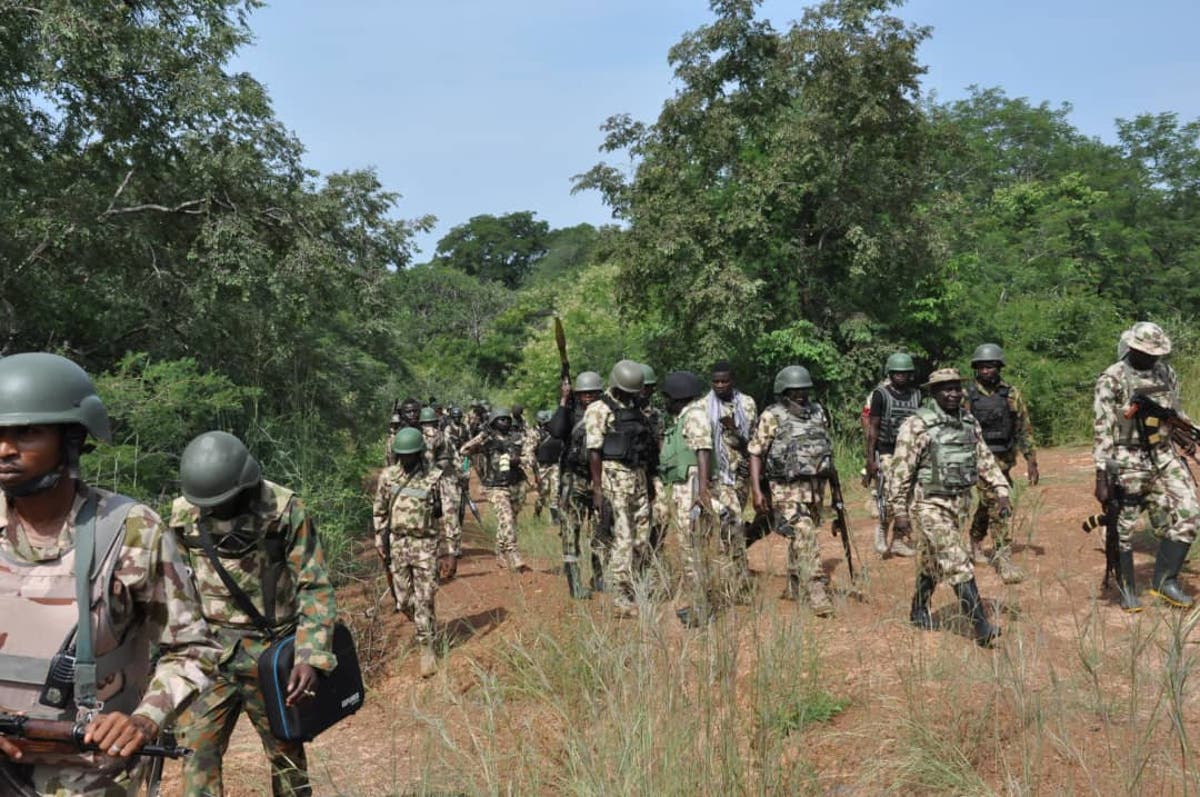
Troops Rescue Three Kidnap Victims in Kebbi
ShareTroops of Sector 2, Operation FANSAN YAMMA, have rescued three kidnapped victims following an operation in Sakaba Local Government Area...


Troops Neutralise Six Terrorists, Arrest 11 Suspected Collaborators in Borno
ShareTroops of the Nigerian Army have neutralised six terrorists, arrested 11 suspected collaborators and received the surrender of a Jama’atu...

JPMorgan’s Entry into Nigeria: Turning Global Finance into a National Development Opportunity
ShareBy Uche Joe Uwaleke The proposed establishment of JPMorgan Merchant Bank Nigeria Limited presents Nigeria with an important opportunity to...

Commissioner Hails Akwa Ibom Governor over Peace Initiatives
ShareVeteran Sports Journalist and Commissioner for Sports Development in Akwa Ibom State, Paul Bassey, has hailed the state Governor, Pastor...

Kogi Probes Mega Electronic Store Inferno
ShareFrom Joseph Amedu, Lokoja The Kogi State Government has commenced investigation into the fire incident that gutted Pee Links, a...