
NEWS
Mutilated Body of Lady Who Went Missing after Boarding BRT Found

By Gom Mirian, Abuja
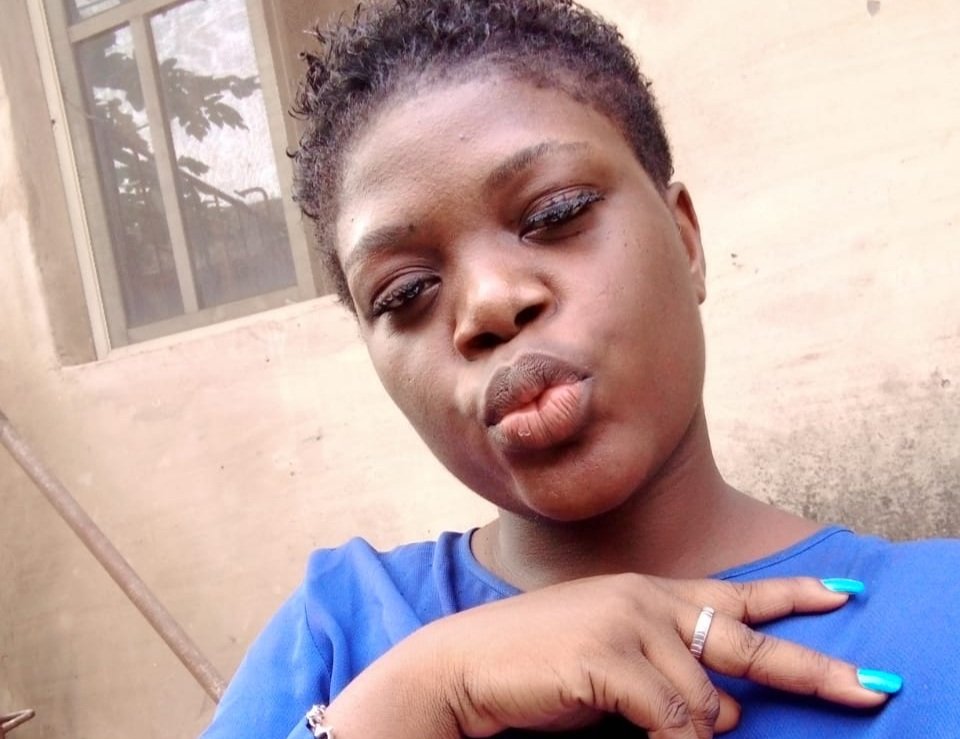
Body of 22-year-old Oluwabamise Ayanwole who went missing after boarding BRT was found on Monday, with her genital missing.
Police in Lagos State said the fashion designer’s remains were found on Carter Bridge, Ogogoro Community, Lagos Island.
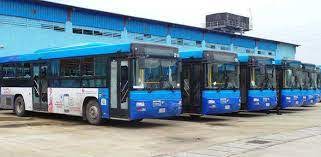
Di corpse of Lagos Island and taken to the morgue of Mainland Hospital, Yaba for autopsy.Oluwabamise boarded an LBSL bus, popularly known as BRT, at the Chevron area of Lekki en route to Oshodi on February 26, 2022 at about 7pm and became suspicious when the driver told her to sit at one the back seats.
According to sources, Bamise, who became uncomfortable, sent out voice notes and a short clip to express her concern to one of her friends.
“On her way home, the driver picked up two men and one woman. This made her calm down a bit. Then she told us she would alight at Oworonshoki. We called her and noticed something was unusual about the way she was talking. We tried to reach out to her again but her phone was unreachable; then we waited a bit, thinking it was probably (due to a) low battery, only for her parents to contact us on Sunday that Bamise wasn’t home yet and since then we have been at the Oshodi BRT Terminal 3. We were told to sit and wait for the driver to come. The driver did not show up,” the source added.
In a series of voice notes exchanges between Bamise and a friend, which were shared on social media, she was heard telling the friend in Yoruba that the bus stopped to pick her up but did not pick other passengers.
Sensing danger, she was said to have made a short video showing the silhouette of a driver and what looked like the vehicle number.
Her mother was seen in a video trending on social media wailing in front of a bus numbered, 240257, in one of the terminals of LBSL, said to be the bus Bamise had boarded.
“This is the vehicle that Bamise boarded. It has been parked. They say they cannot find the driver. Bamise boarded the vehicle at Ajah and said she was coming to Oshodi. The vehicle got to its destination but the child didn’t get home. We can’t find her. They must find Bamise for me. I didn’t tell her to go to Lagos to die,” she lamented.
It was also reported that the missing lady’s elder brother, James, said that Bamise was heard struggling with someone on the bus during the last phone conversation with her.
He said, “The driver took to his heels. As we speak, he is at large. We learnt that he no longer resides where he claimed he resided. It is a case of kidnapping.
“If the driver were available, we may have said it was a case of a missing person. Moreover, she boarded the bus and three people were picked up along the road. When she was called, she didn’t pick up her call. When she picked, she was heard struggling with a man, so this is not a case of a missing person. I believe this (kidnapping) has been ongoing.
“From my little investigation, I discovered that the company does not have proper documentation of their drivers. We learnt that the driver moved from where he claimed to be living over a year ago and his guarantor doesn’t live where he claimed to be living. The company is trying to push us aside and keep it away from the press. Our parents are aware but they aged, so we had to convince them that all is well. But we have been having sleepless nights.

Slavery was the “most horrendous crime that took place in the history of mankind”, Ghana’s foreign minister said ahead of a landmark vote at the UN General Assembly.
Member states are set to vote on a resolution led by Ghana to recognise the transatlantic slave trade as “the gravest crime against humanity”.
The proposal urges UN member states to consider apologising for the slave trade and contributing to a reparations fund.
The resolution is likely to face resistance, as states like the UK have long rejected paying reparations, saying today’s institutions cannot be held responsible for past wrongs.
But the proposal’s advocates, which include the African Union, said it is a step towards healing and justice.
Samuel Okudzeto Ablakwa, Ghana’s foreign minister, said: “We are demanding compensation and let us be clear, African leaders are not asking for money for themselves.
“We want justice for the victims and causes to be supported, educational and endowment funds, skills training funds.”
Ablakwa also said that, with the resolution, Ghana was not ranking its pain above anyone else’s, but simply documenting a historical fact.
Between 1500 and 1800, around 12-15 million people were captured in Africa and taken to the Americas where they were forced to work as slaves. It is estimated that over two million people died on the journey.
Ablakwa said that the “structures” and “inequalities” created by slavery still persist.
“Many generations continue to suffer the exclusion, the racism because of the transatlantic slave trade which has left millions separated from the continent and impoverished,” he said.
Ghana, one of the main gateways for the trade, has long been a leading advocate for reparations.
Forts, where tens of thousands of enslaved Africans were once held under inhuman conditions, remain standing along the West African country’s coast.
The resolution also calls for cultural artefacts stolen during the colonial era to be returned to their countries of origin.
“We want a return of all those looted artefacts, which represent our heritage, our culture and our spiritual significance. All those artefacts looted for many centuries into the colonial era ought to be returned,” Ablakwa said.
Ghana’s President John Dramani Mahama has called the resolution “historic” and S“safeguard against forgetting”.
Tragedy struck in Ridawa village in Ghari Local Government Area of Kano State when an unspecified number of brick workers were reportedly buried after a pit collapsed in the village.
The incident was said to have occurred in the early hours of Wednesday, while the victims were engaged in digging earth for brick-making.
It was gathered that the victims were inside the pit when it suddenly caved in, trapping many of them underground.
There are growing fears that several of the trapped workers may have died, while others sustained varying degrees of injuries in the collapsed pit.
According to reports from the area, rescue efforts have since commenced, as locals and emergency responders struggled to reach those still buried beneath the rubble.
As of the time of filing this report, some of the victims had yet to be rescued, raising concerns over their chances of survival.
The member representing Ghari/ Tsanyawa Federal Constituency in the House of Representatives, Sani Bala, confirmed the incident, saying about 10 persons were believed to be trapped underground.
He called for the government’s urgent intervention in rescuing the victims and preventing further loss of lives.
However, when contacted, the Public Relations Officer of Kano State Fire Service, Saminu Abdullahi, said the service has yet to receive a report on the incident.
“We have not received any report on the incident. The Ghari office has not received a report on the incident, adding that as soon as we get details on the incident, we shall let you know,” Abdullahi said.
CBN Strengthens Diaspora Remittances, Unveils New Framework
By Tony Obiechina, Abuja
The Central Bank of Nigeria (CBN) has introduced a new regulatory framework to strengthen oversight of diaspora remittances and enhance transparency in Nigeria’s foreign exchange market.
Under the new directive, all International Money Transfer Operators (IMTOs) are required to open and maintain naira settlement accounts with authorised dealer banks, through which all remittance-related transactions must be processed.
The policy, contained in a circular dated March 24, 2026, was signed by the Director of the Trade and Exchange Department, Dr.
Musa Nakorji, and made public on the apex bank’s website on Tuesday.According to the CBN, the move is designed to “enhance diaspora remittances, strengthen transparency, traceability, and effective monitoring of all transactions.”
With the new arrangement, all inflows, beneficiary payments, and settlement activities linked to international transfers will now pass strictly through designated accounts held with authorised dealer banks in Nigeria.
The framework also limits how such accounts can be funded, stating that they “shall only be credited with remittance flows and proceeds of foreign exchange conversions by licensed IMTOs (or their agents)” within the Nigerian Foreign Exchange Market.
As part of the changes, IMTOs must formally designate their settlement accounts and submit details to the apex bank, while providing updates when necessary.
The CBN said the policy will also improve efficiency in the FX market, allowing authorised dealer banks to transfer foreign currency from IMTO accounts to other banks and approved participants, including Bureau De Change operators.
In addition, IMTOs are now required to align their pricing with real-time market rates from the Bloomberg BMatch system. The circular stated that operators “shall observe real-time market prices from the Bloomberg BMATCH and utilise this as guidance for pricing transactions with their customers and Authorised Dealers.”
The apex bank noted that the pricing guideline would “improve price discovery, reduce information asymmetry between IMTOs and banks, and encourage increased participation in the official FX market.”
It also stressed that all operators must maintain accurate transaction records and comply fully with anti-money laundering, counter-terrorism financing, and counter-proliferation financing regulations.
“This directive takes effect from May 1, 2026. Please note and ensure compliance,” the circular stated.
Analysts say the move signals a broader push by the CBN to channel remittance inflows through formal banking systems, deepen liquidity in the official FX market, and enhance regulatory oversight of cross-border financial flows into Nigeria.


Tinubu Returns to Abuja after Eid in Lagos
SharePresident Bola Tinubu on Wednesday departed Lagos for Abuja after marking the Eid-el-Fitr celebrations. The presidential aircraft took off from the Presidential Wing of the Murtala Muhammed International...

Super Eagles Unveil New Nike Kits
ShareNigeria’s Super Eagles have revealed their new jerseys on their official X page ahead of upcoming international fixtures, with sportswear giant Nike confirming that the designs...


Ghana Demands Compensation for Slavery in Landmark UN Vote
ShareSlavery was the “most horrendous crime that took place in the history of mankind”, Ghana’s foreign minister said ahead of...
Pit Collapses, Kills Scores in Kano
ShareTragedy struck in Ridawa village in Ghari Local Government Area of Kano State when an unspecified number of brick workers were reportedly...
Frozen Food Sellers Decry Poor Electricity Supply, Fuel Price Hike
ShareUnstable electricity supply and rising fuel prices are placing significant strain on frozen food businesses in Lagos, as traders struggle to cope with higher...


ShareCBN Strengthens Diaspora Remittances, Unveils New Framework By Tony Obiechina, Abuja The Central Bank of Nigeria (CBN) has introduced a new...

FG Defends OPL 245 Settlement, Counters Opposition Criticism
ShareBy David Torough, Abuja The Federal Government has dismissed claims by former Vice-President, Atiku Abubakar, over the resolution of disputes...

APC Elects Zonal Officers By Consensus Ahead National Convention
ShareBy David Torough, Abuja The All Progressives Congress (APC) has moved decisively towards a consensus-driven leadership structure ahead of its...
MainPower Launches Quick Response System in Enugu
ShareFrom Sylvia Udegbunam, Enugu The MainPower Electricity Distribution Limited (MEDL) has launched a customer-focused service called Quick Response System (QRS),...

NURTW Decries Alleged Secretariat Invasion amid Leadership Dispute
ShareThe National Union of Road Transport Workers (NURTW) has expressed outrage over the alleged invasion of its national secretariat in...