
NEWS

CBN Strengthens Diaspora Remittances, Unveils New Framework
By Tony Obiechina, Abuja
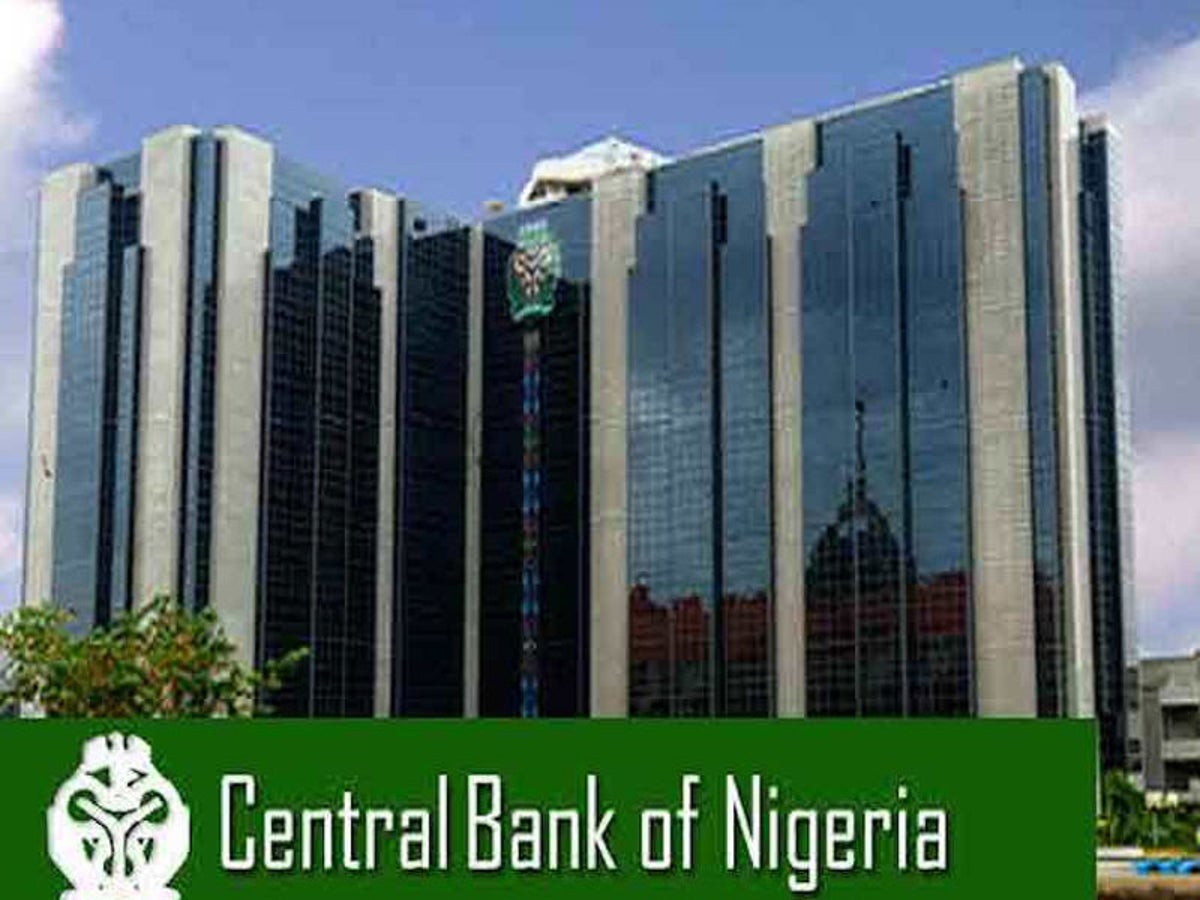
The Central Bank of Nigeria (CBN) has introduced a new regulatory framework to strengthen oversight of diaspora remittances and enhance transparency in Nigeria’s foreign exchange market.
Under the new directive, all International Money Transfer Operators (IMTOs) are required to open and maintain naira settlement accounts with authorised dealer banks, through which all remittance-related transactions must be processed.
The policy, contained in a circular dated March 24, 2026, was signed by the Director of the Trade and Exchange Department, Dr.
Musa Nakorji, and made public on the apex bank’s website on Tuesday.According to the CBN, the move is designed to “enhance diaspora remittances, strengthen transparency, traceability, and effective monitoring of all transactions.”
With the new arrangement, all inflows, beneficiary payments, and settlement activities linked to international transfers will now pass strictly through designated accounts held with authorised dealer banks in Nigeria.
The framework also limits how such accounts can be funded, stating that they “shall only be credited with remittance flows and proceeds of foreign exchange conversions by licensed IMTOs (or their agents)” within the Nigerian Foreign Exchange Market.
As part of the changes, IMTOs must formally designate their settlement accounts and submit details to the apex bank, while providing updates when necessary.
The CBN said the policy will also improve efficiency in the FX market, allowing authorised dealer banks to transfer foreign currency from IMTO accounts to other banks and approved participants, including Bureau De Change operators.
In addition, IMTOs are now required to align their pricing with real-time market rates from the Bloomberg BMatch system. The circular stated that operators “shall observe real-time market prices from the Bloomberg BMATCH and utilise this as guidance for pricing transactions with their customers and Authorised Dealers.”
The apex bank noted that the pricing guideline would “improve price discovery, reduce information asymmetry between IMTOs and banks, and encourage increased participation in the official FX market.”
It also stressed that all operators must maintain accurate transaction records and comply fully with anti-money laundering, counter-terrorism financing, and counter-proliferation financing regulations.
“This directive takes effect from May 1, 2026. Please note and ensure compliance,” the circular stated.
Analysts say the move signals a broader push by the CBN to channel remittance inflows through formal banking systems, deepen liquidity in the official FX market, and enhance regulatory oversight of cross-border financial flows into Nigeria.

From Ene Asuquo, Calabar
The Cross River State Government has confirmed a case of COVID-19 and swiftly activated its public health emergency response mechanisms to contain any potential spread, health authorities announced.
Making the disclosure in Calabar, The State Commissioner for Health, Dr.
Henry Egbe Ayuk, Tuesday at a press briefing assured residents that the situation is under control and that there is no need for panic, he saidHe said the confirmed case involves a 53-year-old Chinese expatriate who arrived Nigeria about a month ago and works in a company at Akamkpa Local Government Area.
The patient, who initially presented mild symptoms, was later admitted to the University of Calabar Teaching Hospital, where samples were collected and the infection confirmed.“The patient is currently receiving care at the state’s designated isolation and treatment centre and is responding well to treatment,” the commissioner said.
He emphasized that the government deliberately delayed public announcement until all diagnostic protocols were completed to avoid misinformation, adding that the state remains vigilant in disease surveillance and response.
Ayuk noted that global interconnectedness continues to expose populations to infectious diseases, stressing that COVID-19, like other outbreaks, is not peculiar to Nigeria.
“We are living in a world of mobile populations, and public health threats can easily cross borders. What matters is the capacity to detect and contain them promptly, and that is what we are doing.
“The state is safe. There is no cause for alarm, but we must all play our part in preventing the spread,” Ayuk reiterated.
The State Epidemiologist, Dr. Inyang Ekpenyong, confirmed that this is the first officially recorded COVID-19 case in Cross River since 2022, attributing the low visibility of recent cases to widespread vaccination and the prevalence of mild or unreported infections.
She explained that COVID-19 symptoms, such as fever, cough, sore throat, and respiratory distress in severe cases often resemble malaria, which may contribute to underreporting.
“With even a single confirmed case, it qualifies as an outbreak, and that is why we immediately activated the Emergency Operations Centre (EOC),” Ekpenyong said.
She disclosed that rapid response teams have been deployed to Akamkpa LGA, while contact tracing and line-listing of exposed individuals are ongoing. Identified contacts are being monitored daily within the virus’ incubation period of two to 14 days.
WHO State Coordinator, Dr. Olatunde Rebecca, highlighted the importance of sustained surveillance, risk communication, and provision of testing materials. She also warned against misinformation, describing it as a key factor that can worsen outbreak outcomes.
“COVID-19 spreads through respiratory droplets and contaminated surfaces. Preventive measures such as hand hygiene, use of face masks, and physical distancing remain critical,” she said.
Rebecca added that efforts are underway, in collaboration with national health authorities, to determine the specific strain involved in the current case.
Nigeria imported about 61.7 million barrels of crude oil from the United States between January 2024 and January 2026, underscoring the country’s growing reliance on foreign feedstock to support domestic refining despite being a major oil producer.
This is despite the fact that Nigeria exported over 300 million barrels of crude in the first 10 months of 2025 and 55.
39 million barrels in January and February 2026.Data obtained from the US Energy Information Administration showed that crude exports from the United States to Nigeria surged during the period, marking a sharp reversal from nearly a decade of negligible crude trade flows between both countries.
Before 2024, American crude shipments to Nigeria were virtually non-existent.
The only notable supply recorded within the period was in March 2016, when exports averaged just 19,000 barrels per day, translating to about 0.589 million barrels for the entire year.However, the trade pattern changed significantly in 2024, coinciding with the commencement of operations at the Dangote refinery, which industry observers said has emerged as the primary buyer of US crude to supplement domestic supply constraints.
The EIA reports its data in thousands of barrels per day, meaning the daily figures must be multiplied by the number of days in each month to derive the total monthly volume.
For 2024, data available for January to June indicated that Nigeria imported a total of 15.701 million barrels from the United States within six months. In January, imports averaged 125,000 barrels per day, translating to 3.87 million barrels. February recorded 110,000 barrels per day or 3.19 million barrels, while March fell to 51,000 barrels per day, amounting to 1.58 million barrels.
Imports rose again in April to 67,000 barrels per day, representing 2.01 million barrels, before dropping to 35,000 barrels per day in May, equivalent to 1.08 million barrels. June recorded the highest inflow for the year at 132,000 barrels per day, which translated to 3.96 million barrels.
The volume increased further in 2025, which accounted for the largest share of the two-year imports. Between February and December 2025, Nigeria imported 41.06 million barrels of US crude.
According to the EIA, the year started with 111,000 barrels per day in February and climbed steadily in the following months.
Imports peaked in June 2025 at 305,000 barrels per day, the highest monthly rate in the dataset, delivering about 9.15 million barrels within 30 days. Another strong inflow was recorded in August at 201,000 barrels per day, equivalent to 6.23 million barrels.
However, the supply slowed sharply towards the end of the year. Imports dropped to 12,000 barrels per day in November, translating to just 0.36 million barrels, before slightly rising to 23,000 barrels per day or 0.71 million barrels in December.
For 2026, data available for January showed that Nigeria imported 159,000 barrels per day, amounting to 4.93 million barrels.
A breakdown of the figures showed that the combined total for 2024, 2025 and January 2026 stood at 61.685 million barrels, which rounds up to 61.7 million barrels.
The development highlights a paradox in Nigeria’s oil sector, where the country exports large volumes of crude oil but still struggles to supply enough feedstock to domestic refineries.
For decades, Nigeria relied heavily on importing refined petroleum products such as petrol and diesel due to limited refining capacity. The commissioning of the Dangote refinery in 2024 shifted the pattern, with the country now importing crude oil for local processing instead of finished fuels.
Aliko Dangote once said the imports from the United States were largely driven by the need to bridge the gap between domestic crude supply and the refinery’s operational requirements.
The Dangote facility, one of the world’s largest single-train refineries, requires substantial daily feedstock to run at optimal capacity, needing over 19 million barrels monthly.
Sources told our correspondent that the Dangote refinery imports crude from Ghana and other African countries even as the country sells crude to other countries.
Data from the Central Bank of Nigeria showed that Nigeria exported an estimated 306.7 million barrels of crude oil between January and October 2025, despite concerns over feedstock shortages faced by domestic refineries.
The figures indicated that while the country produced about 443.5 million barrels during the 10-month period, averaging roughly 1.45 million barrels per day, a significant portion of the output was shipped overseas.
Cumulatively, exports between January and October represented about 69 per cent of total production, leaving roughly 137 million barrels for domestic use.
Similarly, Nigeria exported 55.39 million barrels of crude oil in the first two months of 2026 even as the Dangote refinery continues to struggle with inadequate domestic feedstock supply.
According to CBN data, the country shipped out 31.31 million barrels in January and 24.08 million barrels in February.
In January, crude production averaged 1.46 million barrels per day with exports at 1.01 mbpd. In February, production fell to 1.31 mbpd while exports averaged 0.86 mbpd. Total crude production for the two months stood at 81.94 million barrels, meaning that 26.55 million barrels were left behind for local refineries in the first two months of 2026.
On several occasions, the Dangote refinery complained of low crude supply despite the naira-for-crude arrangement, forcing it to source feedstock from the United States and other countries, including Ghana.
Also, the Crude Oil Refiners Association of Nigeria lamented that some modular refineries under its umbrella shut down intermittently due to inadequate crude supply.
By David Torough, Abuja
The Federal Government has filed a 13-count charge before the Federal High Court in Abuja against six individuals, including two retired senior military officers and a serving police inspector, over an alleged plot to wage war against Nigeria and commit acts of terrorism.
The defendants—retired Major General Mohammed Gana, retired Naval Captain Erasmus Victor, Inspector Ahmed Ibrahim, Zekeri Umoru, Bukar Goni, and Abdulkadir Sani—are scheduled to be arraigned on Wednesday, April 22, before Justice Joyce Abdulmalik.
Also listed in the charge, but said to be at large, is a former Minister of State for Petroleum Resources, Timipre Sylva.
The charge, filed on Monday by the Office of the Attorney-General of the Federation and signed by the Director of Public Prosecutions, Rotimi Oyedepo (SAN), accuses the defendants of offences ranging from treason and terrorism to failure to disclose security intelligence and money laundering linked to terrorism financing.
The prosecution alleged that the defendants conspired in 2025 “to levy war against the state to overpower the President of the Federal Republic of Nigeria,” an offence punishable under Section 37(2) of the Criminal Code.
The Federal Government further alleged that the defendants had prior knowledge of a planned treasonable act involving one Colonel Mohammed Alhassan Ma’aji and others but failed to alert authorities.
According to the charge, the defendants, “knowing that a treasonable act was intended to be committed, did not give information thereof with all reasonable despatch to either the President… or a peace officer.”
They were also accused of failing to take preventive steps, as the charge stated that they “did not use any reasonable endeavours to prevent the commission of the offence.”
Beyond treason, the defendants are facing terrorism-related charges under the Terrorism (Prevention and Prohibition) Act, 2022. Prosecutors alleged that they “conspired with one another to commit an act of terrorism in the Federal Republic of Nigeria.”
Inspector Ahmed Ibrahim and Zekeri Umoru were specifically accused of attending meetings linked to the alleged plot, “in a bid to further a political ideology which may seriously destabilise the constitutional structure of the Federal Republic of Nigeria.”
The charge also accused the defendants of providing support for terrorism, alleging that they “knowingly and indirectly rendered support” to facilitate acts of terror.
In addition, the prosecution alleged deliberate suppression of intelligence, stating that the defendants “had information which would be of material assistance in preventing the commission of the act of terrorism, but failed to disclose the information to the relevant agency as soon as practicable.”
On the financial aspect, several defendants were accused of handling funds linked to terrorism financing, in violation of the Money Laundering (Prevention and Prohibition) Act, 2022.
Bukar Kashim Goni allegedly “indirectly retained the aggregate sum of N50,000,000, which forms part of the proceeds of an unlawful act, to wit: terrorism financing,” while Abdulkadir Sani allegedly retained N2m from a similar source.
Zekeri Umoru, according to the charge, “without going through a financial institution accepted a cash payment of the sum of N10,000,000,” and also retained an additional N8.8m suspected to be proceeds of terrorism financing.
Inspector Ahmed Ibrahim was also accused of taking possession of “the sum of N1,000,000, being part of proceeds of terrorism financing.”
The case is expected to test the Federal Government’s resolve to prosecute alleged threats to national security as proceedings commence before the Federal High Court in Abuja.
In October 2025, the Federal Government announced the cancellation of a ceremonial parade earlier scheduled to mark Nigeria’s 65th Independence Anniversary on October 1.
Days after the announcement, reports emerged linking the cancellation to an alleged coup plot. However, the Defence Headquarters dismissed the claims, insisting that the decision had no connection with any coup attempt.
Later that month, on October 31, authorities confirmed that 16 military officers had been arrested in the first week of October over the alleged plot, while two others were declared at large.
In January 2026, the Defence Headquarters confirmed that there was indeed a plan to overthrow President Bola Ahmed Tinubu.
The Director of Defence Information, Samaila Uba, said investigations carried out in line with military procedures uncovered the involvement of some personnel in the alleged coup plot.
Uba added that those implicated would be arraigned before appropriate military judicial panels.
In March, family members of the detained officers appealed to President Tinubu to ensure that the suspects were tried in an open court.
At a press conference in Abuja, wives and relatives of the detained officers also demanded access to the accused, whom they described as alleged coup masterminds.
The agitation continued in April, as families of the detained officers staged a protest at the entrance of the National Assembly, calling for a speedy trial and improved access to their relatives in custody.


Cross River Confirms Case of COVID-19
ShareFrom Ene Asuquo, Calabar The Cross River State Government has confirmed a case of COVID-19 and swiftly activated its public health emergency response mechanisms to contain any potential...

Nigeria Imports 61.7m Barrels US Crude In Two Years
ShareNigeria imported about 61.7 million barrels of crude oil from the United States between January 2024 and January 2026, underscoring...

FG Slams 13-Count Charge against Alleged Coup Plotters
ShareBy David Torough, Abuja The Federal Government has filed a 13-count charge before the Federal High Court in Abuja against...

Tinubu Restructures Economic Team, Drops Wale Edun, Dangiwa
ShareBy Tony Obiechina and Raphael Atuu, Abuja President Bola Tinubu has approved a minor reshuffle of the Federal Executive Council,...


Nasarawa Lawmaker Supports Wadada Endorsement
ShareBy Tambaya Julius, Abuja The Nasarawa State House of Assembly Member Representing Keffi West Hon. Ibrahim Aliyu Nana has pledged...
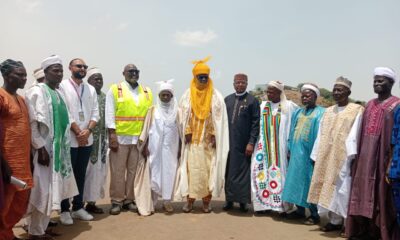

Centenary City Access Road Reaches 35 Per Cent Completion as Community Backing Drives Progress
ShareBy David Torough, Abuja Construction of the 4.3-kilometre access road within Abuja’s Centenary City development has reached 35 per cent...


Armed Herders Kill Five, Displaced Many in Renewed Attack on Benue Community
ShareFrom Attah Ede, Makurdi Suspected armed herdsmen has launched a renewed attack on Tse Ameen community in Mbapa Council Ward of Gwer West Local Government Area in Benue State, killing at...

Schools Compete for Honours at Lagos Volleyball Championship
ShareLagos State will host the second edition of the National School Volleyball Championships from April 21 to April 24 at the Teslim Balogun Stadium....
Over 25 Die in Firecracker Factory Blast in India
ShareAt least 25 people have been killed in an explosion at a firecracker factory in the southern Indian state of Tamil Nadu, with four...
FG begins Nationwide Review of Outdated Agric Curricula
ShareThe Federal Government has commenced a comprehensive review of agricultural curricula in polytechnics and colleges of education to address widening skills gaps and revive...