
NEWS
NAF Prioritises Access to Healthcare, other Services to Host Communities–Offcial

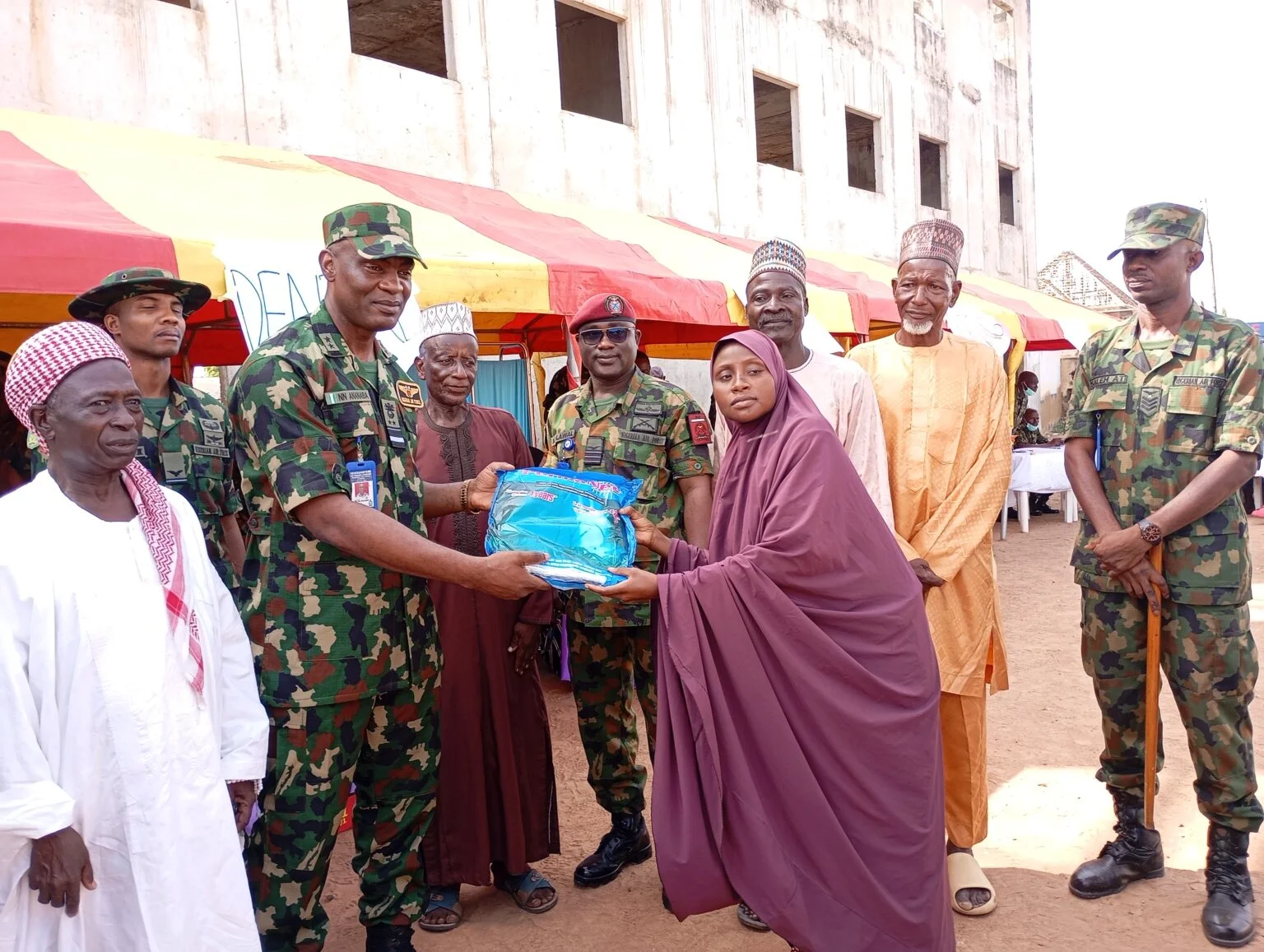
The Air Officer Commanding (AOC), Air Training Command, AVM Nnandi Ananaba, says the Nigerian Air Force (NAF), will continue to prioritise access to healthcare delivery and other humanitarian services to its host communities.
Ananaba gave the assurance during medical outreach to the Rigachikun community on Wednesday in Kaduna.
The outreach is in commemoration of NAF’s 60th anniversary.
He said, “This is part of the activities lined up to honour the legacy of the Nigerian Air Force as it celebrates its 60th anniversary.”
The AOC said NAF, under the Chief of the Air Staff, Air Marshall Hassan Abubakar would focus on the provision of such services to its host communities as part of its corporate social responsibility (CSR).
Ananaba said, “It is in line with this vision that the Nigerian Air Force is giving back to the good people of Rigachikun.
”Today’s event signifies our commitment towards improving our Civilian- Military relationship.
”In the course of this outreach, various medical conditions will be diagnosed and treated, while some of those with more serious cases will be referred to the 461 Nigerian Air Force Hospital, Kaduna for further care.”
He added that the services to be given include health education, counselling, dental screening, free medicated glasses, mosquito nets, screening for hypertension, basic laboratory tests and free drugs, among others.
Ananaba said, “It is expected that over 1000 members of the community will benefit from this outreach which was designed primarily to alleviate the suffering of the people who might not be able to afford quality medical care.
“It is hoped that this gesture will go a long way in helping to improve the overall health of our people and reduce mortality from preventable diseases in our communities while also improving the overall quality of life.
“The NAF reaffirms its commitment to periodically reach out to surrounding rural communities to provide much needed preventive health services to ensure that the burden of preventable diseases is minimised.
” The future of Medicine, we are told, now lies in prevention.”.
The AOC appreciated the government and good people of Kaduna state for the peaceful coexistence being enjoyed saying,”we cannot thank you enough for your hospitality and numerous sacrifices.”
Ananaba also commended the Chairman of Igabi Local Government Area, Malam Jabir Khamis and the District Head of Rigachikun for their numerous roles in making the outreach possible.

ABUMET Brings Joy to JKS Orphanage Through Annual CSR Outreach
By Mike Odiakose, Abuja
In line with its long-standing commitment to community development and social welfare, leading glass and aluminium solutions company ABUMET Wednesday embarked on an outreach programme as part of its annual Corporate Social Responsibility (CSR) initiative and in commemoration of the annual International Day of persons with Disabilities.
The exercise, which saw the company visiting JKS Home for Children with Special Needs in Kubwa area of the Federal Capital Territory extending love, care, and support to the the children with disabilities.
The visit formed part of ABUMET’s continuous effort to sustain its CSR objectives by reaching out to vulnerable groups and supporting institutions that nurture and protect children.Representatives of the company delivered essential food items, household supplies, and other necessities to the orphanages, ensuring that the donations would make a tangible difference in their daily welfare.
The Director at the Home, Mrs Nifeni Ajileye explained that the facility was founded in 2010 and currently has 16 children from ages seven to thirty. She said that they are special kids who need care in line with the vision that founded the Home.
She said: “some of the kids are orphans; some are abandoned because of their condition. We don’t have children who are from wealthy homes and they are just looking for a place to get help. They are children who sincerely need our help. Some of them were brought to us by the government; some from individuals. When you see them, we will be able to tell you about their history. We provide all forms of care for them. We are not just keeping them here without any form of intervention.
She continued: “some of them are on physiotherapy. We train them to be independent. We train them to be able to do things on their own.”
She expressed her profound gratitude to ABUMET, saying “we are very excited and it is a huge privilege for us.
“We understand that there are lots of Homes for the underprivileged and children with disabilities in Abuja and for ABUMET to consider us is a privilege for us and we don’t take it for granted. We can’t run the home without the support of organisations, individuals like this. And we sincerely appreciate you considering us. Thank you very much.”
Inside the home on tour, the therapist, Ms. Favour Ibrahim, guided the team around the facility and explained the different kinds of disabilities the children in the home have. She said: “this is a home for children with special needs. Autism, cerebral palsy, Down syndrome, ADHD, as long as they are special, this is their home. So I am going to introduce some of them to you and also their disabilities and what their challenges are.”
She went on to explain the causes of their disabilities and how each child is cared for according to their specific needs. She noted that some of the children can now cater for themselves thanks to the physiotherapy classes they attend, and some even go to school.
She said: “For instance, there is a child, when she came, she could not do anything. But now she takes care of herself, she takes care of others. She even orientated the new caregivers to now take care of the children. So basically, health intervention as well as medical support and educational support are really helping the children here.
“We also have a school for children, JKS Special Needs Academy with special needs. Some of them attend the school as well,.”
The General manager, ABUMET, Diemo Schillack in a short remark said: “It is a good thing what is happening in this home. Taking care of kids with special needs is very intense to see, its good what you are doing for the community.”
The GM added, “one thing is clear though; the impact of ABUMET’s CSR efforts extends far beyond material contributions.”
He said that it is about inspiring hope, building trust, and reinforcing the company’s belief that the success of any organization is deeply tied to the wellbeing of the society in which it operates.
Annually, with similar CSR initiative, ABUMET continues to reaffirm its position as not only a glass and steel manufacturer but also a compassionate corporate citizen dedicated to uplifting lives and strengthening communities.
For many years, ABUMET has used its CSR programmes as a bridge to connect with communities, going beyond its expertise it tries to touch lives in meaningful ways.
The International Day of Persons with Disabilities was declared by the United Nations for December 3 yearly. The global body holds that, an estimated 1.3 billion people experience significant disability representing 16% of the world’s population.
By Eze Okechukwu, Abuja
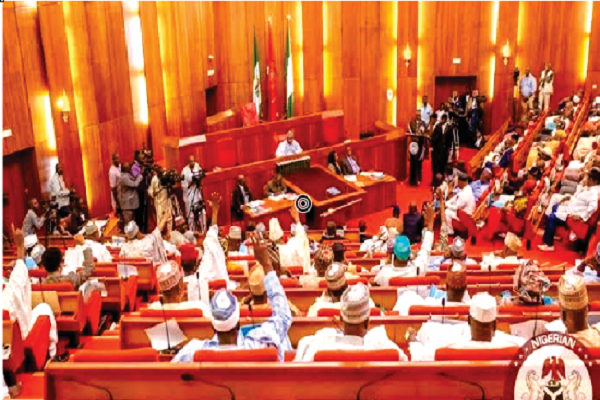
In a major legislative push to curb the worsening state of insecurity, the Senate unanimously approved amendments to the Terrorism (Prevention and Prohibition) Act 2022, prescribing the death penalty for kidnappers, informants, financiers and all collaborators in the kidnapping and terrorism value chain.
Senate Leader Opeyemi Bamidele, who led debate on the bill, said the amendment seeks to classify kidnapping, hostage-taking and related offences as acts of terrorism and impose capital punishment “without option of fine or alternative sentence.
”According to him, kidnapping has transformed into a coordinated, commercialized and militarized enterprise across the country, crippling economic activities, bankrupting families, disrupting education, and claiming countless lives.
“The patterns of organization, brutality and destabilization associated with kidnapping now bear all the characteristics of terrorism,” Bamidele said. “Our legal framework must reflect the magnitude of this threat.”
He added that the amendment would empower security agencies with stronger operational authority, intelligence tools and prosecutorial powers available under counter-terrorism laws, including asset tracing, forfeiture and coordinated inter-agency action.
The bill extends the death penalty not only to perpetrators but also to sponsors, harbourers, transporters, logistics providers and anyone who knowingly aids kidnapping networks. Attempts, conspiracy or incitement to kidnap would attract the same punishment.
By Eze Okechukwu, Abuja
The Senate has passed a bill to amend the Legal Practitioner Act, 2004 into second reading, proposing a two-year mandatory pupillage for all newly called to the Nigerian Bar as part of its reforms to regulate the country’s legal profession in line with modern realities.
The senate also agreed that the bill would restructure and empower the Body of Benchers, as the apex regulatory institution with focus on corporate legal personality, financial autonomy, strengthened its secretariat, clear rule-making authority, and institutional structure for committees and oversight.
Led by Leader of the Senate, Senator Opeyemi Bamidele, senators debated the bill at the plenary yesterday with a view to modernizing the legal profession, in line with global standards as observed in jurisdictions, such as the United Kingdom, Canada, South Africa and Kenya.
After due consideration of the bill, the Senate, presided over by the Deputy President of the Senate, Senator Barau Jibrin okayed its holistic reform and regulation of the legal profession, in line with modern realities.
The senate which passed the bill through to second reading however mandated the Committee on Judiciary, Human Rights and Legal Matters to conduct public hearing on it and report to the plenary within two weeks.
In his lead debate, Bamidele noted that the the Legal Practitioners Act, 2004, “currently in operation, is almost six decades old in context and structure, as it was designed for a legal environment that no longer exists.”
He added that the nature of legal practice today “has drastically evolved with technology, digital court processes, multi-dimensional commercial transactions, cross-border legal issues, and increased public demands for accountability and ethical conduct.
“Accordingly, it is necessary to ensure that our regulatory framework must evolve to meet these new realities. This bill is the aspect that seeks to restructure and empower the Body of Benchers, as the apex regulatory institution for the first time in the history of this Country.
“This restructuring initiative focuses principally on corporate legal personality; financial autonomy; strengthened Secretariat; clear rule-making authority; and institutional structure for committees and oversight,” Bamidele said.
The senate leader further noted that the initiative would definitely ensure “a coordinated and well-modernized regulatory framework that addresses admission to the Nigerian Bar, discipline and professional standards.”
Bamidele pointed out one of the major gaps in the current law, which according to him, was the slow and ineffective disciplinary system for addressing professional misconduct.
He observed that this proposed legislation would restructure the Legal Practitioners Disciplinary Committee (LPDC) by allowing multiple panels to sit across the country; giving the LPDC clearer sanctioning powers, including suspension; striking-off, restitution, compensation, costs, and formal apology; mandating publication of disciplinary outcomes for transparency and giving practitioners the right of appeal to the Supreme Court.
He added that the bill “contemplates creating a new Ethics, Adherence and Enforcement Committee, which is going to function as a professional investigative body, empowered to: inspect law offices; demand documents and explanations; investigate complaints from the public; ensure compliance with regulations; and prosecute cases before the LPDC.
“These innovative initiatives are the major milestones of this Bill, geared toward promoting discipline and restoration of public confidence in the profession. Another innovative aspect of the proposed bill, is the provision that introduces two years of mandatory pupilage for lawyers, newly called to the Nigerian Bar, except in approved special circumstances as well as the mandatory continuing professional development, as a requirement for renewing a practising licence.
“This is to ensure that lawyers stay updated and competent throughout their careers. Also worthy of mentioning is the provision that criminalises unauthorised legal practice to curb the growing concerns about impostors and unqualified individuals posing as lawyers.
“The bill clearly defines the practice of law and criminalises unauthorized practice, which is essential for the protection of citizens from fraud and abuse. The bill is also envisaged to regulate foreign lawyers, reform the Rank of Senior Advocate of Nigeria and enhance client protection and financial safeguards, among others.”
Also speaking on the proposed legislation, Chief Whip of the Senate, Senator Tahir Monguno supported the senate leaders, narrating the realities of legal practice when he became a legal practitioner over 35 years ago.
Emphasizing the national significance of the bill, Monguno urged his colleagues to vote in favour of reforms in the legal profession, saying the bill “is very apt and germane. We are in the digital age, and our legal profession must reflect these realities.”
 | ReplyReply allForwardAdd reaction |



ShareABUMET Brings Joy to JKS Orphanage Through Annual CSR Outreach By Mike Odiakose, Abuja In line with its long-standing commitment...


Senate Seeks Death Penalty for Terrorism Convicts, Informants, Financiers
ShareBy Eze Okechukwu, Abuja In a major legislative push to curb the worsening state of insecurity, the Senate unanimously approved...

FG Empowers 9,870 Farmers with Inputs, Modern Rice Technologies in Kano
ShareThe Federal Government, through the Kano State Special Agro-Processing Zone (SAPZ) Programme in partnership with IFAD, has empowered 9,870 rice...
FG Unveils National Agricultural Sample Survey, 2023 Report for Food Security
ShareThe Federal Government has launched the National Agricultural Sample Survey (NASS) 2023 report, towards developing data-driven policies to achieve food...
Senate Proposes 2-Year Pupillage for Lawyers Newly Called to Bar
ShareBy Eze Okechukwu, Abuja The Senate has passed a bill to amend the Legal Practitioner Act, 2004 into second reading,...


Can the Defense Minister‑Designate Gen. Musa Be Nigeria’s Last Hope for Security Renewal?
ShareBy Abba Dukawa Nigeria stands at a tipping point, where insecurity threatens the very foundations of national stability and erodes...


CBN Scraps Cash Deposit Limits, Raises Weekly Withdrawal
ShareBy Tony Obiechina, Abuja The Central Bank of Nigeria (CBN) yesterday removed all limits on cash deposits and raised the...

Reps Accuse DisCos of Crippling Nations’ Power Supply System
ShareBy Ubong Ukpong, Abuja The House of Representatives on Wednesday, accused the electricity Distribution Companies (DisCos) in the country, of...

Tinubu Inaugurates N1.9bn Renewed Hope Initiative for PWDs, Empowers 250 in Benue
ShareFrom Attah Ede, Makurdi The First Lady of Nigeria, Sen. Oluremi Tinubu, has inaugurated the Renewed Hope Initiative (RHI) Economic...

NPAN Names Veteran Journalist Segun Adediran as New GM/CEO
ShareBy David Torough, Abuja The Newspaper Proprietors Association of Nigeria (NPAN) has appointed seasoned journalist and media strategist, Segun Adediran,...
 Arabic
 Chinese (Simplified)
 Dutch
Dutch English
 French
 German
 Italian
 Portuguese
 Russian
 Spanish