
NEWS
NAFDAC Warns Against Obstruction of Enforcement Duty

The National Agency for Food and Drug Administration and Control (NAFDAC) has warned against obstruction of its personnel while carrying out enforcement operation against substandard drugs and falsified goods.
Mr Shaba Mohammed, Director of Investigation and Enforcement, NAFDAC gave the warning in an interview on Wednesday in Abuja.
Mohammed also the Chairman, Federal Task Force on Fake and Counterfeit Product, said some of the drug hawkers and touts who attacked the enforcement team of the agency in February have been arraigned in court.
He said some of these involved in the attack were facing trial before Justice Joyce Abdulmalik of Federal High Court, Abuja, adding that the arraignment would serve as deterrent to those with similar intention.
“Those arraigned recently in the court are part of those who attacked NAFDAC officials while on enforcement duty some months ago.
“Arraigning them in court is to pay for their sins, this is also to advice the public to desist from attacking NAFDAC staff while on duty’’, he said.
“I will not say there are no counterfeit products in circulation. But such product are brought into the country by unscrupulous elements who do not mean well for the country’’, he said.
He said such criminals who bring in counterfeit drugs used hawkers to push them into circulation, adding that NAFDAC will not stop arresting hawkers until the whole system is sanitised.
The director said arresting the hawkers would help NAFDAC in tracking the sources of counterfeit products whether imported or produced locally.
“The public should support NAFDAC to sanitise the system. Anyone caught in such act will be prosecuted thoroughly because that is obstruction of Federal Government team in performing its jobs.
“Sales of drug in market places, hawking or in moving vehicle is actually prohibited by NAFDAC law.
“This is regarded as a criminal act and that is why we are prosecuting those that have committed crime against NAFDAC act’’, he said.
He said as the director of investigation and enforcement in NAFDAC, he would work closely with the Federal Task Force, which comprises of other related agencies to rid the country of counterfeit drugs and goods.
Mohammed listed some of the organisations in the about to be inaugurated team as Pharmacist Council of Nigeria, and Customs Service, Federal Competition and Consumer Protection Council (FCCPC).
He said that one of the strategies the taskforce would be using to curb fake drug out of the country is the manning of point of entry into the country to intercept all counterfeit products.
“We will also be using Post Marketing Surveillance, whose officials would function like undercover agents,” he said. (NAN)

By Tony Obiechina, Abuja
The National Association of Nigerian Students (NANS) National Secretariat, the umbrella body representing over 40.1 Million Nigerian Students across universities, polytechnics, and colleges of education, has declareed total support for the transformative reforms currently reshaping Nigeria’s insurance industry.
A statement issued on Wednesday by the NANS President Comrade Akinteye Babatunde Afeez said the students body “recognizes the strategic importance of a strong, modern, and resilient insurance sector to national economic development and commends the leadership of the Federal Government under President Bola Ahmed Tinubu GCFR, for initiating bold economic reforms aimed at positioning Nigeria for sustainable growth and the realization of its $1 trillion economy aspiration”.
According to the statement “We equally commend the leadership of National Insurance Commission (NAICOM) under the Commissioner for Insurance, Mr. Olusegun Ayo Omosehin, and the Governing Board chaired by Hajia Halima Kyari, for their commitment to implementing far-reaching reforms that are restoring confidence, improving consumer protection, strengthening industry capacity, and promoting greater public trust in the insurance sector.
“Today, we speak not merely as students but as stakeholders in Nigeria’s future. We cannot remain silent while certain unpatriotic elements seek to undermine reforms that hold significant promise for economic transformation, youth empowerment, consumer protection, and national development.
” NANS joins all well-meaning Nigerians in celebrating President Bola Ahmed Tinubu GCFR’s historic assent to the Nigerian Insurance Industry Reform Act (NIIRA) on 31 July 2025, a historic legislation that modernized Nigeria’s insurance regulatory framework and replaced obsolete legal provisions with a comprehensive regime suited for a modern economy”, the statement added.
It further stated “we encourage NAICOM to intensify public awareness campaigns so that Nigerians fully understand the protections available to them under the new insurance regime”..

From Joseph Amedu, Lokoja
A Professor of Entrepreneurship and Corporate Strategy at the Federal University, Lokoja, John Alabi has called for more investment in the entrepreneurship/innovation sector to tackle Nigeria’s dwindling economy.
Professor Alabi who made the call while delivering the 46th Inaugural Lecture series of the University at its Felele Campus in Lokoja,on Wednesday, also stressed the need for government at all levels to prioritize investment in the sector to take care of the rising unemployment situation in Nigeria.
In his Lecture titled “Entrepreneurship Leadership through Entrepreneurial Education and Empowerment: Building an Entrepreneurial Economy in Vuca World” Professor Alabi advised that governments must provide enabling policies, universities must produce innovative graduates, industries must become active partners, financial institutions must support enterprise growth, and entrepreneurs themselves must embrace continuous learning, resilience, ethical leadership, and technological adaptation.
He explained that through entrepreneurial education and empowerment, nations can transform uncertainty into opportunity and build inclusive, resilient, and globally competitive economies.
“Governments should position entrepreneurship as a national development strategy rather than an employment intervention.
“Align entrepreneurship policies with national industrial and digital transformation agendas and investment in entrepreneurship ecosystems at federal, state, and local government levels.
“Building an entrepreneurial economy in a VUCA world requires more than increasing the number of entrepreneurs; it demands developing entrepreneurial leaders who can envision opportunities amid uncertainty, inspire innovation, mobilize resources, and create sustainable value
Professor Alabi also advocated that universities should focus on producing job creators rather than job seekers, establish functional entrepreneurship centres linked to industry, reward commercialization of research and innovation and encourage faculty-industry collaboration.
Other recommendations advanced by Professor Alabi includes, “Integration of entrepreneurship education across all levels of education, from primary to tertiary institutions.
“Shift from certificate-oriented learning to competency and problem-solving-based education.
“Promotion of interdisciplinary learning combining entrepreneurship, digital technology, leadership, and sustainability.
“Strengthen experiential learning through internships, incubators, business simulations, and enterprise projects.
“Developing a National Entrepreneurial Leadership Policy as well as establishment of a coordinated national framework for entrepreneurial leadership development.
“Encouragement of collaboration among government, academia, industry, and civil society”
In his welcome address, the Vice Chancellor of the Federal University, Lokoja, Professor Gbenga Ibileye gave an assurance that his administration would continue to encourage delivery of inaugural Lecture to ensure sustainability in the academic system.
Professor Ibileye said that the essence of the academic tradition is an opportunity for the academic staff to showcase their intellectual capacity in their field of study.
The Vice Chancellor described the topic of the lecture as timely and a welcome development that would go a long way in addressing the current economic reality in Nigeria.
He extolled Professor John Alabi, the Inaugural Lecturer, for his choice of contemporary topic that would add value to the people and the nation at large.
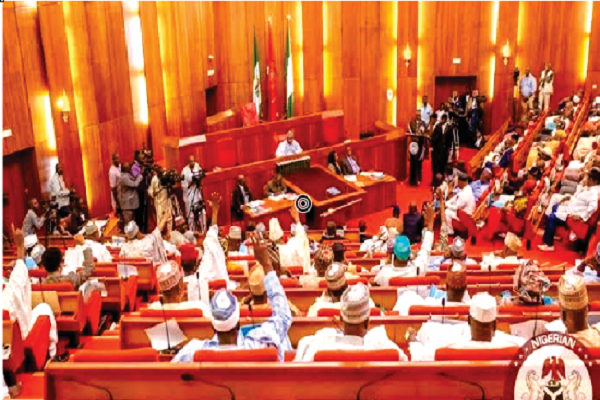
The Senate on Tuesday passed a bill extending the implementation of the capital component of the 2025 Appropriation Act from September 30 to December 31.
The bill, according to the upper chamber, seeks to provide additional time for ministries, departments and agencies (MDAs) to complete all ongoing capital projects.
The bill, sponsored by the Senate Leader, Opeyemi Bamidele (Ekiti Central), was read for the first time and subsequently considered for second reading after the suspension of the relevant Senate Rule.
Leading debate on the bill, Bamidele said the extension would provide the legal and administrative window required to fully implement projects for which funds had been appropriated and released.
He said that capital budget implementation involved procurement, contract execution, mobilisation, certification of works and payment processes, among other procedures.
The senate leader said several infrastructure and development projects across the country were at various stages of completion and required additional time for implementation.
According to him, allowing the existing implementation deadline to lapse can create difficulties for MDAs in completing projects for which resources had already been appropriated and released.
Bamidele added that the extension would help prevent projects from becoming abandoned and ensure that appropriated resources were deployed for their approved purposes.
The senate leader stressed that the extension would not amount to a relaxation of accountability, fiscal responsibility or legislative oversight.
He said that MDAs would remain required to comply with the appropriation act, financial regulations, procurement laws and other applicable statutes.
Contributing, the Deputy Senate President, Sen. Barau Jibrin, said the extension was important to prevent the proliferation of abandoned projects across the country.
Jibrin urged the senators to support the bill, saying it would provide an opportunity for ongoing projects funded under the 2025 appropriation to be completed.
The Minority Leader, Abba Moro (Benue South) also supported the extension but urged senators to avoid unnecessary comparisons with previous administrations during debates on budget implementation.
Moro said the focus should remain on creating the necessary conditions for the government to implement its programmes and projects.
The bill was subsequently committed to the Committee of Supply, which considered and approved amendments to the relevant provisions.
The senate, thereafter, passed the bill at third reading, extending the implementation of the capital component of the 2025 appropriation act to December 31.
The Senate President, Godswill Akpabio, thanked senators for their contributions, saying the extension would facilitate payment for contracts and completion of projects covered by the 2025 capital appropriation.
He urged relevant authorities to utilise the extended period to complete necessary contractual obligations and infrastructure projects for the benefit of Nigerians.(NAN)




NAN Backs Insurance Sector’s Transformation Agenda, hails NAICOM
ShareBy Tony Obiechina, Abuja The National Association of Nigerian Students (NANS) National Secretariat, the umbrella body representing over 40.1 Million...


Don Calls for More Investment in Entrepreneurship/Innovation in Nigeria
ShareFrom Joseph Amedu, Lokoja A Professor of Entrepreneurship and Corporate Strategy at the Federal University, Lokoja, John Alabi has called...


Tinubu Submits NDDC 2026 Appropriation Bill
SharePresident Bola Tinubu has submitted the 2026 Statutory Budget Proposal of the Niger Delta Development Commission (NDDC) to the House...


Senate Passes Bill Extending 2025 Capital Budget Implementation to Dec 31
ShareThe Senate on Tuesday passed a bill extending the implementation of the capital component of the 2025 Appropriation Act from...
CANEX 2026 to Unlock Investment, Jobs in Nigeria’s Creative Economy — FG
ShareThe Federal Government said Nigeria’s hosting of the 2026 Creative Africa Nexus (CANEX) Weekend will attract investment, deepen market access...


NNPC Posts N7.2trn Profit amid Revenue Decline
ShareThe Nigerian National Petroleum Company Ltd. (NNPC Ltd.) recorded N7.2 trillion Profit After Tax (PAT) in 2025, a 33 per...


Wike Approves Contracts for Digitization of FCT High Courts
ShareThe Minister of the Federal Capital Territory (FCT), Nyesom Wike, has approved the award of contracts for the digitisation of...

OPay Names Top 10 Teams in N18m National Innovation Challenge
ShareIn a bid to empower young Nigerians with the skills, opportunities and support needed to build solutions for real-world challenges,...


CBN Sets Agenda for Post-Recapitalisation Banking
ShareBy Tony Obiechina, Abuja The Central Bank of Nigeria (CBN) said recent reforms in the foreign exchange market, monetary policy...

Gunmen Abduct 18 Women in Benue, 47 Niger Farmers
ShareFrom Attah Ede, Makurdi, and Dan Amasingha, Minna Fresh fears over the worsening insecurity across the country emerged on Tuesday...