
security
Nasarawa State Reviews Public Health Bills to Boost Health Security

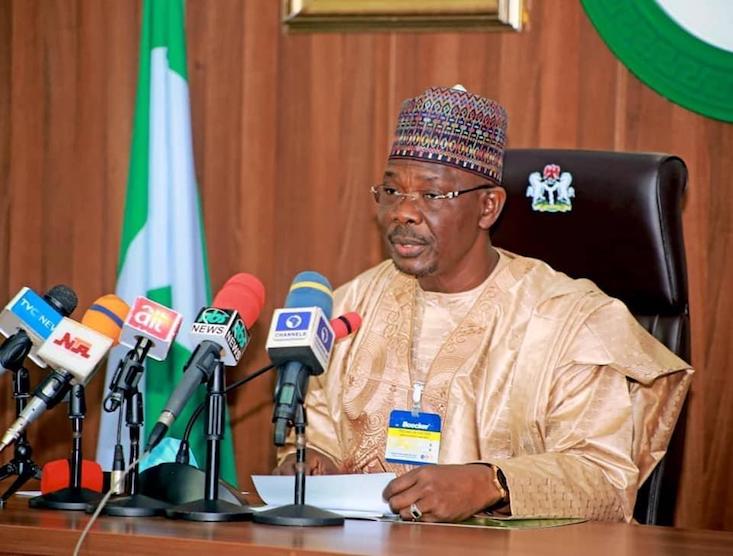
Nasarawa State has initiated a review of its public health bills to strengthen its health security framework.
The bills under review are the Nasarawa State Public Health Security Bill and the Public Health Bill.
The Attorney General and Commissioner for Justice, Labaran Magaji, announced this development at a four-day stakeholders’ meeting on Monday in Nasarawa.
The meeting aims to refine the bills and enhance the state’s health security framework.
The initiative is a collaborative effort between the Nasarawa State Ministry of Justice, the Ministry of Health, Orixine Consulting, and Resolve to Save Lives (RTSL).
NAN also reports that the proposed bills aim to address gaps in the state’s existing legal framework, aligning it with international health regulations and national health security benchmarks.
Magaji emphasised the urgency of overhauling the bills, stating that the health and well-being of the people were paramount.
He noted that revising these laws would not only ensure compliance with national and international standards but also enhance the state’s preparedness to prevent and respond to public health emergencies.
The Commissioner for Health, Dr Gwamna Shekwonugaza, highlighted the collaborative nature of the effort, emphasising the goal of creating practical, enforceable laws that could make a real difference in people’s lives.
Shekwonugaza was represented by Mrs Naomi Oyegbenu, Department of Planning, Research and Statistics.
“Our goal is to create laws that are not only theoretical but also practical, enforceable, and capable of making a tangible difference in people’s lives.”
Mr Yenan Sebastian, Director of the Subnational Support Department at the Nigeria Centre for Disease Control (NCDC), commended Nasarawa State for setting a precedent in public health.
He noted that the state’s proactive approach to legal reform in health security was commendable and essential for building resilience against emerging health threats.
Emem Udoh, Senior Legal Advisor at Resolve to Save Lives (RTSL), emphasised the importance of robust and actionable legislation.
He expressed optimism about the outcomes, stating that strong legal frameworks were the backbone of effective public health systems.
Mr Audu Arome, Executive Director of Orixine Consulting, highlighted the significance of stakeholders’ engagement in legal reforms.
He noted that inclusive participation ensured comprehensive and considerate laws that catered to all facets of public health.
The meeting, which will run until November 21st, aims to refine a set of bills ready for legislative action, demonstrating Nasarawa State’s commitment to prioritising public health.(NAN)
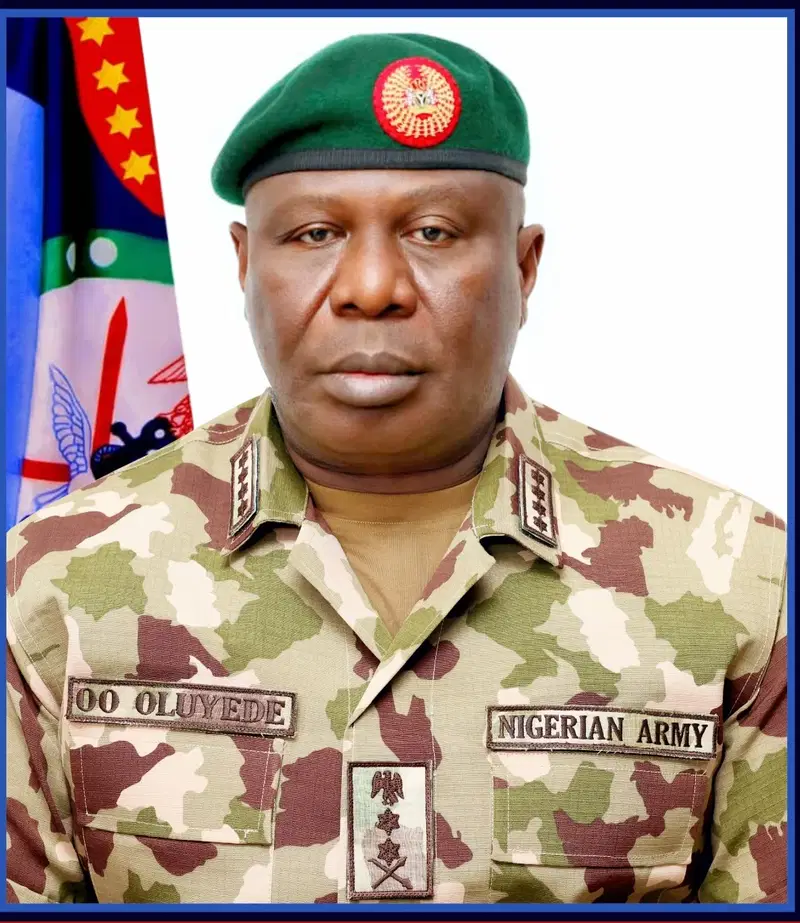
The United Kingdom has reaffirmed its commitment to deepening defence and security cooperation with Nigeria, with emphasis on military training, technology transfer and institutional capacity building.
The British High Commissioner to Nigeria, Pete Vowles, reiterated the commitment during a courtesy visit to the Chief of Defence Staff (CDS), Gen.
Olufemi Oluyede, at the Defence Headquarters, Abuja.This was contained in a statement by the Director of Defence Information, Maj.-Gen. Samaila Uba, on Tuesday in Abuja.
Vowles reaffirmed the UK’s commitment to sustaining existing security initiatives and exploring new areas of collaboration to address evolving regional and global security challenges.
He described defence and security cooperation as critical pillars of the longstanding bilateral relationship between both countries.
The high commissioner also stressed the need for a mutually beneficial partnership that would promote regional stability and strengthen Nigeria’s capacity to tackle contemporary security threats.
In his response, Oluyede highlighted the longstanding historical ties between Nigeria and the UK, noting that both countries had sustained productive defence relations over several decades.
He said the two countries had continued to collaborate in addressing shared security concerns.
The CDS emphasised the need to sustain and expand existing areas of cooperation, particularly in professional military education, technology transfer and institutional capacity building.
According to him, ongoing defence agreements and training programmes have contributed to improving the professional competence and operational capabilities of the Armed Forces of Nigeria.
Oluyede emphasised that continued collaboration with strategic international partners remained vital to strengthening the military’s capacity to respond effectively to emerging threats.
He added that such partnerships would also promote greater self-reliance, institutional resilience and operational efficiency within the Armed Forces.
Both parties expressed optimism about the future of the UK-Nigeria defence and security partnership, reaffirming their commitment to consolidating existing achievements and exploring further areas of cooperation for mutual benefit.
By Tambaya Julius, Abuja
Nigeria and Rwanda are exploring new areas of military cooperation, including personnel exchanges, specialised training and local defence equipment production, as both countries seek to strengthen regional security.
The proposals were presented by the Chief of Army Staff (COAS), Lieutenant General Waidi Shaibu, during an official working visit to Rwanda, where he held talks with the Army Chief of Staff of the Rwanda Defence Force, Major General Vincent Nyakarundi.
In a statement, the Acting Director of Army Public Relations, Colonel Appolonia Anele, said the discussions focused on expanding professional military cooperation and improving the operational capacity of both armies.
Shaibu proposed that two cadets of the Nigerian Defence Academy (NDA) undertake a four-year training programme at the Rwanda Military Academy, with similar opportunities to be made available to Rwandan cadets in Nigeria.
He also called for collaboration between the Defence Industries Corporation of Nigeria (DICON) and relevant Rwandan institutions to boost local defence production and encourage technology development.
Other areas identified for cooperation include logistics, Military Police training, pre-deployment preparation for peace support operations and the exchange of operational experience in counterterrorism and counterinsurgency.
The Army Chief said both countries could draw on their respective military experiences to tackle emerging security threats, improve operational readiness and promote stability across the region.
He further stressed the need for closer ties between DICON and Rwanda’s defence engineering and procurement institutions to support indigenous equipment manufacturing, technological advancement and greater self-reliance.
During the visit, Shaibu paid tribute to the courage and sacrifices of the Rwandan Patriotic Army, particularly the 600 personnel who defended Kigali during the 1994 Genocide against the Tutsi.
He described their resilience and patriotism as enduring lessons in national determination and military leadership.
In his response, Nyakarundi commended the Nigerian Army for providing specialised Military Police and Intelligence training to Rwandan personnel.
He called for expanded professional military education through institutions such as the Armed Forces Command and Staff College, Army War College Nigeria and the National Defence College.
The Rwandan Army chief also welcomed the proposed cadet exchange programme and defence industrial partnership, describing the visit as a reflection of growing mutual trust and professional solidarity between the two armies.
The proposed initiatives are expected to provide a framework for deeper military engagement between Nigeria and Rwanda, particularly in training, defence technology and regional security cooperation
From Dan Amasingha, Minna
An Assistant Superintendent of Corps (ASC), Usman Isah Ndamaka, was moved to tears yesterday as he appeared before the Justice Mohammed Mohammed-led Judicial Commission of Inquiry in Minna.
He offered an unreserved apology over the death of 37 miners while in the custody of the Niger State Command of the Nigeria Security and Civil Defence Corps (NSCDC).
Ndamaka, who was the officer in charge of the command’s detention facility when the incident occurred on September 17, admitted full responsibility for the tragedy, describing it as a grave mistake.
The judicial panel was set up by the Niger State Government to probe the circumstances surrounding the fatalities, which reportedly occurred following the arrest of 58 suspected illegal miners comprising 33 males and 25 females.
Recounting the events that led to the deaths, Ndamaka explained that the facility was originally designed to accommodate between 28 and 30 detainees.
He stated that while female suspects were separated and relocated to another facility, accommodating the remaining male detainees presented a severe logistical challenge.
According to him, the suspects arrived late in the evening during a heavy downpour, making an immediate transfer difficult. An attempt to relocate some of the detainees to the old command facility failed after the Mining Marshal rejected the arrangement.
Ndamaka told the commission that heat, severe overcrowding, and distress caused the male suspects to scream and shout inside the cell.
However, he admitted that fear of being overpowered prevented him and his subordinates from unlocking the door
”An error has already been committed. I am very sorry for the death of the miners under my custody,” Ndamaka said in an emotional testimony. “It is unfortunate that this happened under my watch. I am pained, and I admit my mistake.”
Also testifying, the head of the NSCDC investigation unit, Chief Superintendent of Corps Sunday Oluwadere, confirmed that he profiled and investigated the suspects following their arrest and recovered several exhibits.
Under cross-examination by the Niger State Head of the Legal Aid Council, Mrs. Bolanle Jibogun, Oluwadere expressed regret over operational shortcomings during the handling of the suspects.
Earlier, the Chief Consultant Pathologist at the General Hospital, Minna, Dr. Alfa Sule, informed the panel that post-mortem examinations were required to determine the precise cause of death.
Dr. Sule stated that conducting the autopsies requires coroner approval, while obtaining toxicology and histology samples for forensic laboratory analysis in Lagos requires the consent of the deceased persons’ families.
He projected that full forensic results would be ready within two weeks once samples are dispatched.
Following the incident, the Commandant-General of the NSCDC, Dr. Ahmed Abubakar Audi, ordered the arrest of 22 officers, including the suspended Niger State Commandant, Siaka Zubeiru Anirive.
The officers were escorted to the corps’ national headquarters in Abuja for administrative procedures.
Eight personnel have so far testified before the judicial panel as proceedings continue.


Afe Babalola Send Education Reform Proposals to Tinubu
ShareThe Founder and Chancellor of the Afe Babalola University Ado-Ekiti (ABUAD), Aare Afe Babalola has announced plans to forward proposals...


Sunbeth Treenuts & Sesame Acquires 73.29 Per Cent of Livestocks Feeds Plc
ShareSunbeth Treenuts and Sesame Limited, a subsidiary of Sunbeth Agro HoldCo, announces the completion of its acquisition of UAC of...

How Tinubu’s Reforms Halted Nigeria’s Economic Collapse – Mbah
ShareFrom Sylvia Udegbunam, Enugu Enugu State Governor, Dr. Peter Mbah, says Nigeria would have suffered total economic collapse but for...


Oborevwori Presents N1.23trn 2027 Budget
ShareFrom Francis Sadhere, Delta Delta State Governor, Rt. Hon. Sheriff Oborevwori, on Monday presented a proposed N1.23 trillion 2027 budget...


Sanwo-Olu Gifts Flamingos N10m Each over World Cup Triumph
ShareLagos State Governor, Babajide Sanwo-Olu, has rewarded each member of Nigeria’s Flamingos with ₦10 million and an iPhone 18 Pro...

UniAbuja Land Tussle: Wike Only Implemented What His Predecessor Approved – FCTA
ShareBy Laide Akinboade, Abuja The Federal Capital Territory Administration (FCTA) has described today’s protest by the Joint Action Committee (JAC)...

Obi to Publish Anambra Achievements in 10-day Series
ShareThe 2027 presidential candidate of the Nigeria Democratic Congress, Peter Obi, has announced plans to publish a 10-day account of...


NiMet Predicts Dust Haze, Thunderstorms Nationwide
ShareThe Nigerian Meteorological Agency (NiMet) has predicted dust haze and thunderstorms across the country from Monday to Wednesday. NiMet’s weather...


INEC Debunks Claims of Remote BVAS Log-Out, Lost Election Results
ShareBy Orjime Moses, Abuja The Independent National Electoral Commission (INEC) has dismissed claims that presiding officers can be remotely logged...
Needless Diplomatic Brawl
ShareNigeria and South Africa do not need another quarrel. They have had too many already — xenophobic attacks, trade disputes,...