Religion
NASFAT Inaugurates Chapter in Canada

The Chief Missioner of Nasrul-Lahil-l-Fath Society (NASFAT), Imam Abdul-Azeez Onike, yesterday inaugurated the Toronto chapter of NASFAT.
In a paper delivered at the inauguration of the chapter in Toronto and made available to the Newsmen in Lagos, Imam Abdul-Azeez Onike, said that there was the need for peaceful coexistence regardless of faith, race, language, social class and culture.
His lecture was entitled: “Inter-Faith Relations and Peaceful Co-Existence: The Hallmark of Islam.
”According to him, “God does not forbid you’’ is a good admonition for Muslims to ensure good inter-faith relations and peaceful co-existence with one another.
“In other words, Muslims are enjoined to relate with Non-Muslims amicably, with kindness and with justice, unless they are hostile, persecute or drive Muslims out of their homes.
“It further reaffirms that Muslims should not even engage them in argument “except in a most kindly manner” (Q.29:46).
“Muslims are allowed to form alliances, partnerships with organisations which cooperate with non-Muslims for the attainment of common good,’’ he said.
Onike said that Prophet Muhammad associated with an organisation that was interested in promoting equity and justice before the advent of Islam.
The organisation was called “Hilful Fudul’’.
“The existence of certain interfaith marriages permitted to Muslim men is proof of Islam’s favour towards harmonious relationship-building between faith groups.
“Quran 5:5 Muslim men can marry Non-Muslim Women (Ahlu l kitab), but not contrariwise due to: 3) The Qur’an uses a number of terms denoting friendly relations with reference to Muslims as well as Non-Muslims.
“Many esteemed classical commentators of the Qur’an state that verses prescribing kindness to non-aggressive Non-Muslims are not abrogated by subsequently revealed verses.
“The Prophet (SAW) trusted certain Non-Muslims with his life and the lives of other Muslims. The types of individuals that are trustworthy may thus be derived from the Qur’an and Sunnah.
“Non-Muslims may be consulted and assigned positions of trust in technical matters at private or governmental level such as in the fields of medicine, transport, agriculture, industry, military equipment, etc.”
The cleric urged Muslims, especially NASFAT members, not just to be dutiful to their host country, but actively contribute towards improving it.
“This is because Muslims are enjoined to be “the best nation ever raised for mankind” (Q.3:110). (NAN)



By Laide Akinboade Abuja
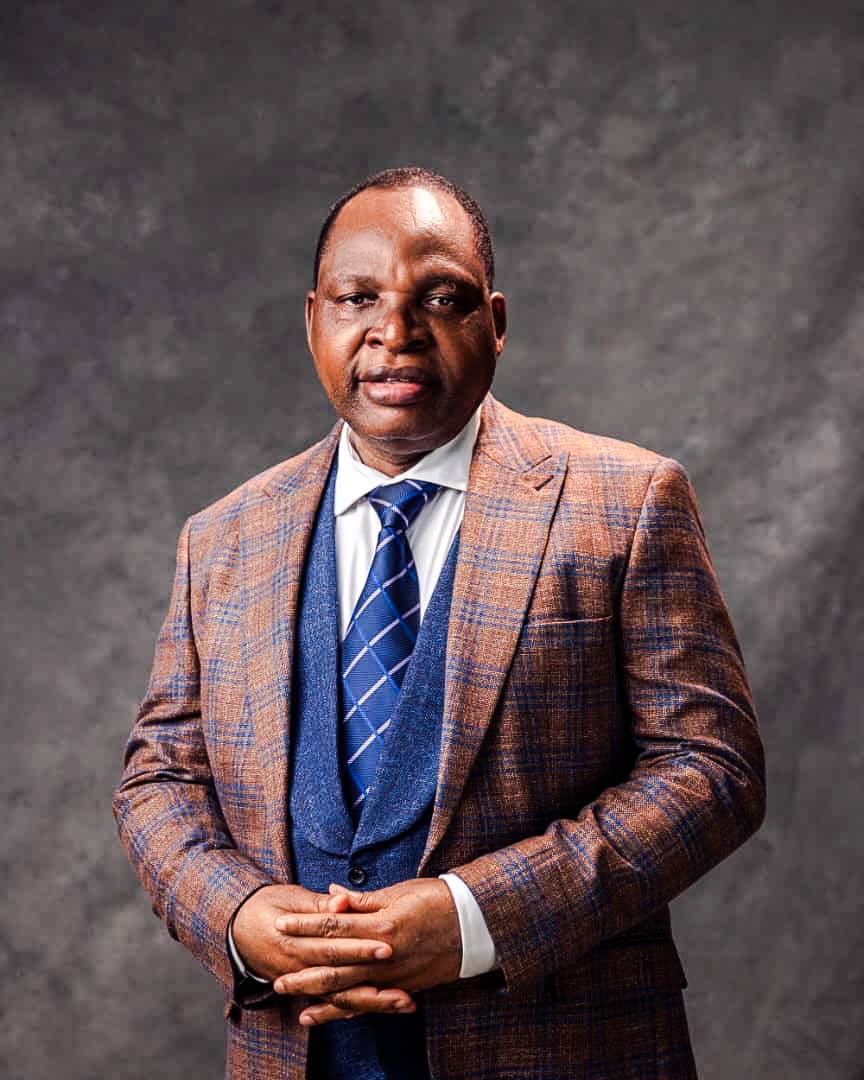
The Christian Association of Nigeria (CAN) mourn the passing of Rev. Dr. William Uzochukwu Okoye, Founder and General Overseer of All Christians Fellowship Mission.
In a statement issued by CAN President,
Archbishop Daniel Okoh, Abuja.
The statement reads in part, “On behalf of the National Executive Committee of CAN and the entire Christian community in Nigeria, I extend my heartfelt condolences to his widow, Rev.
Mrs. Toyin Okoye, his children, the leadership and members of All Christians Fellowship Mission, the Pentecostal Fellowship of Nigeria (PFN), and all who mourn this painful loss.“Rev. Dr. Okoye dedicated his life to the service of God and humanity. Through his ministry, he faithfully preached the Gospel, raised leaders, and worked tirelessly for the unity and growth of the Church in Nigeria.
” His service to the body of Christ extended well beyond his own ministry. He served as Chairman of the Christian Association of Nigeria (CAN), FCT Chapter, Chairman of the Pentecostal Fellowship of Nigeria (PFN), FCT Chapter, and later as CAN National Director on National Issues and Social Welfare. In these and other capacities, he made valuable contributions to strengthening the Christian witness in our nation and promoting constructive engagement on issues affecting the Church and society.
“Rev. Dr. Okoye also served the nation with distinction as a member of the Presidential Advisory Council on Youth Affairs, the National Political Reform Conference, the Nigerian Christian Pilgrims Commission, and as Chaplain to two Presidents of the Federal Republic of Nigeria and Head of the Aso Rock Villa Chapel. His commitment to nation-building reflected his conviction that faith should positively influence society.
“I remember Rev. Okoye as a humble servant of God who carried every responsibility entrusted to him with wisdom, grace, and unwavering dedication. He was deeply committed to the unity of the Church and was always willing to lend his voice and experience whenever called upon. His counsel, calm disposition, and passion for advancing God’s Kingdom will be greatly missed.
“As we mourn his passing, we also thank God for a life well spent in His service. We pray that the Lord will comfort his family, the All Christians Fellowship Mission, and all who are grieving at this difficult time. May God grant them the strength to bear this loss and uphold them with His unfailing grace.
“May the soul of Rev. Dr. William Uzochukwu Okoye rest in the eternal peace of our Lord Jesus Christ”
Religion
*Palm Sunday: Show Empathy, Ease Nigerians’ Burden, CAN urges Leaders………laments state of nation

By Laide Akinboade, Abuja
The Christian Association of Nigeria (CAN), at the weekend said in view of the current economic crunch in Nigeria, leaders must not be loud, but be restraints, have empathy and be focused on the common good of the people.
In a statement issued by Archbishop Daniel Okoh,President,CAN, in commemoration of Palm Sunday in Abuja.
The CAN President, lamented about the state of the nation, saying families are feeling the weight of time, cost of living is rising and normal daily lives is getting harder for families.
He said food cost is rising, transportation is high and for many Nigerians is how to stay afloat.
He said it is at this time leaders must make decisions that would ease the pain and burdens of Nigerians.
The statement reads, “As we observe Palm Sunday, we remember a powerful moment. Jesus entered Jerusalem with calm resolve, at a time of uncertainty and expectation. It was not a show of force, but a message of peace, purpose, and hope. In a tense atmosphere, he chose humility; riding on a colt, not in the trappings of power. That choice still speaks to us today.
“Across Nigeria, many are feeling the weight of the times. The cost of living is rising. For countless families, daily life is getting harder. Events far beyond our borders; especially tensions involving Iran, Israel, and the United States, are unsettling global energy markets. The impact is already here. Fuel is more expensive. Transport costs are rising. Food prices are climbing. In moments like this, the calm and clarity of Palm Sunday matter even more.
“For many Nigerians, the concern is simple and immediate: how to cope, how to plan, how to stay afloat. When life feels this uncertain, the tone of national life matters. Words carry weight. Actions have consequences. Palm Sunday reminds us that in tense moments, people need reassurance. They need stability. They need the quiet confidence that those in positions of responsibility understand what they are going through.
“That is why the lesson of Palm Sunday matters for leadership. True leadership is not always loud. It is seen in restraint, in empathy, and in a steady focus on the common good. It is reflected in decisions that ease burdens, calm anxieties, and bring people together. This is a time for such wisdom”.
The CAN boss, therefore urged all Christians in Nigeria, to stand firm on faith, stand together and in peace.
“For the Church and all people of faith, Palm Sunday is also a call to responsibility. It reminds us of a rare moment when people from all walks of life came together with one purpose: to welcome the Messiah in hope, humility, and expectation. That same spirit is needed now. We must stand for peace. We must strengthen unity. We must support one another. In a season that can easily tilt towards tension, we must remain a steady source of light and hope.
“And to every Nigerian, especially the young and those feeling the strain most deeply, do not lose hope. The challenges are real, but they are not the end of the story.
“As we journey through this sacred season, may the spirit of Palm Sunday guide us towards quiet courage, shared purpose, and a renewed commitment to the good of all”, he urged.
Congratulates Muslims on Eid-el-Fitri, urges unity amid economic, security challenges
By Laide Akinboade, Abuja
The Christian Association of Nigeria (CAN), congratulate the Muslim brothers and sisters across the country as they celebrate Eid-el-Fitri 2026.
In a statement issued and signed by
Archbishop Daniel Okoh,President,
Christian Association of Nigeria (CAN), in Abuja
He noted that, Eid marks the end of Ramadan, a period of fasting, prayer, reflection and giving.
He said today Christians in Nigeria celebrate with them, not only the breaking of the fast, but also the strengthening of faith, families and hope.
“At a time like this, our nation needs unity more than ever. From insecurity to economic hardship, the challenges before us are real, but so too is our shared strength. Nigeria works best when we stand together; not divided by faith or ethnicity, but united by a common purpose and a shared future.
“The spirit of Eid; kindness, sacrifice and care for others, offers us a way forward. It calls us to reject division, to choose dialogue over distrust, and to act in ways that heal rather than harm. This is how nations move forward, not just in words, but through everyday actions”, the CAN President, said.
He said, “We join our Muslim compatriots in prayer for Nigeria; for lasting peace, improved security, economic recovery, and leadership guided by wisdom and compassion. We pray that the right values nurtured during Ramadan will endure beyond this season, especially in caring for the poor, protecting the vulnerable, and building a more just society.
“Let this Eid be more than a celebration; let it be a reset for our national conscience”.



Group wants PGF, Wike to Work Together for Tinubu’s Re-election
ShareA political pressure group `Jagaban Apex Alliance (JAA)’, has called on Gov. Hope Uzodinma-led Progressive Governors Forum (PGF) and FCT...


Oborevwori Mourns Catholic Priest, Fr Anthony Ozele
ShareFrom Francis Sadhere, Delta Delta State Governor, Rt. Hon. Sheriff Oborevwori, has expressed condolences to the Catholic Diocese of Warri...
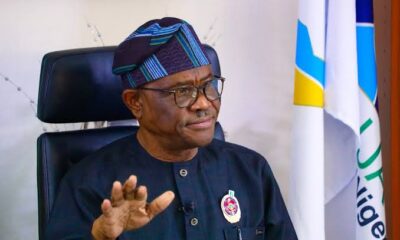

2027: Wike’s Support for Tinubu, Personal – PDP
ShareThe Peoples Democratic Party (PDP) and Nyesom Wike appear to be operating on parallel lanes regarding the 2027 presidential poll...
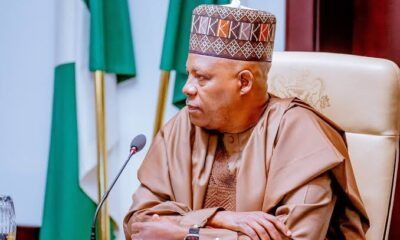

Tinubu Forgave Northern Govs Who Opposed Him in 2023, Says Shettima
ShareVice President Kashim Shettima has said President Bola Tinubu demonstrated political maturity by forgiving northern governors who opposed his presidential...


Soludo Charges PR Practitioners to Champion Strategic Communication, Rebuild Public Trust
ShareFrom Sylvia Udegbunam, Enugu The Anambra State Governor, Prof. Chukwuma Charles Soludo, has charged public relations practitioners to champion strategic...


PenCom Extends Deadline for Online Verification Exercise to Dec
ShareBy Tony Obiechina, Abuja The National Pension Commission (PenCom) has extended the deadline for the mandatory online verification and enrolment...


NASS Transmits 2026 Constitution Review Bills to 36 States
ShareBy Ubong Ukpong, Abuja The National Assembly has transmitted the Constitution of the Federal Republic of Nigeria, 1999 (Sixth Alteration)...


Presidency to Obi: Quit 2027 Race Over Anambra Debt Claims
ShareBy Tambaya Julius, Abuja The Presidency has challenged former Anambra State Governor and presidential candidate of the Nigeria Democratic Congress...


Police, Varsity Deepen Security Pact against Cultism, Campus Threats
ShareThe Cross River Police Command and the University of Cross River State (UniCross) have resolved to deepen their collaboration to...


Police Rescue Two Kidnap Victims, Arrest Three Suspects in Ondo
ShareThe Police Command in Ondo State said it has rescued two kidnapped victims and arrested three suspects at Isua-Akoko in...