
POLITICS
NASS Deals Blow to Women Political Empowerment

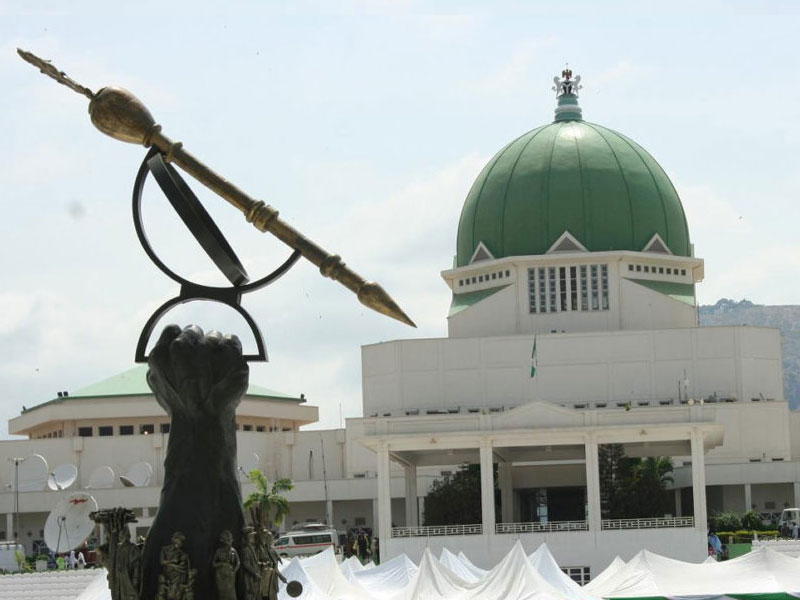
.Rejects 35% Affirmative Action for Female Politicians.
.Presence of VP’s Wife Fail to Swing Votes
.Passes Local Gov’t Financial Autonomy Bill
By Jude Opara and Ubong Ukpong, Abuja
Both chambers of the National Assembly yesterday, dealt a deathly blow to the move to slant the playing field in favour of Nigerian women in politics.
The lawmakers turned down two bills that sought to give more empowerment and leverage to Nigerian women in the political space.
One of the bills sought for the creation of one special seat for a woman at the Senate, House of Representatives and the Federal Capital Territory (FCT).
The lawmakers outrightly rejected the bill.
“The bill seeks to create a special seat for women in the Senate, House of Representatives and the State Houses of Assembly and the Federal Capital Territory reserved solely for women without prejudice to their eligibility to contest in the existing Senatorial seats in each State and FCT.”
Similarly, the proposed 35% affirmative action for women in political party administration was also rejected by both chambers.
Meanwhile, wife of the Vice President, Mrs. Dolapo Osinbajo and her entourage were in the Chamber as observers of Tuesday’s legislative proceedings and saw how the Senators rejected the two bills that concerned the female gender.
However, both chambers easily passed the Local Government Financial Autonomy Bill.
The Bill seeks alteration of the 1999 Constitution (as amended), to grant financial autonomy to the 776 local government areas in the country.
On Monday, the Nigeria Labour Congress (NLC) led a protest to demand autonomy for the local government and the judiciary.
The leadership of the NLC demanded overwhelming votes from the federal lawmakers, ahead of the clause-by-clause voting on the ongoing constitution amendment process.
NLC President, Mr. Ayubba Wabba demanded that the lawmakers vote in favour of autonomy for the local government and the judiciary.
The labour leaders insisted that the lack of autonomy for the judicial arm of government, as well as the local government as the third tier of government, run contrary to democratic principles.
In passing the Local Government Autonomy Bill granting full autonomy to the local government and council areas in Nigeria, 92 members of the red chambers voted overwhelmingly in support of the Bill, after a clause-by-clause consideration at the Committee on the Whole.
Furthermore, both chambers approved financial autonomy for State Legislatures, Judiciary and Local Governments in the country.
The approval came during voting on the report of the Senate Committee on the Review of the 1999 Constitution (Fifth Alteration) Bills, 2022.
However, the senators rejected the proposal for the payment of pension for presiding officers of the legislature.
During the voting, a total number of 88 Senators registered to vote on the bill of which 34 voted in support while 53 others were against its passage.
Also rejected were bills to override Presidential Veto in Constitution Alteration and to override Presidential veto in respect of ordinary money bills.
The rejected bills required the mandatory four-fifth votes of (88 Senators) and a two-thirds majority (votes of 73 Senators) respectively to pass.
In a related development, the bill for an Act to alter the provisions of the Constitution to provide the procedure for overriding executive veto in respect of money bills seeks to provide for the mode of exercising federal legislative power on money bills before the National Assembly.
A total of 94 Senators registered to vote on the bill to override a presidential veto in constitutional alteration, of which 79 lawmakers voted in support while15 voted against it. The bill could not muster the needed 88 votes (four-fifth requirement) to pass.
Also, the upper legislative arm rejected bills seeking to provide for the Removal of Presiding Officers of the Legislature; and to equally change the name of Barikin Ladi Local Government Area in Plateau State to “Gwol” Local Government Area.
The House, which considered 68 reports all together, rejected about 15 of the bills, as the over 304 members present at the sitting, voted clause by clause electronically.
Amongst the bills that failed to pass at the committee of the whole, presided by Speaker Femi Gbajabiamila, alongside his Deputy, Idris Wase,was clause 6, the Bill for an Act to Alter the Provisions of the Constitution of the Federal Republic of Nigeria, 1999 to Change the name Barikin Ladi Local Government Area; and for Related Matters.
Clause 35, a Bill for an Act to Alter the Provisions of the Constitution of the Federal Republic of Nigeria, 1999 to Provide for Special Seat for Women in the National and State Houses of Assembly; and for Related Matters Clause 36, a Bill for an Act to Alter the Provisions of the Constitution of the Federal Republic of Nigeria, 1999 to Expand the Scope of Citizenship by Registration; and for Related Matters
Clause 34, a Bill for an Act to Alter Part I of the Second Schedule to the Constitution of the Federal Republic of Nigeria, 1999 to include Value Added Tax on the Exclusive Legislative List; and for Related Matters and approve the Clause 37, a Bill for an Act to Alter the Provisions of the Constitution of the Federal Republic of Nigeria, 1999 to Provide for Affirmative Action for Women in Political Party Administration; and for Related Matters Clause 42, on a Bill for an Act to Alter the Provisions of the Constitution of the Federal Republic of Nigeria, 1999 to Expand Immunity to the Legislative and Judicial Arms of Government; and for Related Matters Clause 50, on a Bill for an Act to Alter the Provisions of the Constitution of the Federal Republic of Nigeria, 1999 to Replace the Consolidated Revenue Fund of the Federation with the Consolidated Revenue Fund of the Federal Government;
and for Related Matters.
Clause 59, on a Bill for an Act to Alter the Provisions of the Constitution of the Federal Republic of Nigeria, 1999 to Provide for Diaspora Voting; and for Related Matters.
Clause 64, on a Bill for an Act to Alter the Provisions of the Constitution of the Federal Republic of Nigeria, 1999 to further define Acts that Constitute Torture, Inhuman or Degrading Treatment; and for Related Matters.
Clause 12, on a Bill for an Act to Alter the Provisions of the Constitution of the Federal Republic of Nigeria, 1999 to
Institutionalize Legislative Bureaucracy in the Constitution; and for Related Matters .
Clause 13, on a Bill for an Act Alter the Provisions of the Constitution of the Federal Republic of Nigeria, 1999 to Provide for the Procedure for passing a Constitution Alteration Bill where the President withhold Assent; and for Related Matters.
Clause 16, on a Bill for an Act to Alter the Provisions of the Constitution of the Federal Republic of Nigeria, 1999 to Provide Pension for Presiding Officers of the National Assembly; and for Related Matters, amongst others.
The implication of the bills that failed is that they would not meet the list that would be transmitted to states houses of Assembly for approval, even if they were passed in the Senate, as there is no more room for harmonization between the two Chambers.
The House however passed critical bills giving financial autonomy to States judiciary and legislators as well as abolished the states and Local Government joint account.
Bill for independent candidates at elections, bill separating office of Attorney General from minister of Justice, as well as bill to make judges of industrial court part of election tribunal amongst others were passed.
The House also passed bills placing the Correctional Service on concurrent lists, Airport administration as well as electricity amongst others.
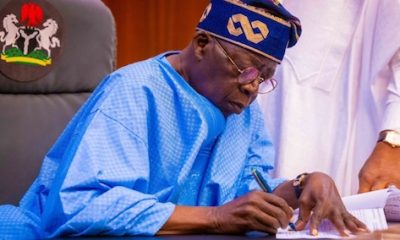


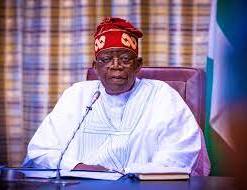
President Bola Tinubu yesterday, transmitted the appropriation (Repeal and Re-enactment Bill 2024/2025 bill to the House of Representatives for consideration and expected approval in accordance with constitutional and appropriation process.
Reading the letter during plenary, the Deputy Speaker, Rep.
Benjamin Kalu said that the appropriation bill is aimed at ending the practice of running multiple budgets concurrently.“Rt Honourable Speaker, the Bill seeks to authorize the issue from the consolidated Revenue fund of the federation of the total sum of N43,561,041,744,507.
“Comprising N1,742,786,788,150 for statutory transfers, N8,270,960,606,831 for debt service, N11,268,513,380,853 for recurrent (non-debt) expenditure and N22,278,780,968,673 for capital expenditure for the year ending 31 December 2025,” the President said.
According to the President, the bill provides a transparent and constitutionally grounded appropriation mechanism.
President Tinubu in the letter said that the appropriation is not only critical but time-sensitive expenditures necessary in advancing the well-being of Nigerians.
He further explained that the bill seeks to strengthen implementation discipline and accountability by requiring that appropriated funds are applied strictly for purposes specified in the schedules.
The House however adjourned to Thursday being 18, Dec for further consideration of the Bill.

From Christopher Tom, Uyo
Non-indigence in Akwa Ibom State especially the Igbo’s community has promised to give the highest number of votes across the state to Governor Umo Eno come 2027 governorship elections in the state.
The Igbo community said they will not fail to vote massively for the Governor.
The President of Ohanaeze Ndi-Igbo Akwa Ibom State Chapter, Hon.
Keyceey Chidiadi made this known while speaking with media practitioners shortly after the Uyo chapter of Igbo community unity day celebration 2025 in Uyo.He said Igbo’s scattered across the 31 local government Area of the state without any doubt seriously doing their businesses without any crisis, showcasing their love, unity among the indigence of the state while also contributing their quotas to boost the state economy.
According to him, the Igbo’s are about five thousand while some have not been recorded because they have not identified with the community and advise others to join the train before it’s too late for them.
He said their vote come 2027 is massively for Pastor Umo Eno without compromise because of his leadership style and developmental strive, showcasing true democracy carrying every individual along not minding the state or religion the people came from but stand on peace, unity among the people to benefit the dividend of democracy.
He called on Igbo’s resident in the state to make sure they vote here without going to their various states to maintain their voting strength as the highest numbers of people across the non-indigence communities in Akwa Ibom State.
He said they are law abiding citizens and not ready to accommodate or entertain any crisis, violence, because of their peaceful nature created by God, especially respect for the government of the day while corporate to preach peace in the state. He commended the community for embracing peace after 27 years of crisis without a leader among them, but now peace has restored to them across the communities in the state.

From Francis Sadhere, Delta
The Independent National Electoral Commission (INEC), Delta State Office, has announced the commencement of the display of the Preliminary Voter Register for claims and objections across the state.
According to a press release by the Resident Electoral Commissioner, Etekamba Udo Umoren, the exercise will begin on Monday, 15th December 2025 and end on Sunday, 21st December 2025.
The display will take place at all the 25 Local Government Area offices of INEC in Delta State between 9:00am and 3:00pm daily.
INEC explained that the exercise is in line with the Electoral Guidelines and is aimed at correcting any anomalies that may have occurred during the recent voter registration exercise.
The Commission noted that the process is essential to producing a credible and reliable voter register, which remains a key instrument for conducting free, fair and credible elections.
The Commission urged eligible voters in the state to seize the opportunity to visit INEC offices in their respective local government areas to confirm that their names and personal details are correctly captured in the register. Voters were also encouraged to report cases of omission, errors in spelling, or any other discrepancies.
In addition, members of the public were advised to raise objections to the inclusion of names of deceased persons, underaged individuals, or any other doubtful entries found in the register.
INEC reiterated its commitment to electoral integrity and called on all Deltans to actively participate in the exercise as part of their civic responsibility.
The Commission concluded the notice with a call to action, encouraging eligible citizens to register and participate in the electoral process.



Nigeria Clinches Bronze in Judo at 4th African Youth Games
ShareTeam Nigeria clinched a bronze medal in judo at the ongoing 4th African Youth Games after winning the 63kg category bout against Zimbabwe. The...
NCDMB Set to Attain 100 Per Cent Local Content in Africa
ShareBy Eddy Ochigbo, Abuja The Nigerian Content Development Management Board (NCDMB) has reaffirmed its determination to increase the current from...


Trump Expands US Travel Ban to Five More Countries
SharePresident Donald Trump has expanded a US travel ban, barring nationals of five additional countries and people travelling on Palestinian Authority-issued documents from entering the US. The White...


Farouk Ahmed, Gbenga Komolafe Resign after Dangote Petition
ShareBy Eze Okechukwu, Abuja President Bola Tinubu has nominated new chief executives for Nigeria’s two foremost petroleum regulatory agencies following the resignation...

NLC Stages Nationwide Strike over Insecurity
ShareLabour Takes Nationwide Protest to Streets over Insecurity The Nigeria Labour Congress (NLC) yesterday led a nationwide protest across major...

Presidency Transmits N43.5trn 2026 Appropriation Bill to Reps
SharePresident Bola Tinubu yesterday, transmitted the appropriation (Repeal and Re-enactment Bill 2024/2025 bill to the House of Representatives for consideration and expected approval...

SMEDAN Unveils MSMEs New Policy in 2026, Targets Funding Expansion
ShareThe Small and Medium Enterprises Development Agency of Nigeria (SMEDAN) said it will deepen business formalisation, expand access to affordable financing and unveil a new national MSMEs policy in 2026....


NCDMB set to Attain 100% Local Content in Africa
ShareBy Eddy Ochigbo The Nigerian Content Development Management Board (NCDMB) has reaffirmed its determination to increase the current from 56%...
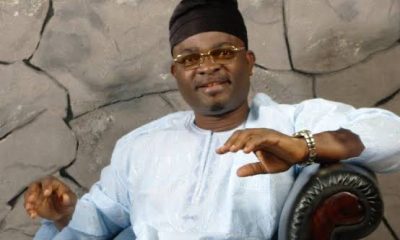

The Man Rotimi Makinde: A True Progressive by All Standards
ShareBy Kolapo Ogundare It is impressive to note that many well-meaning Nigerians are now coming out, recounting several good deeds...
FG, NBS Launch Nationwide MICS7 Survey
ShareFrom Francis Sadhere, Delta The Federal Government of Nigeria, through the National Bureau of Statistics (NBS), has officially launched the...