
POLITICS
NASS pledges Speedy Passage of Women-Inclusion Bills

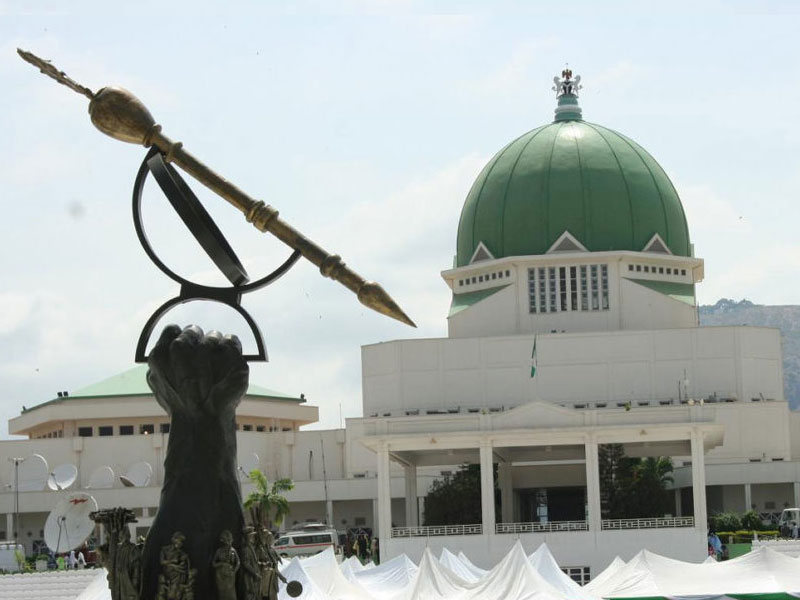
Senate President Godswill Akpabio has pledged the commitment of the 10th Assembly to speedily consider and pass gender-based bills in the ongoing Constitution amendment process.Akpabio made the pledge on Monday at the opening of a workshop organised for all female legislators at the national and state assemblies in Abuja.
The workshop which was organised by the National Institute for Legislative and Democratic Studies (NILDS) in collaboration with UN-Women was titled “Role of Legislators in Enhancing Gender Responsive Legislations and Budgeting in Nigeria” in Abuja. Akpabio said that promoting gender-responsive legislation and budgeting was an expression of genuine commitment to gender mainstreaming.He said that efforts including the most recent interventions, the five gender bills that were presented to the 9th National Assembly in 2022, that could have made significant contribution to gender equality/equity had failed.The senator said that unless notable barriers deeply rooted in culture, religion, economy and society are broken, it will be difficult to eliminate gender gaps.Akpabio said breaking such barriers demanded huge investments in gender-responsive legislations and budgeting as the take-off point.“This is because the role of gender-responsive legislation and budgeting in addressing gender gaps in governance and development cannot be overemphasised“As a responsible parliament, the 10th Assembly under my leadership will also act in solidarity with women caucus of the National and State Assemblies in their rightful demand for improved representation in governance, both symbolically and substantively.“Arising from this workshop, I will facilitate constant stakeholders’ engagements, including the leadership of NASS and state assemblies, women legislators at national and state levels, relevant Civil Society Organisations (CSOs) and so on.“We must do all that we can to make it work. We cannot afford to fail the nation again on this pertinent matter at this critical time.“I will expect, among other things, that this workshop will lead to the production of a framework or template for assessing the responsiveness of our budgets to gender equity; and guide the NASS regarding relevant and actionable legislative measures capable of addressing this pertinent issue.“Permit me to reiterate, for the umpteenth time, the commitment of the assembly under my leadership, to the speedy consideration and passage of the Gender Equality Bills as soon as we receive them.“We are also committed to the effective implementation of such Bills once passed. We will also ensure that each phase of thebudget cycle, from forecasting to outcome monitoring, is deliberately gender responsive,” he said.Also speaking, the Speaker of the House of Representatives, Rep. Tajudeen Abbas, said that women are not only underrepresented politically but in the private sector, religious organisations, and community and village governance.He said that male chauvinism had continued to derail the democratic ethos of inclusion and participation.Abbas said women and girls still face challenges in accessing education, healthcare, economic opportunities, and political representation.“Discriminatory cultural norms and practices, limited access to resources and decision-making processes, as well as violence against women, contribute to these inequalities.“How do we explain that out of the 469 seats in the National Assembly, the 10th Assembly has only 3.91 per cent women’s representation?“This is significantly low when compared to other African countries such as Kenya with 82 Female Members reordering 23.43 per cent of 350 representatives.“Uganda have 188 women representing 33.81 per cent of 556 representatives, and Ghana with 40 women, represents 14.55 per cent of 275 representatives.“Tanzania boasts of 118 which represents 37.4 per cent women in a parliament of 393 seats, and Malawi has 40 women which represents 20.73 per cent of 193 parliamentary seats.“It is therefore a matter of urgency to advance gender responsive Legislature and the 10th House of Representatives is taking this seriously,” he said. Report says that after counting of the votes, the Nigerian National Assembly at its plenary sessions on March 1, 2022, voted to reject five bills seeking to improve participation of women in governance in the country.Voting on 68 bills covering a range of matters, the National Assembly failed to vote in support of five key bills that would have improved women’s rights, created more legislative seats and increased participation of women in the governance of Nigeria.NAN relorts that the most far-reaching of these bills being the Specific seats for women in the Federal and State Legislative Houses, which could have been the signature amendment of the 9th Assembly’s legislative achievement.Another failed bill was the bill to provide 35 per cent affirmative action for women in political party administration, which failed in both houses, including an amendment in the House of Representatives to 15 per cent.Others include the bill to expand the scope of citizenship by registration, to extend citizenship to foreign spouses of Nigerian women and the bill on State indigeneship rights, which were approved in the Senate but failed in the House of Representatives.Also, a bill for reserved quota for women in Executive cabinet positions (ministers and commissioners) was approved in the House of Representatives by voice votes but failed in the Senate.(NAN)
From Francis Sadhere, Delta
The Federal High Court sitting in Warri, Delta State, has nullified the nomination of former Deputy President of the Senate, Senator Ovie Omo-Agege, as the Nigeria Democratic Congress (NDC) candidate for Delta Central Senatorial District in the 2027 general elections.
The court, presided over by Justice Hyeladzira Ajiya Nganjiwa on Tuesday, also directed the Independent National Electoral Commission (INEC) to remove Omo-Agege’s name from its list of candidates and restrained him from parading himself as the NDC senatorial candidate.
In addition, the court held that the statutory period for conducting fresh primaries to nominate another candidate had elapsed, effectively leaving the party with no opportunity to conduct another primary for the senatorial seat under the applicable electoral timeline.
The judgment followed a suit instituted by Prof. Alexander Osondu Akpodiete, marked FHC/WR/CS/120/2026, challenging the validity of Omo-Agege’s nomination on grounds bordering on his resignation from the All Progressives Congress (APC), membership of the NDC and eligibility to participate in the party’s senatorial primary.
Delivering judgment, Justice Nganjiwa dismissed five preliminary objections raised by Omo-Agege, the NDC and INEC, challenging the competence of the suit, before proceeding to determine the substantive issues.
The court found that the NDC failed to comply with the mandatory provisions of the Electoral Act concerning the submission of its membership register to INEC ahead of its primary election.
According to the court, Omo-Agege’s name was not contained in the NDC membership register submitted to INEC at least 21 days before the party conducted its primary.
Justice Nganjiwa further held that the NDC failed to provide credible evidence to establish that the membership register was subsequently updated and submitted to INEC within the statutory period.
The judge also relied on INEC’s revised electoral timetable, noting that Omo-Agege participated in the APC senatorial primary held on May 18, 2026.
The court held that the development established that the former Deputy Senate President was still a member of the APC at the material time, raising questions about his eligibility to participate in the NDC primary.
Justice Nganjiwa stressed that only persons whose names appeared in a political party’s membership register, in accordance with the provisions of the Electoral Act, were eligible to participate in its primary elections.
On the issue of a previously withdrawn affidavit, the court held that a party was entitled to withdraw an affidavit already filed in a proceeding, adding that once withdrawn, such an affidavit ceased to form part of the court’s records and could no longer be relied upon in determining the matter.
The judge maintained that a political party could not secure a valid nomination through a process that failed to meet statutory requirements, stressing that INEC was not permitted to include a candidate whose nomination violated the Electoral Act on the ballot.
Consequently, the court invalidated Omo-Agege’s nomination, ordered INEC to delist his name and restrained him from presenting himself as the NDC candidate for Delta Central Senatorial District in the forthcoming election.
The ruling raises questions over the NDC’s participation in the 2027 senatorial election in Delta Central, particularly following the court’s pronouncement that the statutory window for conducting fresh primaries had expired.
The full certified judgment and reactions from Omo-Agege, the NDC and INEC were not available at the time of filing this report.
By Orjime Moses, Abuja
The All Progressives Congress (APC) has mourned 15 of its members and supporters reportedly killed in a road accident in Zamfara State.
The party said the victims were travelling from Gummi Local Government Area to Talata Mafara to attend its governorship campaign flag-off when the accident occurred.
In a statement issued on Tuesday, and signed by its National Publicity Secretary, Felix Morka, the APC said several other people sustained injuries in the accident.
The party extended its condolences to Governor Dauda Lawal, the bereaved families, the government and people of Zamfara State, as well as its leadership and members.
It described the incident as a painful loss to the party and commended the decision to postpone the scheduled campaign rally in Maru Local Government Area in honour of the deceased and in solidarity with their families.
The APC also prayed for the speedy recovery of those injured and for the repose of the souls of the deceased.
From Attah Ede, Makurdi
Former Benue State Commissioner for Lands and Survey, John Tondo, has criticised former Governor Samuel Ortom over what he described as his failure to deliver meaningful infrastructural development to Guma Local Government Area despite spending eight years in office.
Tondo said Ortom failed to bring appreciable development to his immediate local government area throughout his two-term administration, particularly in addressing insecurity and the plight of displaced residents.
He alleged that although Ortom enacted the Open Grazing Prohibition and Ranches Establishment Law in 2017 to curb open grazing and promote ranching, the policy ultimately resulted in the displacement of residents, who were confined to internally displaced persons (IDP) camps instead of cattle being ranched.
The former commissioner made the remarks while hosting journalists to a luncheon in Makurdi. He, however, commended Governor Hyacinth Alia for what he described as deliberate efforts to reverse the situation and facilitate the return of displaced persons to their ancestral communities.
Speaking about the security situation in his community, Uvir, Kasiyo Council Ward, Guma LGA, Tondo said the former governor failed to translate the anti-open grazing law into a practical solution that would protect both farmers and their communities.
Explaining his recent political involvement, Tondo said he was not a career politician but a technocrat and businessman who became interested in supporting the present administration because he believes it is prioritising service delivery.
He recalled his experience as a commissioner, saying he gave his best during his time in government because he understood public office as an opportunity to serve the people.
Tondo also expressed concern over what he described as the commercialisation of IDP camps by some non-governmental organisations (NGOs), alleging that certain groups were frustrating Governor Alia’s efforts to return displaced persons to their ancestral communities because of the financial benefits associated with maintaining the camps.
He accused some organisations and their alleged agents of encouraging displaced persons to remain in camps to sustain the flow of humanitarian assistance from international partners.
According to him, the situation was undermining the state’s efforts to restore normalcy in affected communities.
He maintained that many residents of his community had returned home and resumed farming activities, adding that the process of resettlement was ongoing.
“In September 2023, my people started returning home after spending more than five years in IDP camps. As I speak, all of them have returned and are going about their farming activities. Nobody is being ranched again.
“This development endeared me to Governor Alia, and I decided to support him so that my people could continue to enjoy peace.
“The IDP issue has become a source of business for some people, especially NGOs. They have allegedly recruited agents to ensure that displaced persons do not return home so that they can continue to benefit from humanitarian assistance.
“I can drive you to my village and you will see that people have returned. However, some people are keeping others in the camps because they want to continue doing business and receiving assistance from foreign partners.
“These are the issues. The communities are sufficiently safe for residents to begin returning, and it is a continuous process. Even last Saturday, I attended a burial in my village. I had not visited the community until that day,” he said.
The former commissioner further applauded Governor Alia’s infrastructural interventions, particularly the construction and rehabilitation of access roads across the state.
He said the governor was addressing some of the developmental priorities he had identified during his own governorship aspiration.
Tondo, who served as Commissioner for Lands and Survey, said he had earlier been concerned about the unplanned expansion of Makurdi, where residents constructed buildings without due consideration for existing urban development plans.
He commended the Alia administration for opening and constructing access roads, noting that the interventions would improve urban development and ease movement.
On workers’ welfare, he also praised the governor for what he described as the timely payment of salaries and pensions, saying the development had positively affected civil servants, pensioners and their families.
Tondo also denied being a member of the All Progressives Congress (APC), insisting that membership of a political party was not a prerequisite for supporting good governance.
He said his support for the Alia administration was based on its performance rather than party affiliation, adding that he also supported policies of the Federal Government that he considered beneficial to the country.
Citing the removal of fuel subsidy by President Bola Tinubu, Tondo argued that although the policy initially imposed economic hardship on citizens, it had increased the resources available to federal, state and local governments for development.
“I do not need to belong to a political party to support good governance. The APC, from the national to the state level, is doing what the PDP did not do.
“Governance is not about emotions. When you are given a responsibility, you must be seen discharging it. If I am in a position of authority and see people doing the right thing, I will support them.
“On fuel subsidy, for instance, we all know that it was a system through which Nigeria’s resources were shared among a few people. The President came in and had the courage to remove it.
“Although people may suffer temporarily, in the long run, the policy can benefit them through increased resources for development. Leadership is about taking difficult decisions and remaining focused on achieving set objectives.
“At the national and state levels, the President and the governor are delivering on their mandates and promises to the people. I do not have to belong to a political party to support a system that is doing well,” he said.
Explaining his financial contribution to Governor Alia’s campaign fundraising, Tondo said he donated because he believed the governor was using public resources to deliver services to the people and deserved support for his re-election bid.
He maintained that Alia’s performance motivated his decision to contribute to the campaign fund, expressing confidence that the governor would do more if returned to office.
Tondo urged the people of Benue State to prioritise the state’s image, welfare and security, while supporting development initiatives capable of improving the lives of residents.
He called for collective commitment to the state’s progress, saying sustained support for policies and projects that promote development would help build the Benue of their dreams.




Court Nullifies Omo-Agege’s NDC Senatorial Candidacy
ShareFrom Francis Sadhere, Delta The Federal High Court sitting in Warri, Delta State, has nullified the nomination of former Deputy...


APC Mourns 15 Supporters Killed In Zamfara Road Accident
ShareBy Orjime Moses, Abuja The All Progressives Congress (APC) has mourned 15 of its members and supporters reportedly killed in...
Ortom ‘Ranched’ Benue People in IDP Camps Instead of Cattle – Tondo
ShareFrom Attah Ede, Makurdi Former Benue State Commissioner for Lands and Survey, John Tondo, has criticised former Governor Samuel Ortom...


2027: INEC Chairman Seeks Stronger Security Cooperation Ahead Of Elections
ShareBy Orjime Moses, Abuja The Chairman of the Independent National Electoral Commission (INEC), Prof. Joash Ojo Amupitan, SAN, has called...


CBN Retains Interest Rate at 23 Per Cent
ShareBy Tony Obiechina, Abuja The Monetary Policy Committee (MPC) of the Central Bank of Nigeria (CBN) has retained the benchmark...


2027: Emovworho Warns Delta Politicians Against Exploiting Youths
ShareBy Orjime Moses, Abuja A concerned son of the Urhobo Nation, Austin Obule Emovworho, has warned political leaders in Delta...

Katsina Suspends Daura Emir, Orders Probe into Sexual Assault Allegation
ShareBy David Torough, Abuja The Katsina State Government has suspended all official engagements and travels of the Emir of Daura,...

Makarfi Chairs DAILY ASSET 10th Anniversary, Awards
ShareBy David Torough, Abuja Former Kaduna State Governor, Senator Ahmed Mohammed Makarfi, has accepted the invitation to chair the 10th...


Customs Unveils Novara to Spotlight Officers’ Challenges
ShareBy Tambaya Julius, Abuja The Nigeria Customs Service (NCS) has unveiled a 79-episode television drama series, Novara, to showcase the...


FCT Upgrades 20 PHCs Under World Bank-supported IMPACT Project
ShareBy Laide Akinboade, Abuja The Federal Capital Territory Administration (FCTA) has upgraded 20 Primary Health Centres (PHCs) across the territory...