
NEWS
Navigating Nigeria’s Insecurity: The Church as Moral Compass for Peace


By Kevin Okunzuwa
The avalanche of angry reactions trailing the U.S. designation of Nigeria as a “Country of Concern” was expected, given the escalating insecurity and the fragile state of the nation.
Yet, amid the crisis and rising voices of fear, some churches and clerics maintain that the body of Christ has a responsibility to help guide the country out of its current challenges.
Leading the crusade for voices of reason, the Catholic Church in Nigeria described the church as society’s moral compass for peace and development in times of uncertainty.
Fr. Peter Babangida-Audu, the Director, Department of Church and Society of the Catholic Church, made the declaration in an interview with the News Agency of Nigeria (NAN) recently in Lagos.
Babangida-Audu spoke on the sidelines of the annual general meeting of the Catholic Secretariat Department of Church and Society held in Abuja.
The cleric described the Church as society’s moral compass, stressing that “it is called not to retreat during moments of insecurity, but to take the lead’’.
According to him, the church is called to be a credible witness to hope, a defender of human dignity, and an agent of integral development.
“Today’s gathering brings together the richness of our five units. Education, Health, Migrants and Refugees, Family and Human Life, and the Justice, Development and Peace Commission (JDPC).
“Each contributes uniquely to the church’s social mission; when we bring these strengths together, we become a formidable force for national transformation, turning displacement to development.
“Our first sub-theme, ‘Displacement to Development: Solidarity with the Vulnerable in the Year of Hope’, reminds us of the millions of Nigerians displaced by conflict, poverty, natural disasters, and social instability.
“As a Church, our response cannot end at providing relief; we must accompany people along the entire journey – from displacement to empowerment, from despair to dignity, from trauma to transformation,” he said.
He said that the Church must form consciences, promote justice, insist on good governance, strengthen civic participation, and mobilise for peaceful political processes.
“Our JDPC structures are uniquely positioned to guide this process with integrity and courage.
“One of our strategic goals in the years ahead is to continue to build stronger inter-unit collaboration.
“No single unit can address Nigeria’s complex social challenges alone; education influences peace building; family life affects migration; health supports development; JDPC drives governance and stability,” he said.
According to him, there is a need for the church to rediscover its identity as a harbinger of hope– one that speaks, acts, and serves with the conviction that Nigeria can rise again.
In addition, the Archbishop Emeritus of Abuja, Cardinal John Onaiyekan, said that only a unity of purpose among religious leaders and organisations could guarantee the rediscovery of purposeful leadership and good governance.
He lamented that the virtues of religious tolerance and mutual respect that once endeared Nigeria to the international community had become a sad anomaly.
According to Onaiyekan, that once beautiful narrative has now become a sad anomaly.
The cleric spoke at the 9th International Conference on “Love and Tolerance”, convened by the Ufuk Dialogue at the Institute for Peace and Conflict Resolution (IPCR) in Abuja.
Speaking on the theme, “Bridging Divides – Building Trust in a Polarised World,” Onaiyekan said that the world was currently witnessing religious organisations and people coming together.
He contrasted the trend with the situation in Nigeria, observing that while the global drift pointed towards greater religious unity, Nigerians were instead using religion to divide and tear themselves apart.
“I am 81, and 20 years ago, I thought we were making progress and that we would soon do away with evil people using religion to divide us.
“Why are we allowing this polarisation? People are afraid to talk because they are afraid of offending people.
“Indeed, God created us differently, so let us celebrate our differences and welcome one another.
“Nigeria used to be a model of religious tolerance and mutual respect.
“Twenty years ago, I used to boast about it, but I do not know what has happened,” he said.
The co-founder of the Interfaith Initiatives for Peace (IIP) said Christians and Muslims should embrace their differences and build bridges so they could jointly confront the nation’s common enemies.
According to the octogenarian, both Christianity and Islam are monotheistic religions.
“If either a Christian or a Muslim believes their Gods are different, it implies the existence of at least two Gods—something neither faith teaches
“If we can work on honesty in every sphere of our national life, we can make progress.
“Let us agree that we have differences; only then can we work together for the development of our country,” he said.
The Director-General of the IPCR, Dr Joseph Ochogwu, said the conference was taking place at a time when polarisation had become increasingly evident in the country.
Represented by Dr Emmanuel Mamman, a director at the institute, Ochogwu said that women, youths, and traditional and religious institutions must play a central role in bridging divides and rebuilding trust.
“Trust cannot be legislated; it is cultivated through those who hold moral influence and generational reach.
“Women have long been silent architects of unity because they mediate family and community disputes by detecting early signs of tension and spearhead recovery efforts after crises.
“The youths also represent enormous potential because of their technological skills, cultural connection, and global awareness.
“Yet, many feel excluded from national discourse.
“Rebuilding trust requires meaningful engagement of young people as co-creators of solutions, not passive recipients,” he said.
In his submission, the President of Ufuk Dialogue, Mr Emrah Ilgen, said the annual conference was conceived to promote dialogue, culture of coexistence, mutual understanding, and to establish a common platform for promoting peace.
He said peace was a prerequisite for growth and development, and that any society that failed to invest in peace could not progress.
Most Rev. Christopher Naseri, the Auxiliary Bishop of Calabar, represented by Fr. Evaristus Bassey, at the conference, highlighted the importance of mainstreaming Catholic Social Teaching (CST) in Nigeria’s development agenda.
Naseri said that the country’s current challenges were not the result of a religious war, but rather a crisis driven by poverty, inequality, and environmental degradation.
According to him, leaders often lack the will to implement policies that genuinely serve the common good.
He said that the church must act as a prophetic voice, advocating for justice, peace, and development.
The priest outlined the key principles of CST—including the dignity of the human person, the common good, subsidiarity, and solidarity—emphasising that these should guide the Church’s development efforts.
Naseri further called for the Church to actively engage in advocacy and policy making, applying CST principles to shape its actions.
He recommended stronger collaboration with the government and other stakeholders to promote sustainable development and address Nigeria’s pressing challenges.
In the same vein, Most Rev. Sunday Ndukwo, Archbishop, Special Duties, At-Large of the Methodist Church Nigeria, said the way out of the current challenges was for leaders to become truthful to themselves and do right.
Onuoha declared that Nigeria would not overcome its deepening insecurity crisis “unless the nation confronts the truth about the scale of the problem.
Speaking in Abuja during a thanksgiving service held after his investiture as Archbishop of Special Duties, Onuoha said the country had slipped into a worrying cycle of dependence — borrowing not only money, but even the basic technologies required for survival.
He cautioned that Nigeria could no longer continue “pretending that all is well” while kidnappings, attacks on vulnerable communities and widespread fear persisted across the country.
Onuoha urged Nigerians to stop pretending and begin rebuilding the nation with truth, responsibility and accountability.
Ultimately, stakeholders maintain that strong political will and sustained interfaith dialogue were crucial in navigating Nigeria’s complex security situation. (NAN)
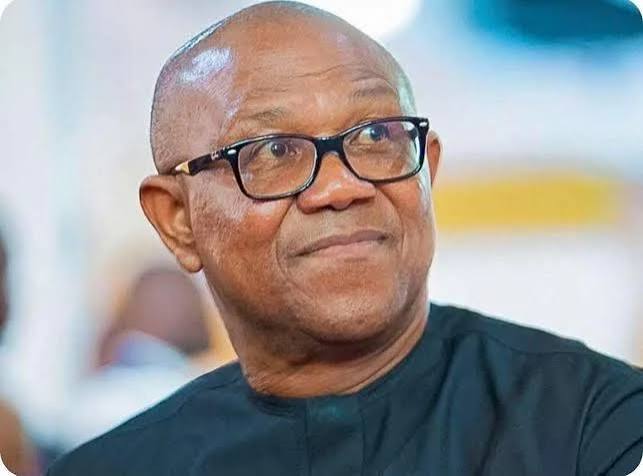
The 2027 presidential candidate of the Nigeria Democratic Congress, Peter Obi, has announced plans to publish a 10-day account of his achievements as governor of Anambra State amid allegations that he abandoned the state during an erosion crisis.
Obi said the series, titled ‘Record of Service’, would highlight his interventions, achievements and responsibilities during his tenure as governor.
The former Anambra governor disclosed this in a post on his X handle on Monday, shortly after arriving in the United States for a series of engagements in Washington, DC.
He said the presentation would begin on Tuesday and run for 10 days, explaining that he decided to make his record public in response to repeated scrutiny of his past.
“Nevertheless, because certain individuals have repeatedly scrutinised my past, even as they appear uneasy about their own records, I have chosen to allow the facts to speak for themselves.
“Starting today and running for ten days, I will present some of the accomplishments recorded during my tenure as Governor of Anambra State.
“This series will outline my interventions, achievements and the responsibilities entrusted to me. I have titled it my Record of Service,” he said.
Obi also specifically addressed allegations that he abandoned Anambra State during the erosion crisis, insisting that he had never evaded any responsibility entrusted to him.
“In particular, in light of allegations that I abandoned Anambra State during the erosion crisis, among other assertions, I consider it necessary to present the facts to the public.
“I have never evaded any responsibility entrusted to me, and I will certainly not shirk my responsibility to help address Nigeria’s challenges,” he said.
Recall that on November 6 during the APC rally in Akwa Ibom, Tinubu took a swipe at Obi, accusing him of failing to tackle erosion in his state while contrasting his record with efforts to confront the Atlantic Ocean in Lagos.
However, Obi, on Monday, maintained that his political campaigns had focused on policies, ideas and practical solutions to Nigeria’s challenges rather than personal criticisms.
“Throughout my election campaigns, I have sought to emphasise policies, ideas, and practical solutions that can deliver the change Nigeria urgently requires and help our nation overcome its current challenges,” he added.
The former governor said he had always given his best in every position he had occupied, although he acknowledged that not all intended results could always be achieved.
“In every position I have held, I have consistently given my utmost effort in fulfilling my responsibilities. Although no one can always attain every intended result, I have never been found lacking in dedication or effort. I have always given the task my full commitment,” he said.
Obi added that he would continue to update supporters on his daily engagements and other significant developments as campaign activities gathered momentum.
He expressed confidence that facts would ultimately outlast allegations, adding, “I am confident that, ultimately, facts outlast allegations, while records carry greater weight than rhetoric.”

The Nigerian Meteorological Agency (NiMet) has predicted dust haze and thunderstorms across the country from Monday to Wednesday.
NiMet’s weather outlook, released on Sunday in Abuja, forecast slight dust haze over most northern areas, with moderate haze over parts of Kano, Jigawa, Bauchi and Kaduna states.
The agency also predicted isolated thunderstorms accompanied by light rains over parts of Taraba on Monday afternoon or evening.
For the North-Central region, NiMet forecast sunny skies with patches of clouds on Monday morning.
It anticipated isolated thunderstorms accompanied by light rains over parts of Kogi, Kwara, the Federal Capital Territory and Benue later in the afternoon or evening.
In the southern region, the agency predicted cloudy skies, with possible light rains over parts of Delta and Bayelsa states on Monday morning.
It also forecast thunderstorms accompanied by moderate rains over parts of Ondo, Ogun, Osun and Ekiti states, as well as the South-East and South-South, later in the day.
For Tuesday, NiMet predicted sunny and hazy conditions across the northern region throughout the day.
The agency forecast sunny skies with patches of clouds over the North-Central region in the morning.
It, however, anticipated isolated thunderstorms accompanied by light rains over parts of Kogi, Kwara and Benue states later in the afternoon or evening.
Across the southern region, NiMet predicted cloudy skies in the morning, followed by thunderstorms accompanied by moderate rains over most areas later in the day.
For Wednesday, the agency forecast slight dust haze over most northern areas throughout the day.
It also predicted sunny skies with patches of clouds across the North-Central region.
In the southern region, NiMet envisaged cloudy skies in the morning, followed by thunderstorms accompanied by light rains over parts of Imo, Abia and Anambra states.
It further forecast light rains over parts of the South-West and South-South later in the day.
The agency urged the public to take precautions against suspended dust particles, particularly people with asthma and other respiratory conditions.
It cautioned that strong winds could precede thunderstorms and advised residents to secure loose objects to prevent them from being blown away.
NiMet also advised residents to avoid tall trees to minimise the risk of injuries from falling branches and broken trees.
It urged the public to disconnect electrical appliances from power sockets during thunderstorms.
“Airline operators are advised to obtain airport-specific weather reports (flight documentation) from NiMet for effective planning of their operations,” it said.
The agency advised residents to stay informed through regular weather updates on its website. (NAN)
By Orjime Moses, Abuja
The Independent National Electoral Commission (INEC) has dismissed claims that presiding officers can be remotely logged out of the Bimodal Voter Accreditation System (BVAS) before the conclusion of voting, describing the allegation as false and misleading.
The commission also faulted claims that election results uploaded offline could be lost, explaining that such results remain securely stored on the devices pending successful transmission to its Result Viewing Portal (IReV).
INEC gave the clarification in a statement posted on its official Facebook page on Monday, following the circulation of a video on social media alleging that election officials could be logged out of BVAS before the end of voting.
The video, which circulated online last week, also warned presiding officers against uploading polling unit results offline, claiming that such results could be lost.
However, INEC explained that each polling unit is assigned unique login credentials, which are issued to the presiding officer on the eve of an election to access BVAS for voter accreditation and subsequent uploading of polling unit results.
It said only the poll official operating the device has the authority to log in or log out of the system, adding that there is no provision for any external individual or authority to remotely log out the device.
On the offline upload process, the commission said it upgraded the IReV application following experiences during the 2023 general election, when some poll officials were held hostage at their polling units because of poor or non-existent network connectivity.
According to INEC, the upgrade introduced an offline upload capability that allows presiding officers in areas with poor or no network coverage to upload polling unit result sheets in the presence of stakeholders.
It explained that the uploaded result sheets remain securely stored on the BVAS devices until they reconnect to the internet.
The commission added that as presiding officers proceed from their polling units to ward collation centres, the result sheets are automatically transmitted to the IReV portal once the devices regain internet connectivity, without requiring further manual intervention.
INEC assured Nigerians that its BVAS and IReV systems operate in accordance with established procedures designed to safeguard the integrity, transparency and credibility of the electoral process.
It urged members of the public to disregard the video, avoid creating or sharing unverified information and rely on its official communication channels for accurate information.
The commission reiterated its commitment to transparency, accountability and the conduct of free, fair and credible elections.



Obi to Publish Anambra Achievements in 10-day Series
ShareThe 2027 presidential candidate of the Nigeria Democratic Congress, Peter Obi, has announced plans to publish a 10-day account of...


NiMet Predicts Dust Haze, Thunderstorms Nationwide
ShareThe Nigerian Meteorological Agency (NiMet) has predicted dust haze and thunderstorms across the country from Monday to Wednesday. NiMet’s weather...

INEC Debunks Claims of Remote BVAS Log-Out, Lost Election Results
ShareBy Orjime Moses, Abuja The Independent National Electoral Commission (INEC) has dismissed claims that presiding officers can be remotely logged...
Needless Diplomatic Brawl
ShareNigeria and South Africa do not need another quarrel. They have had too many already — xenophobic attacks, trade disputes,...

Governor Hyacinth Alia and the Case for Continuity: Consolidating the Gains of Development, Institutional Renewal and Workers’ Welfare in Benue State
ShareBy Elijah Terdoo Ikpanor The question of continuity in governance is ultimately a question of performance, direction, accountability and the...

Tinubu Orders Release of 78 Suspects over Abuja Convoy Attack
ShareBy Laide Akinboade, Abuja The Federal Capital Territory (FCT) Police Command has commenced the release of 78 suspects arrested in...

Daily Asset at 10: Adeniyi, Alia, Bala Mohammed Top Awards List
ShareBy David Torough, Abuja DAILY ASSET Newspaper has unveiled an impressive list of distinguished Nigerians and institutions selected for its...

Kohol tasks NUBESS Leaders on Service, Accountability, Legacy
ShareBy David Torough, Abuja The founder of Menroi Rural Priority Organisation, Professor Kohol Iornem has challenged leaders of the National...

Stakeholders Celebrate Zikism at 7th Nnamdi Azikiwe Annual Award Lecture in Abuja.
ShareBy Raphael Atuu, Abuja As Barrister Henry Okeke Says The gathering provided another opportunity for Nigerians to reflect on the...

2027 Elections: CHRICED Trains 36 Journalists To Combat Fake News, Promote Peaceful Polls
ShareBy Orjime Moses Abuja As Nigeria prepares for the 2027 general elections, the Resource Centre for Human Rights and Civic...