
BUSINESS
NBET Pays N42bn to GenCos for November 2021 Power Supply


By Joseph Amah, Abuja
The Nigerian Bulk Electricity Trading Plc on yesterday disclosed that it remitted N42 billion to power generation companies (GenCos) for electricity supplied to the national grid in November 2021.
The bulk trader in a statement in Abuja explained that the payments were a combination of market receipts and supplementary payments from Electricity Distribution Companies (DisCos) made to NBET.
NBET said it processed market payment of N42,486,673,723.75 to the power generators for the November 2021 Payment Cycle for grid distributed electricity.
It stated that these payments were made last week to GenCos for delivered electricity to the National grid during the period.
“DisCos and GenCos payments are based on the electricity market settlement”, it added.
NBET explained that “Market Settlement Statement are issued in arrears by the Market Operator (MO) following a period of 28 days after a cycle. The MO takes the readings of the various meters via the grid network to determine the quantum of electricity supplied to the grid by each generation companies into the national pool, which is then wheeled via the transmission network to the distribution companies and subsequently to the end-users.
“The settlement statement forms the basis of invoicing and processing of payments to the GenCos”.
NBET said it has continued to ensure “timely payments to generating companies for energy generated and distributed to end users via the grid despite the average market performance of DisCos”.
NBET Head of Corporate Communications, Ms. Henrietta Ighomrore, in the statement, added that the payments were made following its internal payment committee meetings and approval by management.
“NBET continues to fulfill its mandate in ensuring an efficient and effective transactions environment for the bulk purchase and resale of power in the Nigerian Electricity Supply Industry.
“For the 2021 payment cycle, NBET processed an average of N68 billion worth of electricity via the grid, making sure that GenCos received an average minimum settlement of 85 per cent of generation invoices”, she said.
According to her, for January – June 2021 settlement cycle, NBET ensured that all GenCos received payment of 90 – 99 per cent of generation invoices for grid distributed electricity through the NBET Payment Assurance Facility (PAF) and market receipts.
NBET named Eko Electricity Distribution Company (EKEDC) as the best performing DisCo with a rating of 93 per cent of its Minimum Remittance Order (MRO) for November, 2021 while Abuja Electricity Distribution Company (AEDC) and Kaduna Electricity Distribution Company (KEDCO) were named as the least performing companies with both remitting below 20 per cent of the MRO.
“The increase, timeliness and consistency in payments to the GENCOS has ensured stability of the national grid and sustained power generation across the country. It is evident that the quantum of power delivered to the grid has been on a steady increase as GenCos can leverage payments to third parties and ensure maintenance of their plants.
“With a new license, NBET is suitably positioned to lead the NESI towards a viable power exchange for the good of the sector”, Ms Ighomrore added.



By Tambaya Julius, Abuja
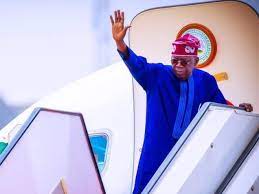
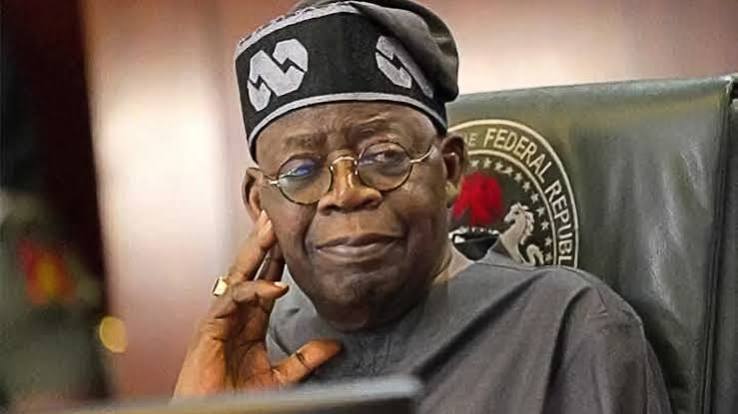
President Bola Tinubu has asked the National Assembly to approve a supplementary external borrowing plan of $20.52 billion and €1.045 billion to finance projects and programmes across critical sectors of the Nigerian economy.
The request was conveyed in a letter read by Senate President Godswill Akpabio during plenary on Tuesday.
Tinubu said the proposed loans would help address the country’s infrastructure deficit, accelerate economic growth, create employment opportunities and improve the living conditions of Nigerians.
He urged the National Assembly to approve the 2026–2027 Supplementary External Borrowing Plan to enable the Federal Government to implement its development projects and programmes without delay.
Hhowever, the opposition- African Democratic Congress( ADC) has querried the timing of the loan just as it said economic conditions in tje country did not justify any fresh borrowing.
The president said the proposed borrowing would cover infrastructure, agriculture, healthcare, education, water supply, security, employment generation and financial management reforms.
According to him, the need to sustain economic growth and accelerate national development following the implementation of his administration’s reforms had made additional external financing necessary.
Tinubu put the proposed facilities at $20,517,755,901 and €1,045,083,643, adding that the projects and programmes had undergone technical and economic assessments to determine their potential contributions to national development.
He said the proposed investments were expected to stimulate economic activities, create jobs, promote skills acquisition, encourage entrepreneurship, reduce poverty and strengthen food security.
The president added that most of the projects would be implemented across the 36 states of the federation and the Federal Capital Territory (FCT).
He explained that the scale of Nigeria’s infrastructure needs and the financial resources required to address them had made broader external borrowing necessary to bridge the funding gap.
Tinubu said the funds would be channelled primarily into critical infrastructure, particularly power, transportation and healthcare, while other sectors would also benefit from the proposed financing.
He called on the Senate and the House of Representatives to give the request urgent consideration, arguing that prompt approval would facilitate timely disbursement and effective implementation of the projects.
Following the presentation of the letter, Akpabio referred the request to the Senate Committee on Local and Foreign Debts for consideration and directed it to report back to the chamber within one week.
The committee is expected to conduct the initial legislative review, with possible collaboration with the Senate Committee on Appropriations and other relevant committees.
The proposed borrowing plan must undergo legislative scrutiny before the external financing can proceed.
However, the letter, as presented to the Senate, did not provide a project-by-project breakdown of the proposed facilities, their individual financing terms or the allocation of funds among the beneficiary sectors.
The request comes as the Federal Government seeks additional resources to finance infrastructure and development programmes amid competing demands on public finances.
The implementation of the borrowing plan will depend on the outcome of the National Assembly’s consideration and the details of the projects to be financed.
In a statement, the Director of Media and Publicity of the ADC-PCC, Kola Ologbondiyan, said the fresh borrowing request came amid rising living costs, increased taxation and growing economic hardship among Nigerians.
Ologbondiyan questioned the rationale for seeking additional foreign loans when, according to the council, millions of citizens were struggling to meet their basic needs.
“What exactly is President Tinubu borrowing all this money for? Where are the roads, the electricity, the hospitals, the jobs and the critical infrastructure that should justify this relentless accumulation of debt? Nigerians deserve answers,” he said.
He also demanded explanations on the utilisation of funds saved from fuel subsidy removal and the proceeds of previous borrowings.
The ADC-PCC expressed concern that continued dependence on foreign loans, without clear evidence of corresponding improvements in infrastructure, productivity, employment and citizens’ welfare, could push Nigeria deeper into a debt trap.
According to the council, mounting debt-servicing obligations could limit the ability of future administrations to make independent economic decisions and undermine the country’s fiscal flexibility.
“This is not a sustainable path to national development. It is a dangerous attempt to mortgage the future of Nigeria and generations yet unborn,” Ologbondiyan said.
He argued that the government should not continue to demand economic sacrifices from citizens while seeking additional loans without adequately explaining how existing resources had been spent.
The council further warned that excessive borrowing could expose the country to greater financial pressure and constrain its ability to fund critical public services.
It insisted that any new borrowing arrangement must be tied to clearly defined national priorities, productive investments and measurable benefits for Nigerians.
The ADC-PCC therefore called on the National Assembly to subject the proposed loans to rigorous scrutiny and reject the request unless the Federal Government demonstrates their necessity, sustainability and expected benefits.
It also demanded that Tinubu publish a comprehensive account of all domestic and foreign loans obtained since May 29, 2023, alongside a detailed breakdown of revenue generated from fuel subsidy removal and how the funds had been applied.
The council called for full disclosure of the proposed facilities’ purposes, interest rates, repayment schedules, associated fees, conditions and any collateral or guarantees attached to them.
It maintained that Nigerians had a right to know the financial obligations being incurred on their behalf and the implications for the country’s economic future.
“Nigeria cannot borrow its way out of poor economic management. Borrowing must be tied to clearly defined national priorities, transparent expenditure and measurable outcomes.
Anything less is an injustice to the Nigerian people,” the statement added.
The ADC-PCC also urged the National Assembly not to abdicate its oversight responsibilities, insisting that lawmakers must ensure that any borrowing arrangement does not expose the country to unacceptable financial risks.
It said the Federal Government must demonstrate how the proposed loans would stimulate economic growth, create jobs, improve infrastructure and raise living standards rather than impose additional liabilities on future generations.
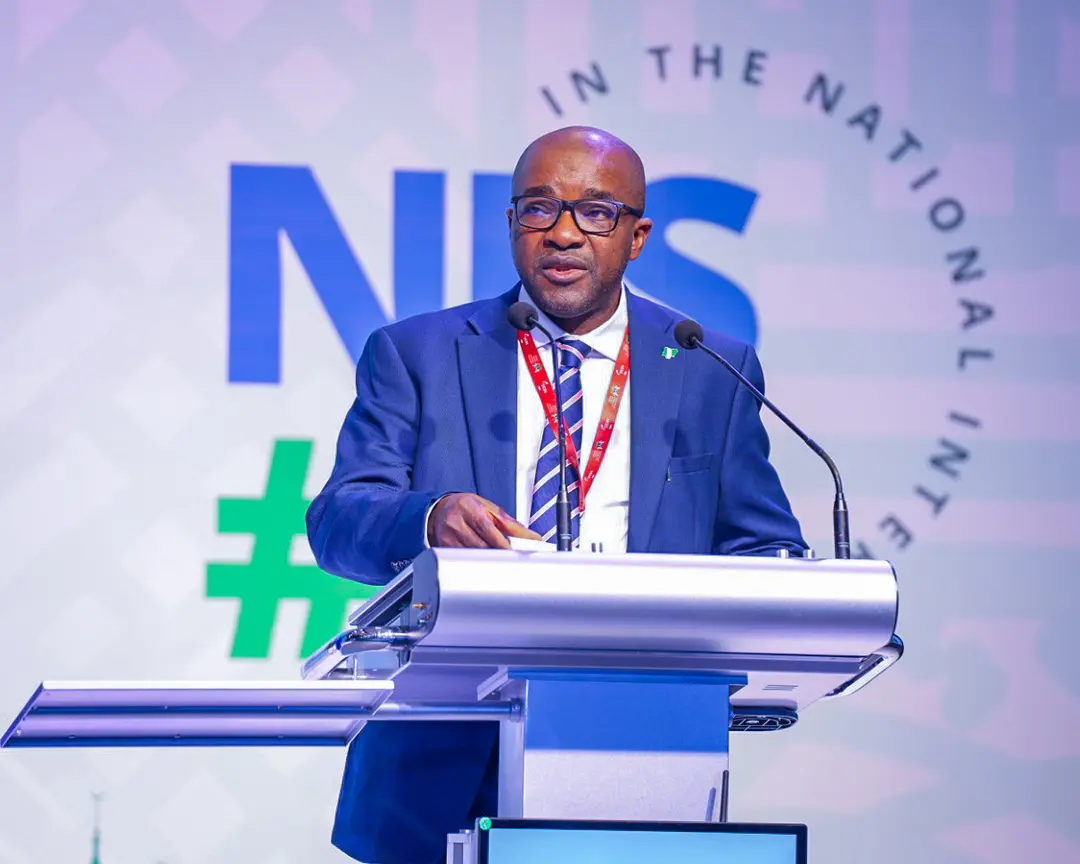
Chairman, Nigerian Economic Summit Group (NESG), Olaniyi Yusuf has urged the Federal Government to translate economic reforms into tangible results, including job creation, increased productivity and improved living standards.
Yusuf made the call on Monday in Abuja at the 32nd Nigerian Economic Summit (NES32), themed “Growth That Works: Delivering Jobs, Productivity and Shared Prosperity”.
He said Nigeria’s economic reforms had created an opportunity to strengthen the foundations for socio-economic development, in spite of the pressures on households and businesses.
“Our responsibility now is to ensure that reforms translate into stronger enterprises, better jobs, more productive workers, rising incomes, improved living standards and shared prosperity,” Yusuf said.
He said recent measures, including petroleum subsidy removal, foreign exchange reforms, fiscal restructuring and banking sector reforms, were necessary to address economic distortions.
However, he said macroeconomic stabilisation alone would not automatically translate into broad-based economic growth or improved citizens’ welfare.
Yusuf said households needed decent jobs, stronger purchasing power, and improved security and reduced poverty, while businesses required lower production costs, reliable electricity and affordable financing.
According to him, Nigeria must sustain economic stabilisation while prioritising practical measures to improve productivity and expand economic opportunities.
He said the summit’s theme reflected the need to measure economic success by the quality of jobs created, business competitiveness and the extent to which prosperity reached Nigerians.
Yusuf identified productivity, human capital development and resilience as key priorities for achieving sustainable and inclusive economic growth.
He said investments in education, healthcare, nutrition and relevant skills would improve workers’ productivity and prepare young Nigerians for employment.
The NESG chairman also called for improved infrastructure, predictable regulations, fair competition and an efficient legal system to encourage private investment and business expansion.
Yusuf said Nigeria’s economic performance presented a mixed picture, with improvements in some macroeconomic indicators alongside persistent challenges affecting businesses and households.
He noted that real Gross Domestic Product (GDP) grew by 4.43 per cent year-on-year in the second quarter of 2026, compared with 3.89 per cent in the first quarter.
Yusuf, however, expressed concern over persistent food inflation, high production costs, unreliable electricity, expensive financing and inadequate infrastructure.
According to him, a slowdown in inflation does not necessarily mean that goods have become affordable, as households continue to grapple with elevated prices.
Yusuf urged policymakers to prioritise productive investments, effective public expenditure and measures to address poverty, food insecurity and gaps in access to essential services.
He also called for stronger links between education and employment through technical and vocational training, digital skills and industry relevant learning.
The NESG chairman identified agriculture, agro-processing, manufacturing, construction, tourism and digital services as sectors with opportunities to expand productive employment.
He said the private sector remained central to Nigeria’s economic transformation but required an enabling environment to invest, produce and create jobs.
Yusuf urged businesses to invest in technology, workforce skills, local supply chains and export competitiveness, while calling on the government to improve infrastructure and ensure regulatory predictability.
He emphasised the need to assess the actual impact of reforms rather than merely documenting policies introduced or activities undertaken.
Yusuf said commitments arising from the summit should include clear institutional responsibilities, realistic timelines, measurable indicators and periodic reviews to ensure accountability.
He called on the government, businesses, development partners and other stakeholders to work together to translate economic stability into investment, productivity, employment and shared prosperity.
Yusuf said the ultimate test of the summit would be whether its deliberations produced tangible improvements in the lives of farmers, manufacturers, entrepreneurs and young people seeking decent jobs.
He urged participants to develop practical solutions and measurable commitments that would continue to deliver results beyond the summit.
From Dan Amasingha, Minna.
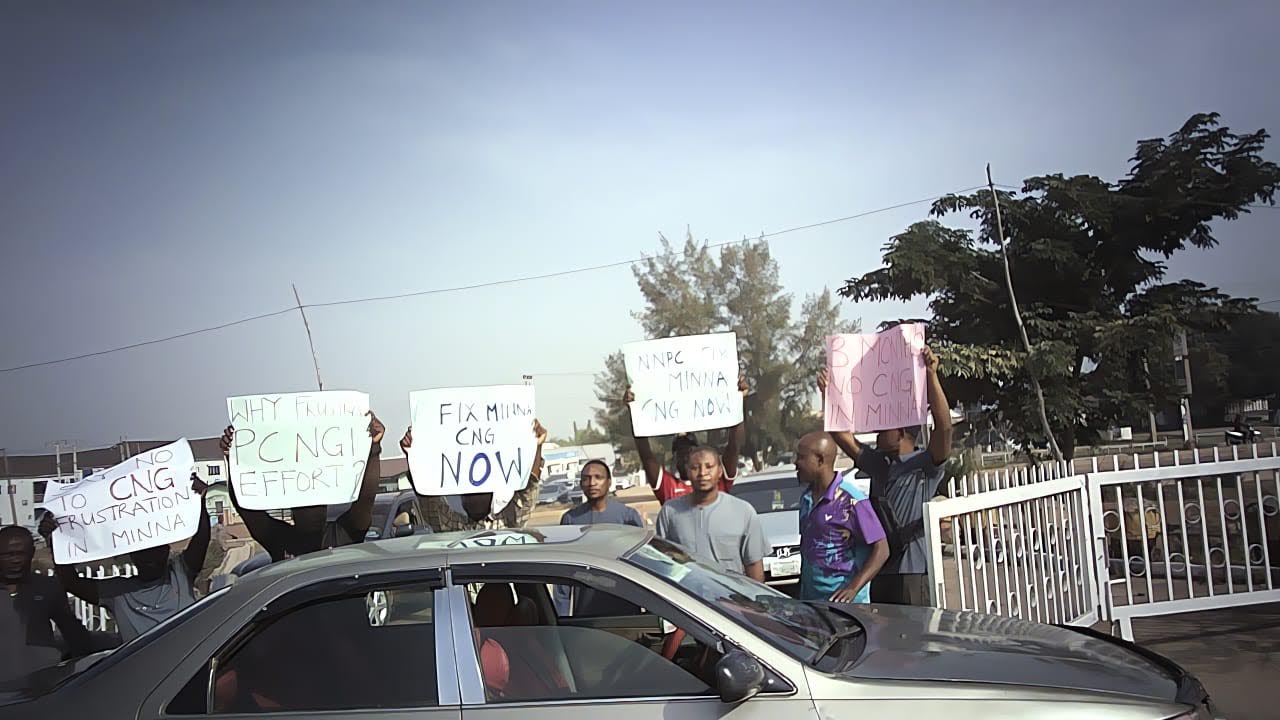
Angry vehicle owners on Sunday staged a peaceful protest at the NNPC Mega Station along the Western Bypass in Minna, Niger State, over the alleged three-month shutdown of the facility’s Compressed Natural Gas (CNG) dispensing service.
The protesters, who accused the station’s management of failing to address the persistent shortage, said the development had frustrated the Federal Government’s initiative to promote CNG as a cheaper alternative to Premium Motor Spirit (PMS), popularly known as petrol.
They lamented that despite investing hundreds of thousands of naira and, in some cases, over ₦1 million to convert their vehicles to run on CNG, they had been unable to access the product in the state capital for months.
Findings indicated that a component of the station’s CNG dispensing equipment had reportedly developed a fault but had allegedly remained unrepaired, leaving motorists who rely on the alternative fuel with little choice but to return to the more expensive petrol.
The persistent outage, the protesters said, had not only undermined the economic benefits of converting their vehicles but had also imposed additional financial burdens on vehicle owners already grappling with rising transportation and fuel costs.
Speaking during the protest, one of the motorists, Engr. Israel Ogbonnaya, described the situation as discouraging, alleging that repeated visits to the station to obtain explanations from the management had yielded no meaningful response.
“It is so discouraging that for three months now, the CNG station at NNPC Minna has not functioned. Imagine that since January, some people did conversion and have not recovered their money,” he said.
Ogbonnaya expressed disappointment that motorists had allegedly received no satisfactory explanation regarding the prolonged breakdown.
“The CNG broke down, nobody has spoken to us. We have come here several times demanding answers from the management, and nobody is talking.
“So, for now, we want to bring the attention of Nigerians and those in authority to the situation in Minna.
CNG is the heartbeat of the President. He commissioned a committee to look into this scheme, and these people are taking us for granted,” he added.
Another protester, Mohammed Doko Saidu, questioned the rationale behind encouraging motorists to convert their vehicles to CNG without ensuring the availability of adequate dispensing facilities to meet demand.
Saidu disclosed that he had spent more than ₦1 million converting his vehicle, only to discover that the product was unavailable in Minna.
“The frustrating aspect of all is that I just installed CNG, spending over a million naira, without a single gas in Minna; hoping that it is going to be fixed today, it is going to be fixed tomorrow, and up till this moment, there is nothing.
“Nobody is saying anything. The station is just lying fallow. In short, I had to disconnect some of the cylinders installed in my car because there is no gas.
What kind of government are we in? It is frustrating,” he said.
The protesters called on the NNPC Mega Station’s management and other relevant stakeholders to urgently repair the faulty equipment and restore CNG supply to Minna.
They warned that failure to resolve the problem could trigger another protest involving a larger number of aggrieved motorists, including commercial tricycle operators who also depend on CNG to reduce their operating costs.
The motorists maintained that the prolonged unavailability of the product had defeated the purpose of the conversion programme, forcing them to bear the cost of installing CNG systems while continuing to spend more on petrol.
The development raises concerns among affected motorists over the reliability of CNG supply infrastructure and the need for prompt maintenance of facilities established to support the Federal Government’s alternative-fuel initiative.
Efforts to obtain comments from the manager of the NNPC Mega Station were unsuccessful as of press time, while attendants on duty declined to speak on behalf of the management.




Ogbodo Seeks FG, Benue Intervention in Deplorable Otukpo–Obi–Oju Road
ShareBy David Torough, Abuja An illustrious son of the Igede nation, medical doctor, author and Medical Director of Lydia Memorial...


Kane Wins 2026 Ballon d’Or, Ends 25-year Wait for England
ShareHarry Kane has become the first English player in 25 years to win the prestigious Ballon d’Or after emerging victorious...


Five Die in Niger Governor’s Convoy Crash
ShareFrom Dan Amasingha, Minna A journey along the Minna–Bida Road ended in tragedy on Monday when five people reportedly lost...


CAN Condemns Threats killing Believers in Viral Video Online
ShareBy Laide Akinboade Abuja The Christian Association of Nigeria (CAN), on Tuesday, has condemned in the strongest terms a disturbing...

SharePoverty: Households Spend 120 Per Cent Income on Food, Says Oyedele By Tambaya Julius Some Nigerian households spend up to...


FG Panel Proposes N1.4bn Compensation for Families of 37 Niger Minners
ShareBy Tambaya Julius, Abuja A Federal Government investigative panel has described the deaths of 37 suspected illegal miners in the...

Again, Tinubu Seeks Senate Approval for $20.52bn, €1.045bn External Loans
ShareBy Tambaya Julius, Abuja President Bola Tinubu has asked the National Assembly to approve a supplementary external borrowing plan of...


2027: FOOG Women Coordinator Urges Nigerians to Support Tinubu’s Re-election Bid
ShareBy Francis Sadhere, Warri Chief (Mrs) Esther Orighomisan Okotie-Eboh, Coordinator of Felix Omagbemi Ogbe Group (FOOG) Women Support Group for...
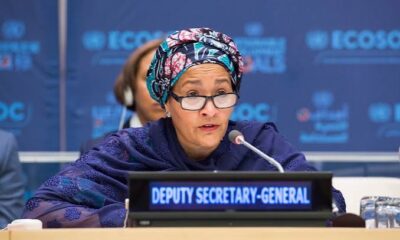

UN, EU Seek Trust, Technology to Strengthen Africa’s Counter-Terrorism Fight
ShareUN Deputy Secretary-General Amina Mohammed, has called for stronger intelligence sharing, public trust and responsible use of emerging technologies to...


University of Agriculture, Orerokpe Bill, Passes Third Reading in Senate
ShareThe University of Agriculture, Orerokpe Bill, sponsored by Senator Ede Dafinone, representing Delta Central Senatorial District, has passed through its...