
Business Analysis
NBS Unemployment Rate Controversy

By Tope Fasua
I read quite a few commentaries that are dismissive of the new methodology, which dropped Nigeria’s unemployment rate to 4.1 per cent. But I think we should understand that there are merits and demerits.
The methodology forces us all to think about critical issues in the labour space today.First, the ILO is the United Nations body supervening labour issues worldwide, so at some point, we must adhere to their improving standards.
The NBS further says many countries have internalised these new guidelines. However, the NBS is basing its survey on 35,520 households. It is unclear whether the NBS has been using the same database for a while or if it shifts its surveys spatially and geographically to get new perspectives.Also, the NBS has to explain to the public why it chose to survey only 35,520 households. Is that number representative enough for 200 million+ people – depending on whom you believe? I have personally not been surveyed by the NBS and honestly don’t know anyone who has. Again, this throws up the usual cynicism, among ordinary Nigerians – just as happened when we heard that the Buhari government (working with the World Bank) came up with a list of 60 million Nigerians who live in poverty. Don’t blame us if we disbelieve. Work on your methodology.
Now, the NBS says that three-quarters, or 73.6 per cent – 76.7 per cent of working-age Nigerians, were employed because they did more than 1 hour of paid work (or for profit) in a week. People are asking if one hour of work in Nigeria is good enough even if someone chooses not to do more work. The amount earned by people who work for one hour a week will differ considerably, with techies earning a lot but casual workers being unable to survive on their earnings.
A high-flying executive in many industries does not need more than one hour of work in a week, but an artisan who says one hour of work in a week is enough surely needs help. The NBS report also says that 36.4 per cent and 33.2 per cent of working-age Nigerians worked for less than 40 hours (about 1 and a half days) in the period under survey (Q4, 2022 and Q1, 2023) but did not seek more work.
“Underemployment rate (which is a share of employed people working less than 40 hours (about 1 and a half days) per week and declaring themselves willing and available to work more) was 13.7 per cent in Q4 2022 and 12.2 per cent in Q1 2023”, the NBS declared. The bureau further stated that wage employment accounted for only 13.4 per cent and 11.8 per cent in Q4, 2022 and Q1, 2023 respectively while a whopping 73.1 per cent in Q4, 2022 and 75.4 per cent in Q1, 2023 were operating their own businesses or into farming!
The balance of 10.7 per cent in Q4, 2022 and 10.6 per cent in Q1, 2023 were either “engaged helping in a household business” or serving as apprentices/interns (2.6 per cent in Q4, 2022 and 2.2 per cent in Q1, 2023). This means that of all the people ‘working’ in Nigeria, roughly 85 per cent were engaged ‘on their own’, hustling, serving as apprentices, doing ‘buying and selling’, or generally in the informal sector. This is shameful, sad, and scary. This leaves a balance of 5.3 per cent in Q4, 2022, and 4.1 per cent in Q1, 2023, which could be considered as truly unemployed, according to the NBS. But obviously, Nigeria is in deep trouble.
The NBS concluded, “22.3 per cent of the working age population were out of labour force in Q4 2022, while it was 20.1 per cent in Q1, 2023”. This may mean that this category is not looking for employment. Why? Could they all be infirm? Or, for some reason, zoned out and unwilling to work? I think this is where the real work is. We should have a much smaller percentage of young or working-age people who are unwilling to work in a country with so many problems and pining for labour.
Again, providing for the shortcomings of a small sample size, this survey by the NBS tells a story.
1. The face of work has changed the world over. Young people these days no longer think of work as some 8 a.m. to 4 p.m. or 9 a.m. to 5 p.m. place to go. And oftentimes, the old format is inefficient.
2. Perhaps many young Nigerians are simply no longer interested in work. Why? They are now exposed to the ‘developed’ world and all the glitz via the internet and the plethora of social media handles. Leaders, too, have not done much work in psychoanalysing the youths of today in designing policies. Nigerian youths can no longer be bothered to do the heavy lifting of building a nation from scratch. Many have stopped trying and are just waiting to ‘japa’ through any means.
Many are also deluded about what it takes to become successful in life, and many think ‘abroad’ is a place of enjoyment. Many would also rather be pranksters, bloggers, or Big Brother ‘soft porn’ stars – anything for a big haul of money. Even the children of the rich, sponsored to very expensive schools at home and abroad would rather be musicians or Deejays (who work at night or never have to work at all since their work is also their play).
3. A recent newspaper report details how there is a drastic drop in apprenticeships and skills learning in Nigeria. This is a scary prospect because the skills we are talking about play a very critical role in society – carpenters, mechanics, tailors, welders, technicians, electricians, plumbers, etc. Most of the workers (bosses) interviewed say they no longer have young people coming in as apprentices. Most say that less than 2 per cent of those who come bother to learn the work before leaving. For most boys from poorer homes in the south of Nigeria, the allure of yahoo-yahoo is way too strong. For the rich or middle-class ones, learning such skills does not even come up as everyone desires a degree. Even the world-famous Igbo apprenticeship system is waning out. Fewer and fewer boys remain in the villages to be picked up by big men for training.
Most are already hardened and searching for big bucks in their teenage years. And for those who bother to sound savvy in and out of government, the focus is on technology. Can we focus on technology and abandon these core skills? Who will repair our cars and plumbing in the future? Are we deluding ourselves so that we can leap over into the tech future without taking care of these ‘dirty jobs’? The future is bleak in this regard. We are rudderless and rootless.
4. Roughly 85 per cent of the Nigerian economy is informal – full of hustlers. Yet Nigeria is pushing more of her youths into ‘entrepreneurship’. Our understanding of ‘entrepreneurship’ here is shallow and used as an excuse for successive governments to shirk their responsibility of organising society, creating adequate public sector jobs to ensure proper manning of public amenities. We cite the example of small-scale industries in China being the fulcrum of their economy, but deliberately ignore that small scale industries in China, Germany, USA and elsewhere are capacitated to produce tangible things and engage in massive exports.
Most of our biggest businessmen/entrepreneurs (who are mere agents of the industries in these countries) only go as far as dealing with small-scale players out there. We should not deceive ourselves.
5. If the NBS intends to use this one-hour-per-week benchmark, it should remember that we are comparing apples with oranges at some level. A majority of Nigeria’s workforce are stuck at subsistence level – as maibolas, chewing gum sellers inside traffic, and so on, until they get tired and become liability upon the country. Whereas the NBS report has presented the data from a global angle, the same data needs to be discombobulated to allow for Nigerian nuances. A youth working in MacDonalds in the US, for example, has many opportunities to grow even in the same sector and to live a fulfilled life. I am speaking here about the fundamental and foundational damage to our social system which renders most of our youths as illiterate, unemployable, despondent and unable to scale their usefulness to society beyond that petty hustle they do.
So, as I advised the SG in that parley, perhaps we don’t want to use 1-hour as a benchmark. Perhaps we want to do that for 10 hours a week (two hours a day), in determining who is fully employed. Or we want to evolve more granular data that separates top earners as fully employed, but those earning meagre amounts with no prospects for bettering themselves, as unemployed. It is indeed unfair to consider everyone working for one hour as fully employed. Also, we need to look at the kind of survey questions that make people say they don’t need more work!
I expect a lot more acerbic reaction in the next few days. But at least this strikes up a good debate that allows us to dissect our many problems with our population, productivity, youth engagement, job creation, government responsibility, private sector contributions, artificial intelligence, technology in general, our several experimentations with petty entrepreneurship, and what the future holds for our dear nation. These are crucial times indeed.
Tope Fasua is an Economist, Author, Blogger, and Entrepreneur.
By Joel Oladele, Abuja
The Nigeria Customs Service (NSC) has generated an impressive N1,751,502,252,298.05 in revenue during the first quarter of 2025.
The Comptroller-General (CG) of the Service, Bashir Adeniyi, disclosed this yesterday, during a press briefing in Abuja.
According to Adeniyi, the achievement not only surpasses the quarterly target but also marks a substantial increase compared to the same period last year, reflecting the effectiveness of recent reforms and the dedication of customs officers across the nation.
“This first quarter of 2025 has seen our officers working tirelessly at borders and ports across the nation.
I’m proud to report we’ve made real progress on multiple fronts—from increasing revenue collections to intercepting dangerous shipments,” Adeniyi stated.He attributed this success to the reforms initiated under President Bola Tinubu’s administration and the guidance of the Honourable Minister of Finance and Coordinating Minister of the Economy, Olawale Edun.
The CG noted that the revenue collection for Q1 2025 exceeded the quarterly benchmark of N1,645,000,000,000.00 by N106.5 billion, achieving 106.47% of the target. This performance represents a remarkable 29.96% increase compared to the N1,347,705,251,658.31 collected in Q1 2024.
Adeniyi highlighted the month-by-month growth, noting that January’s collection of N647,880,245,243.67 surpassed its target by 18.12%, while February and March also showed positive trends.
“I’m pleased to report the Service’s revenue collection for Q1 2025 totaled N1,751,502,252,298.05.
“Against our annual target of N6,580,000,000,000.00, the first quarter’s proportional benchmark stood at N1,645,000,000,000.00. I’m proud to announce we’ve exceeded this target by N106.5 billion, achieving 106.47% of our quarterly projection. This outstanding performance represents a substantial 29.96% increase compared to the same period in 2024, where we collected N1,347,705,251,658.31.
“Our month-by-month analysis reveals even more encouraging details of this growth trajectory,” Adeniyi said.
In addition to revenue collection, Adeniyi said the NCS maintained robust anti-smuggling operations, recording 298 seizures with a total Duty Paid Value (DPV) of ₦7,698,557,347.67.
He stated that rice was the most seized commodity, with 135,474 bags intercepted, followed by petroleum products and narcotics.
“From rice to wildlife, these seizures show our targeted approach,” Adeniyi remarked, noting the NCS’s commitment to combating smuggling and protecting national revenue.
Adeniyi also highlighted key initiatives, including the expansion of the B’Odogwu customs clearance platform and the launch of the Authorized Economic Operators Programme, which aims to streamline processes for compliant businesses. The NCS’s Corporate Social Responsibility Programme, “Customs Cares,” was also launched, focusing on education, health, and environmental sustainability.
Despite these achievements, the CG noted that the NCS faced challenges, including exchange rate volatility and non-compliance issues. Adeniyi acknowledged the need for ongoing adaptation and collaboration with stakeholders to address these challenges effectively.
Looking ahead, the NCS aims to continue its modernization efforts and enhance service delivery, ensuring that it remains a critical institution in Nigeria’s economic and security landscape.
“Results speak louder than plans; faster clearances through B’Odogwu, trusted traders in the AEO program, and measurable food price relief from our exemptions. We’ll keep scaling what works,” he concluded.
 |
By Tony Obiechina Abuja
The Nigeria Sovereign Investment Authority (NSIA) yesterday disclosed that its net assets grew from N156bn in 2013 to N4.35 trillion in 2024.
Similarly, the Authority has remained profitable for 12 consecutive years, leading to cumulative retained earnings of N3.
74 trillion in 2024.Managing Director and Chief Executive Officer of NSIA, Aminu Umar- Sadiq made these disclosures at a media engagement in Abuja, highlighting its audited financial results for the 2024 fiscal year.
According to him, the results underscored the resilience of the authority’s investment strategy and the strength of its earnings, driven by a well-diversified revenue base and robust risk management practices, despite a challenging global macroeconomic and geopolitical environment.
Total operating profits, excluding share of profits from associates and Joint Venture (JV) entities, increased from N1.17 trillion in 2023 to N1.86 trillion in 2024, driven by the strong performance of
NSIA’s diversified investment portfolio, infrastructure assets, gains from foreign exchange movements, and derivative valuations.
In addition, Total Comprehensive Income (TCI), inclusive of share of profits from associates and JV entities, reached N1.89 trillion in 2024, reflecting a 59 per cent increase from N1.18 trillion in 2023.
Core TCI (excluding foreign exchange and derivative valuation gains) rose by 148 per cent to N407.9 billion in 2024 compared to N164.7 billion in 2023, supported by robust returns on financial assets measured at fair value through profit and loss, including collateralised securities, private equity, hedge funds, and Exchange-Traded Funds (ETFs).
Umar-Sadiq said the authority’s outstanding financial performance in 2024 reflected the “strength of our strategic vision, disciplined execution and unwavering commitment to sustainable socio-economic advancement.”
He said, “By leveraging innovation, strategic partnerships and sound risk management, we have not only delivered strong returns but also created value for our stakeholders
“As we move forward, we remain focused on driving economic transformation, expanding opportunities, scaling transformative impact and ensuring long-term prosperity for current and future generations of Nigerians.”
The CEO reaffirmed the authority’s commitment to managing the country’s SWF, and delivering the mandates enshrined in the NSIA Act.
He said NSIA remained poised to continually create long-term value for its stakeholders by delivering excellent risk-adjusted financial results, developing a healthy and well-diversified portfolio of assets and large-scale infrastructure projects, and enhancing the desired social outcomes.
He noted that NSIA was committed to its mandate of prudent management and investment of Nigeria’s sovereign wealth.
“In adherence to its Establishment Act, NSIA prioritises transparency, disclosure, and effective communication with all stakeholders and counterparties,” he said.
He pointed out that in the year under review, a new board, led by Olusegun Ogunsanya as Chairman, was appointed by President Bola Tinubu, in accordance with the provisions of the NSIA Act.
The new board will provide strategic direction and oversight, in addition to playing a pivotal role in critical decision making.
He remarked that under the guidance of the Board, the Authority will retain focus on its primary mandate of creating shared value for all stakeholders based on its continued adoption of corporate governance practices.
“NSIA prides itself an investment institution of the federation established to manage funds in excess of budgeted oil revenues and its mission is to play a pivotal role in driving sustained economic development for the benefit of all Nigerians through building a savings base for the Nigerian people, enhancing the development of the county’s infrastructure, and providing stabilisation support in times of economic misadventure,” he added.

By Cletus Akwaya
Call it Dangote Republic and you would not be wrong, for that is what it means in real sense.
The ultra-modern Dangote Refinery and Petrochemical complex located at the Lekki Free Trade Zone in Lagos is the World’s Engineering wonder.
A guided tour for top Media executives in the country by the President, Dangote Industries Group himself, Alhaji Aliko Dangote on July 14, provided a rare privilege and opportunity to appreciate the project that has emerged as the World’s largest single train petroleum refinery.
Dangote, the Kano-born business mogul and Africa’s richest man, whose vision for the industrial transformation of Nigeria led to the initiation of this project is certainly a fulfilled person, having accomplished such a gargantuan task in the spelt of just about 10 years.
The refinery, which is built and equipped with the latest technology in the industry. It is a behemoth sitting on a huge land space of 2, 735 hectares, approximately seven times, the size of Victoria Island, the octane section of Lagos, which has become the abode for the very rich in the nation’s commercial nerve – centre over the decades.
The land was provided by the Lagos state government after the payment of $100million dollars by the Dangote Group as cost of the land.
The edifice didn’t come easy as the engineers had to reclaim 65million cubic metres of sand through dredging of the Atlantic coastline to pave way for the construction of the refinery and its accompanying facilities especially the Jetty.
The Dangote refinery is not a stand-alone project as it has a coterie of associated industries and infrastructure making it a self-reliant complex.
For instance, the company has a fully developed port (jetty)for maritime operations for both in-take of crude and discharge of refined products. This perfectly compliments the huge pipeline network that lands into the Atlantic for intake of crude and loading of refined products to ships. Its Jetty, which stretches 9KM into the international waters in the Atlantic Ocean and 12.5 KM from the refinery is perhaps one of the most modern in the world built with sand piles that shield the final landing points from the violent oceanic waves, thus providing for safety and stability of ships, barges and oil tankers.
The complex is accessed by 200KM network of concrete under-lay and well asphalted road network to ease vehicular traffic. The refinery has its dedicated steam and power generation system with standby units to adequately support operations of the various plants in the complex.
It has successfully completed a 435 MW power generating plant for its operations. The power generated from this plant surpasses the entire distribution capacity of Ibadan Electricity Distribution company, which supplies electricity to five states of the Federation including Oyo, Osun, Ondo, Ekiti and Kwara.
The Dangote refinery with a capacity of 650,000 bpd of crude oil is designed to handle the crude from many of the African countries, the Middle East and the US light crude. Its petrochemical plant is designed to produce 77 different high-performance grades of polypropylene, which is the major raw material for numerous industries and other refineries. With a huge refining capacity, Alhaji Dangote said the products from the refinery company would easily meet 100 per cent the needs of Nigeria’s demand for gasoline, diesel, Petrol and Aviation Jet with 56 per cent surplus for export, from which the company projects to earn a princely $25billion per annum from 2025.
The company has facility to load 2,900 trucks with its various products in a day by land and millions of litres of products through the waters depending on where the orders come from. The $25million projected revenue in 2025 could translate to a huge relieve for the nation in dire need of foreign earnings to shore-up the value of the nation’s currency.
The associated industry, the Dangote Fertilizers Limited also situated in the complex utilises the raw materials from petrochemicals to produce different varieties of fertilzers especially Urea, NPK and Amonia grades of fertilizers. Apart from the local market, Dangote is already exporting its fertilizers to other countries including Mexico, a testament to its high quality that meets world standards.
This feta, the President of Dangote industries explained was possible because of the high quality, the company has opted to pursue. In between the refinery and the fertilizers complex lies a 50,000 housing estate, which provided accommodation for the construction workers at the time of construction especially during the COVID-19 lockdowns of 2020, when workers remained encamped on the project site to continue with the work.
What stands out the Dangote Refinery is perhaps not in its sheer size and capacity but in the fact that it is perhaps the only of such projects whose Engineering, Procurement and construction(EPC) was done directly by the company without engaging the world renowned refinery constriction companies like Technip Bechtel (USA)Technip (France)Aker Solutions (Norway)Chiyoda Corporation (Japan)SNC-Lavalin Group (Canada)J. Ray McDermott (USA)JGC Corporation (Japan)Hyundai Heavy Industries (South Korea)Foster Wheeler (USA) and Daelim Industrial Company (South Korea)
“The design of the refinery was handled by dozens of Engineers and technical experts assembled in India and Houston, Texas, USA to execute engineering designs of the refinery,” said Edwin Kumar, the Executive vice President, Oil and Gas for the Dangote Group who midwifed the birth of the refinery complex.
“We didn’t give out contracts to anybody, we bought every single bolt and equipment ourselves and had it shipped into the country,” Dangote explained to his guests.
Part of the equipment imported into the country was the procurement of over 3,000 cranes to handle the evacuation of huge consignments of machinery from the wharf and for subsequent installation at the construction site. The cranes have become an unusual assemblage of such equipment to be found in one place on the African continent.
If there was any doubt that Alhaji Aliko Dangote is Africa’s richest man, the successful completion of the refinery and petrochemical complex at the cost of about $20billion has further confirmed his status as Africa’s leading businessman and entrepreneur.
However, Dangote does not really accept that he is the richest man on the continent,
“When you are rich, you accumulate cash, but when you wealthy, you create wealth” he told the top Media executives on tour of the huge project, explaining that he would rather prefer to be referred to as a “Wealthy man.”
And consistent with his business philosophy, Dangote hinted of plans to list the refinery on the Nation’s stock exchange by the first quarter of 2025. His vision is to avail the public of 20 per cent of the shares so as to ensure participation by Nigerians and even international portfolio investors.
The refinery company and the entire of Dangote Group at the moment provides direct employment to about 20,000 Nigerians and much indirect jobs to Nigerians, making it the highest employer of labour outside the government.
Most interestingly, the highly technical operations of Dangote refinery is operated by over 70 per cent of local manpower who work in the refinery control, centre, the numerous production and quality control laboratories among others. Some of the staff who explained their tasks to the visiting media executives said they were graduates of Engineering and allied disciplines recruited mostly from Nigerian universities and trained in various institutions abroad for periods ranging from sixth months – one year to master refinery operations. Through this strategy, Dangote has ensured transfer of technology to thousands of Nigerian youths.
“We don’t know where they come from as long as they are Nigerians and if they decide to leave and join international oil companies for better job opportunities, we have no problem with that,” Dangote responded to a question on the strategy to retain the technical manpower for stability of the refinery’s operations.
The Dangote Refinery is a Republic of some kind, at least an economic or industrial Republic.
But the man who presides over this ‘industrial empire’, Alhaji Dangote says his only ambition is to boot the nation’s economy and ensure netter life for Nigerians.
“When you import any product into Nigeria, you are importing poverty and exporting our jobs to those countries from where you are importing” Dangote said adding “this is why I want economic nationalism in Nigeria.”
Dangote’s vision even goes beyond Nigeria as he has cement factories and other business concerns in about 13 African countries including Ghana, Ethiopia, Tanzania, Uganda, etc. This signifies his continent-wide dream to transform Africa’s economies.
There has been attempts by some international oil companies to frustrate the successful take-off of the refinery, through over pricing and in some instances outright denial of crude supplies for processing. This made Dangote to commence importation of crude from the US. However, the cheering news that the Nigerian National Petroleum Company Limited (NNPC) has finally approved a supply arrangement has raised hopes that full operations will commence and that the long-awaited Dangote oil products will reach consumers around the country from August.
At last, the Dangote Group may have achieved its objective to serve as the elixir to Nigeria’s industrialisation effort. This is perhaps the greatest legacy of Africa’s richest man to his country of birth.
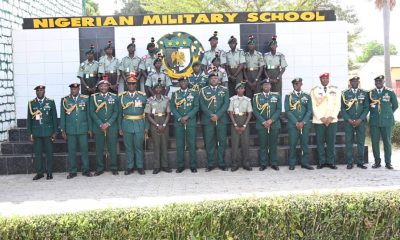

COAS Urges NMS Students to Uphold Discipline, Excellence, Promises Better Learning Environment
ShareBy David Torough, Abuja The Chief of Army Staff (COAS), Lieutenant General Waidi Shaibu, has charged students of the Nigerian...


Gov Adeleke Didn’t Join APC Because Osun People Already Hated the Party – Jackson Ojo
Share…Says Defectors to Ruling Party Will Regret By Mike Odiakose, Abuja A former chieftain of the All Progressives Congress (APC),...


COAS Charges 3,439 New Army Recruits on Loyalty, Discipline
ShareBy David Torough, Abuja The Chief of Army Staff (COAS), Lieutenant General Waidi Shaibu (NAM), has charged 3,439 newly trained...


CBN Revamps Agric Guarantee Scheme, Targets Smallholder Farmers
Share The Central Bank of Nigeria (CBN) has launched a major overhaul of the Agricultural Credit Guarantee Scheme Fund (ACGSF),...


Okonjo-Iweala, Others Urge Youths to Drive Reforms, Strengthen Civic Action
ShareNational leaders have challenged youths to lead Nigeria’s renewal, warning that meaningful change now depends on young citizens organizing, demanding...


Eight Students Die, Three Injure in Jos Road Crash
ShareFrom Jude Dangwam, Jos The Vice Chancellor of the University of Jos, Prof. Ishaya Tanko has confirmed the sad death...


ShareUNICEF Hails Bayelsa as Champion of Primary Healthcare Devt in Nigeria From Mike Tayese, Yenagoa The United Nations Children’s Fund...

EFCC Seeks Stronger Alliance with CSOs, Media in Anti-corruption Fight
ShareThe Economic and Financial Crimes Commission (EFCC) has called for deeper collaboration with Civil Society Organisations (CSOs) and the media...

ShareMutfwang Pledges Support for Minister of Defence in Fight against Insecurity From Jude Dangwam, Jos Plateau State Governor, Caleb Mutfwang,...


FRSC Deploys New Sector Commander to Benue
ShareThe Federal Road Safety Corps (FRSC) on Thursday, announced the deployment of Corps Commander (CC) Kehinde Dahunsi as new commander...