
BUSINESS
NSIA Net Assets Hit N4.35trn in 2024

By Tony Obiechina Abuja
The Nigeria Sovereign Investment Authority (NSIA) yesterday disclosed that its net assets grew from N156bn in 2013 to N4.35 trillion in 2024.
Similarly, the Authority has remained profitable for 12 consecutive years, leading to cumulative retained earnings of N3.
74 trillion in 2024.Managing Director and Chief Executive Officer of NSIA, Aminu Umar- Sadiq made these disclosures at a media engagement in Abuja, highlighting its audited financial results for the 2024 fiscal year.
According to him, the results underscored the resilience of the authority’s investment strategy and the strength of its earnings, driven by a well-diversified revenue base and robust risk management practices, despite a challenging global macroeconomic and geopolitical environment.
Total operating profits, excluding share of profits from associates and Joint Venture (JV) entities, increased from N1.17 trillion in 2023 to N1.86 trillion in 2024, driven by the strong performance of
NSIA’s diversified investment portfolio, infrastructure assets, gains from foreign exchange movements, and derivative valuations.
In addition, Total Comprehensive Income (TCI), inclusive of share of profits from associates and JV entities, reached N1.89 trillion in 2024, reflecting a 59 per cent increase from N1.18 trillion in 2023.
Core TCI (excluding foreign exchange and derivative valuation gains) rose by 148 per cent to N407.9 billion in 2024 compared to N164.7 billion in 2023, supported by robust returns on financial assets measured at fair value through profit and loss, including collateralised securities, private equity, hedge funds, and Exchange-Traded Funds (ETFs).
Umar-Sadiq said the authority’s outstanding financial performance in 2024 reflected the “strength of our strategic vision, disciplined execution and unwavering commitment to sustainable socio-economic advancement.”
He said, “By leveraging innovation, strategic partnerships and sound risk management, we have not only delivered strong returns but also created value for our stakeholders
“As we move forward, we remain focused on driving economic transformation, expanding opportunities, scaling transformative impact and ensuring long-term prosperity for current and future generations of Nigerians.”
The CEO reaffirmed the authority’s commitment to managing the country’s SWF, and delivering the mandates enshrined in the NSIA Act.
He said NSIA remained poised to continually create long-term value for its stakeholders by delivering excellent risk-adjusted financial results, developing a healthy and well-diversified portfolio of assets and large-scale infrastructure projects, and enhancing the desired social outcomes.
He noted that NSIA was committed to its mandate of prudent management and investment of Nigeria’s sovereign wealth.
“In adherence to its Establishment Act, NSIA prioritises transparency, disclosure, and effective communication with all stakeholders and counterparties,” he said.
He pointed out that in the year under review, a new board, led by Olusegun Ogunsanya as Chairman, was appointed by President Bola Tinubu, in accordance with the provisions of the NSIA Act.
The new board will provide strategic direction and oversight, in addition to playing a pivotal role in critical decision making.
He remarked that under the guidance of the Board, the Authority will retain focus on its primary mandate of creating shared value for all stakeholders based on its continued adoption of corporate governance practices.
“NSIA prides itself an investment institution of the federation established to manage funds in excess of budgeted oil revenues and its mission is to play a pivotal role in driving sustained economic development for the benefit of all Nigerians through building a savings base for the Nigerian people, enhancing the development of the county’s infrastructure, and providing stabilisation support in times of economic misadventure,” he added.
By Tambaya Julius, Abuja
The Nigeria Customs Service (NCS), Kebbi Area Command, has commenced fresh efforts to revive legitimate cross-border trade along the Kamba–Tungan Gyado corridor through stronger cooperation with the Nigerien Customs administration.
The initiative followed a meeting between the Kebbi Area Command and a delegation from Nigerien Customs on Thursday, where both sides examined emerging challenges affecting trade and explored measures to improve commercial activities along the border.
The engagement focused on strengthening bilateral customs cooperation, enhancing revenue generation and easing the economic difficulties confronting communities on both sides of the Nigeria-Niger border.
The Customs Public Relations Officer of the Kebbi Area Command, Mustapha Mubarak, disclosed this in a statement.
He said the meeting was attended by the Customs Area Controller (CAC), Kebbi Area Command, Mahmoud Ibrahim; Comptroller, Douanes du Dosso, Niger Republic, Abdoulaye Vincent; and other key stakeholders.
During the engagement, Vincent commended the Kebbi Area Command for hosting the Nigerien delegation and called for stronger collaboration between the customs administrations of Nigeria and Niger.
He particularly stressed the need to promote legitimate trade through the Kamba corridor, which he described as increasingly important amid disruptions along traditional regional trade routes.
According to him, insecurity along routes through Burkina Faso and Togo, combined with the prevailing diplomatic situation involving the Benin Republic, has significantly affected cross-border commerce and economic activities across the region.
He said the circumstances had increased the importance of the Kamba corridor as an alternative route for legitimate trade between Nigeria and Niger.
Vincent appealed for greater support for legitimate exports through Kamba, noting that increased commercial activities would not only boost government revenue but also help cushion the economic difficulties being experienced by border communities.
Responding, the Kebbi Area Controller, Mahmoud Ibrahim, welcomed the initiative and reaffirmed the command’s commitment to deepening its relationship with the Nigerien Customs administration.
Ibrahim said the command would continue to facilitate legitimate cross-border trade while ensuring that traders and other stakeholders understood and complied with established customs procedures.
He pledged to intensify sensitisation programmes for traders and relevant stakeholders, particularly on customs requirements, while encouraging greater use of the Kamba corridor for legitimate commercial activities.
The CAC noted that increased trade through the corridor would have wider economic benefits, including improved revenue generation, employment creation and enhanced livelihoods for residents of border communities.
He said the command would continue working with relevant stakeholders to create an enabling environment where legitimate businesses could thrive.
As part of efforts to strengthen bilateral cooperation, Ibrahim announced plans to visit the Nigerien Customs Command in Dosso, Niger Republic.
He said the proposed visit would provide an opportunity for both customs administrations to hold further discussions on practical measures for facilitating legitimate trade and addressing challenges confronting businesses operating along the border corridor.
The planned engagement is expected to further strengthen coordination between the two customs administrations and improve the movement of legitimate goods between Nigeria and Niger.
The initiative also received support from traditional and trade stakeholders in Kamba.
The Sarkin Shikon Kamba, Mamuda Zarumai, expressed appreciation to the Customs Area Controller for creating a conducive environment for legitimate business activities in the community.
Zarumai commended Ibrahim for demonstrating concern for the welfare and economic prosperity of residents of Kamba and prayed for the success of the partnership between the Nigerian and Nigerien Customs administrations.
Other stakeholders at the engagement included the Chairman, Dendi Ganda; Sarkin Shikon Kamba, Mamuda Zarumai; and Secretary-General, SNAT Gaya, Abubakar Inusa, among others.

The National Insurance Commission (NAICOM) has unveiled the Insurance Sector Strengthening Programme (ISSP), to advance insurance penetration, financial inclusion and innovation within Nigeria’s insurance ecosystem.
The Commissioner for Insurance, Olusegun Omosehin, during the unveiling on Thursday in Abuja, said the programme offered a framework for advancing the growth and stability of the Nigerian insurance sector.
Omosehin said the programme also focused on capacity building, gender inclusion, youth engagement, and Micro, Small, and Medium Enterprises (MSME) and value-chain development.
He said the ISSP placed significant emphasis on awareness and education, adding that the insurance market was directly linked to public understanding and trust.
He said no insurance market could flourish where consumers do not appreciate insurance as a practical tool for financial protection and risk management.
According to him, the programme’s emphasis on capacity building and the future competitiveness of the country’s industry depends on the quality of its human capital.
He said as technology evolved and customer expectations changed, insurance professionals must continue to develop the skills and competencies required for excellent service delivery.
“The proposed training and professional development initiatives will strengthen technical expertise, improve professionalism, and enhance performance across the insurance value chain.
“No sector can achieve sustainable growth when large segments of society remain sidelined or underrepresented.
“Women are a significant economic force in Nigeria, while young people represent the future of our nation and our industry.
“Bringing these two groups into the mainstream of insurance through tailored products and innovative engagement will enhance the sector’s relevance.
“The programme further acknowledges the central role of micro, small and medium enterprises in national economic development,” he said.
He called for stronger collaboration among government, regulators, insurers and development partners to deepen insurance penetration in Nigeria.
The Chairman of the Senate Committee on Banking, Insurance and other Financial Institutions, Sen. Mukhail Abiru, said the programme was critical in Nigeria’s economic transformation.
Abiru who was represented by the Senior Legislative Aide, Victor Inedu, said a strong and resilient insurance industry was essential to protecting lives and assets, supporting businesses and encouraging investment.
He said that Nigeria’s insurance market remained significantly underdeveloped with millions of individuals and businesses still uninsured or underinsured.
The senator commended NAICOM’s recapitalisation exercise and other reforms aimed at creating stronger, better-capitalised and globally competitive insurance institutions.
He said legislation alone would not transform the sector, adding that effective implementation, stronger governance, consumer protection, innovation and public trust were equally necessary.
He urged stakeholders to move insurance “from the margins to the mainstream” of Nigeria’s economic development.
Ebelechukwu Nwachukwu, Chairman, Nigerian Insurance Association (NIA), represented by Director-General, NIA, Bola Odukale, said ISSP aimed to increase insurance penetration from about five per cent to 10 per cent of GDP by 2030.
She described the target as ambitious but achievable through sustained collaboration, innovation and institutional commitment.
She said increasing insurance penetration should not be viewed merely as an effort to grow premium income but as a means of expanding financial protection.
The D-G pledged to mobilise NIA members and provide data, expertise and support for initiatives aimed at improving innovation, consumer confidence and access to affordable insurance products.
In his keynote, Dr. Kola Adesina, Group Managing Director, Sahara Power Group, said the industry would continue to underperform if it relied heavily on compulsory insurance and legislation to drive growth.
Adeshina said Nigeria’s youthful population represented a huge market opportunity for insurers, but warned that products that did not reflect the aspirations and realities of young Nigerians would struggle to gain acceptance.
He urged insurers to follow the money by understanding where Nigerians spend their resources and by developing products that give consumers a compelling reason to spend their money on insurance.
Funmike Sojinuga, Trade Commissioner for Global Affairs Canada in Nigeria, expressed interest in deepening cooperation with Nigeria’s insurance sector.
She said a strong insurance industry was critical to investment, economic stability and development.
According to her, investors do not only follow opportunities but also should have confidence in regulation, governance and the ability to manage risks effectively.
She said a stronger insurance sector could support infrastructure development, renewable energy projects, businesses and livelihoods while helping Nigeria mobilise long-term capital.
Sojinuja noted that the growing Nigeria-Canada relationship provided opportunities for greater cooperation in insurance, regulatory development and innovation.
The Canadian representative said discussions were already underway with stakeholders in Canada’s insurance sector to provide a platform for collaboration and knowledge sharing.
She said the ultimate impact of a stronger insurance sector would extend beyond increased premiums, adding that it help attract investment, strengthen industries and promote shared prosperity. (NAN)
From Mike Tayese, Yenagoa
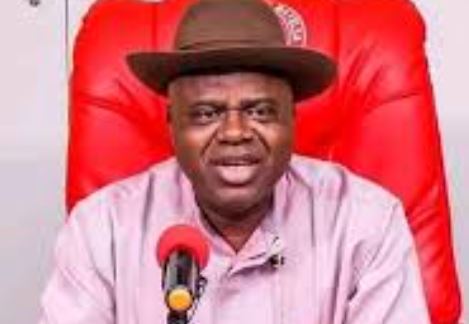
Bayelsa State Governor, Senator Douye Diri, on Monday commissioned a second branch of Premium Trust Bank in the Etegwe/Edepie roundabout axis of Yenagoa, describing the bank’s expansion as a significant boost and practical demonstration of investor confidence in the state’s economy.
Diri said the state was entering a new phase of economic possibilities with the coming on stream of its 60-megawatt independent power plant, which he noted would provide a major boost to businesses and industries.
According to the Bayelsa governor, reliable power will stimulate enterprise, attract investments, create jobs and improve the quality of life of the people.
“It will also increase the need for credible and innovative financial partners,” he said.
Diri also stated that the improved economic environment would require strong financial institutions capable of providing innovative banking solutions and easier access to capital for businesses and individuals.
He urged the bank to expand its presence beyond the state capital to local government headquarters and other commercial and university communities across the state, including Amassoma and Otuoke.
The state’s helmsman noted that traders, farmers, fishermen, artisans, civil servants, women, entrepreneurs and young business owners needed accessible modern financial services to grow their businesses and contribute to the state’s economy, adding that the expansion of banking services across the state would deepen financial inclusion, facilitate commerce and support the administration’s prosperity agenda.
“When banking grows closer to the people, commerce becomes easier, enterprise expands and prosperity spreads.”
He urged citizens and business owners to take advantage of the peaceful and secure environment created by his administration to build sustainable enterprises while commending Premium Trust Bank for its professionalism, innovation and commitment to customer service.
The bank’s Managing Director and Chief Executive Officer, Dr. Emmanuel Emefienim, said the opening of the new branch reaffirmed the bank’s long-term commitment to Bayelsa State and its people.
He said the bank would continue to combine physical branches with digital banking solutions to make financial services more accessible to residents, businesses and institutions across the state.
Dr. Emefienim commended the Diri administration for promoting investment, security and an enabling business environment, assuring that the bank would continue to support businesses, empower individuals and contribute to the state’s economic development.
Also, on Monday, Senator Douye Diri inaugurated the state Advisory Council.
He explained that on assumption of office in 2020, he inherited party-based local government caucuses but decided to review it and changed it to an all-inclusive advisory council cutting across various political parties.
He said as governor, he does not know it all, stressing that he needed the advice and support of experienced Bayelsans to move the state forward.
Diri also noted that the peace and development enjoyed in the state was as a result of collective efforts.
His words: “When I came in as governor, we had local government caucuses but we reviewed it and decided to change the name to advisory council.
“What we are doing here is not only for politics as membership cuts across political parties. They are people that have what it takes to advise the government. We need the advice of experienced citizens.
“There are no limitations as they can advise on everything. I believe that when we put our heads together it is always better than one head.
“You are being inaugurated to advise the governor and government so that governance will be streamlined across all levels.”
He announced that all members of the national and state assembly from the state, all state executive council members, party working committee members, council chairmen and others will be statutory members of the council.
Responding on behalf of the Advisory Council, a former Deputy Governor, Hon. Peremobowei Ebebi, appreciated the governor for finding them worthy to serve.
He described Governor Diri as humble for recognizing the need for an advisory council, saying they are ready to serve to the best of their ability.


Nigeria Pledges Stronger Ties with Sao Tome on Maritime Security
ShareBy Tony Obiechina, Abuja The Federal Government has reaffirmed Nigeria’s commitment to strengthening bilateral relations with São Tomé and Príncipe,...
NAICOM Launches Programme to Strengthen Insurance Sector
ShareBy Tony Obiechina, Abuja The National Insurance Commission (NAICOM) has officially launched the Insurance Sector Strengthening Programme (ISSP), a new...
NESG Convenes Pre-Summit Dialogue on Bridging the Gap from Learning to Earning
ShareBy Tony Obiechina, Abuja The Nigerian Economic Summit Group (NESG), in collaboration with the Federal Ministry of Budget and Economic...


Enugu Govt Names Henry Okeke to Polytechnic Iwollo Governing Council
ShareBy Raphael Atuu, Abuja The Enugu State Government has approved the immediate appointment of Barr. Henry Okeke as a member...
NCS, Niger Customs Team Up to Revive Kamba Border Economy
ShareBy Tambaya Julius, Abuja The Nigeria Customs Service (NCS), Kebbi Area Command, has commenced fresh efforts to revive legitimate cross-border...
Equipping Educators for Excellence: Preparing for a New Academic Session
ShareBy Tolulope Sobiye Ogunbowale A new academic session is knocking at the door. But before the first lesson is taught,...
NFF: Why Nigeria Must Follow the Rules, not Sentiments
ShareBy Ken Ekwueme On Tuesday, September 1, 2026, the world football governing body FIFA formally accepted the resignation of Nigeria...


NOA Initiates Five-month Voter Education Exercise in Bauchi
ShareThe National Orientation Agency (NOA) in Bauchi State, says it will conduct a five-month voter education exercise to mobilise participation...


Sanwo-Olu Urges Media to Combat Misinformation Ahead 2027 Elections
ShareLagos State Governor, Babajide Sanwo-Olu has urged the media to uphold professionalism, verify information and combat misinformation ahead of the...


I Think I’d Have Won BBNaija Season 11 – Neche Speaks on Exit
ShareFormer Big Brother Naija housemate Neche said she believes she could have won the show if she had stayed, citing...